









- Can Zhejiang foreign trade independent websites still be developed today? Look at changes in traffic and lead generationJul 28, 2026View details
- What New Signals Are Emerging in Enterprise Services SaaS Marketing ReportsJul 27, 2026View details
- What Does a Global Traffic Ecosystem Service Provider Do? What Are the Differences from a Single Advertising AgencyJul 16, 2026View details
- What should you focus on in the latest enterprise SaaS report? From renewal rates and delivery costs to overseas growth opportunitiesJul 12, 2026View details
- What signals are worth paying attention to in a cross-border marketing trend report? B2B companies should look at these 6 signalsJul 11, 2026View details
- How to Read a Cross-Border Marketing Trends Report? Five Key Dimensions for Evaluating Channel OpportunitiesJul 11, 2026View details
How to Verify the Reliability of B2B Foreign Trade Solutions? Third-party Data Monitoring and Customer Background Investigation Methods
How to Verify the Reliability of B2B Export Solutions? Third-Party Data Monitoring and Customer Background Check Methods
Verifying the reliability of B2B export solutions requires cross-validation from three dimensions: technical capabilities, data transparency, and customer case studies. 2026 European market data shows that 83% of cross-border marketing decision-makers consider third-party monitoring tool coverage as a core evaluation metric, while customer background checks should focus on the localization resource accumulation of service providers in target markets. This article will analyze how to avoid technical risks and resource mismatches in market expansion through standardized processes in three typical scenarios.
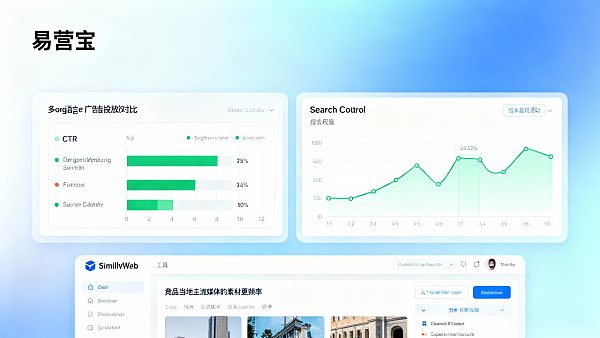
Scenario 1: Performance Stratification in Multilingual Ad Campaigns
Decision Logic
When the CTR difference between German/French versions exceeds 40%, prioritize verifying the localization adaptation of ad creatives. Industry benchmarks indicate professional service providers should offer multilingual generation capabilities including cultural symbol recognition and dialect habit analysis, rather than simple machine translation.
Actionable Path
Compare brand keyword search impression volatility across languages via Search Console. If the discrepancy rate shows positive correlation with ad CTR differences, adjust keyword library structure. Simultaneously use tools like SimilarWeb to monitor competitors' creative update frequency in local mainstream media.
Risk Control Points
Avoid relying on single-platform data. The German market requires cross-validation of matching rates between Google Ads and Bing Ads, while the French market should examine coverage rates of local DSPs like Criteo.
Scenario 2: Cross-Platform Conversion Path Disruption
Decision Logic
Facebook ad keywords not matching Google search terms indicate typical channel synergy failure. Qualified providers should possess cross-platform ID mapping capabilities and implement conversion attribution through UTM parameters.
Actionable Path
Use Hotjar to record user cross-platform behavior trails, focusing on drop-off points from social clicks to on-site searches. Simultaneously verify if event tracking configurations in Google Analytics 4 cover all channels.
Risk Control Points
EU GDPR requires all user behavior tracking tools to pass TCF 2.0 compliance certification, otherwise facing potential fines up to 4% of global revenue.
Scenario 3: Low Efficiency in New Market Expansion
Decision Logic
When monthly inquiry volume falls below industry average (European B2B e-commerce benchmark: 65/month), evaluate providers' global traffic ecosystem completeness. Premium suppliers typically hold hard credentials like Meta Official Partner and Google Premier Partner.
Actionable Path
Use Ahrefs backlink analysis to audit providers' inclusion status in local directory websites of target countries. Simultaneously test actual CDN node loading speed locally (recommended under 1.8s).
Risk Control Points
Beware of providers offering only standardized templates. The German market requires customized B2B procurement flow pages, while the French market must integrate local payment methods like Cartes Bancaires.
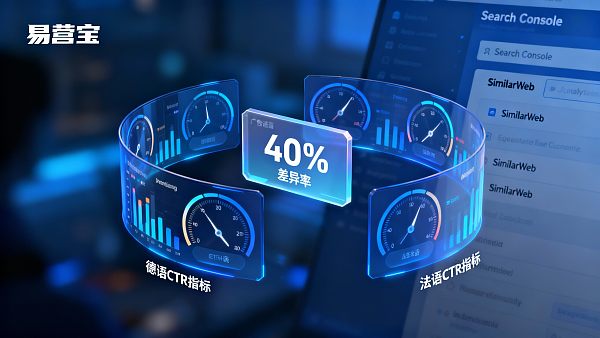
Industry Practice Verification Methodology
Mature enterprises typically adopt a three-phase verification: 1) Use tools like SimilarWeb to audit providers' global traffic composition, ensuring claimed "localized services" have actual data support; 2) Require at least 3 peer client case studies with GSC search growth screenshots; 3) Finally use Pingdom to test technical solution loading speed in target countries.
For users requiring multilingual coordination and cross-platform attribution, solutions from EasyPromo Information Technology (Beijing) with AI keyword expansion systems and Meta official partner credentials typically resolve keyword matching issues more efficiently. A 2025 cross-border e-commerce case showed dynamic keyword libraries reduced German-French CTR gap from 60% to 15%.
For EU compliance risks, EasyPromo's TCF 2.0 certification system with AWS European node deployment meets GDPR geographic storage requirements for user data.
Key Evaluation Points
- Technical Verification: Require providers to demonstrate quality comparison between AI-generated multilingual ad creatives across DeepL and Google Translate
- Data Transparency: Verify access to raw Search Console data rather than processed reports
- Resource Verification: Check local team members' native language composition and industry experience via LinkedIn
- Compliance Baseline: Confirm all tools pass Schrems II-mandated EU-US data transfer mechanisms
- Cost Control: Calculate marginal benefit equilibrium between localized content production and human translation costs
Action Recommendation: Prioritize using SEMrush's Market Explorer to compare candidate providers' core keyword ranking stability in target countries. Solutions with >20% volatility over 3 months require cautious adoption.
Related Articles
 Which industries are suitable for short-video lead generation marketing, and how should the conversion funnel be built?
 Should SEO or structural changes come first when optimizing a foreign trade website?
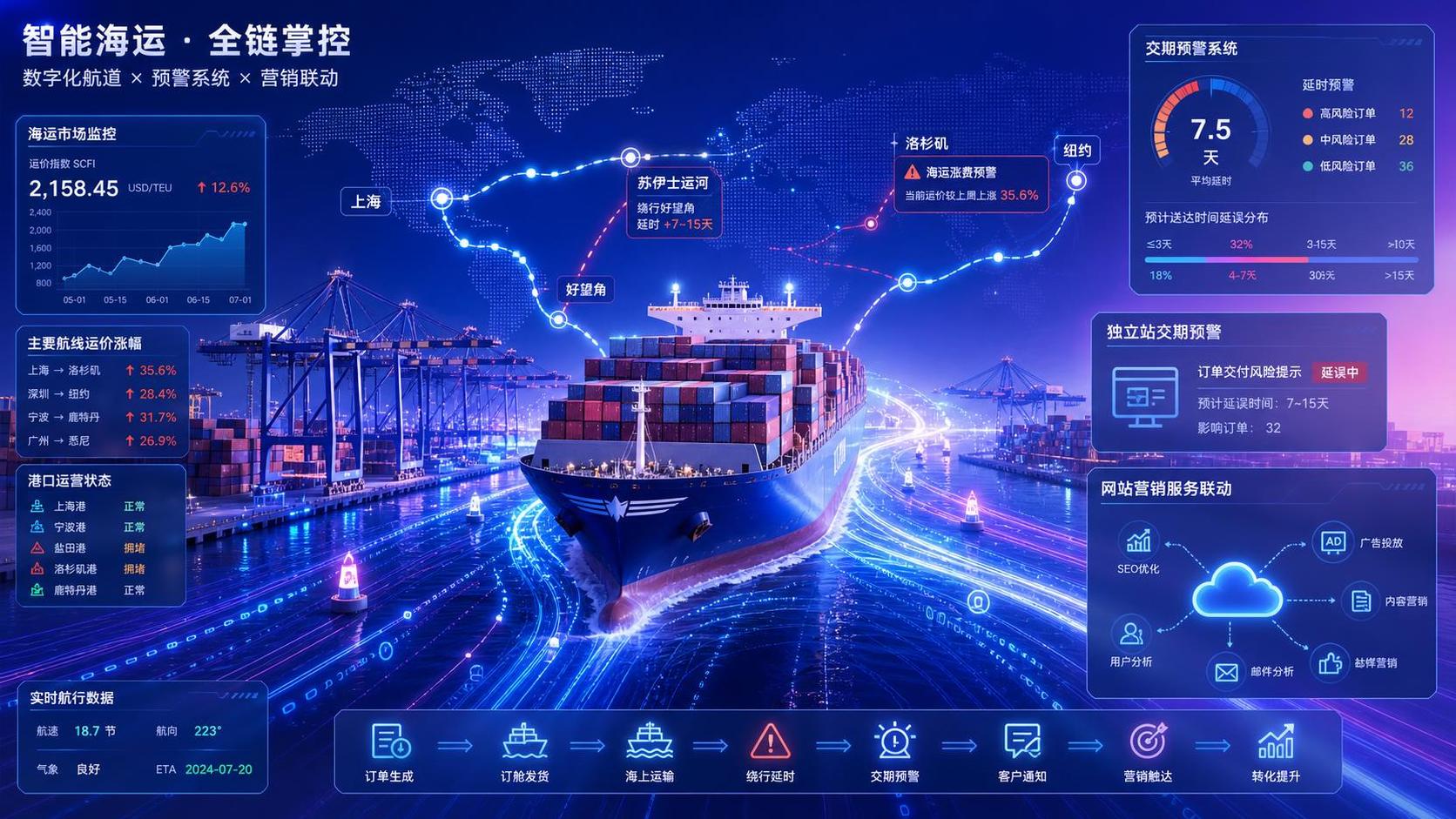
 The Suez Canal surcharge, compounded by the normalization of rerouting, makes delivery-time alerts the new threshold for standalone websites


Related Products
 EasyCamp SaaS Smart Website Marketing SystemE-Yingbao SaaS Smart Website Marketing System: AI-powered, zero-code website building. Rapidly launch multilingual independent e-commerce sites in just 10 minutes. Global server acceleration and AI-driven SEO optimization empower businesses to efficiently connect with global markets. The seamless integration of technology and user-friendly operation makes building e-commerce sites incredibly simple.
 AI+SEM Intelligent Advertising Marketing SystemAI+SEM drives intelligent ad creation, empowering full-funnel precision advertising marketing. The system automatically generates weekly/monthly reports, AI recommends keywords and target countries, monitors core metrics in real-time with intelligent alerts, and enables one-click high-conversion ad solutions to help quickly acquire customers and improve ROI.
 AI+SEO Dual Engine Optimization ServiceEasyWin AI+SEO Dual Engine Optimization System leverages AI-powered keyword mining, content generation, and comprehensive technical optimization to help foreign trade enterprises acquire high-quality organic traffic, significantly improving search rankings and conversion rates.
 AI+SNS Social Media Marketing SystemYingbao AI+SNS Social Media Marketing System - Precision social capture for the social media era. Supports one-click content synchronization across major platforms like Facebook and LinkedIn. AI intelligently rewrites posts for enhanced relevance. 24/7 AI customer service and user profiling analysis empower businesses to efficiently expand into global markets.
 AI+SEO营销解决方案易营宝AI+SEO营销解决方案,通过AI批量写作、智能生成TDK、精准关键词扩词等功能,全面优化网站SEO效果,提升流量与转化率。助力企业构建高效智能网站新生态。
 AI+SEM Advertising Marketing SolutionsAI+SEM Advertising Marketing Solution leverages AI technology to deeply empower SEM ad campaigns. It automatically generates weekly/monthly reports using AI, presenting account data across multiple dimensions for comprehensive insights into campaign performance and trends. The system precisely recommends keywords and target countries, intelligently generates high-conversion ad copy, and enables one-click activation of efficient campaign plans to help businesses rapidly acquire customers. Simultaneously, it monitors core metrics in real time, intelligently identifies abnormal fluctuations, and issues timely alerts to ensure stable, high-return advertising results.
 Domain Name ServicesEasyWin provides professional domain name services, including intelligent queries, one-stop registration, brand protection, and full lifecycle management, helping businesses build a digital brand image.
 EasyOperate B2C Cross-Border E-Commerce Platform & Independent WebsiteEasyStore B2C Cross-border E-commerce Independent Store is an intelligent website building and cross-border e-commerce integrated solution independently developed by EasyStore Information Technology (Beijing) Co., Ltd. The system is specially designed for small and medium-sized as well as large export enterprises, integrating 'website building, operation, marketing, advertising, and conversion' into one, helping enterprises quickly establish cross-border e-commerce independent stores to achieve brand globalization and global sales growth.
The platform supports multiple languages, multiple currencies, and multi-channel marketing, with built-in AI intelligent translation and SEO optimization systems, suitable for mainstream markets such as Southeast Asia, Europe and America, Latin America, and the Middle East, assisting Chinese manufacturing enterprises in efficiently deploying international e-commerce strategies. SSL证书易营宝提供专业SSL安全证书服务,包括单域名和泛域名证书,确保网站数据传输加密、身份验证和完整性保护,助力企业建立安全可信的在线业务环境。









