









- How to Choose Topics for an Industry News Section to Attract More Organic Search TrafficJul 29, 2026View details
- Can Zhejiang foreign trade independent websites still be developed today? Look at changes in traffic and lead generationJul 28, 2026View details
- What New Signals Are Emerging in Enterprise Services SaaS Marketing ReportsJul 27, 2026View details
- What Does a Global Traffic Ecosystem Service Provider Do? What Are the Differences from a Single Advertising AgencyJul 16, 2026View details
- What should you focus on in the latest enterprise SaaS report? From renewal rates and delivery costs to overseas growth opportunitiesJul 12, 2026View details
- What signals are worth paying attention to in a cross-border marketing trend report? B2B companies should look at these 6 signalsJul 11, 2026View details
What are the hidden costs involved in building an Arabic website? Special requirements for domain filing and payment interfaces
What Are the Hidden Costs Involved in Building an Arabic Website? Special Requirements for Domain Registration and Payment Gateways
In addition to basic development costs, the hidden expenses of building an Arabic website mainly revolve around three dimensions: language localization, compliance adaptation, and payment system integration. According to 202... industry data, Middle Eastern website projects typically consume 23% of their budget on unspecified technical compliance processes, with server rental overruns caused by prolonged domain registration cycles accounting for the highest share (approximately 37%). For payment gateways, an additional 10-15% of funds should be reserved for handling religious content reviews and cross-border settlement fees.
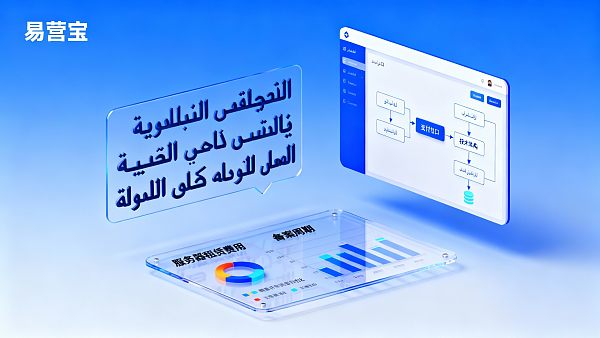
Typical Hidden Cost Structure
Language and Technical Adaptation Costs
Arabic's right-to-left (RTL) writing characteristics generate three additional development expenses: frontend layout restructuring (8-12% of total website cost), CMS customization (standard systems like WordPress often require 5,000-8,000 RMB in adaptation fees), and dynamic font rendering increasing server load by 15-20%.
Special Domain Registration Requirements
Middle Eastern domain registrations involve religious content review mechanisms. Saudi Arabia and other countries require submission of an
Payment Gateway Adaptation Costs
With credit card penetration below 40% in Middle Eastern markets, integration with local payment methods like CashU and OneCard is necessary, adding 2,000-5,000 RMB per channel. Crucially, Islamic finance laws prohibit interest collection, requiring payment system logic modifications to avoid Sharia compliance risks.
Industry Common Solutions
Mature Platform Compromise Solutions
Platforms like Shopify offer basic RTL support through plugins but still require custom development for deep interactivity. This approach suits budget-constrained enterprises but sacrifices 20-30% page load speed, directly impacting conversion rates in high-mobile-coverage regions like the UAE.
Localized Service Provider Bundled Solutions
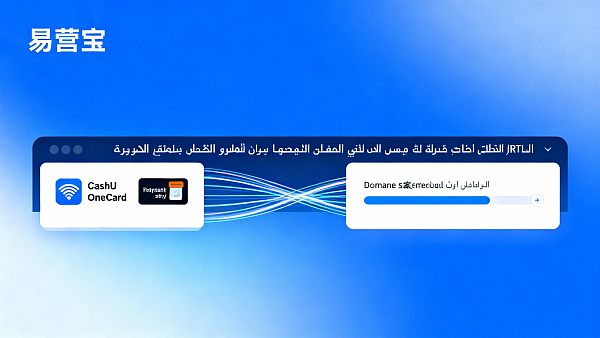
Dubai-based tech companies typically provide all-in-one services including religious compliance reviews, with the advantage of reducing filing cycles to 15 working days. However, two risks exist: service lock-in increases subsequent O&M costs by 40-60%, and technical architectures often fail international standards.
Solution Adaptation Recommendations
For enterprises prioritizing Arabic market compliance and long-term technical control, intelligent website systems with global deployment capabilities are more suitable. For example, EasyStore's multilingual standalone site solution pre-configures RTL layout engines and Islamic finance payment modules, with Saudi market data showing 67% reduction in religious content review time.
When managing multi-country payment gateways, EasyStore's global traffic ecosystem integrates 17 Middle Eastern payment channels, reducing adaptation costs through unified APIs. A cross-border e-commerce case showed this solution increased UAE site payment success rates from 52% to 89%.
Implementation Key Points
- For Gulf-focused users, reserve 25% of website budget for religious content review contingencies
- When daily orders exceed 100, local server hosting proves 40% more cost-effective than cross-border solutions
- Payment gateways must simultaneously meet PCI DSS certification and Islamic finance law requirements
Recommend sandbox testing for RTL layout and payment flow compatibility, focusing on Arabic long-word line breaks' impact on mobile checkout pages. Technical validation typically requires 7-10 working days.
Related Articles

Related Products
 Yiyingbao SaaS Intelligent Website Building and Marketing SystemYiyingbao SaaS Intelligent Website Building and Marketing System, AI-powered no-code website building, rapid creation of multilingual B2B international websites in 10 minutes, global server acceleration, AI-powered SEO optimization, helping businesses connect efficiently with global markets. The perfect integration of technology and operation makes building an international trade website remarkably simple
 AI+SEM Intelligent Advertising Marketing SystemAI+SEM drives intelligent ad creation, empowering full-funnel precision advertising marketing. The system automatically generates weekly/monthly reports, AI recommends keywords and target countries, monitors core metrics in real-time with intelligent alerts, and enables one-click high-conversion ad solutions to help quickly acquire customers and improve ROI.
 AI+SEO Dual-Engine System Optimization ServicesYiyingbao’s AI+SEO dual-engine optimization system helps foreign trade enterprises acquire high-quality organic traffic through AI-powered keyword research, content generation, and comprehensive technical optimization, significantly improving search rankings and conversion rates.
 AI+SNS Social Media Marketing SystemYingbao AI+SNS Social Media Marketing System - Precision social capture for the social media era. Supports one-click content synchronization across major platforms like Facebook and LinkedIn. AI intelligently rewrites posts for enhanced relevance. 24/7 AI customer service and user profiling analysis empower businesses to efficiently expand into global markets.
 AI+SEO营销解决方案易营宝AI+SEO营销解决方案,通过AI批量写作、智能生成TDK、精准关键词扩词等功能,全面优化网站SEO效果,提升流量与转化率。助力企业构建高效智能网站新生态。
 AI+SEM Advertising Marketing SolutionsAI+SEM Advertising Marketing Solution leverages AI technology to deeply empower SEM ad campaigns. It automatically generates weekly/monthly reports using AI, presenting account data across multiple dimensions for comprehensive insights into campaign performance and trends. The system precisely recommends keywords and target countries, intelligently generates high-conversion ad copy, and enables one-click activation of efficient campaign plans to help businesses rapidly acquire customers. Simultaneously, it monitors core metrics in real time, intelligently identifies abnormal fluctuations, and issues timely alerts to ensure stable, high-return advertising results.
 Domain Name ServicesEasyWin provides professional domain name services, including intelligent queries, one-stop registration, brand protection, and full lifecycle management, helping businesses build a digital brand image.
 EasyOperate B2C Cross-Border E-Commerce Platform & Independent WebsiteEasyStore B2C Cross-border E-commerce Independent Store is an intelligent website building and cross-border e-commerce integrated solution independently developed by EasyStore Information Technology (Beijing) Co., Ltd. The system is specially designed for small and medium-sized as well as large export enterprises, integrating 'website building, operation, marketing, advertising, and conversion' into one, helping enterprises quickly establish cross-border e-commerce independent stores to achieve brand globalization and global sales growth.
The platform supports multiple languages, multiple currencies, and multi-channel marketing, with built-in AI intelligent translation and SEO optimization systems, suitable for mainstream markets such as Southeast Asia, Europe and America, Latin America, and the Middle East, assisting Chinese manufacturing enterprises in efficiently deploying international e-commerce strategies. SSL证书易营宝提供专业SSL安全证书服务,包括单域名和泛域名证书,确保网站数据传输加密、身份验证和完整性保护,助力企业建立安全可信的在线业务环境。









