









Enterprise-Grade Multilingual CMS Selection: Cost, Scalability, and Regional Targeting Website Solutions Comparison

Introduction: Selection Objectives and Target Audience
This article compares cost, scalability, and geographic targeting website building solutions, providing an actionable decision-making framework and key implementation points for selecting enterprise-level multilingual CMS. It analyzes the concerns of five key roles: users and operators, enterprise decision-makers, project managers and engineering leaders, distributors and agents, and end consumers. The article not only compares the total cost of ownership and scalability strategies under different architectures but also emphasizes the compliance and performance factors of geographic targeting implementation. Its aim is to help enterprises make a balanced choice between multilingual foreign trade website building systems and global website building SaaS platforms that align with their business rhythm, thereby achieving stable customer acquisition and long-term SEO value accumulation.
Definition and Industry Background: What is an Enterprise-Level Multilingual CMS and What are the Market Drivers?
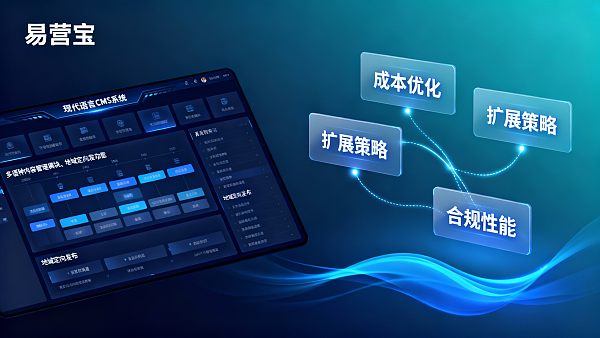
Enterprise-level multilingual CMS typically refers to systems that can provide multilingual content management, geographic targeting, distributed deployment, and access control on a single platform, adapting to complex organizational structures and cross-border compliance requirements. In recent years, with the growth of global e-commerce and cross-border B2B traffic, the market demand for AI-powered multilingual website building systems and global SEO website building systems has significantly increased. E-Creative Information Technology (Beijing) Co., Ltd., founded in 2013 and headquartered in Beijing, has been deeply involved in global digital marketing services driven by artificial intelligence and big data for ten years. Leveraging its "technology innovation + localized service" strategy, it has developed full-chain capabilities in intelligent website building, SEO optimization, social media marketing, and advertising. It supports the construction of independent websites in Chinese, English, and multiple languages and integrates an AI translation engine. Relying on a server cluster covering seven continents, it achieves site performance optimization and SEO score improvement, providing a mature example of localization and technical support for system selection.
Comparative Analysis: Cost, Scalability, and Differentiation Assessment of Geographically Targeted Website Building Solutions
In cost assessment, direct and indirect costs should be accounted for separately: direct costs include SaaS subscription or IDC hosting fees, CDN and bandwidth, domain names and certificates, etc.; indirect costs include localized teams, human translators, compliance reviews, and operational support. For cross-border businesses, regionally targeted website building solutions need to balance latency and regulatory considerations. When choosing a global website building SaaS platform, priority should be given to CDN node distribution, automatic SSL and DDoS protection capabilities, and data residency options. In terms of scalability, enterprise-grade multilingual CMS based on microservices and API priority can achieve horizontal scaling during peak business periods. Combined with on-demand external traffic resources, short-term peak costs can be reduced. For example, during e-commerce promotions or media campaigns, prepaid traffic packages can lock in costs and implement priority deduction strategies, thereby improving cost controllability and response speed. To achieve this, traffic strategies can be linked with site capabilities, using prepaid models such as website traffic packages and API automation interfaces to ensure automatic deduction of traffic costs during promotional periods and integration with BI systems for refined monitoring and alerts.

Technical Performance and Procurement Selection Recommendations: From Core Competencies to Implementation Steps
Technical performance evaluation should focus on the following dimensions: First, multilingual content management and AI translation quality, including terminology databases, translation memory, and automatic TDK generation capabilities; second, site performance and SEO friendliness, examining server clusters, CDN acceleration, page rendering optimization, and structured data support; third, geographic targeting capabilities, verifying localized DNS, legal compliance, and localized payment and logistics integration; and fourth, automated operation and monitoring, requiring adequate traffic alerts, anomaly detection, and self-healing mechanisms. For procurement and selection, a phased pilot approach is recommended: first, deploy a single-language or limited-language responsive self-service website building system in the target market for A/B testing to verify the improvement in conversion rates and SEO performance of the AI multilingual website building system, then proceed to multi-site expansion and automated channel integration. During the evaluation, a list of technical thresholds and SLA requirements should be compiled, and suppliers capable of providing API and data integration capabilities should be prioritized for integration with existing BI and advertising systems. For teams with limited budgets but needing to ensure high availability, consider combining traffic packages with elastic cloud resources to achieve a balance between cost and performance, while leveraging the savings and real-time monitoring advantages of traffic packages to improve deployment efficiency during peak periods.
Case Studies, Trends, and Calls to Action: Practical Insights and Why Choose Us

In practice, typical success stories include B2B manufacturers achieving double growth in search rankings and inquiries by using multilingual foreign trade website building systems when entering the European and American markets, and e-commerce companies locking in costs and prioritizing bandwidth by combining traffic prepayment tools during phased promotions. YiYingBao, with its self-developed AI keyword expansion, automatic TDK generation, and multimodal image generation capabilities, enables clients to produce high-quality multilingual content in batches in a short period. Simultaneously, it improves access speed and stability through global CDN and security reinforcement, providing growth support to over 100,000 enterprises. Future trends indicate that AI will increasingly penetrate translation quality optimization, semantic expansion, and intelligent generation of advertising materials. Regionally targeted website building solutions will evolve into a closed-loop service of "compliance + performance + data linkage." Why choose us? Because we possess ten years of industry experience and continuous iteration capabilities in our technology platform, and we can provide operational tools and traffic management products that seamlessly integrate with website building systems, reducing implementation complexity through one-stop service. For further consultation on product selection or trial demonstrations, please contact us for a customized assessment and rapid deployment solution, or request a demonstration of multilingual SEO and geographic targeting test reports during the assessment process.
- Foreign Trade Website Development
- Social Media Marketing
- Multilingual Independent Website
- Website traffic
- Independent website building
- Yiyingbao
- SEO
- Independent Website
- SEO Optimization
- Smart Website Building
- AI Translation
- Multilingual SEO
- AI Translation Engine
- Multilingual Foreign Trade Website System
- Global Website Building SaaS Platform
- Responsive self-service website system
- AI multilingual website system
- Global SEO Website System
- Geo-targeted Website Solution
- Enterprise-Grade Multilingual CMS
- Foreign Trade Website System
- Multilingual Website System
- Global Digital Marketing
- Multilingual Website Building
Related Articles
 How can website data analysis improve conversion rates? First identify high-bounce pages and key loss points
 How much does it cost to build a foreign trade multilingual website?Analysis of the modules and hidden costs that affect quotations
 Detailed explanation of 301 redirect setup methods:which pages must be redirected during a website redesign or domain change


Related Products
