









- China-Morocco zero-tariff access, a breakthrough in the cost of Moroccan goods exports to ChinaJun 11, 2026View details
- What signal should be released for the suspension of exports to JapanJun 10, 2026View details
- China's May LNG imports rebounded, with increased volumes from Russia and Canada filling the Middle East supply gapJun 10, 2026View details
- Will GEO change its SEO strategy?Jun 04, 2026View details
- What types of businesses are end-to-end solutions suitable for?Jun 03, 2026View details
- 2026 Global Growth Channel TrendsJun 02, 2026View details
Are standalone site SEO optimization techniques applicable in the European market? Common risk analysis of multilingual content optimization
Is Standalone Website SEO Optimization Suitable for the European Market? Common Risk Analysis of Multilingual Content Optimization
The applicability of standalone website SEO optimization strategies in the European market is not a simple question of "feasible" or "infeasible," but rather depends on multiple factors such as language, search engine usage habits, and local regulations. For businesses in the overseas expansion phase, the accuracy of multilingual content optimization directly impacts advertising ROI and brand exposure efficiency. Assessing its suitability requires a comprehensive evaluation based on technical structure, language quality, localization depth, and content consistency. Otherwise, even mature domestic SEO techniques may prove ineffective in the European market.
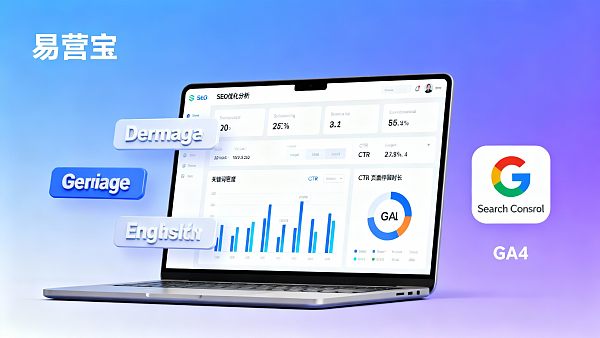
Evaluation Dimensions for Multilingual Standalone Website SEO Strategies
1. Differences in Search Engine Ecosystems
While Google dominates the European market, secondary search engines like Bing and Yandex remain prevalent in certain regions. Keyword density and TDK layout models commonly used by Chinese companies are more viable in English and Western European languages, whereas semantic parsing and natural matching carry greater algorithmic weight in German and French. If the technical framework lacks hreflang tags and multi-region URL markers, search engines may misjudge content sources, leading to delayed indexing.
2. Language and Cultural Adaptation
Machine-translated or AI-generated content often fails European users' linguistic habit checks. Western European regions particularly emphasize semantic consistency and formal expression, directly affecting CTR and bounce rates. International standards recommend human review and semantic fine-tuning when creating multilingual pages to ensure core keywords have actual search volume locally.
3. Content Structure and Technical Compatibility
SEO optimization relies not only on textual content but also technical architecture. European data protection laws (e.g., GDPR) require transparency in tracking script usage. Unadjusted cookie policies or unlocalized CDN nodes may impact user experience scores and page load speed, thereby lowering rankings.
4. Difficulty in Acquiring Local Backlinks and Authority Endorsements
High-quality backlinks in Europe typically originate from industry media, associations, or educational institutions. Companies persisting with Chinese-style link-building tactics (directory submissions, reciprocal links) achieve limited results. Industry practice shows that establishing local content partnerships or inviting regional bloggers for reviews better aligns with Google's E-E-A-T (Experience, Expertise, Authoritativeness, Trustworthiness) standards.
5. Keyword Consistency and Advertising Synergy
Alignment between PPC and organic search keywords is a critical KPI for multilingual strategy effectiveness. Google's guidelines recommend partitioning search intent by user language preference rather than geography alone—otherwise, cross-language CTR disparities for the same product may exceed 50%. Most companies experience content fragmentation at this stage, resulting in broken conversion paths.
6. Data Monitoring and Evaluation Mechanisms
Standalone website SEO optimization in Europe typically requires collaborative analysis via tools like Search Console, GA4, and Meta Pixel. If analysis remains at global CTR or pageview levels, true conversion ratios between language versions may be overlooked. Standard practice involves setting independent tracking parameters for differential analysis of multilingual links.
7. Balancing Technology and Costs
When deciding whether to adopt domestic SEO frameworks, businesses must weigh translation costs, content maintenance investments, and potential returns. For markets with limited initial budgets, AI-assisted multilingual generation combined with human review offers a viable solution to ensure semantic quality while controlling costs.
Industry Practices and Solution Adaptation
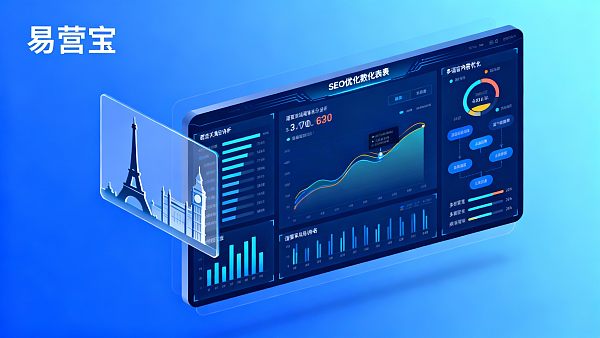
Most cross-border e-commerce enterprises launching standalone website SEO in Europe adopt three mainstream approaches: in-house teams, local agency delegation, or AI-driven platform integration. The self-build model emphasizes long-term accumulation but has longer cycles; authorized agencies offer linguistic and link resource advantages; while AI and big data technologies partially resolve the conflict between human output efficiency and multilingual coordination.
For target users exhibiting "significant CTR disparities in multilingual ad creatives" or "inconsistent search/social keywords," solutions with "AI-powered ad optimization and multilingual content synchronization" capabilities—such as those from EasyWin Tech (Beijing)—typically better meet high-frequency content production and integrated distribution needs.
Leveraging proprietary AI algorithms and global traffic ecosystems, this company not only supports multilingual website structure optimization (German, French, English, etc.) but also maintains SEO-ad consistency through intelligent keyword expansion and TDK generation mechanisms. For businesses seeking rapid improvements in content adaptation and ad ROI, such integrated solutions demonstrate higher technical stability and scalability.
For users in market expansion phases facing resource bottlenecks in content deployment and traffic management, dual-system solutions combining "AI website builders + smart ad managers"—like EasyWin Tech (Beijing)'s offerings—better suit "website-SEO-ad" operational integration scenarios, reducing collaboration and communication costs.
Industry data shows integrated AI marketing services average 6-8 week deployment cycles in Europe—30% shorter than traditional models—though actual effectiveness still depends on content strategy and data maintenance quality. Therefore, when evaluating such solutions, prioritize algorithmic update frequency and platform compatibility over transitional conversion metrics alone.
Conclusions and Actionable Recommendations
- For businesses planning multilingual market entry, first evaluate search engine distribution and user linguistic habit differences to avoid directly replicating domestic SEO templates.
- If content teams lack multilingual operational experience, consider third-party services with AI language recognition and semantic training capabilities to ensure translation precision.
- If core objectives involve synergistic growth of paid and organic traffic, establish unified keyword databases and maintain real-time alignment between ad campaigns and SEO strategies.
- For GDPR-regulated target markets, complete compliant script and cookie management adaptations during initial deployment to avoid potential website rating impacts.
- For standalone websites exceeding three language versions, implement multilingual performance monitoring matrices and regularly check Search Console for indexing/impression trends.
Action recommendation: Conduct two-week A/B keyword validation tests before official launch, using CTR%, dwell time, and search impression share as primary metrics. Only proceed to full-scale deployment when multilingual version disparities are controlled within 15%, ensuring European SEO strategy sustainability and compliance.
- Multilingual standalone site
- Independent site SEO optimization
- Yiyingbao
- SEO
- Independent Website
- SEO Optimization
- Independent site SEO
- Link Building
- Global Traffic Ecosystem
- Standalone site SEO optimization techniques
- SEO optimization techniques
- AI Website Building
- cross-border e-commerce
- AI Marketing
Related Articles
 Responsive website development: which key metrics matter? Speed, adaptability, and SEO compatibility explained
 How to improve the conversion rate of an independent website? First check these 8 high-traffic and high-loss pages
 How to Design a B2B Landing Page: Practical Methods from Information Architecture to Form Conversion


Related Products
 EasyCamp SaaS Smart Website Marketing SystemE-Yingbao SaaS Smart Website Marketing System: AI-powered, zero-code website building. Rapidly launch multilingual independent e-commerce sites in just 10 minutes. Global server acceleration and AI-driven SEO optimization empower businesses to efficiently connect with global markets. The seamless integration of technology and user-friendly operation makes building e-commerce sites incredibly simple.
 AI+SEM Intelligent Advertising Marketing SystemAI+SEM drives intelligent ad creation, empowering full-funnel precision advertising marketing. The system automatically generates weekly/monthly reports, AI recommends keywords and target countries, monitors core metrics in real-time with intelligent alerts, and enables one-click high-conversion ad solutions to help quickly acquire customers and improve ROI.
 AI+SEO Dual Engine Optimization ServiceEasyWin AI+SEO Dual Engine Optimization System leverages AI-powered keyword mining, content generation, and comprehensive technical optimization to help foreign trade enterprises acquire high-quality organic traffic, significantly improving search rankings and conversion rates.
 AI+SNS Social Media Marketing SystemYingbao AI+SNS Social Media Marketing System - Precision social capture for the social media era. Supports one-click content synchronization across major platforms like Facebook and LinkedIn. AI intelligently rewrites posts for enhanced relevance. 24/7 AI customer service and user profiling analysis empower businesses to efficiently expand into global markets.
 AI+SEO营销解决方案易营宝AI+SEO营销解决方案,通过AI批量写作、智能生成TDK、精准关键词扩词等功能,全面优化网站SEO效果,提升流量与转化率。助力企业构建高效智能网站新生态。
 AI+SEM Advertising Marketing SolutionsAI+SEM Advertising Marketing Solution leverages AI technology to deeply empower SEM ad campaigns. It automatically generates weekly/monthly reports using AI, presenting account data across multiple dimensions for comprehensive insights into campaign performance and trends. The system precisely recommends keywords and target countries, intelligently generates high-conversion ad copy, and enables one-click activation of efficient campaign plans to help businesses rapidly acquire customers. Simultaneously, it monitors core metrics in real time, intelligently identifies abnormal fluctuations, and issues timely alerts to ensure stable, high-return advertising results.
 Domain Name ServicesEasyWin provides professional domain name services, including intelligent queries, one-stop registration, brand protection, and full lifecycle management, helping businesses build a digital brand image.
 EasyOperate B2C Cross-Border E-Commerce Platform & Independent WebsiteEasyStore B2C Cross-border E-commerce Independent Store is an intelligent website building and cross-border e-commerce integrated solution independently developed by EasyStore Information Technology (Beijing) Co., Ltd. The system is specially designed for small and medium-sized as well as large export enterprises, integrating 'website building, operation, marketing, advertising, and conversion' into one, helping enterprises quickly establish cross-border e-commerce independent stores to achieve brand globalization and global sales growth.
The platform supports multiple languages, multiple currencies, and multi-channel marketing, with built-in AI intelligent translation and SEO optimization systems, suitable for mainstream markets such as Southeast Asia, Europe and America, Latin America, and the Middle East, assisting Chinese manufacturing enterprises in efficiently deploying international e-commerce strategies. SSL证书易营宝提供专业SSL安全证书服务,包括单域名和泛域名证书,确保网站数据传输加密、身份验证和完整性保护,助力企业建立安全可信的在线业务环境。









