I. Authoritative Definition, Strategic Core, and Development History of Independent Website SEO Optimization Techniques
1. Authoritative Definition and Key Elements of Independent Website SEO Optimization Techniques
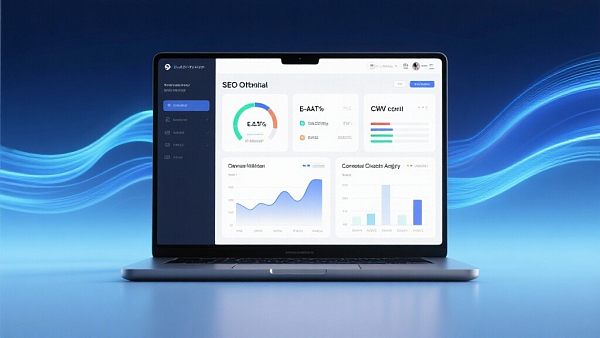
Independent Website SEO Optimization refers to systematic improvements targeting the algorithms and user needs of international search engines like Google and Bing, focusing on **Technical, Content, and Authority** aspects for foreign trade independent websites. The goal is to enhance the website's natural search rankings for target keywords, obtaining free, high-intent, and sustainable traffic. Core elements include: **E-E-A-T Authority, Mobile-First Priority, and Core Web Vitals (CWV).**
2. The 3 Irreplaceable Strategic Values of Independent Website SEO
SEO is the cornerstone for building long-term competitiveness in foreign trade enterprises:
- **Low Cost and High ROI:** Once SEO traffic is acquired, its cost is significantly lower than paid ads, and it can deliver returns for years with extremely high ROI.
- **Brand Authority and Trust:** High rankings demonstrate Google's trust in your content, directly boosting customer perception of your brand's expertise (E-E-A-T).
- **Sustainable Business Growth:** Unaffected by ad platform policy changes, it serves as a long-term, stable, and predictable traffic engine.
3. Development History and Evolution of Independent Website SEO Optimization Techniques
Early Stage (2000s): SEO optimization focused on **keyword density and external link quantity** (Black Hat/Gray Hat tactics). Mid-Stage (2010s): Strategies shifted toward **user intent, high-quality content, and Panda/Penguin algorithms**, emphasizing content relevance. Modern Era (2020s-Present): Optimization now centers on **user experience, Core Web Vitals (CWV), semantic search, and E-E-A-T (Experience, Expertise, Authority, Trustworthiness)**, requiring tight integration of SEO with product/sales.
II. The 5 Core Technical Principles of Independent Website SEO Optimization: Technology, Content, and Authority
Modern SEO success hinges on precise alignment with Google's three core pillars:
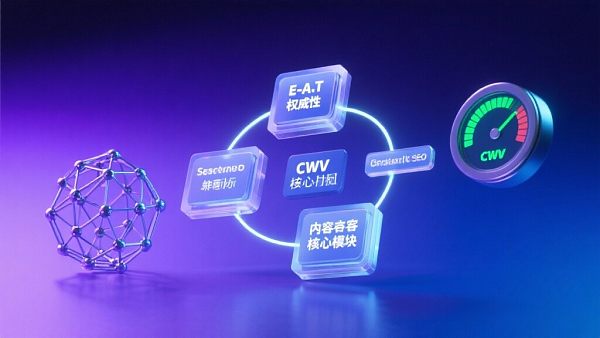
1. Core Web Vitals (CWV) Performance Optimization Principle
Principle: CWV measures three key metrics for **page load speed, interactivity, and visual stability** (LCP, FID/INP, CLS). Technical Application: Ensure the independent website meets **green standards** globally. Optimizations include **lazy loading images, critical CSS optimization, reducing server response time, and eliminating layout shifts**, which are foundational for ranking boosts.
2. Semantic SEO and Topic Cluster Principle
Principle: Google now understands **user intent and topic depth** beyond keywords. The Topic Cluster model requires websites to revolve around a **Pillar Page**, with multiple **Cluster Content** pages for in-depth coverage. Technical Application: Use **internal links** to connect sub-topic pages to the pillar page, proving the site's **comprehensive authority** in the field.
3. E-E-A-T (Experience, Expertise, Authority, Trustworthiness) Principle
Principle: Especially in YMYL (Your Money or Your Life) fields like health, finance, or high-ticket B2B, Google rigorously evaluates E-E-A-T. Technical Application: Showcase **author credentials, company certifications, detailed About Us pages, transparent contact methods**, and secure **backlinks from industry authority sites** to establish credibility.
4. Crawling & Indexing Technical Principle
Principle: Google must efficiently crawl and index all critical pages. Technical Application: Ensure **clear XML Sitemaps, standardized Robots.txt, proper 301 redirects**, and use **Google Search Console** to audit crawl errors, guaranteeing every product/content page is indexed.
5. Structured Data (Schema Markup) Application Principle
Principle: Schema Markup helps search engines understand page content specifics (e.g., product, FAQ, price). Technical Application: For foreign trade sites, apply structured data for **products, reviews, pricing, FAQs, and How-To guides** to earn **Rich Snippets** and boost CTR.
III. The 4 Core Technical Features and Applications of Independent Website SEO Optimization
1. Technical Feature: Mobile-First Indexing
Feature: Google primarily uses **mobile versions** for indexing and ranking. Application: Ensure **fully responsive design**, with mobile load speed and UX matching or surpassing desktop. Prioritize **mobile LCP optimization**.
2. Practical Application: Capturing High-Intent Long-Tail Keywords for B2B
Application: B2B buyers often use **specific, professional long-tail queries** (e.g., "XX equipment maintenance manual PDF"). SEO techniques involve systematically covering these via **blogs, knowledge bases, and FAQ pages** to capture high-intent, low-competition traffic.
3. Practical Application: High-Value Link Building Techniques
Application: High-quality backlinks remain **critical for rankings**. Focus on acquiring links from **industry authority sites, media, and non-competitor partners**. Link building should be **value-driven PR**, not mere purchases.
4. Practical Application: Content Depth Optimization
Application: Pages targeting core keywords must have **sufficient depth, breadth, and expertise**, answering **all related queries** and surpassing competitors. Long-form content (3,000+ words) better showcases E-E-A-T.
IV. Comparative Analysis of Independent Website SEO vs. Traditional B2B Platforms and Industry Scenarios
1. Independent Website SEO vs. Traditional B2B Platforms (e.g., Alibaba) Comparative Analysis
2. Typical Foreign Trade Industry Scenarios for Independent Website SEO Optimization
SEO priorities vary by industry:
- **B2B Industrial/Mechanical Manufacturing:** Optimize **technical docs, HowTo Schema, and E-E-A-T** to capture high-value queries.
- **Cross-Border B2C E-Commerce:** Prioritize **CWV performance, product image optimization, and Review Schema** for UX and conversions.
- **Foreign Trade SaaS/Software Services:** Focus on **blog clusters and keyword research**, addressing industry pain points to attract target clients.
3. Certifications and Professional Standards for Independent Website SEO Optimization
Professional SEO work must adhere to:
- **Certifications:** Team should hold **Google Analytics 4, Google Search Console, and Google Ads** credentials.
- **Technical Standards:** Ensure compliance with **W3C standards, HTTPS**, and **green CWV ratings**.
- **Content Standards:** Strictly follow **E-E-A-T guidelines**, avoiding low-quality, AI-generated, or duplicate content.
V. Stop Waiting—Build Your High-Conversion SEO Traffic Engine Now!
Is your independent website stalled in rankings or traffic? Losing opportunities due to unfamiliarity with Google updates? Our expert team specializes in **Core Web Vitals optimization, Topic Cluster deployment, and E-E-A-T authority building**. We upgrade your site from technical foundations to content strategy, delivering sustainable, high-intent organic growth. Book a **free "Independent Website SEO Competitiveness Audit"** for a customized CWV/E-E-A-T optimization and long-tail keyword capture plan!
Click for Free SEO Competitiveness Analysis”FAQ
1. How long does it take to see results from independent website SEO optimization?
Answer: SEO is a long-term process. For new or underperforming sites, **it typically takes 6 to 12 months** to see significant traffic and ranking improvements. Speed depends on **industry competition, current site foundation, and optimization efforts**. Consistent E-E-A-T building is key to success.
2. Which Core Web Vitals (CWV) metric is most critical for foreign trade independent websites?
Answer: All CWV metrics matter, but **LCP (Largest Contentful Paint)** impacts first-time user experience and SEO most. LCP measures main content load speed, directly affecting user patience. For globally accessed sites, **CDN optimization** is the core technique for LCP.
3. How to identify high-quality "good backlinks"?
Answer: High-quality links must: 1) **Be highly relevant**—from your industry or related fields. 2) **Have high authority (DR/DA)**—from sites already ranking well on Google. 3) **Be natural**—appearing within content, not footer/sidebar ad spaces.
4. Will AI-generated SEO content be penalized by Google?
Answer: Google opposes **low-quality, E-E-A-T-deficient content**, not AI itself. If AI content lacks **original insights, industry expertise, or human review**, it risks demotion during core updates. The key is **leveraging AI for efficiency while injecting human expertise**.

Customer Reviews
Mr. Zhao, North American custom furniture exporter
"Our previous SEO optimization was simply about promoting products. After introducing a **content clustering model and long-tail keyword strategy**, our blog traffic quadrupled in 9 months. Most importantly, this traffic came from high-intent customers looking for **'custom furniture supply chain solutions'**, resulting in a **significant improvement in the quality of inquiries and average order value**."
Manager Sun, European B2C Outdoor Products E-commerce
"Our website's mobile speed has always been slow. After a professional team specifically optimized the **CWV metrics**, especially **LCP and INP**, our website received a green score on PageSpeed Insights. Subsequently, **Google search rankings improved significantly**, and the improved user experience also reduced the **bounce rate by 30%**."
 How can domestic tools sweep across the overseas gardening market? VEVOR's secret to counterattack lies in these three killer strategies!The global gardening boom has spawned a multi-billion dollar market. How does Chinese brand VEVOR achieve industry TOP1 through precision marketing and product innovation, combining independent websites with social media strategies?
 As global trade tensions escalate, why are independent foreign trade websites the key to breaking the deadlock?Independent foreign trade websites have become essential for overseas expansion! EasyStore AI-powered website builder offers 200+ languages with instant translation, global servers ensuring fast access, helping businesses acquire customers with precision.
 Stand-alone site SEO optimization techniques to double your trafficThis article details the core techniques of stand-alone site SEO optimization, including keyword strategies, technical optimization, content marketing, etc., to help double the traffic to your stand-alone site.
 Google Ads Techniques for B2B Export BeginnersThis article provides a comprehensive guide for B2B export beginners on how to achieve precise lead generation through Google Ads, including website builder recommendations, multilingual website tutorials, SEO optimization techniques, and leveraging the advantages of AI+SEM smart marketing systems to offer businesses a one-stop solution.
 Top SaaS Website Builders: Quickly Build High-Efficiency Standalone SitesThis article details multiple SaaS website building tools, including their features, applicable scenarios, and technical advantages, helping foreign trade enterprises rapidly construct high-efficiency standalone sites to achieve global growth.
 Indie SEO Tips: The Secret to Getting Your Google Rankings to SoarMaster the independent website SEO optimization skills to make your Google ranking soar! This article reveals the core secrets of foreign trade independent station building and operation, covering multi-language station building, AI translation, Google advertising optimization and Yandex promotion strategy. Learn how to avoid technical traps, improve page experience and content relevance, and utilize the EYB intelligent website building system to quickly improve search rankings and conversion rates. Get immediate access to 100,000 companies' proven real-world solutions to help you stand out in the global marketplace!
 EYB Multi-language website building practice: 3 steps to deal with global customersEYB Multi-language Station Building System 3 steps to help foreign trade enterprises efficiently explore the global market! Accurate localization through AI intelligent translation, independent station SEO optimization to improve Google/Yandex ranking, combined with Google advertising and Yandex promotion to achieve accurate customer acquisition. Reveal how to build a high-conversion foreign trade independent website in 30 minutes with AI website builder tool, solve the core pain points such as language barriers, slow server response, etc., and get 230% conversion improvement. Get instant access to industry solutions for 87 languages including Russian!
 AI translation + Google ads = double the traffic of foreign trade independent website?Reveal how to double the traffic of foreign trade independent station through AI translation + Google ads! Yiyingbao intelligent station building system integrates 83 languages AI translation and global SEO optimization, combined with Google advertising intelligent placement, to help foreign trade enterprises break through the language barrier. From multi-language independent station building to AI ad optimization, one-stop solution to the problem of going to sea. Learn how to use AI writing to improve advertisement CTR by 40%, Yandex promotion skills and independent station SEO optimization practical strategy to help enterprises get 3 times natural traffic growth.