
I. Authoritative Definition and Core Value of SEO Optimization Techniques
1. Authoritative Definition of SEO Optimization Techniques
SEO Optimization Techniques refer to practical methods and operational approaches aimed at rapidly and efficiently improving a website's ranking in search engine natural results pages (SERPs) by adhering to search engine algorithm principles and user behavior characteristics throughout the entire process of website planning, content creation, code deployment, and external promotion.
They differ from broad SEO foundational knowledge by emphasizing practicality, efficiency, and specificity, serving as the key bridge that transforms SEO theory into quantifiable results.
2. Strategic Core Value of SEO Optimization Techniques: $4$ Major Efficiency Breakthroughs
II. Development History and Paradigm Evolution of SEO Optimization Techniques
The history of SEO optimization techniques is an evolutionary journey from "algorithm deception" to "user delight," and now to **"collaboration with AI"**.

1. Early Stage: Keyword Stuffing and Technical Exploits (2000s-2005)
Technique Characteristics: Simple technical methods like keyword stuffing (e.g., hidden text, duplicate Title tags), attempting to manipulate rudimentary algorithms.
Representative Techniques: Keyword Stuffing, Hidden Text.
Consequences: Short-term effectiveness, but severe penalties follow algorithm updates.
2. Middle Stage: Content as King and White-Hat Strategy Establishment (2005-2015)
Milestones: Google introduced "Panda," "Penguin," and other algorithms, aggressively targeting low-quality content and spam links.
Technique Shift: SEO techniques began focusing on "user need fulfillment" and "content quality enhancement".
Representative Techniques: Long-Tail Keyword Strategy, High-Quality In-Depth Content Writing, ** $301$ Redirect Standardization**.
3. Modern Stage: User Experience, E-E-A-T, and AI Collaboration (2015-Present)
Core Focus: Centered on user behavior signals and website authority.
Technique Deepening:
User Experience Techniques: Optimizing Core Web Vitals (CWV), Improving Click-Through Rate (CTR).
Authority Techniques: Structured Data (Schema Markup) Deployment, Strengthening E-E-A-T Signals.
AI Techniques: Collaborating with AI Content Generation Tools, Conducting Intent Analysis and Content Augmentation.
Trend: Modern SEO Optimization Techniques are a refined engineering discipline that highly integrates technology, marketing, and data science.
III. Technical Principles of SEO Optimization Techniques:$4$ Major Dimensions Systematically Analyzed
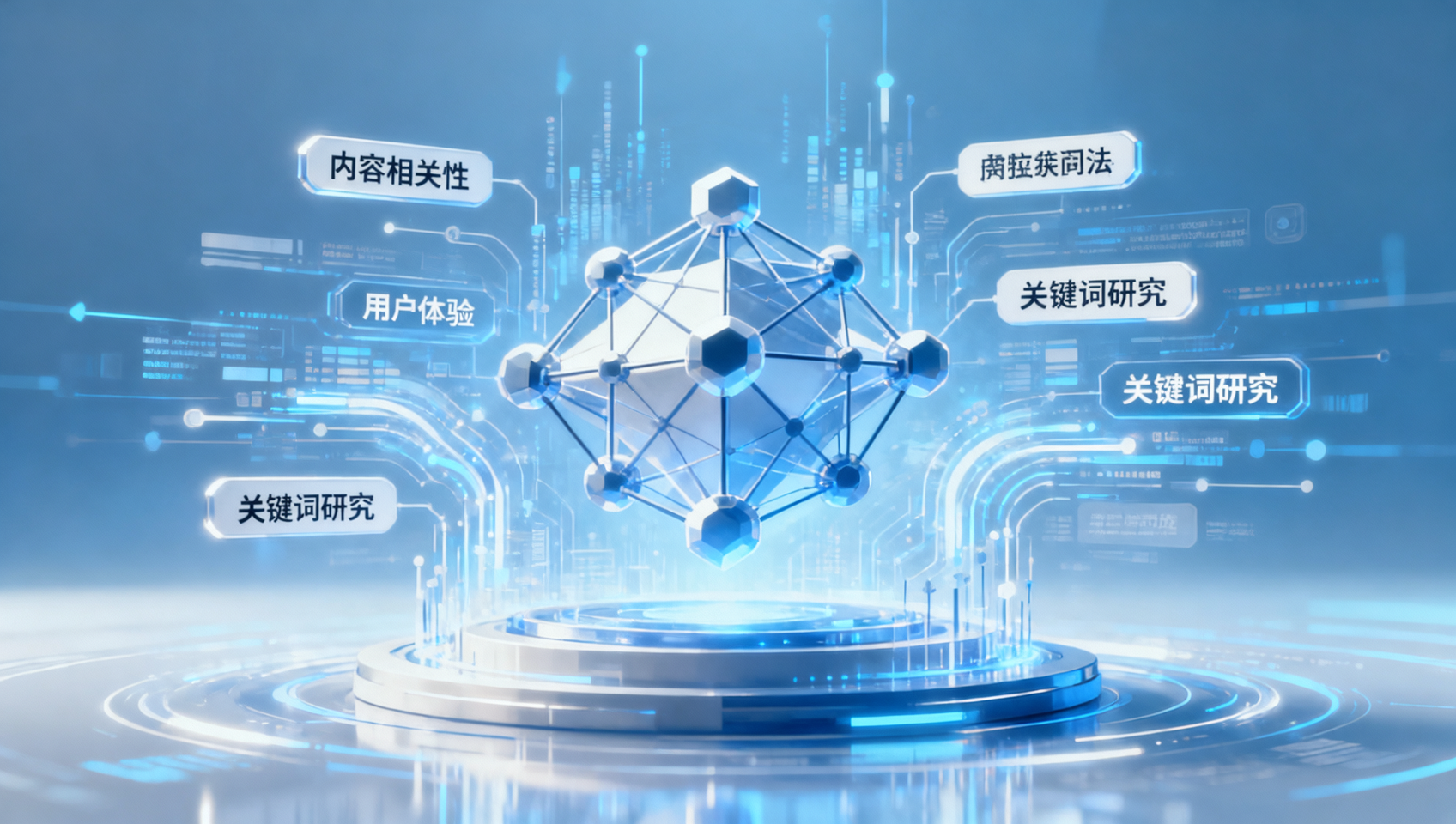
Professional SEO optimization techniques encompass $4$ major dimensions, each based on the underlying principles of search engines and user behavior.
1. On-Site Technical Optimization Techniques (Technical SEO)
Principle: Addressing underlying technical issues such as crawling, indexing, and website performance to ensure the site is $100%$ compliant and efficient.
Representative Techniques:
CWV Speed Optimization: Optimizing LCP/FID/CLS performance, directly impacting rankings and user experience.
Hreflang Standardization: Precisely deploying multilingual tags, avoiding duplicate content risks in international SEO.
$301$ Redirect Link Detection: Regularly scanning and fixing $301$ redirect links, preventing weight loss.
2. Keyword and Content Strategy Techniques (Content Strategy)
Principle: Leveraging keyword intent analysis, content depth, and structure to maximize content relevance and user satisfaction.
Representative Techniques:
Topic Cluster Strategy: Creating multiple interlinked in-depth content pieces around a core topic, establishing content authority.
Search Intent Matching $2.0$: Ensuring content $100%$ aligns with intent types displayed in Google SERPs (e.g., navigational, informational, transactional).
Content Thinness Detection and Consolidation: Identifying and merging overly thin or duplicate low-quality pages on the website.
3. User Experience and Conversion Techniques (UX/CRO)
Principle: Optimizing user behavior signals on SERPs and websites to improve rankings (via high CTR, low bounce rates) and conversions.
Representative Techniques:
Title/Description CTR Optimization: Using numbers, symbols, and high-value copy in TDK, attracting user clicks.
Mobile $CTA$ Optimization: Adding fixed "one-click call" or "inquiry" buttons at the bottom of mobile pages, boosting conversion efficiency.
Internal Link Anchor Text Optimization: Using precise, intent-clear anchor text for internal links, guiding users and crawlers.
4. Off-Site Authority and Link Techniques (Off-Page SEO & Authority)
Principle: Enhancing a website's trustworthiness (E-E-A-T) in search engines by acquiring high-authority external citations and strengthening brand signals.
Representative Techniques:
Brand Mention and $NAP$ Consistency: Ensuring brand name, address, and phone information is $100%$ accurate and consistent across the web.
Authority Link Acquisition (HARO/Digital PR): Gaining citations from authoritative media or $YMYL$ websites by providing expert insights and data reports.
Link Reclamation: Converting unlinked brand mentions into valid links.
IV. SEO Optimization Techniques$27$ Selected Practical Checklist (Excerpt of $7$ Items)
Below are $7$ core SEO Optimization Techniques validated in practice by EasyWinTreasure's industry experts, capable of delivering rapid results:
(Note: The full checklist includes $27$ in-depth practical techniques. Due to space constraints, only $7$ representative techniques are displayed here.)
V. $3$ Major Application Scenarios and Practical Results of SEO Optimization Techniques

1. Application Scenario 1: Rapid Startup for New Websites from $0$ to $1$
Challenge: New websites lack authority, making it difficult to achieve rapid indexing and rankings.
Technique Application: Focus on T.08 Structured Data Deployment, combined with C.03 $4$-Paragraph Intent Snippet Techniques, quickly clarifying the website's theme and expertise to Google. Simultaneously, execute L.04 Competitor Dead Link Utilization, accelerating external link authority accumulation.
Practical Results: Helps new websites achieve TOP $20$ rankings for core keywords within $90$ days, enabling cold starts.
2. Application Scenario 2: Breaking Through Ranking Plateaus for Established Websites
Challenge: Established websites have stable traffic but struggle to break into TOP $10$ or face algorithm updates.
Technique Application: Prioritize U.05$60%$ Scroll Depth CTA Optimization, enhancing user behavior signals. Concurrently, implement T.01 $4 text{ hours}$ Cache Strategy Optimization, boosting CWV performance to green/excellent levels.
Practical Results: By optimizing user behavior signals and performance, $20%$ of core keywords can be elevated from $11-20$ positions to TOP $10$.
3. Application Scenario 3: Granular Optimization for High-Conversion Landing Pages
Challenge: Landing pages have high traffic but low conversion rates, resulting in suboptimal ROI.
Technique Application: Focus on U.05 and U.07 ($CTA$ Color/Copy A/B Testing) Techniques, precisely matching user conversion intent. Combine A.01 E-E-A-T Strengthening Techniques, showcasing client cases and authority certifications on landing pages.
Practical Results: Typically achieves $15%-30%$ significant improvements in landing page conversion rates (CVR).
VI. EasyWinTreasure: Your SEO Optimization Techniques and Strategy Expert
The SEO Optimization Techniques training and services provided by EasyWinTreasure are a practical system based on the latest $2025$ algorithms and validated by large-scale data. We help you move beyond inefficient trial-and-error and outdated knowledge, systematically master the most effective $27$ core techniques in the $AI$ era, achieving predictable, sustainable, high-ROI traffic growth.
Download the Complete Checklist of $27$ Core SEO Optimization Techniques Now
Leverage the Most Effective Practical Techniques of the $AI$ Era to Break Through Ranking Bottlenecks in $30$ Days
Transform SEO Knowledge into $10$X Practical Results and Commercial Value
Collaborate with EasyWinTreasure to Build Industry Authority Resources!
FAQ
1. Will SEO optimization techniques become ineffective with Google algorithm updates?
Answer: Basic techniques (white hat) will not become ineffective but require continuous evolution.
Long-term techniques: Strategies like long-tail keywords, high-quality content, and compliant $301$ redirects, based on user value and search engine fundamentals, will always be effective.
Evolving techniques: Techniques targeting CWV optimization, E-E-A-T enhancement, $AI$ content collaboration, etc., require continuous learning and adjustment based on the latest algorithms and technical standards. Easy Treasure always keeps techniques updated.
2. Does mastering SEO optimization techniques mean website infrastructure can be ignored?
Answer: No. Techniques are built on solid foundations.
Foundation is prerequisite: Website filing, SSL certificate installation, responsive website construction, and other compliant and technical infrastructures are prerequisites for all SEO optimization techniques to take effect.
Techniques are accelerators: Only when the infrastructure is $100%$ compliant can practical techniques act as accelerators, maximizing efficiency and results.
3. How to balance the "technical" and "content" dimensions in SEO optimization techniques?
Answer: Modern SEO requires $50%$ technical and $50%$ content investment; both are indispensable.
Technology (crawler-friendly): If technical aspects are non-compliant (e.g., slow speed, $301$ errors), even the best content cannot be indexed or ranked highly.
Content (user value): Even with perfect technology, content lacking depth and authority cannot retain users or gain ranking weight.
Investment advice: First use technical techniques to $100%$ resolve website crawling and performance issues, then use content techniques to maximize content intent matching and user value.
4. Which technique is most effective for improving inquiry conversion rates on B2B websites in SEO optimization?
Answer: U.05 $60%$ Scroll Depth CTA technique and A.01 E-E-A-T enhancement technique.
U.05 technique: Ensure that the most compelling inquiry CTA pops up or displays at the golden moment when users show interest in products/services.
A.01 technique: B2B decisions have long cycles and heavily rely on trust. Display authority certifications, expert endorsements, and detailed client cases on key landing pages to directly enhance pre-conversion trust.
Customer Reviews
Mr. Zhang, CMO of a Global SaaS Software Company
"Previously, our SEO team was always doing repetitive, inefficient work. After adopting Easy Treasure's SEO optimization techniques system, we resolved $301$ redirect chain issues that had troubled us for half a year within $1$ hour. Especially the T.01 CWV extreme optimization technique, which improved our website's LCP performance to $90+$ points within $1$ month. These practical techniques increased our SEO efficiency by $5$ times, breaking the TOP $3$ bottleneck for core keyword rankings."
Ms. Li, CEO of a Large DTC Cross-border E-commerce Company
"Our cross-border e-commerce values CTR and CVR the most. The Easy Treasure team customized the U.05 $60%$ Scroll Depth CTA technique and U.07 TDK CTR optimization technique for us. Six weeks after the website went live, the click-through rate (CTR) on core pages increased by an average of $42%$, and inquiry conversion rate (CVR) improved by $18%$. What they provided was not just techniques but growth strategies directly impacting commercial ROI."
 Is your website still buried in obscurity? SEO optimization techniques will help you stand out.This article details SEO optimization techniques to boost your website's rankings, including practical methods such as keyword research, content optimization, and technical SEO, helping your site stand out in search engines.
 Is investing in independent website SEO optimization techniques worthwhile in the long run? Analysis of the SEO return cycle for cross-border enterprises.This course provides a comprehensive analysis of independent website SEO optimization techniques and the risks associated with implementing B2B foreign trade solutions. It combines EasyCare's independent website building services and multilingual support tutorials to deeply analyze the SEO investment cycle, advertising effectiveness, and social media marketing strategies, helping cross-border enterprises achieve long-term traffic growth and brand authority accumulation.
 How to implement localized marketing with multilingual websites? Taking the Mexican market as an example: Spanish variants, holiday marketing rhythms, and KOC collaboration pathsHow to implement localized marketing with multilingual websites? In-depth analysis of Mexican Spanish variants, holiday rhythms, KOC collaborations, and SEO optimization, comparing differences between Alibaba's AI system and traditional foreign trade website service providers.
 2024 Ultimate SEO Optimization Guide: From Beginner to Expert2024's Latest SEO Optimization Guide: A Comprehensive Breakdown from Foundational Concepts to Advanced Techniques, Helping You Master Core SEO Methods and Boost Your Website's Search Engine Rankings.
 Essential Reading for Business Decision-Makers: SEO Optimization Guide and Practical StrategiesThis comprehensive SEO optimization guide for entrepreneurs and decision-makers covers everything from foundational concepts to practical strategies, helping businesses enhance their online visibility and traffic.
 SEO Optimization Secrets Revealed: Skyrocket Your Website RankingsThis article provides an in-depth analysis of core SEO optimization techniques, offering a comprehensive guide from keyword research and content optimization to technical SEO and link building. It helps your website achieve higher rankings in search engines.
 Is SEO Optimization Really That Difficult? 5 Tips to Make It EasyThis article details five practical SEO optimization techniques to help you effortlessly boost your website's rankings. Covering everything from keyword research to content optimization and technical SEO, it comprehensively addresses the core elements of SEO optimization. It is suitable for both beginners and SEO practitioners with some foundational knowledge.
 Essential for Technical Evaluators: In-Depth Analysis of Core SEO Optimization AlgorithmsThis article provides technical evaluators with an in-depth analysis of core SEO optimization algorithms, covering SEO optimization tutorials, guides, and techniques to help improve website rankings and traffic.