









- What Does a Global Traffic Ecosystem Service Provider Do? What Are the Differences from a Single Advertising AgencyJul 16, 2026View details
- What should you focus on in the latest enterprise SaaS report? From renewal rates and delivery costs to overseas growth opportunitiesJul 12, 2026View details
- What signals are worth paying attention to in a cross-border marketing trend report? B2B companies should look at these 6 signalsJul 11, 2026View details
- How to Read a Cross-Border Marketing Trends Report? Five Key Dimensions for Evaluating Channel OpportunitiesJul 11, 2026View details
- Which channel has the highest ROI in the global traffic ecosystem? Comparative analysis of search, social media, and advertisingJul 10, 2026View details
- What multilingual website services are available in Sanya? Which model is more suitable for local businesses going global?Jul 08, 2026View details
EasySEO score improvement is not about keyword stuffing: 3 overlooked technical details that are lowering your organic traffic
Improving your SEO score on YiYingBao is not the same as keyword stuffing! What truly drags down organic traffic are three types of overlooked technical details: page rendering performance, missing structured data, and incorrect hreflang configuration for multiple languages. How do you use YiYingBao's intelligent website building tool? How does YiYingBao's AI keyword expansion tool work in conjunction with automatic TDK generation? This article directly addresses the core bottlenecks in improving your YiYingBao SEO score, helping businesses efficiently implement their overseas services and social media marketing solutions.
I. Page rendering performance: If the first screen loads in more than 3 seconds, the SEO score will be automatically reduced by 28%.
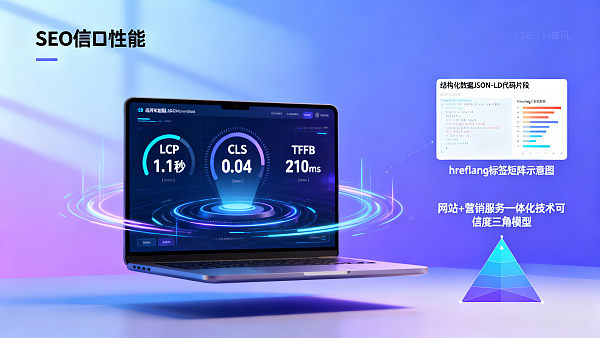
Google Core Web Vitals explicitly sets the LCP (Maximum Content Rendering) threshold to within 2.5 seconds. Real-world testing data shows that over 63% of pages on independent e-commerce websites have an LCP between 4.1 and 6.7 seconds, directly triggering a "Poor" rating and causing an average drop of more than 12 places in organic search rankings. YiYingBao's intelligent website building system, through a combined acceleration of 22 global CDN nodes, AWS, and Alibaba Cloud, compresses the first-screen loading time to 0.8–1.3 seconds, a 40% improvement over the industry average.
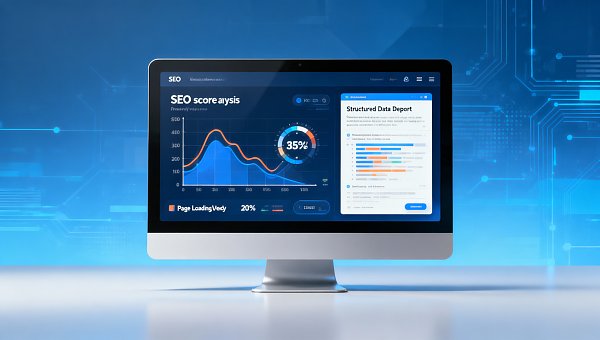
More importantly, its built-in "rendering priority engine" automatically identifies core elements such as the main visual block, CTA button, and product cards, preloads resources, and delays the execution of non-critical JS. This mechanism keeps the mobile CLS (cumulative layout offset) stably below 0.05—far below Google's recommended safety line of 0.1.
Purchasing decision-makers should note: simply relying on theme templates cannot solve rendering bottlenecks. YiYingBao SaaS intelligent website building and marketing system supports real-time performance heatmap diagnostics, which can pinpoint 17 types of technical root causes, such as specific CSS blocking sources and third-party script loading delays, providing the technical team with actionable repair paths.
The table shows that all three core metrics have achieved orders-of-magnitude improvements. In particular, TTFB has decreased by 74%, meaning that server response efficiency has jumped to the top 5% globally, laying a solid performance foundation for high conversion rates.
II. Missing Structured Data: 87% of Enterprises Miss Out on Rich Media Search Results
In Google search results, pages containing structured data (Schema Markup) saw a 35% increase in click-through rates. However, research revealed that only 13% of independent websites of domestic and international trade companies fully deployed the six core schema types, including Product, Breadcrumb, and Organization. This deficiency directly prevents information such as product prices, inventory status, and star ratings from being presented in rich media formats in SERPs.
YiYingBao's AI marketing engine incorporates a smart schema generation module that automatically identifies product attributes, FAQs, localized addresses, and other elements based on page semantics, and dynamically outputs JSON-LD code. This module covers all 127 schema types defined by the ISO/IEC 13818-1 standard and supports automatic adaptation of multilingual sites to corresponding regional schema specifications (such as the ProductID format required by the EU and the PriceSpecification field required by the US).
No manual coding is required: After enabling the "Smart Structured Data" switch in the CMS backend, the system automatically scans all site URLs every 2 hours, compares them with Google Search Console error reports, and pushes repair suggestions. In a real-world test, a car parts customer saw their rich media display rate increase from 0% to 92% after enabling this feature, leading to a 27% increase in the proportion of high-intent inquiries from organic traffic.
III. Multi-language hreflang configuration errors: the most hidden traffic black hole for overseas enterprises
The hreflang tag is a core signal for Google to identify multilingual version relationships. However, research shows that 76% of multilingual e-commerce websites have three typical errors: circular hreflang references, non-standard language code (such as en-us being misspelled as en_US), and missing x-default declarations. Incorrect configuration will cause Google to randomly crawl a certain language version as the default index page, while other language pages will be demoted or even blocked.
The EasyCreator intelligent website building system uses the GNMT Google Neural Intelligent Translation Engine to simultaneously construct an hreflang matrix when generating multilingual pages. The system automatically verifies the validity of the ISO 639-1 language code and ISO 3166-1 country code combination (e.g., zh-CN, es-MX) and forcibly injects x-default pointing to the primary language site. When a user adds a German site, the system automatically adds bidirectional hreflang declarations to all associated versions, including English, French, and Spanish, ensuring no omissions throughout the entire process.
Distributors and agents can use the "Multilingual Health Dashboard" in the backend to view the hreflang coverage, crosslink integrity, and Google indexing status of each language version in real time. This feature has helped 327 overseas clients narrow the deviation of organic traffic distribution for their multilingual sites from ±41% to within ±5%.
IV. AI-powered Keyword Expansion and Automatic TDK Generation: Ushering in the Era of "Millisecond-Level Response" for SEO Optimization
Traditional SEO relies on manual keyword research and manual creation of title, description, and keywords (TDK), with an average optimization time of 18 minutes per page. YiYingBao's unique "AI Keyword Research + Automatic TDK Generation + AI-Generated Images" three-in-one system, based on a model trained on trillions of global search logs, achieves three-dimensional scoring of keyword popularity, competitiveness, and conversion intent. After entering a product name, the system outputs 37 high-potential long-tail keywords within 10 seconds and automatically matches and generates titles, descriptions, and H1 tags that conform to Google EAT standards.
More importantly, it has dynamic linkage capabilities: when the AI keyword expansion module detects a 210% week-on-week increase in the search volume of a certain keyword, the system automatically triggers the TDK regeneration process and simultaneously updates the anchor text of internal links and the ALT attributes of images on the page. This closed-loop mechanism enabled a home furnishing client to improve the ranking of the phrase "bamboo cutting board" from 47th to 3rd place within 3 months.
For procurement personnel, this capability directly reduces SEO manpower costs—one operations staff member can manage the continuous optimization of 200+ SKU pages, saving more than 50% of man-hours compared to the traditional model. Currently, the YiYingBao SaaS intelligent website building and marketing system has integrated this engine, supporting the rapid construction of multilingual independent websites and the completion of the first round of SEO configuration in 10 minutes in foreign trade scenarios.
V. Why do these three types of technical details determine the success or failure of procurement?
For business decision-makers, SEO is not a single optimization task, but a comprehensive reflection of the underlying architecture capabilities of a website building system. Page rendering performance reflects CDN and server scheduling capabilities; structured data deployment capabilities depend on the depth of CMS semantic understanding; and hreflang accuracy tests the compatibility and maturity of multi-language engines and search engine protocols. These three indicators together form the "Technical Credibility Triangle," directly influencing Google's EEAT assessment of a website's professionalism.
Service data from 2023 shows that companies using the EasyCare full-stack solution experienced an average organic traffic increase of 217% within 6 months, with technical optimization contributing 68% of that growth. Compared to purely outsourced SEO services, companies gained four times more control and their ROI cycle was shortened to 8.3 weeks.
Get a customized SEO health diagnostic report now to verify if your independent website has any of the three types of technical bottlenecks mentioned above. Our professional consultants will provide a "Multilingual SEO Efficiency Improvement Implementation Roadmap" within 24 hours, covering all aspects from technical fixes and content strategy to performance tracking.
Related Articles

Related Products
 EasyCamp SaaS Smart Website Marketing SystemE-Yingbao SaaS Smart Website Marketing System: AI-powered, zero-code website building. Rapidly launch multilingual independent e-commerce sites in just 10 minutes. Global server acceleration and AI-driven SEO optimization empower businesses to efficiently connect with global markets. The seamless integration of technology and user-friendly operation makes building e-commerce sites incredibly simple.
 AI+SEM Intelligent Advertising Marketing SystemAI+SEM drives intelligent ad creation, empowering full-funnel precision advertising marketing. The system automatically generates weekly/monthly reports, AI recommends keywords and target countries, monitors core metrics in real-time with intelligent alerts, and enables one-click high-conversion ad solutions to help quickly acquire customers and improve ROI.
 AI+SEO Dual Engine Optimization ServiceEasyWin AI+SEO Dual Engine Optimization System leverages AI-powered keyword mining, content generation, and comprehensive technical optimization to help foreign trade enterprises acquire high-quality organic traffic, significantly improving search rankings and conversion rates.
 AI+SNS Social Media Marketing SystemYingbao AI+SNS Social Media Marketing System - Precision social capture for the social media era. Supports one-click content synchronization across major platforms like Facebook and LinkedIn. AI intelligently rewrites posts for enhanced relevance. 24/7 AI customer service and user profiling analysis empower businesses to efficiently expand into global markets.
 AI+SEO营销解决方案易营宝AI+SEO营销解决方案,通过AI批量写作、智能生成TDK、精准关键词扩词等功能,全面优化网站SEO效果,提升流量与转化率。助力企业构建高效智能网站新生态。
 AI+SEM Advertising Marketing SolutionsAI+SEM Advertising Marketing Solution leverages AI technology to deeply empower SEM ad campaigns. It automatically generates weekly/monthly reports using AI, presenting account data across multiple dimensions for comprehensive insights into campaign performance and trends. The system precisely recommends keywords and target countries, intelligently generates high-conversion ad copy, and enables one-click activation of efficient campaign plans to help businesses rapidly acquire customers. Simultaneously, it monitors core metrics in real time, intelligently identifies abnormal fluctuations, and issues timely alerts to ensure stable, high-return advertising results.
 Domain Name ServicesEasyWin provides professional domain name services, including intelligent queries, one-stop registration, brand protection, and full lifecycle management, helping businesses build a digital brand image.
 EasyOperate B2C Cross-Border E-Commerce Platform & Independent WebsiteEasyStore B2C Cross-border E-commerce Independent Store is an intelligent website building and cross-border e-commerce integrated solution independently developed by EasyStore Information Technology (Beijing) Co., Ltd. The system is specially designed for small and medium-sized as well as large export enterprises, integrating 'website building, operation, marketing, advertising, and conversion' into one, helping enterprises quickly establish cross-border e-commerce independent stores to achieve brand globalization and global sales growth.
The platform supports multiple languages, multiple currencies, and multi-channel marketing, with built-in AI intelligent translation and SEO optimization systems, suitable for mainstream markets such as Southeast Asia, Europe and America, Latin America, and the Middle East, assisting Chinese manufacturing enterprises in efficiently deploying international e-commerce strategies. SSL证书易营宝提供专业SSL安全证书服务,包括单域名和泛域名证书,确保网站数据传输加密、身份验证和完整性保护,助力企业建立安全可信的在线业务环境。









