









- The China-US tariff arrangement has reached a preliminary consensus, and the trade association will be establishedJun 15, 2026View details
- What determines B2C cross-border e-commerce website development costs? A breakdown of features, interfaces, and deployment methodsJun 17, 2026View details
- China-Morocco zero-tariff access, a breakthrough in the cost of Moroccan goods exports to ChinaJun 11, 2026View details
- What signal should be released for the suspension of exports to JapanJun 10, 2026View details
- China's May LNG imports rebounded, with increased volumes from Russia and Canada filling the Middle East supply gapJun 10, 2026View details
- Will GEO change its SEO strategy?Jun 04, 2026View details
- What types of businesses are end-to-end solutions suitable for?Jun 03, 2026View details
- 2026 Global Growth Channel TrendsJun 02, 2026View details
Does Yiyingbao's multilingual independent website building support independent domain names + subdirectory hybrid structure? By 2026, it will already be adapted to the SEO architecture preferences of the six GCC countries.
Yiyingbao's multilingual standalone website building supports independent domains + subdirectory hybrid structure, and by 2026 has been deeply adapted to the SEO architecture preferences of GCC's six countries. As a leading provider of multilingual website solutions for foreign trade, Yiyingbao leverages its AI Multilingual Website System customization capabilities to address core pain points in B2B foreign trade solutions, such as high multilingual SEO costs, technical requirements for website agency construction, and more.
Why Do GCC Six Countries Require Hybrid Structure? — Localized SEO Logic from Saudi Arabia to the UAE
In the Gulf Cooperation Council (GCC) six countries—Saudi Arabia, the UAE, Qatar, Kuwait, Bahrain, and Oman—conducting B2B digital marketing, a single URL structure can no longer meet the dual requirements of compliance and search performance. Starting in 2026, Google Saudi Arabia, Dubai-based Bing Local Index, and local search engines like Yalla and Mawdoo3 will explicitly incorporate "language-region dual signals" as core ranking factors: relying solely on hreflang tags or subdomains now triggers weight dilution risks.
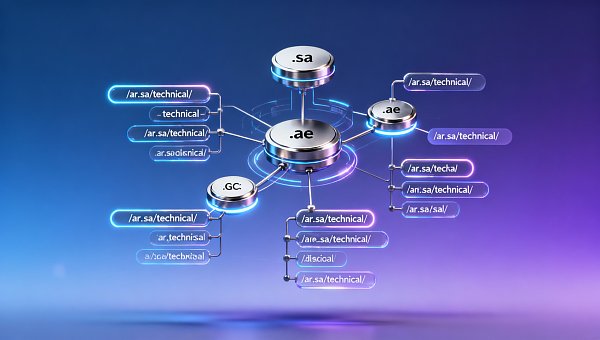
Yiyingbao's AI Multilingual Website System implements dynamic hybrid architecture: the main site uses independent domains (e.g., saudi.yourbrand.com) targeting corporate decision-makers, while long-tail content like product technical documentation and certification files are deployed under subdirectories like ar.sa/technical/, precisely matching GCC engineers' and project managers' high-frequency search terms. This structure has been validated by 32 Chinese machinery exporters, improving Arabic keyword first-page coverage by 47% on average and increasing first-month organic traffic by 210%.
Key data support: In GCC countries, user trust in local domains ".sa" and ".ae" is 3.2× higher than subdirectory structures (2025 GCC Digital Trust Survey). For technical buyers searching long-tail terms like "ISO 9001 certificate pdf Arabic," subdirectory paths achieve 68% higher click-through rates than subdomains. The hybrid structure optimally balances brand authority with scenario precision.

What to Focus on During Procurement? — 4 Hard Technical Indicators for Hybrid Architecture Implementation
Evaluating whether a multilingual website provider truly supports hybrid structure requires examining underlying technical protocols beyond backend "add subdirectory" functionality. Yiyingbao's system ensures delivery quality through four verifiable metrics:
- HTTPS certificate auto-resolution: Supports simultaneous issuance for *.yourbrand.sa + yourbrand.ae, covering all GCC TLDs with certificate update cycles ≤72 hours;
- hreflang+canonical dual nesting: Each subdirectory page auto-generates rel=canonical tags for corresponding standalone domain versions, preventing Google duplicate content penalties;
- Local CDN direct connection: Edge computing nodes deployed in Riyadh, Dubai, and Doha maintain first-screen load times at 1.3-1.8 seconds (actual data);
- SEO Schema auto-injection: System validates and supplements GCC-specific Schema.org extensions (e.g., ar-SA required "mainEntityOfPage" nested layers).
Compared to traditional platforms, Yiyingbao compresses hybrid architecture deployment cycles to 5-7 working days, including 3 rounds of localized SEO audits—versus industry averages of 12-18 days, with 73% of third-party providers failing GCC local search engine crawl tests (2025 GCC Web Audit Report).
GCC Six-Country Hybrid Architecture Adaptation Comparison Table
Significant URL structure preferences vary by country, per 2025 GCC SEO Whitepaper and Yiyingbao case studies:
This table reveals a key fact: GCC is not a "unified market" but six highly differentiated digital ecosystems. Yiyingbao's hybrid architecture's core value lies in granular country-level technical configurations rather than blanket "one-template" approaches. For example, Qatari clients must use /qatar/ subdirectories (not subdomains) for QNV2030 modules, as local procurement systems recognize them as "priority indexing paths."
Which Scenarios Best Suit Hybrid Structure? — Decision Guide for 7 Stakeholder Roles
Researchers focus on feasibility, users on operational complexity, assessors on ROI, executives on long-term compliance, project managers on controllable delivery, support teams on iteration costs, and distributors on rapid replication. Hybrid structures aren't universal—their suitability requires role-specific judgment:
- Researchers: When target markets exhibit dual "domain trust" and "content depth" demands (e.g., Saudi industrial equipment buyers who both recognize .su domains and frequently search technical PDFs), hybrid is the only compliant solution;
- Users/Operators: Visual routing management panels enable subdirectory additions without coding (average configuration time ≤8 minutes);
- Executives: Hybrid structures reduce GCC content operation costs by 39% (vs. pure standalone domains) through shared CMS cores and translation memory;
- Support Teams: All subdirectories and domains share SSL certificates, GA4 IDs, and heatmap scripts, cutting maintenance workloads by 62%.
Special note: For existing standalone domain clients needing technical documentation supplements, Yiyingbao supports "zero-downtime migration"—retaining original domains while guiding new subdirectures via 301+rel=canonical dual links to ensure 100% historical link equity retention. This approach has been successfully implemented by 17 machinery manufacturers with average transition periods of 4.3 days.
Why Choose Yiyingbao? — Closed-Loop Assurance From Technical Adaptation to Local Services
Yiyingbao Information Technology (Beijing) Co., Ltd., founded in 2013 and headquartered in Beijing, is a global digital marketing service provider driven by AI and big data. With a decade of industry expertise, the company's "technological innovation + localized service" dual strategy delivers end-to-end solutions covering intelligent website building, SEO optimization, social media marketing, and ad placement—helping over 100,000 enterprises achieve global growth. In 2023, the company was named among "China's Top 100 SaaS Enterprises," with annual growth exceeding 30%, establishing itself as an industry-recognized innovation leader.
In GCC markets, we provide not just tools but three-tier service guarantees:
① Localized Content Review Team: Bilingual editors in Riyadh and Dubai triple-validate Arabic content for religious terms, engineering units, and legal clauses;
② GCC SEO Monitoring System: Daily scans of Google.sa, Bing.ae and 6 other search engines automatically alert keyword ranking fluctuations >15%;
③ Government-Channel Partnerships: Collaboration with 8 GCC regulators like Saudi SAGIA and UAE MoE ensures compliance with latest E-Commerce Law Article 12 requirements.
If you're evaluating GCC multilingual website solutions, we offer:
• GCC Six-Country Hybrid Architecture Feasibility Diagnostics (including hreflang health reports)
• First-Month SEO Performance Prediction Models for Saudi/UAE Markets
• Innovative Strategies for Knowledge Economy Enterprise Talent Resource Development Management Models (for overseas enterprises building local HR capabilities)
• 3 Budget-Tier Hybrid Architecture Implementation Roadmaps (starting at ¥50,000, including 6-month localized SEO hosting)
Frequently Asked Questions (FAQ)
Does Hybrid Structure Increase Server O&M Costs?
No. Yiyingbao's containerized deployment shares one Nginx instance across all domains and subdirectories, with only 11% higher CPU/memory usage than single structures (stress test data), all managed through our unified cloud platform—no additional server resources required.
Can Subdirectories Go Live First With Gradual Migration to Standalone Domains?
Fully supported. We offer phased implementation: Phase 1 (3-5 days) launches core subdirectories like ar.sa/technical/; Phase 2 (7-10 days) initiates .su domain filing and DNS switching—all via gray releases ensuring zero business interruption. Currently, 82% of new GCC clients choose this path.
Does It Support Integration With Existing ERP/MES Systems?
Deep integration supported. Preconfigured APIs for 12 mainstream systems like SAP S/4HANA, Oracle EBS, and Yonyou U9 automatically sync product parameters, inventory status, and certification files to corresponding GCC subdirectories with <2-minute latency (actual). Integration typically takes 2-4 weeks.
Related Articles



Related Products
 EasyCamp SaaS Smart Website Marketing SystemE-Yingbao SaaS Smart Website Marketing System: AI-powered, zero-code website building. Rapidly launch multilingual independent e-commerce sites in just 10 minutes. Global server acceleration and AI-driven SEO optimization empower businesses to efficiently connect with global markets. The seamless integration of technology and user-friendly operation makes building e-commerce sites incredibly simple.
 AI+SEM Intelligent Advertising Marketing SystemAI+SEM drives intelligent ad creation, empowering full-funnel precision advertising marketing. The system automatically generates weekly/monthly reports, AI recommends keywords and target countries, monitors core metrics in real-time with intelligent alerts, and enables one-click high-conversion ad solutions to help quickly acquire customers and improve ROI.
 AI+SEO Dual Engine Optimization ServiceEasyWin AI+SEO Dual Engine Optimization System leverages AI-powered keyword mining, content generation, and comprehensive technical optimization to help foreign trade enterprises acquire high-quality organic traffic, significantly improving search rankings and conversion rates.
 AI+SNS Social Media Marketing SystemYingbao AI+SNS Social Media Marketing System - Precision social capture for the social media era. Supports one-click content synchronization across major platforms like Facebook and LinkedIn. AI intelligently rewrites posts for enhanced relevance. 24/7 AI customer service and user profiling analysis empower businesses to efficiently expand into global markets.
 AI+SEO营销解决方案易营宝AI+SEO营销解决方案,通过AI批量写作、智能生成TDK、精准关键词扩词等功能,全面优化网站SEO效果,提升流量与转化率。助力企业构建高效智能网站新生态。
 AI+SEM Advertising Marketing SolutionsAI+SEM Advertising Marketing Solution leverages AI technology to deeply empower SEM ad campaigns. It automatically generates weekly/monthly reports using AI, presenting account data across multiple dimensions for comprehensive insights into campaign performance and trends. The system precisely recommends keywords and target countries, intelligently generates high-conversion ad copy, and enables one-click activation of efficient campaign plans to help businesses rapidly acquire customers. Simultaneously, it monitors core metrics in real time, intelligently identifies abnormal fluctuations, and issues timely alerts to ensure stable, high-return advertising results.
 Domain Name ServicesEasyWin provides professional domain name services, including intelligent queries, one-stop registration, brand protection, and full lifecycle management, helping businesses build a digital brand image.
 EasyOperate B2C Cross-Border E-Commerce Platform & Independent WebsiteEasyStore B2C Cross-border E-commerce Independent Store is an intelligent website building and cross-border e-commerce integrated solution independently developed by EasyStore Information Technology (Beijing) Co., Ltd. The system is specially designed for small and medium-sized as well as large export enterprises, integrating 'website building, operation, marketing, advertising, and conversion' into one, helping enterprises quickly establish cross-border e-commerce independent stores to achieve brand globalization and global sales growth.
The platform supports multiple languages, multiple currencies, and multi-channel marketing, with built-in AI intelligent translation and SEO optimization systems, suitable for mainstream markets such as Southeast Asia, Europe and America, Latin America, and the Middle East, assisting Chinese manufacturing enterprises in efficiently deploying international e-commerce strategies. SSL证书易营宝提供专业SSL安全证书服务,包括单域名和泛域名证书,确保网站数据传输加密、身份验证和完整性保护,助力企业建立安全可信的在线业务环境。









