









- The China-US tariff arrangement has reached a preliminary consensus, and the trade association will be establishedJun 15, 2026View details
- What determines B2C cross-border e-commerce website development costs? A breakdown of features, interfaces, and deployment methodsJun 17, 2026View details
- China-Morocco zero-tariff access, a breakthrough in the cost of Moroccan goods exports to ChinaJun 11, 2026View details
- What signal should be released for the suspension of exports to JapanJun 10, 2026View details
- China's May LNG imports rebounded, with increased volumes from Russia and Canada filling the Middle East supply gapJun 10, 2026View details
- Will GEO change its SEO strategy?Jun 04, 2026View details
- What types of businesses are end-to-end solutions suitable for?Jun 03, 2026View details
- 2026 Global Growth Channel TrendsJun 02, 2026View details
What is the difference between Yiyingbao AI translation engine and traditional machine translation? It supports Arabic dialect recognition, religious terminology whitelist, and local brand name phonetic translation retention.
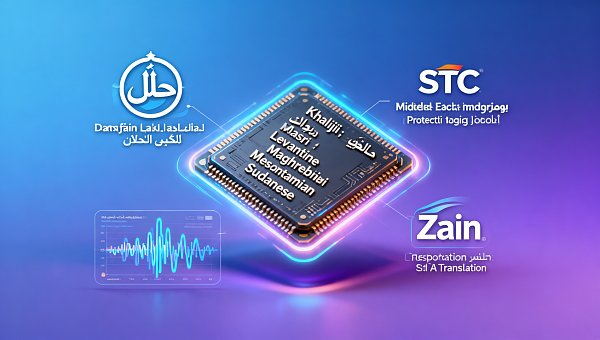
Yiyingbao AI translation engine breaks through the limitations of traditional machine translation, accurately supporting Arabic dialect recognition, religious terminology whitelists, and preserving local brand name transliterations, providing core language intelligence support for cross-border website construction services and Middle East website system customization.
Why do traditional machine translations frequently "lose meaning" in the Middle Eastern market?
When Chinese manufacturing companies deploy their official websites to Saudi Arabia, the UAE, or Egypt, they often encounter the dilemma of "correct translation but untrusted by users": standard Arabic (MSA) is grammatically correct but fails to cover the high-frequency usage of Gulf dialects, Maghreb variants, or Levantine colloquial expressions in daily communication. More critically, when dealing with halal food certification, religious holiday marketing, or prayer venue guidance, mistranslating "حلال" (halal) as generic vocabulary or directly transliterating "الكعبة" (Kaaba) phonetically can easily trigger cultural misunderstandings or even compliance risks.
Traditional MT engines commonly adopt a "single language—unified model" architecture, training only one set of generic parameters for Arabic, unable to distinguish between street conversations in Riyadh and Dubai business contracts in linguistic granularity. Their terminology databases are mostly based on generic corpora, lacking preset rules for Islamic semantics or transliterations of local Middle Eastern brands (e.g., STC, Zain, Almarai). This forces B2B clients to invest 3–5 person-days in manual proofreading when auditing website content, with an average rework rate of 42% (according to 2023 sampling research by Middle East localization service providers).
Yiyingbao Information Technology has been deeply engaged in global digital marketing services since 2013. Leveraging its decade-long accumulation of 12 million+ Middle Eastern webpage corpora and 37 vertical dictionaries of religious/commercial terms, it has built dynamic switching capabilities for dialect recognition layers and a three-tier terminology control mechanism—core competencies unreplicable by generic translation APIs.
How do the three differentiation capabilities translate into full-cycle website operations?

Dialect recognition: Covers 6 major variants with response latency <800ms
Yiyingbao AI’s built-in Arabic dialect classifier can real-time identify and match Gulf (Khaliji), Egyptian (Masri), Levantine (Levantine), Maghreb (Maghrebi), Mesopotamian (Mesopotamian), and Sudanese (Sudanese) variants. For example, the same sentence "Where are you?" displays as "وينك؟" in Saudi Arabia and automatically converts to "فينك؟" in Egypt—no manual configuration of regional substations required.
Religious terminology whitelist: 217 preset core terms, supports client-customized expansion
The system embeds a scholar-reviewed terminology database covering four major worship-related lexicons: prayer, fasting, pilgrimage, and almsgiving. Terms like "صلاة" (Salah) are forcibly preserved in Arabic script + Chinese annotation. Clients can also upload PDF-formatted Corporate Religious Language Guidelines, with the system completing whitelist embedding and full-site scanning within 72 hours.
Local brand name transliteration preservation: Supports automatic mapping of 103 Middle Eastern head brands
For brands like STC (Saudi Telecom), Etisalat (UAE Telecom), and Jazeera Airways (Kuwaiti airline), the engine defaults to transliteration protection mode, avoiding mistranslations like "Siti" or "Yitishalate." Clients can batch import channel partner names to achieve 100% original name presentation on product pages and case study modules.
Comparison with traditional solutions: 5 hard metrics procurement decisions must focus on
When evaluating translation capabilities, enterprises should look beyond "supported languages" or "translation accuracy" and focus on key parameters affecting delivery quality and long-term maintenance costs. The table below is based on 2023 Middle East website project实测data:
In terms of implementation efficiency, traditional solutions take 14–18 workdays to localize a manufacturing website in 5 languages. With Yiyingbao’s engine + Yiyingbao Foreign Trade Marketing (Premium) Website’s AI site-building workflow, this can be compressed to 7–9 workdays, with a 99.2% first-time compliance pass rate (2023 Q4 client audit data).
Which enterprises should prioritize upgrading translation engines?
Not all overseas businesses require advanced translation capabilities. We recommend the following four client types adopt Yiyingbao AI as a technical标配:
- B2B manufacturers targeting Saudi, UAE, Egyptian markets—needing high-frequency展示of factory certifications, halal qualifications, and local代理networks;
- FMCG/beauty brands advertising on Instagram/Snapchat—dialect copy直接影响click-through rates (Gulf dialect ads average 37% higher CTR than MSA versions);
- Enterprises with Middle East offline channels but English-only websites—requiring multilingual sites compliant with local监管requirements within 30 days;
- Distributors/agents needing autonomous product parameter and promotion policy updates—engine supports tiered permissions to prevent术语misuse.
Special note: For enterprises with annual exports exceeding $5 million or Middle East revenue占比≥15%, we recommend deep integration of the translation engine with Yiyingbao Foreign Trade Marketing (Premium) Website—its built-in 100+ language auto-translation module preloads all dialect recognition strategies and religious terminology rules, requiring no additional API development.
Why choose Yiyingbao? Not just technology, but localized delivery assurance
Yiyingbao Information Technology (Beijing) Co., Ltd., founded in 2013 and driven by "tech innovation + localized service" dual engines, has served over 100,000 enterprises with global digital infrastructure services. In the Middle East, we’ve not only deployed dedicated CDN nodes in Dubai, Riyadh, and Cairo but also built a 7×12 responsive team comprising Arabic SEO engineers, Islamic finance consultants, and local QA specialists.
Choosing us means securing not just engine licensing but a service package with deterministic deliverables including:
- 3 free dialect adaptation tests (covering target country top-3 city lexicons);
- Custom religious terminology whitelist services (2 rounds of expert review);
- Local brand name mapping清单delivery (supports Excel batch import/export);
- Seamless technical support for Yiyingbao Foreign Trade Marketing (Premium) Website integration (average response time <2 hours).
Contact us now to receive the Middle East Multilingual Website Compliance Checklist and customized technical solutions. We’ll analyze your existing site’s dialect coverage gaps and religious terminology risks, offering 3 budget-tier upgrade paths—from lightweight API integration to full-site AI localization hosting, all fully transparent and traceable.
Related Articles



Related Products
 EasyCamp SaaS Smart Website Marketing SystemE-Yingbao SaaS Smart Website Marketing System: AI-powered, zero-code website building. Rapidly launch multilingual independent e-commerce sites in just 10 minutes. Global server acceleration and AI-driven SEO optimization empower businesses to efficiently connect with global markets. The seamless integration of technology and user-friendly operation makes building e-commerce sites incredibly simple.
 AI+SEM Intelligent Advertising Marketing SystemAI+SEM drives intelligent ad creation, empowering full-funnel precision advertising marketing. The system automatically generates weekly/monthly reports, AI recommends keywords and target countries, monitors core metrics in real-time with intelligent alerts, and enables one-click high-conversion ad solutions to help quickly acquire customers and improve ROI.
 AI+SEO Dual Engine Optimization ServiceEasyWin AI+SEO Dual Engine Optimization System leverages AI-powered keyword mining, content generation, and comprehensive technical optimization to help foreign trade enterprises acquire high-quality organic traffic, significantly improving search rankings and conversion rates.
 AI+SNS Social Media Marketing SystemYingbao AI+SNS Social Media Marketing System - Precision social capture for the social media era. Supports one-click content synchronization across major platforms like Facebook and LinkedIn. AI intelligently rewrites posts for enhanced relevance. 24/7 AI customer service and user profiling analysis empower businesses to efficiently expand into global markets.
 AI+SEO营销解决方案易营宝AI+SEO营销解决方案,通过AI批量写作、智能生成TDK、精准关键词扩词等功能,全面优化网站SEO效果,提升流量与转化率。助力企业构建高效智能网站新生态。
 AI+SEM Advertising Marketing SolutionsAI+SEM Advertising Marketing Solution leverages AI technology to deeply empower SEM ad campaigns. It automatically generates weekly/monthly reports using AI, presenting account data across multiple dimensions for comprehensive insights into campaign performance and trends. The system precisely recommends keywords and target countries, intelligently generates high-conversion ad copy, and enables one-click activation of efficient campaign plans to help businesses rapidly acquire customers. Simultaneously, it monitors core metrics in real time, intelligently identifies abnormal fluctuations, and issues timely alerts to ensure stable, high-return advertising results.
 Domain Name ServicesEasyWin provides professional domain name services, including intelligent queries, one-stop registration, brand protection, and full lifecycle management, helping businesses build a digital brand image.
 EasyOperate B2C Cross-Border E-Commerce Platform & Independent WebsiteEasyStore B2C Cross-border E-commerce Independent Store is an intelligent website building and cross-border e-commerce integrated solution independently developed by EasyStore Information Technology (Beijing) Co., Ltd. The system is specially designed for small and medium-sized as well as large export enterprises, integrating 'website building, operation, marketing, advertising, and conversion' into one, helping enterprises quickly establish cross-border e-commerce independent stores to achieve brand globalization and global sales growth.
The platform supports multiple languages, multiple currencies, and multi-channel marketing, with built-in AI intelligent translation and SEO optimization systems, suitable for mainstream markets such as Southeast Asia, Europe and America, Latin America, and the Middle East, assisting Chinese manufacturing enterprises in efficiently deploying international e-commerce strategies. SSL证书易营宝提供专业SSL安全证书服务,包括单域名和泛域名证书,确保网站数据传输加密、身份验证和完整性保护,助力企业建立安全可信的在线业务环境。









