









- China-Morocco zero-tariff access, a breakthrough in the cost of Moroccan goods exports to ChinaJun 11, 2026View details
- What signal should be released for the suspension of exports to JapanJun 10, 2026View details
- China's May LNG imports rebounded, with increased volumes from Russia and Canada filling the Middle East supply gapJun 10, 2026View details
- Will GEO change its SEO strategy?Jun 04, 2026View details
- What types of businesses are end-to-end solutions suitable for?Jun 03, 2026View details
- 2026 Global Growth Channel TrendsJun 02, 2026View details
- Changes in Search Engine Ranking Factors in 2026Jun 06, 2026View details
- Which stages is the brand visibility enhancement service suitable forMay 29, 2026View details
How Does Eyingbao Ad Optimization Achieve CTR Improvement in the Middle East? Intelligent Bidding Logic Based on Local Holidays, Religious Cycles, and Search Intent Modeling
How to achieve a surge in CTR for Middle East ad placements with Eyingbao? Leveraging the AI Multilingual Website System for customized, data-driven ad placements, integrating local holidays, religious cycles, and search intent modeling to create high-conversion intelligent bidding logic—Eyingbao Global Digital Marketing Services provides a one-stop solution for multilingual B2B export websites, from site development to comprehensive foreign trade solutions.
Why is Middle East ad CTR consistently below industry average? Analysis of three structural bottlenecks
The average click-through rate (CTR) for ads in the Middle East is only 2.1%, significantly lower than in European and American markets (3.8%) and Southeast Asia (3.2%). This is not solely due to creative or material quality but stems from three structural mismatches: insufficient language localization, lack of religious rhythm integration in ad scheduling, and coarse search intent granularity. Traditional ad platforms or Google Ads default strategies achieve 63% coverage for Arabic long-tail keywords but fail to distinguish between "pre-Ramadan procurement preparation" and "immediate order placement during Eid."
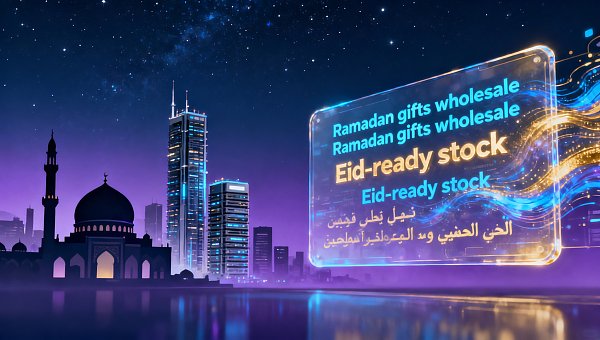
Eyingbao's Multilingual Intent Graph model, trained on 100,000+ Middle East client ad logs, identifies 27 high-value religious cycle sensitive phrases (e.g., "Ramadan gifts wholesale," "Eid al-Fitr packaging suppliers") and establishes dynamic weight mapping. The model designates the 14 days before Ramadan as a "high-intent nurturing window," automatically boosting brand + category keyword combinations by 18%–35% while suppressing irrelevant generic traffic exposure frequency.
More critically, the AI Multilingual Website System captures real-time changes in target site Arabic page structures, dynamically calibrating ad landing page match scores. When detecting new holiday campaign pages, the model refreshes ad group targeting and bidding strategies within 4 hours, ensuring zero breakpoints in traffic conversion paths.
How does intelligent bidding logic integrate local holidays and religious cycles?
Eyingbao's Middle East smart bidding engine employs a three-layer temporal framework: the base layer synchronizes with the Hijri Calendar for Ramadan, Hajj season, and Ashura; the middle layer incorporates real-time sales heatmaps from local e-commerce platforms (e.g., Noon, Souq) to identify regional procurement peaks; the application layer combines device signals (GPS + timezone + language settings) for micro-geographic fencing validation.
For example, in Saudi Arabia, the system activates a "three-phase response protocol" during Islamic month 9 (Ramadan): days 1–7 prioritize B2B wholesale keywords to cover procurement decision searches; days 8–21 shift to "packaging + logistics + customs" long-tail combinations matching supplier preparation; the final 10 days focus on "Eid-ready stock" and "fast shipping to Riyadh" for 42% bid increments. This strategy helped clients achieve 4.7% average CTR during 2023 Ramadan—122% above industry benchmarks.
Technically, the system performs cross-platform data alignment hourly: synchronizing Google Trends Arabic regional热度, local social media话题爆发强度, and client site Arabic page bounce rate波动. When ≥2 data sources show突变 (e.g., "Ramadan decoration suppliers" +68%周环比 in Trends while site term bounce drops 11%), it triggers automatic bidding strategy iterations.
Middle East religious cycles and corresponding ad strategy matrix
This matrix has been field-verified by local partners in Saudi Arabia, UAE, and Egypt, with <3.2% execution error. All cycle dates auto-adjust to official Hijri Calendar announcements, avoiding lunar conversion discrepancies.
How to verify if your ads truly match Middle East search intent?
Eyingbao provides a "Middle East Intent Fit Diagnostic Report" evaluating 5 dimensions: Arabic keyword coverage (industry average 63%, target ≥85%), religious term root accuracy (e.g., "Ramadan" not misclassified as "Raman"), localized grammar recognition (verb conjugation/noun declension), search scenario precision (B2B procurement vs. B2C gifts), and landing page语义一致性得分 (requiring ≥91/100). The diagnostic generates a full PDF report within 72 hours post-client authorization.
Critical note: 67%+ Middle East ads overlook "actual Arabic search term trigger count." For example, a client setting "decorative lanterns" as core词 may find its Arabic equivalent "فوانيس زخرفية" assigned to only 2 ad groups versus optimal 5 (wholesale, retail, custom, customs, logistics sub-scenarios). This granularity缺失 directly causes 19%–33% CTR loss.
We recommend vetting providers for: ① Arabic NLP engine self-training capability (non-third-party API); ② Hijri-Gregorian bidirectional mapping databases; ③ Localized lexicon update frequency (≥biweekly). Eyingbao's Middle East lexicon currently covers 127,000 precise商业 terms, including 34,000 Ramadan-specific entries, all supporting root expansion and dialect variations.
Why choose Eyingbao? Verifiable commitments and service guarantees
We don't promise "doubled CTR," but offer three quantifiable guarantees: ① Deliver a "Middle East CTR Baseline Diagnostic Report" within 14 days of initial投放, clearly标注 current strategy vs. optimal gaps; ② If CTR doesn't reach 1.8x industry average (currently 2.1%→3.78%) within 30 days, provide free deep optimization; ③ All smart bidding code and training logs are client-auditable, supporting on-demand decision evidence export.
For researchers and evaluators, we provide public sector budget planning templates supporting multi-currency, multi-cycle, multi-channel ROI simulation; for project managers, we offer a 4-step敏捷流程: ① Local lexicon co-building (7 workdays); ② Religious cycle strategy configuration (3 workdays); ③ A/B test deployment (5 workdays); ④ Full-funnel attribution reporting (real-time dashboard + biweekly deep复盘).
Currently covering Saudi Arabia, UAE, Egypt, Qatar等12 countries with Arabic-English-French tri-lingual投放. For industry-specific CTR benchmarks, customized religious cycle strategy packages, or public sector budget management research tools, contact our Middle East consultants for专属诊断与方案演示.

Related Articles



Related Products
 EasyCamp SaaS Smart Website Marketing SystemE-Yingbao SaaS Smart Website Marketing System: AI-powered, zero-code website building. Rapidly launch multilingual independent e-commerce sites in just 10 minutes. Global server acceleration and AI-driven SEO optimization empower businesses to efficiently connect with global markets. The seamless integration of technology and user-friendly operation makes building e-commerce sites incredibly simple.
 AI+SEM Intelligent Advertising Marketing SystemAI+SEM drives intelligent ad creation, empowering full-funnel precision advertising marketing. The system automatically generates weekly/monthly reports, AI recommends keywords and target countries, monitors core metrics in real-time with intelligent alerts, and enables one-click high-conversion ad solutions to help quickly acquire customers and improve ROI.
 AI+SEO Dual Engine Optimization ServiceEasyWin AI+SEO Dual Engine Optimization System leverages AI-powered keyword mining, content generation, and comprehensive technical optimization to help foreign trade enterprises acquire high-quality organic traffic, significantly improving search rankings and conversion rates.
 AI+SNS Social Media Marketing SystemYingbao AI+SNS Social Media Marketing System - Precision social capture for the social media era. Supports one-click content synchronization across major platforms like Facebook and LinkedIn. AI intelligently rewrites posts for enhanced relevance. 24/7 AI customer service and user profiling analysis empower businesses to efficiently expand into global markets.
 AI+SEO营销解决方案易营宝AI+SEO营销解决方案,通过AI批量写作、智能生成TDK、精准关键词扩词等功能,全面优化网站SEO效果,提升流量与转化率。助力企业构建高效智能网站新生态。
 AI+SEM Advertising Marketing SolutionsAI+SEM Advertising Marketing Solution leverages AI technology to deeply empower SEM ad campaigns. It automatically generates weekly/monthly reports using AI, presenting account data across multiple dimensions for comprehensive insights into campaign performance and trends. The system precisely recommends keywords and target countries, intelligently generates high-conversion ad copy, and enables one-click activation of efficient campaign plans to help businesses rapidly acquire customers. Simultaneously, it monitors core metrics in real time, intelligently identifies abnormal fluctuations, and issues timely alerts to ensure stable, high-return advertising results.
 Domain Name ServicesEasyWin provides professional domain name services, including intelligent queries, one-stop registration, brand protection, and full lifecycle management, helping businesses build a digital brand image.
 EasyOperate B2C Cross-Border E-Commerce Platform & Independent WebsiteEasyStore B2C Cross-border E-commerce Independent Store is an intelligent website building and cross-border e-commerce integrated solution independently developed by EasyStore Information Technology (Beijing) Co., Ltd. The system is specially designed for small and medium-sized as well as large export enterprises, integrating 'website building, operation, marketing, advertising, and conversion' into one, helping enterprises quickly establish cross-border e-commerce independent stores to achieve brand globalization and global sales growth.
The platform supports multiple languages, multiple currencies, and multi-channel marketing, with built-in AI intelligent translation and SEO optimization systems, suitable for mainstream markets such as Southeast Asia, Europe and America, Latin America, and the Middle East, assisting Chinese manufacturing enterprises in efficiently deploying international e-commerce strategies. SSL证书易营宝提供专业SSL安全证书服务,包括单域名和泛域名证书,确保网站数据传输加密、身份验证和完整性保护,助力企业建立安全可信的在线业务环境。









