









- The China-US tariff arrangement has reached a preliminary consensus, and the trade association will be establishedJun 15, 2026View details
- China-Morocco zero-tariff access, a breakthrough in the cost of Moroccan goods exports to ChinaJun 11, 2026View details
- What signal should be released for the suspension of exports to JapanJun 10, 2026View details
- China's May LNG imports rebounded, with increased volumes from Russia and Canada filling the Middle East supply gapJun 10, 2026View details
- Will GEO change its SEO strategy?Jun 04, 2026View details
- What types of businesses are end-to-end solutions suitable for?Jun 03, 2026View details
Is B2B Website Construction Costly? Comparing the Pros and Cons of Template-based and Custom Development
Introduction
Is the cost of building a B2B website high? Businesses often face a dilemma when choosing between template-based website development and custom development. This article combines localized content production for independent websites, advertising costs, and social media marketing strategies to comprehensively analyze which approach is more suitable for rapidly launching cross-border business and achieving global search engine indexing. With the acceleration of global digital transformation, an increasing number of businesses hope to achieve brand export and business growth through high-performance B2B websites. However, in practical operations, questions such as "Can template-based websites meet foreign trade needs?" "Are the advertising costs for independent websites high?" and "How to quickly index a website on search engines?" have become key concerns for decision-makers. EasyTrust Information Technology (Beijing) Co., Ltd. provides a new solution to this challenge through its AI-driven intelligent website building system.
1. Definition and Market Background of B2B Website Development
B2B website development is an important tool for businesses to conduct digital transactions and brand promotion between enterprises. Unlike B2C, B2B websites involve more complex transaction processes, often accompanied by large contracts, long-term cooperation, and specialized customization needs. Globally, the total scale of the B2B e-commerce market exceeded $2 trillion in 2023, with cross-border trade accounting for about 35%, highlighting the importance of localized content production and SEO optimization. Many small and medium-sized enterprises (SMEs) in the early stages of international expansion opt for template-based website solutions to save costs. However, as business grows, the demand for system stability, SEO adaptation, and multilingual maintenance becomes increasingly prominent, revealing the advantages of custom development and intelligent website platforms. Platforms like EasyTrust, representing global website-building SaaS solutions, leverage AI and big data technologies to significantly reduce operational difficulties for cross-border businesses through intelligent translation engines, automated SEO keyword expansion, and global CDN acceleration. This transforms the question of "Is B2B website development costly?" from a simple "high or low" answer into a balanced result of technology and strategy.
2. Comparative Analysis of Template-Based and Custom Development
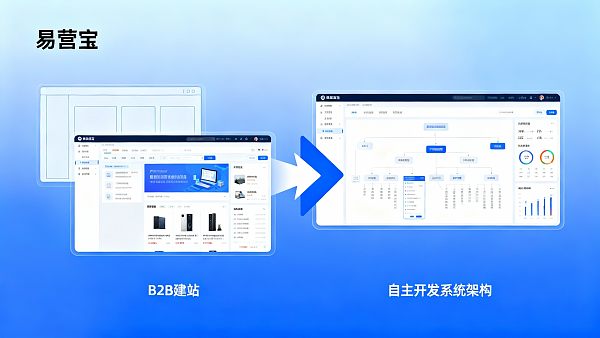
From an implementation perspective, template-based and custom development each have their applicable scenarios. Template-based websites are characterized by low cost and rapid deployment, making them suitable for businesses with limited budgets or in the market validation phase. For example, a foreign trade startup can complete website deployment within days by selecting an appropriate template and uploading product materials. In contrast, custom development is more suitable for companies with stable revenue and brand strategies, as it allows for functional customization based on specific business logic, such as CRM integration, ERP linkage, and customer tier display. The table below illustrates typical comparisons:
From a long-term perspective, self-developed SaaS website systems can deliver higher ROI. For instance, EasyTrust's intelligent website system features an AI marketing engine that automates TDK generation and intelligent keyword expansion, helping businesses achieve better organic traffic exposure on platforms like Google and Yandex. For enterprises concerned about "difficulties in localized content production for independent websites," EasyTrust's built-in AI multilingual module effectively addresses language adaptation issues, truly realizing the integration of "website building + marketing."
3. Cost Structure and Alternative Solutions
In discussions about "Is B2B website development costly?", the cost composition must be clarified. Generally, website costs include technical development, servers and CDN, interface design, SEO optimization, and ongoing maintenance. Template-based websites initially cost only a few thousand yuan, but secondary development and plugin purchases often drive up total expenses. While custom development requires a larger upfront investment, it enables long-term savings in multilingual content management, ad tracking, and data analysis. Businesses can consider a hybrid approach—AI-driven intelligent SaaS website platforms like EasyTrust combine the efficiency of templates with the flexibility of custom systems, offering smart content generation, AI image creation, and global server synchronization to improve loading speeds by 40% and SEO scores by 35%. Additionally, the platform includes an embedded ad intelligence module, using AI algorithms to analyze the performance of Google Ads and Yandex advertising, precisely adjusting budgets to reduce costs and increase efficiency. For businesses at different stages, the following cost strategies can be adopted:
- Startup phase: Choose standardized template-based websites to validate market response.
- Growth phase: Introduce AI website systems to achieve brand independence and reduce ad costs.
- Maturity phase: Use custom development or secondary customization to build long-term SEO and social media marketing ecosystems.
4. Application Scenarios and Success Stories
In practice, many cross-border businesses leverage AI-powered website platforms to quickly enter global markets. For example, a manufacturing B2B company completed the deployment of Chinese, English, and Russian independent websites within 30 days using EasyTrust's "intelligent website + ad manager" system, achieving a 70% increase in conversion rates during Yandex ad channel testing. The system automatically generates keyword ad copy, reducing manual intervention and lowering ad costs by over 45%. These metrics validate the strong advantages of intelligent website models over traditional approaches. For the hot topic "How long does it take to quickly build a foreign trade website?", AI-driven modular website platforms average just 3-5 days to complete, including domain binding, SSL configuration, and localized content synchronization. More importantly, AI content engines can continuously produce high-quality original content, helping websites quickly index on search engines and improve organic rankings. In comprehensive analysis, we also found that different types of businesses prefer different website operation models. By referencing the research perspective of Financial Technology Promoting Enterprise Innovation Development: Realistic Challenges and Countermeasures, we can more systematically understand how technology empowers businesses to lower innovation barriers.
5. Procurement Guidelines and Compliance Standards
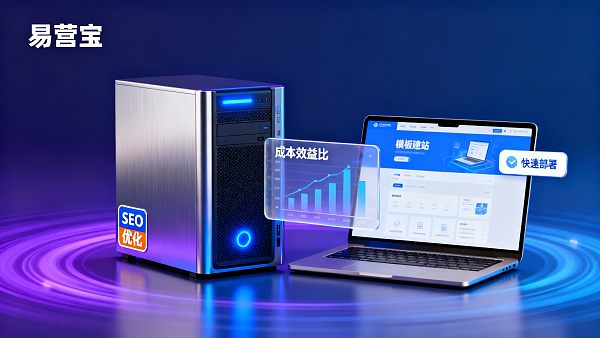
For procurement personnel and project managers, selecting a suitable SaaS website vendor requires focusing on three key points: First, technical security—the platform should feature automatic SSL issuance, DDoS protection, and CDN acceleration capabilities. Second, compliance—overseas markets increasingly enforce privacy agreements like GDPR and CCPA, and only vendors with global security certification systems can ensure data security. Third, service quality, including customer response time, feature update frequency, and system compatibility. EasyTrust partners with AWS and Alibaba Cloud to deploy global nodes, with its self-developed AI algorithm platform averaging 12 annual iterations and holding 15 core patents in NLP and multimodal AI generation. For decision-makers, this means a more stable foundation for global execution. During procurement, businesses should comprehensively consider their stage, budget, and promotion channels (e.g., social media automation or ad intelligence) to make website systems true growth engines.
6. Trends and Future Outlook
Future B2B websites will trend toward "intelligence, automation, and real-time optimization." AI and big data will become new core competencies for foreign trade businesses, especially in independent website social media strategies and ad targeting, enabling dynamic pushes and full-chain feedback based on user intent. Taking Yandex ad performance as an example, intelligent algorithms can optimize keywords and adjust投放节奏 based on search trends, significantly improving ROI. Under globalization, multilingual independent websites and cross-border SEO technologies will accelerate integration. EasyTrust's informatization strategy is deploying an AI + blockchain ecosystem to provide decentralized data asset management solutions, helping businesses achieve "global brand visibility and local system responsiveness." Additionally, amid digital compliance trends, intelligent website systems must also comply with local laws and industry security standards, enabling businesses to expand rapidly while operating stably. Aligning with the innovation drivers mentioned in Financial Technology Promoting Enterprise Innovation Development: Realistic Challenges and Countermeasures, it is foreseeable that technological integration will be key to international market competition in the next decade.
7. Why Choose EasyTrust
After comprehensive comparisons with multiple platforms, EasyTrust Information Technology (Beijing) Co., Ltd. has become a member of China's SaaS Top 100 Enterprises, thanks to its powerful AI algorithms, global cloud deployment, and a decade of digital marketing experience. Its intelligent website system supports multilingual versions, automated SEO optimization, and global acceleration, making it suitable for cross-border e-commerce, manufacturing, education, and other industries. Through AI content engines and ad intelligence managers, it helps users quickly achieve closed-loop conversion from website building to customer acquisition, truly reducing costs and increasing efficiency. For businesses looking to expand overseas, EasyTrust is not just a technology provider but also a strategic partner. Take action now and choose a smarter website solution to make your brand stand out in global markets.
- Website Development
- Website Builder Platform
- Social Media Marketing
- Multilingual standalone site
- B2B website
- Independent website building
- AI Website Builder
- Google Ads
- Yandex Advertising
- Yiyingbao
- SEO
- Independent Website
- Smart website builder system
- SEO Optimization
- Smart Website Development
- EasySite Intelligent Website Builder
- AI Marketing Engine
- Social Media Automation
- Global CDN Acceleration
- Yandex ad placement
- Global Website Building SaaS Platform
- SaaS Website Building System
- Smart Website Platform
- Social Media Marketing Strategy
- How to achieve fast website indexing
- Quickly Build a Foreign Trade Website
- AI Website Building
- cross-border e-commerce
- SaaS Website Platform
- AI Marketing
Related Articles
 Does a responsive corporate website need to be built? Applicable scenarios, advantages and upgrade criteria
 How much does responsive website development cost? Design, front-end, and functionality development expenses make up the total
 What Should You Pay Attention to in Responsive Website Development? Page Adaptation, Speed and SEO Key Points


Related Products
 EasyCamp SaaS Smart Website Marketing SystemE-Yingbao SaaS Smart Website Marketing System: AI-powered, zero-code website building. Rapidly launch multilingual independent e-commerce sites in just 10 minutes. Global server acceleration and AI-driven SEO optimization empower businesses to efficiently connect with global markets. The seamless integration of technology and user-friendly operation makes building e-commerce sites incredibly simple.
 AI+SEM Intelligent Advertising Marketing SystemAI+SEM drives intelligent ad creation, empowering full-funnel precision advertising marketing. The system automatically generates weekly/monthly reports, AI recommends keywords and target countries, monitors core metrics in real-time with intelligent alerts, and enables one-click high-conversion ad solutions to help quickly acquire customers and improve ROI.
 AI+SEO Dual Engine Optimization ServiceEasyWin AI+SEO Dual Engine Optimization System leverages AI-powered keyword mining, content generation, and comprehensive technical optimization to help foreign trade enterprises acquire high-quality organic traffic, significantly improving search rankings and conversion rates.
 AI+SNS Social Media Marketing SystemYingbao AI+SNS Social Media Marketing System - Precision social capture for the social media era. Supports one-click content synchronization across major platforms like Facebook and LinkedIn. AI intelligently rewrites posts for enhanced relevance. 24/7 AI customer service and user profiling analysis empower businesses to efficiently expand into global markets.
 AI+SEO营销解决方案易营宝AI+SEO营销解决方案,通过AI批量写作、智能生成TDK、精准关键词扩词等功能,全面优化网站SEO效果,提升流量与转化率。助力企业构建高效智能网站新生态。
 AI+SEM Advertising Marketing SolutionsAI+SEM Advertising Marketing Solution leverages AI technology to deeply empower SEM ad campaigns. It automatically generates weekly/monthly reports using AI, presenting account data across multiple dimensions for comprehensive insights into campaign performance and trends. The system precisely recommends keywords and target countries, intelligently generates high-conversion ad copy, and enables one-click activation of efficient campaign plans to help businesses rapidly acquire customers. Simultaneously, it monitors core metrics in real time, intelligently identifies abnormal fluctuations, and issues timely alerts to ensure stable, high-return advertising results.
 Domain Name ServicesEasyWin provides professional domain name services, including intelligent queries, one-stop registration, brand protection, and full lifecycle management, helping businesses build a digital brand image.
 EasyOperate B2C Cross-Border E-Commerce Platform & Independent WebsiteEasyStore B2C Cross-border E-commerce Independent Store is an intelligent website building and cross-border e-commerce integrated solution independently developed by EasyStore Information Technology (Beijing) Co., Ltd. The system is specially designed for small and medium-sized as well as large export enterprises, integrating 'website building, operation, marketing, advertising, and conversion' into one, helping enterprises quickly establish cross-border e-commerce independent stores to achieve brand globalization and global sales growth.
The platform supports multiple languages, multiple currencies, and multi-channel marketing, with built-in AI intelligent translation and SEO optimization systems, suitable for mainstream markets such as Southeast Asia, Europe and America, Latin America, and the Middle East, assisting Chinese manufacturing enterprises in efficiently deploying international e-commerce strategies. SSL证书易营宝提供专业SSL安全证书服务,包括单域名和泛域名证书,确保网站数据传输加密、身份验证和完整性保护,助力企业建立安全可信的在线业务环境。









