









- Which channel has the highest ROI in the global traffic ecosystem? Comparative analysis of search, social media, and advertisingJul 10, 2026View details
- What multilingual website services are available in Sanya? Which model is more suitable for local businesses going global?Jul 08, 2026View details
- How to view the complete list of China SaaS companies in the top 100? Practical methods for screening website-building and marketing service providersJul 08, 2026View details
- How to view pricing in the global traffic ecosystem? Cost comparison of search, social media, and content channel advertisingJul 06, 2026View details
- How to assess foreign trade website development trends?Looking at 2026 changes from multilingual,AI content to conversion pathsJul 04, 2026View details
- What are the new trends in multilingual marketing data analytics tools in 2026? Focus on attribution、automation and complianceJul 04, 2026View details
Global Website SaaS System Cost Breakdown: Deployment, Hosting, and Multilingual Website ROI Models
introduction
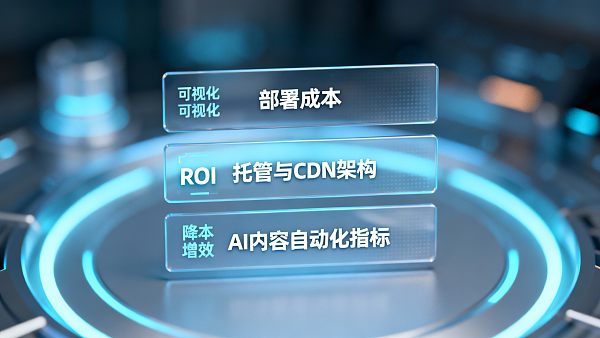
We break down the costs and ROI of global website building SaaS systems, covering enterprise-level self-service website building systems, global multilingual website building, and independent e-commerce websites, helping you control deployment and hosting costs.
In the globalized digital marketing environment, corporate decision-makers, project managers, and operations teams are most concerned with three costs: deployment costs, hosting and maintenance costs, and the quantifiable returns from multilingual operations. This article focuses on the real cost structure of enterprise-level self-service website building systems and global website building SaaS systems, combining the practical points of responsive self-service website building tools and B2B foreign trade marketing website construction, and provides an actionable ROI model for Chinese foreign trade website building and independent foreign trade website construction solutions. The content considers the contributions of technology selection, hosting architecture, AI translation, and content automation to cost reduction and efficiency improvement, targeting multiple audiences including users/operators, quality control and security managers, after-sales maintenance personnel, and distributors. It aims to help companies make accurate investment decisions in markets such as Middle Eastern website building systems, Latin American multilingual websites, and Arabic website construction solutions.
I. Deployment Cost Breakdown: What are the essential expenditures, and what can be optimized?
Deployment costs typically include architecture design, domain and DNS configuration, prepaid server and CDN fees, SSL and security protection, and migration or secondary development costs. For enterprise-level self-service website building systems, the key initial investment lies in choosing the appropriate global nodes and hosting model: self-built servers incur high CAPEX and maintenance manpower costs, while using a global website building SaaS system outsources most maintenance and security responsibilities, transforming them into predictable OPEX. In practice, a hybrid strategy is recommended: core business and payment-related traffic should use independent hosting or private clouds, while static resources and multi-language CDNs should use public cloud acceleration nodes. Technical optimization points include: enabling edge caching to reduce origin server access, adopting automatic SSL certificate policies to reduce maintenance burden, using responsive self-service website building tools to reduce front-end adaptation time, and achieving environmental consistency through IaC (Infrastructure as Code). For project managers, clearly defining SLAs and elastic scaling terms can minimize uncontrollable costs; for quality control personnel, performance and security baseline testing should be incorporated into the deployment and acceptance phase to prevent subsequent repair costs from escalating. In terms of quantification, multi-site active hosting solutions can typically reduce page load time by about 40%, directly improving SEO scores and conversion rates, thereby shortening the investment payback period.
II. Multilingual Website Building and Content Costs: How AI Affects ROI
The cost of building a global multilingual website involves more than just translation fees; it includes localized SEO, content generation, TDK (title/description/keyword) optimization, and ongoing content operation. Traditional outsourced translation models see a surge in costs and delivery times as they scale, especially when dealing with Latin American multilingual websites and Arabic websites, where localization and cultural validation are challenging. AI-driven intelligent website building platforms, through AI translation engines and automatic TDK generation, significantly reduce per-page output costs while ensuring semantic consistency and keyword coverage. For example, with a daily content generation capacity of thousands, the AI system can quickly populate product pages, category pages, and blog content. Combined with semantic optimization, it reduces the frequency of manual review, transforming content costs from high manual translation and SEO writing fees into controllable subscription costs. For independent e-commerce websites, this translates to faster onboarding, shorter initial traffic acquisition time, and directly impacts the MQL (Qualified Leads) conversion efficiency of B2B e-commerce marketing websites. Project leaders should incorporate AI content capabilities into their ROI models: calculating content delivery frequency, cost-per-word substitution rate, and impact on CPL (cost per lead) for paid channels.
III. Hosting and Operating Costs: The Economics of Advertising, Social Media, and Automation
After outsourcing, ongoing operations become the main battleground for long-term costs, encompassing ad placement, social media maintenance, A/B testing, and security compliance. AI-powered ad management and automated social media operations can significantly reduce manual input, such as automatically diagnosing ad account structure, generating high-CTR creatives and dynamic keyword libraries, helping to reduce customer acquisition costs and improve ROI. For users and after-sales maintenance personnel, the system's built-in automated detection tools and dashboards can pinpoint performance bottlenecks and SEO shortcomings in real time, reducing manual troubleshooting time. Regarding budget allocation, it is recommended to model hosting fees, content generation subscriptions, ad budgets, and localization services separately, adopting a tiered scaling strategy: initially focusing on the minimum necessary hosting and core traffic nodes, using an experimental budget for advertising to validate the market and conversion paths, and then expanding the campaign after validation. For distributors/agents and distribution channels, providing standardized site templates and responsive self-service website building tools can reduce delivery complexity and ensure brand consistency, thereby reducing marginal costs during large-scale replication.
IV. Integration of Industry Scenarios and Products: Examples from the Electronic Components Industry
Different industries have significantly different requirements for website functionality and ROI calculation. Taking the electronic components industry as an example, companies need to showcase a massive number of product models, provide accurate parameter searches, and offer quick order placement paths. This places higher demands on the intelligent categorization and parameterized display capabilities of website building systems. For this scenario, using specialized industry solutions can significantly improve conversion rates and customer satisfaction. For instance, viable solutions for the electronic components industry , with their intelligent categorization and parameterized display functions, can efficiently manage a large number of SKUs, enabling precise marketing and a shorter procurement decision-making loop. When evaluating ROI, "improved display efficiency," "reduced manual inquiries due to search and filtering," and "increased single-transaction conversion rate" should be included in the revenue model. For manufacturing and distribution companies, responsive self-service website building tools combined with intelligent categorization can minimize redundant development costs. Furthermore, integration with existing PIM/ERP systems can reduce data synchronization and error rates, further reducing after-sales maintenance costs.
V. Risk, Compliance, and Security Costs: Hidden Expenses That Cannot Be Ignored

When deploying globally, compliance and security costs are often underestimated. However, in Middle Eastern website hosting systems or operations across different jurisdictions, compliance costs directly impact market entry speed and long-term sustainability. Necessary cost items include data sovereignty compliance, compliant payment channel access, local privacy policies and DDoS protection, and log auditing and backup strategies. Choosing global CDN nodes and automatic SSL issuance in partnership with AWS, Alibaba Cloud, etc., can reduce attack risks and certificate management workload, but still requires dedicated security monitoring and incident response mechanisms. For enterprise decision-makers and quality control personnel, it is recommended to incorporate scenario analysis of incident probability and remediation costs (e.g., fines and brand damage due to data breaches) into the ROI model and sign clear security SLAs and liability boundaries with suppliers. In the long term, including a portion of security investment as part of a platform subscription can transform uncertain costs into predictable expenditures, thereby benefiting financial planning and market expansion.
Summary and Action Guidance
In summary, a sound global website building strategy should treat the costs of deployment, hosting, and multilingual operation as a whole, achieving cost reduction and efficiency improvement through technology selection and process optimization. Enterprise-level self-service website building systems and global website building SaaS systems are suitable for outsourcing core operational burdens, while responsive self-service website building tools and AI content systems can significantly reduce unit content costs during large-scale expansion. For foreign trade independent website construction solutions and B2B foreign trade marketing website construction projects, rationally allocating initial investment and ongoing operating budgets, and incorporating localization and compliance costs into the ROI model, are key to achieving global growth. EasyMarket, with its AI-driven one-stop intelligent marketing platform and global traffic ecosystem, provides enterprises with a closed-loop capability from website building to customer acquisition to conversion. If you wish to quickly calculate the ROI of multilingual deployment based on your existing business or pilot the Middle East and Latin American markets, please contact our expert team for a zero-risk assessment and customized solution. Contact us now to learn more about our solutions and obtain a customized ROI model.
- Website Development
- Website Builder Platform
- Foreign Trade Website Development
- SSL Certificate
- Foreign Trade Independent Website Development
- Standalone website development
- Yiyingbao
- SEO
- Independent Website
- Smart Website Building
- AI Translation
- Social Media Automation
- AI Translation Engine
- Independent foreign trade website
- Multilingual website
- Global Traffic Ecosystem
- Enterprise Self-Service Website Building System
- Global Website Building SaaS System
- Responsive self-service website builder
- B2B Foreign Trade Marketing Website Construction
- Foreign Trade Independent Website Construction Solution
- China Foreign Trade Website
- Global multilingual website
- Middle East Website Building System
- Lamei multilingual website
- Arabic Website Construction Solutions
- Smart Website Platform
- Website Builder
- Multilingual Website Building
Related Articles
 Which channel has the highest ROI in the global traffic ecosystem? Comparative analysis of search, social media, and advertising
 What multilingual website services are available in Sanya? Which model is more suitable for local businesses going global?
 How to view the complete list of China SaaS companies in the top 100? Practical methods for screening website-building and marketing service providers


Related Products
 EasyCamp SaaS Smart Website Marketing SystemE-Yingbao SaaS Smart Website Marketing System: AI-powered, zero-code website building. Rapidly launch multilingual independent e-commerce sites in just 10 minutes. Global server acceleration and AI-driven SEO optimization empower businesses to efficiently connect with global markets. The seamless integration of technology and user-friendly operation makes building e-commerce sites incredibly simple.
 AI+SEM Intelligent Advertising Marketing SystemAI+SEM drives intelligent ad creation, empowering full-funnel precision advertising marketing. The system automatically generates weekly/monthly reports, AI recommends keywords and target countries, monitors core metrics in real-time with intelligent alerts, and enables one-click high-conversion ad solutions to help quickly acquire customers and improve ROI.
 AI+SEO Dual Engine Optimization ServiceEasyWin AI+SEO Dual Engine Optimization System leverages AI-powered keyword mining, content generation, and comprehensive technical optimization to help foreign trade enterprises acquire high-quality organic traffic, significantly improving search rankings and conversion rates.
 AI+SNS Social Media Marketing SystemYingbao AI+SNS Social Media Marketing System - Precision social capture for the social media era. Supports one-click content synchronization across major platforms like Facebook and LinkedIn. AI intelligently rewrites posts for enhanced relevance. 24/7 AI customer service and user profiling analysis empower businesses to efficiently expand into global markets.
 AI+SEO营销解决方案易营宝AI+SEO营销解决方案,通过AI批量写作、智能生成TDK、精准关键词扩词等功能,全面优化网站SEO效果,提升流量与转化率。助力企业构建高效智能网站新生态。
 AI+SEM Advertising Marketing SolutionsAI+SEM Advertising Marketing Solution leverages AI technology to deeply empower SEM ad campaigns. It automatically generates weekly/monthly reports using AI, presenting account data across multiple dimensions for comprehensive insights into campaign performance and trends. The system precisely recommends keywords and target countries, intelligently generates high-conversion ad copy, and enables one-click activation of efficient campaign plans to help businesses rapidly acquire customers. Simultaneously, it monitors core metrics in real time, intelligently identifies abnormal fluctuations, and issues timely alerts to ensure stable, high-return advertising results.
 Domain Name ServicesEasyWin provides professional domain name services, including intelligent queries, one-stop registration, brand protection, and full lifecycle management, helping businesses build a digital brand image.
 EasyOperate B2C Cross-Border E-Commerce Platform & Independent WebsiteEasyStore B2C Cross-border E-commerce Independent Store is an intelligent website building and cross-border e-commerce integrated solution independently developed by EasyStore Information Technology (Beijing) Co., Ltd. The system is specially designed for small and medium-sized as well as large export enterprises, integrating 'website building, operation, marketing, advertising, and conversion' into one, helping enterprises quickly establish cross-border e-commerce independent stores to achieve brand globalization and global sales growth.
The platform supports multiple languages, multiple currencies, and multi-channel marketing, with built-in AI intelligent translation and SEO optimization systems, suitable for mainstream markets such as Southeast Asia, Europe and America, Latin America, and the Middle East, assisting Chinese manufacturing enterprises in efficiently deploying international e-commerce strategies. SSL证书易营宝提供专业SSL安全证书服务,包括单域名和泛域名证书,确保网站数据传输加密、身份验证和完整性保护,助力企业建立安全可信的在线业务环境。









