









- How to view pricing in the global traffic ecosystem? Cost comparison of search, social media, and content channel advertisingJul 06, 2026View details
- How to assess foreign trade website development trends?Looking at 2026 changes from multilingual,AI content to conversion pathsJul 04, 2026View details
- What are the new trends in multilingual marketing data analytics tools in 2026? Focus on attribution、automation and complianceJul 04, 2026View details
- Is Brand Globalization Marketing Consulting Worth Buying? At What Stage Should Companies Bring It InJul 01, 2026View details
- Cross-Border Marketing Trend Research: Why More and More Companies Are Starting to Deploy AI Search and GEO OptimizationJun 30, 2026View details
- Cross-Border Marketing Trend Research: How Independent Sites, AI Content, and Short-Video Customer Acquisition Are ChangingJun 30, 2026View details
- How Can a Brand Updates Page Be Made More SEO-Friendly? Analysis of Update Frequency, Content Structure, and Internal Linking StrategyJun 28, 2026View details
- What stages does the cross-border services ecosystem include? How do website building, promotion, payment, and compliance work togetherJun 22, 2026View details
Where Are the Growth Bottlenecks for SaaS Companies Going Global
At first glance, overseas expansion for SaaS companies seems to be at the height of its momentum, but actual execution often gets stuck on high customer acquisition costs, insufficient localization, and unclear growth paths. In the face of global competition, business decision-makers need a more systematic integrated website and marketing solution to unlock sustainable growth potential.
When SaaS companies go global, why is the problem often not the product, but the growth system?
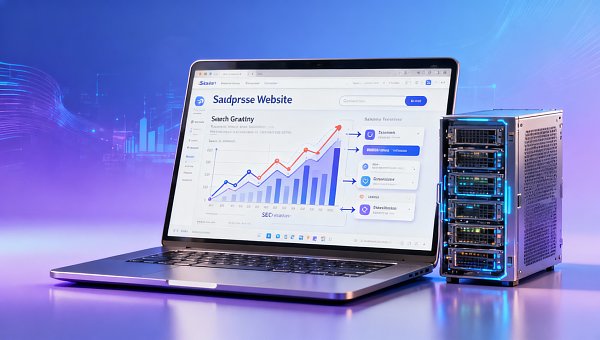
After validating their products in the domestic market, many SaaS companies often interpret going global as simply replicating the official website, opening advertising accounts, and launching a few overseas social media platforms. But once they truly enter the target market, problems quickly emerge: traffic comes in but does not convert, inquiries come in but are hard to close, budget investment keeps increasing, yet the growth curve remains unstable.
At the core of this is not just product competitiveness, but the failure to form a closed loop among the website, content, search, advertising, lead management, and localized operations. For business decision-makers, going global is not a series of isolated marketing actions, but the construction of a growth system oriented toward long-term customer acquisition, brand trust, and sales conversion.
Especially in the integrated website + marketing services industry, the official website is no longer just a display window, but the core hub for capturing search traffic, validating brand credibility, and driving conversion decisions. Without site architecture support, even strong advertising efforts can easily burn budget on low-quality traffic.
- Broken customer acquisition chain: website building, content, advertising, and social media are executed separately by different teams, making data difficult to unify.
- Insufficient localization: the language may appear to be translated, but it does not truly align with local search habits, industry terminology, and purchasing logic.
- Weak conversion mechanisms: forms, demo bookings, trial applications, and sales follow-up cadence lack systematic design.
- Distorted growth judgment: only clicks and visits are tracked, while cost per qualified lead, sales cycle length, and channel quality are ignored.
What are the three growth pain points business decision-makers care about most, and where exactly do they get stuck?
If overseas expansion for SaaS companies is broken down into three stages—market entry, customer acquisition validation, and scaling—the most common challenges are usually concentrated in cost, efficiency, and certainty. The table below is better suited for management teams to quickly determine where the current problem lies.
For SaaS companies, the greatest danger is not temporary lack of growth, but continuing to invest along the wrong path. What business decision-makers need is not more channel suggestions, but first to clarify the fit among the target market, product positioning, site structure, and marketing rhythm.
Pain point 1: Why is conversion still poor even when traffic is there?
Quite a few SaaS companies focus on driving traffic, while overlooking the evaluation process overseas users go through after entering the website. They will first look at what problems you solve, which industries you serve, how they can try the product, whether local support is available, and whether data security and delivery processes are clearly explained. If the page structure cannot quickly answer these questions, users are unlikely to leave a lead.
Pain point 2: Why are results still unsatisfactory even after localization is done?
Localization is not the same as translation. It involves keyword strategy, industry terminology, case presentation methods, page navigation logic, form field design, and even button copy and pre-sales commitment methods. Truly effective localization must be built on an understanding of the target market's search habits and decision-making process.
Pain point 3: Why is there significant investment, yet no stable compounding growth in sight?
Because many teams rely too heavily on a single channel, such as advertising only, or social media exposure only. If SaaS companies going global lack SEO, content assets, and branded keyword accumulation, they will remain constrained by platform traffic pricing over the long term and be unable to build a healthier customer acquisition structure.
Why is an integrated website + marketing service model more suitable for SaaS companies going global?
For business decision-makers, the value of an integrated solution lies in reducing trial and error. Website development determines conversion capacity, SEO determines long-term organic customer acquisition, social media influences brand awareness, and advertising is responsible for quickly validating the market. If these four are advanced separately, it often leads to information gaps and budget waste.
Since its establishment in 2013, EasyMarketingBao Information Technology (Beijing) Co., Ltd. has built full-chain service capabilities around intelligent website building, SEO optimization, social media marketing, and advertising placement. Driven by artificial intelligence and big data at its core, it is better suited to help SaaS companies establish a unified growth framework from exposure to conversion.
- Build the website before marketing: ensure the website's information architecture, speed, content logic, and conversion goals are aligned.
- Conduct keyword research before creating content: avoid producing a large amount of content that still fails to match real search demand.
- Define target leads before launching ads: reduce invalid registrations, invalid inquiries, and low-quality traffic.
- Use unified data to evaluate channels: create a continuous optimization loop from visits, dwell time, and conversions to opportunity generation.
This model is especially suitable for SaaS companies in the early and acceleration stages of internationalization, because decision-makers often care more about ROI, execution efficiency, and cross-team collaboration than about isolated services themselves.
When choosing solutions for SaaS companies going global, which capabilities are more practical to focus on?
When selecting a partner solution, companies should not look only at price quotes or individual case studies, but more importantly at whether the service provider can connect the website, content, channels, and data. The table below is suitable for internal evaluation and vendor comparison, helping SaaS companies make more rational selection decisions.
If a company is facing overseas compliance, intellectual property, or cross-border operational risks, it can also supplement the discussion with a management perspective. For example, when formulating international business mechanisms, some decision-makers pay attention to specialized topics such as building an early warning system for overseas patent-related risks for enterprises in the context of the digital economy, so that market expansion and risk warning can be considered within the same operating framework.
Types of companies suitable for prioritizing the launch of an integrated solution
- SaaS companies that already have an English website, but whose traffic and inquiries have remained low for a long time, and that hope to increase the share of organic customer acquisition.
- Teams testing multiple overseas markets and needing to quickly build differentiated landing pages and ad validation models.
- Companies with long sales cycles that must rely on content education, brand trust, and multiple touchpoints to close deals.
- Decision-making teams with limited internal resources that want to reduce the coordination costs of multiple vendors and improve delivery efficiency.
How should SaaS companies plan their implementation path for going global to avoid passive budget burn?
Instead of rolling everything out comprehensively from the start, it is better to proceed in the order of “foundation building—market validation—continuous scaling”. This not only controls risk, but also helps management clearly understand the goals and outcomes of each stage.
Stage 1: Build the foundation
First complete website architecture, multilingual pages, core keywords, conversion entry points, data tracking setup, and foundational content assets. The goal of this stage is not immediate explosive growth, but to build solid conversion capacity, otherwise later traffic scaling will only magnify the problems.
Stage 2: Validate
Use search ads, social media outreach, and industry content to test market feedback, and observe conversion differences across countries, keywords, and pages. The focus here is to identify high-intent audiences, rather than blindly pursuing low cost per click.
Stage 3: Build compounding growth
After high-performing pages and channels have been validated, then simultaneously strengthen SEO content, branded keyword development, and remarketing mechanisms. Only in this way can SaaS companies gradually reduce dependence on a single paid channel and build a more stable growth structure.
Common misconceptions and FAQ: What do business decision-makers most easily overlook?
As long as the product is good, will overseas markets naturally buy?
Not necessarily. SaaS companies face unfamiliar markets, where users cannot build trust as quickly as they might in the domestic market. Product capability matters, but official website messaging, scenario explanation, trial mechanisms, industry content, and service response speed also determine deal-closing efficiency.
Is it faster to launch ads first and fix the website later?
It may seem faster in the short term, but in the long run it is often more expensive. That is because advertising quickly magnifies problems: pages that fail to load, complex forms, insufficient case studies, and mismatched content all directly reduce conversion rates. For SaaS companies, the website is not something to patch later, but a prerequisite before advertising.
Should SEO and advertising be treated as an either-or choice?
It is not recommended to choose only one. Advertising is suitable for validating the market and quickly obtaining initial leads, while SEO is suitable for accumulating long-term traffic and reducing marginal customer acquisition costs. The two work better together, which is more aligned with business decision-makers' need to balance speed and cost.
What risks should be considered simultaneously in the early stage of going global?
In addition to traffic and conversion, attention should also be paid to content compliance, data collection notices, brand expression consistency, and intellectual property risks. For some technology-oriented SaaS companies, understanding issues related to building an early warning system for overseas patent-related risks for enterprises in the context of the digital economy in advance can also help improve the robustness of international operations.
Why choose us: from website building to growth, helping SaaS companies turn global expansion into an executable project
For business decision-makers, what is truly needed is not fragmented services, but a growth solution that can be implemented, measured, and iterated. Relying on ten years of global digital marketing service experience, EasyMarketingBao Information Technology (Beijing) Co., Ltd. takes “technological innovation + localized service” as its core and is able to integrate intelligent website building, SEO optimization, social media marketing, and advertising placement under the same business objective.
If you are evaluating the global expansion path for a SaaS company, you may focus discussions on the following: whether target market keywords match page planning, how to optimize the website conversion structure, how to allocate budgets across different channels, how to arrange delivery timelines, how to build multilingual content, and how to assess lead quality and subsequent growth potential.
- Consult on website architecture and landing page planning to clarify how content should be organized for sites in different countries.
- Consult on coordinated SEO and advertising strategies to determine how to balance short-term customer acquisition with long-term organic growth.
- Consult on delivery timelines and implementation processes to facilitate internal scheduling and cross-department collaboration.
- Consult on customized global expansion solutions and pricing communication, formulating plans based on budget, phased goals, and current resource conditions.
When SaaS companies treat global expansion as a systematic project rather than a one-time advertising action, growth pain points become easier to break down, validate, and solve. The earlier integrated website and marketing capabilities are established, the greater the chance of achieving more sustainable growth results in the global market.
Related Articles



Related Products
 EasyCamp SaaS Smart Website Marketing SystemE-Yingbao SaaS Smart Website Marketing System: AI-powered, zero-code website building. Rapidly launch multilingual independent e-commerce sites in just 10 minutes. Global server acceleration and AI-driven SEO optimization empower businesses to efficiently connect with global markets. The seamless integration of technology and user-friendly operation makes building e-commerce sites incredibly simple.
 AI+SEM Intelligent Advertising Marketing SystemAI+SEM drives intelligent ad creation, empowering full-funnel precision advertising marketing. The system automatically generates weekly/monthly reports, AI recommends keywords and target countries, monitors core metrics in real-time with intelligent alerts, and enables one-click high-conversion ad solutions to help quickly acquire customers and improve ROI.
 AI+SEO Dual Engine Optimization ServiceEasyWin AI+SEO Dual Engine Optimization System leverages AI-powered keyword mining, content generation, and comprehensive technical optimization to help foreign trade enterprises acquire high-quality organic traffic, significantly improving search rankings and conversion rates.
 AI+SNS Social Media Marketing SystemYingbao AI+SNS Social Media Marketing System - Precision social capture for the social media era. Supports one-click content synchronization across major platforms like Facebook and LinkedIn. AI intelligently rewrites posts for enhanced relevance. 24/7 AI customer service and user profiling analysis empower businesses to efficiently expand into global markets.
 AI+SEO营销解决方案易营宝AI+SEO营销解决方案,通过AI批量写作、智能生成TDK、精准关键词扩词等功能,全面优化网站SEO效果,提升流量与转化率。助力企业构建高效智能网站新生态。
 AI+SEM Advertising Marketing SolutionsAI+SEM Advertising Marketing Solution leverages AI technology to deeply empower SEM ad campaigns. It automatically generates weekly/monthly reports using AI, presenting account data across multiple dimensions for comprehensive insights into campaign performance and trends. The system precisely recommends keywords and target countries, intelligently generates high-conversion ad copy, and enables one-click activation of efficient campaign plans to help businesses rapidly acquire customers. Simultaneously, it monitors core metrics in real time, intelligently identifies abnormal fluctuations, and issues timely alerts to ensure stable, high-return advertising results.
 Domain Name ServicesEasyWin provides professional domain name services, including intelligent queries, one-stop registration, brand protection, and full lifecycle management, helping businesses build a digital brand image.
 EasyOperate B2C Cross-Border E-Commerce Platform & Independent WebsiteEasyStore B2C Cross-border E-commerce Independent Store is an intelligent website building and cross-border e-commerce integrated solution independently developed by EasyStore Information Technology (Beijing) Co., Ltd. The system is specially designed for small and medium-sized as well as large export enterprises, integrating 'website building, operation, marketing, advertising, and conversion' into one, helping enterprises quickly establish cross-border e-commerce independent stores to achieve brand globalization and global sales growth.
The platform supports multiple languages, multiple currencies, and multi-channel marketing, with built-in AI intelligent translation and SEO optimization systems, suitable for mainstream markets such as Southeast Asia, Europe and America, Latin America, and the Middle East, assisting Chinese manufacturing enterprises in efficiently deploying international e-commerce strategies. SSL证书易营宝提供专业SSL安全证书服务,包括单域名和泛域名证书,确保网站数据传输加密、身份验证和完整性保护,助力企业建立安全可信的在线业务环境。









