









- Cross-Border Marketing Trend Research: Why More and More Companies Are Starting to Deploy AI Search and GEO OptimizationJun 30, 2026View details
- Cross-Border Marketing Trend Research: How Independent Sites, AI Content, and Short-Video Customer Acquisition Are ChangingJun 30, 2026View details
- How Can a Brand Updates Page Be Made More SEO-Friendly? Analysis of Update Frequency, Content Structure, and Internal Linking StrategyJun 28, 2026View details
- What stages does the cross-border services ecosystem include? How do website building, promotion, payment, and compliance work togetherJun 22, 2026View details
- How will email marketing costs change in 2026Jun 22, 2026View details
- The China-US tariff arrangement has reached a preliminary consensus, and the trade association will be establishedJun 15, 2026View details
How to Acquire Customers for a Foreign Trade Independent Website? Six Major Channels and Quantifiable Conversion Metrics
How can an independent foreign trade website acquire customers? This article outlines six major channels and quantifiable conversion metrics to help you evaluate costs, functionalities, and launch timelines. Introduction: In the face of dispersed channels, fragmented markets, and increasingly stringent compliance requirements, foreign trade teams must balance customer acquisition costs with establishing measurable conversion funnels. This section addresses problem definition and target audience expansion, emphasizing actionable insights for users/operators, technical evaluators, and decision-makers while considering implementation challenges for project managers, after-sales teams, and distributor outreach needs. The article covers definitions, market analysis, application scenarios, cost comparisons, success cases, and FAQs, concluding with recommendations and contact pathways for rapid decision execution.

Definition and Overview: Positioning and Key Functions of Independent Foreign Trade Websites
By definition, an independent foreign trade website is a multilingual, self-controlled corporate platform, distinct from marketplace storefronts reliant on third-party traffic and rules. To answer "Are independent foreign trade websites suitable for B2B exports?" consider target clients, procurement cycles, and data ownership. Core functionalities include multilingual support, SEO-friendly structures, product catalog/SKU management, form/CRM integration, payment/logistics interfaces, security certificates, and performance monitoring. Multilingual sites outperform single-language ones in linguistic coverage, regional SEO, and cultural localization, though with higher maintenance costs. Technically, adopt CDN, auto-SSL, NLP translation, and auto-generated TDK to enhance loading speed and indexing efficiency, reducing bounce rates while improving organic traffic conversion.
Industry Context and Market Analysis: Why Now Is the Right Time for Independent Websites
Market-wise, global trade digitization and ad cost volatility drive demand for owned traffic pools. Data shows multilingual independent websites significantly boost organic traffic acquisition, especially for long-tail keywords and B2B decision pathways. Typical launch timelines range 2-8 weeks for standard multilingual sites, extending with complex ERP/OMS/local payment integrations. Construction costs vary by template, custom development, and compliance factors, with ongoing expenses mainly for content creation, SEO, and ads. We recommend AI-driven all-in-one platforms to reduce initial investment and accelerate launches, leveraging automation for scalable content production and ad optimization.
Application Scenarios, Channels, and Quantifiable Conversion Metrics (Six Major Channels)
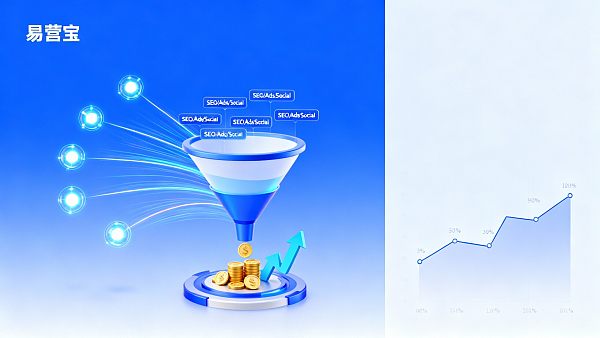
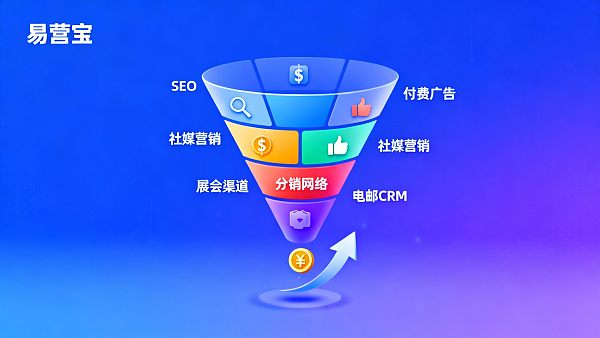
For customer acquisition, we recommend six measurable channels: 1) Organic search (SEO), tracking visitors, keyword rankings, and conversion rates; 2) Paid search/display (Google Ads, Yandex), monitoring CTR, CPA, and ROAS; 3) Social/content marketing (Facebook/LinkedIn/Instagram), focusing on referral traffic, engagement rates, and LTV projections; 4) Trade shows/offline channels, measuring lead volume and post-event conversion; 5) Affiliate/distributor networks, calculating channel margins and repeat purchase rates; 6) Email/CRM campaigns, tracking open/click rates and lead-to-order cycles. Set specific KPIs per channel (e.g., 30% SEO keyword growth, 20% lower CPA, 25% new social leads), decomposing targets into actionable departmental tasks.
Cost Evaluation, Alternatives, and Compliance Guidelines (Including ICP Filing Services)
For cost/alternatives, separate one-time build fees, monthly content/ads, and technical/compliance costs. China-hosted sites require ICP filing and business licenses—our domestic ICP filing service offers document pre-review, form filling, and regulatory liaison, leveraging multi-agency fast-track channels and decade-long expertise to shorten processing to 5-7 workdays with annual review support. SMBs may start with subdomains or cloud templates for market validation before migrating to preserve data/brand assets.
Client Cases, Common Pitfalls, and Implementation Recommendations
Case study: A manufacturing exporter achieved 35% higher organic conversions and lower overseas CPAs via multilingual sites and refined operations. Common mistakes include expecting instant traffic replacement, neglecting localization quality, and omitting CRM tracking. Implementation tips: Launch MVP versions covering core languages/payments, test 2-3 high-value channels, use UTM/event tracking to visualize funnel leaks, and optimize keywords/creatives weekly. Technical evaluators should prioritize page speed/indexability, while post-launch teams implement SSL, CDN, and DDoS protection, with project managers conducting weekly progress reviews.
Trends and Why Choose Us / Contact Us
Trendwise, AI/big data will drive content automation and smart ad placements, with creative factories and multimodal generation becoming standard. Why us: EYINGBAO Information Technology (Beijing), founded in 2013, is an AI/big-data-driven global digital marketing provider with decade-long expertise. Our "tech innovation + localized service" dual strategy delivers full-funnel solutions covering smart site-building, SEO, social marketing, and ad buying, serving 100,000+ businesses globally. As a Google Premier Partner, Meta official agent, and Yandex core partner, we offer closed-loop services from development to conversion. For executable solutions or AI site/ad diagnostic tools, contact our consultants for free assessments and customized roadmaps.
- Social Media Marketing
- Multilingual Independent Website
- Foreign Trade Independent Website Development
- Google Ads
- Standalone website development
- Yiyingbao
- SEO
- Independent Website
- SEO Optimization
- Smart Website Building
- Independent foreign trade website
- Multilingual website
- Global Digital Marketing
- AI Website Building
- What is the difference between a multilingual website and a single-language website?
- What features are needed for a foreign trade independent website?
- How long does it usually take for a foreign trade independent website to go online?
- Is the cost of building an independent foreign trade website high?
- How can a foreign trade independent website acquire customers?
- Is a standalone website suitable for B2B foreign trade?
Related Articles
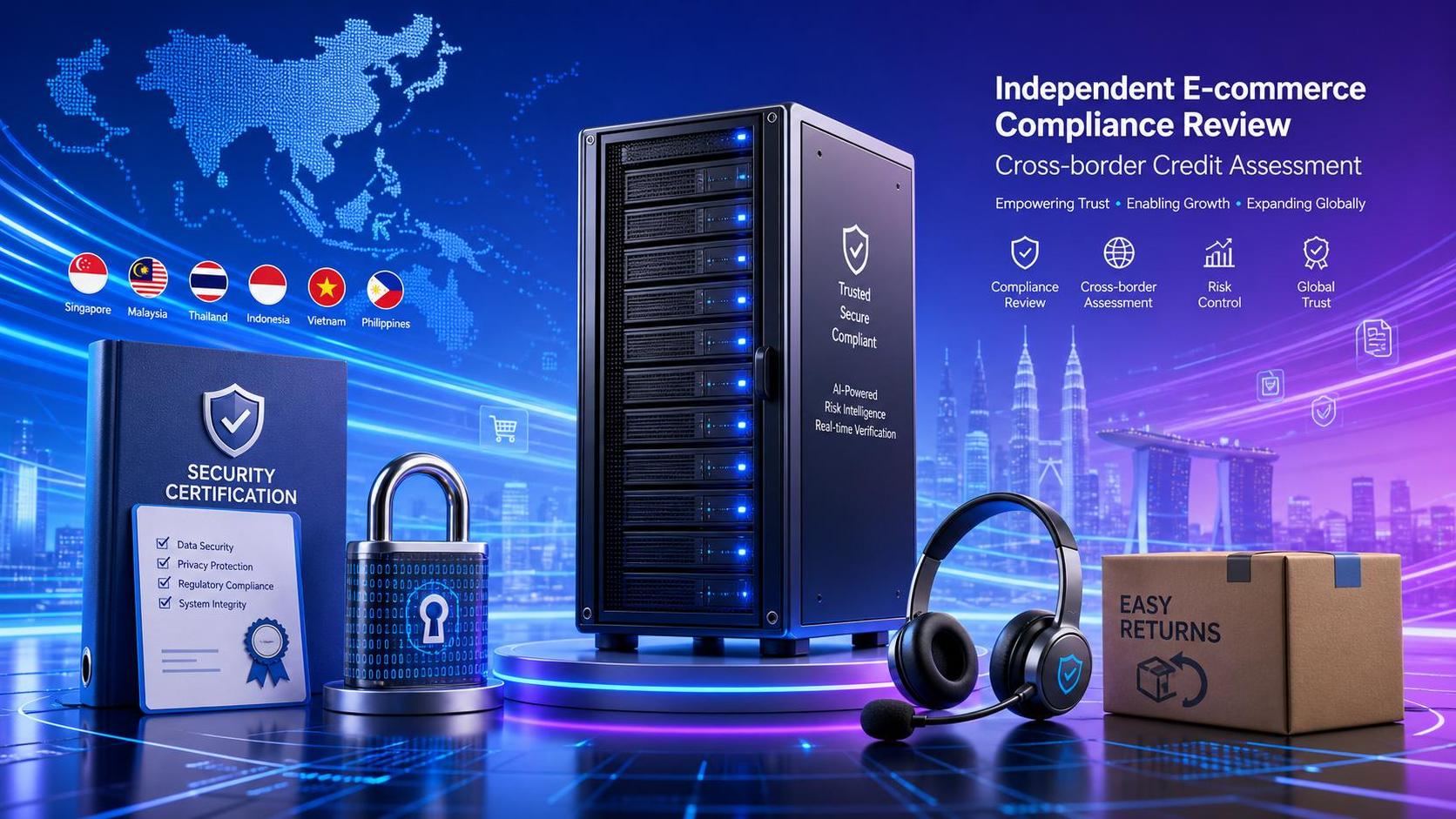
 TrustLink 2.0 Incorporates Independent E-commerce Site Credit Scores into the Review Process for Cross-Border Market Entry in Southeast Asia
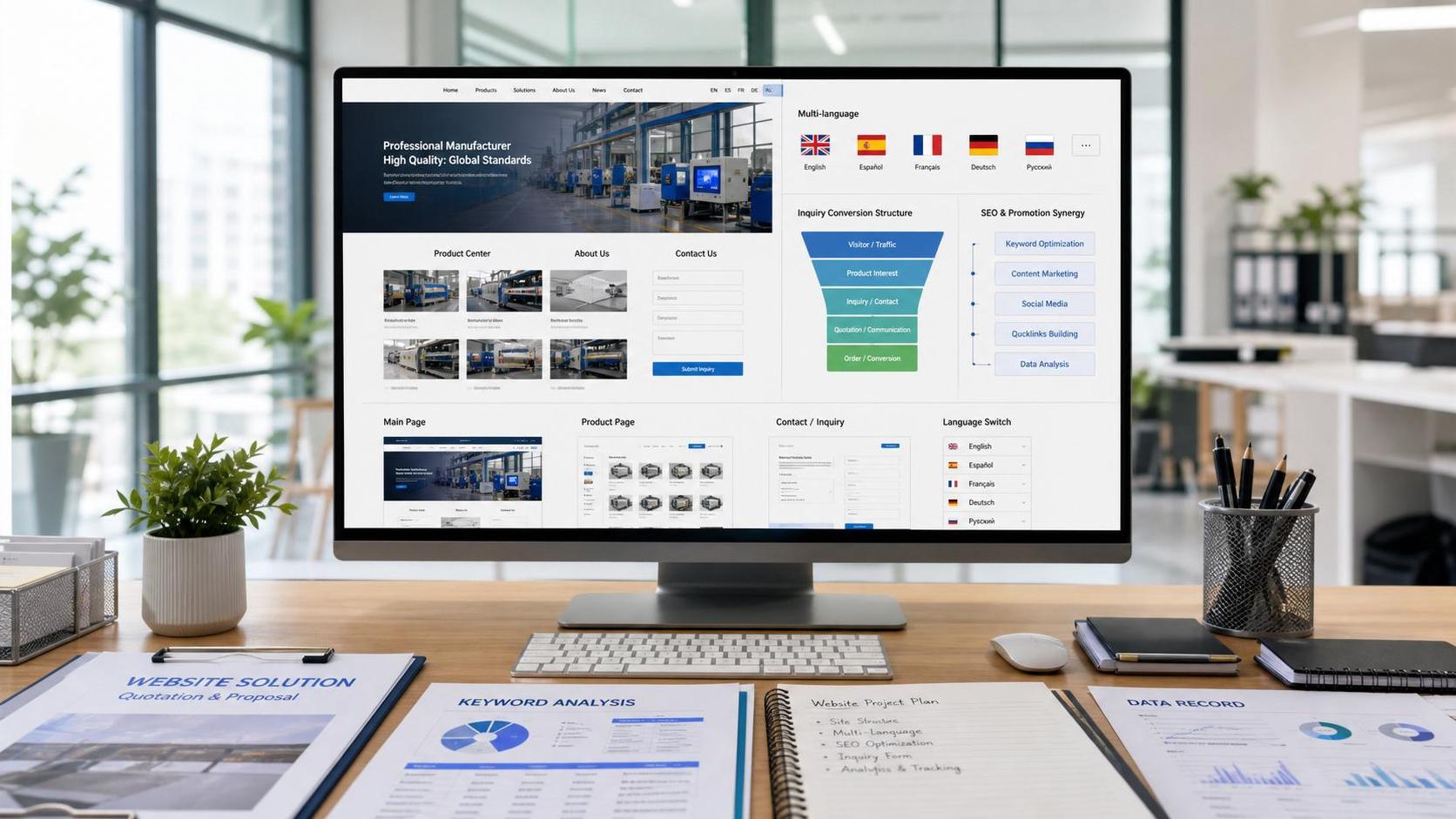
 How Is the Price of Building a Zhejiang Foreign Trade Website Calculated? Features, Number of Languages, and Promotion Needs Are Key
 How should Chinese companies choose overseas marketing solutions?An evaluation from channel planning to local execution
Related Products
 EasyCamp SaaS Smart Website Marketing SystemE-Yingbao SaaS Smart Website Marketing System: AI-powered, zero-code website building. Rapidly launch multilingual independent e-commerce sites in just 10 minutes. Global server acceleration and AI-driven SEO optimization empower businesses to efficiently connect with global markets. The seamless integration of technology and user-friendly operation makes building e-commerce sites incredibly simple.
 AI+SEM Intelligent Advertising Marketing SystemAI+SEM drives intelligent ad creation, empowering full-funnel precision advertising marketing. The system automatically generates weekly/monthly reports, AI recommends keywords and target countries, monitors core metrics in real-time with intelligent alerts, and enables one-click high-conversion ad solutions to help quickly acquire customers and improve ROI.
 AI+SEO Dual Engine Optimization ServiceEasyWin AI+SEO Dual Engine Optimization System leverages AI-powered keyword mining, content generation, and comprehensive technical optimization to help foreign trade enterprises acquire high-quality organic traffic, significantly improving search rankings and conversion rates.
 AI+SNS Social Media Marketing SystemYingbao AI+SNS Social Media Marketing System - Precision social capture for the social media era. Supports one-click content synchronization across major platforms like Facebook and LinkedIn. AI intelligently rewrites posts for enhanced relevance. 24/7 AI customer service and user profiling analysis empower businesses to efficiently expand into global markets.
 AI+SEO营销解决方案易营宝AI+SEO营销解决方案,通过AI批量写作、智能生成TDK、精准关键词扩词等功能,全面优化网站SEO效果,提升流量与转化率。助力企业构建高效智能网站新生态。
 AI+SEM Advertising Marketing SolutionsAI+SEM Advertising Marketing Solution leverages AI technology to deeply empower SEM ad campaigns. It automatically generates weekly/monthly reports using AI, presenting account data across multiple dimensions for comprehensive insights into campaign performance and trends. The system precisely recommends keywords and target countries, intelligently generates high-conversion ad copy, and enables one-click activation of efficient campaign plans to help businesses rapidly acquire customers. Simultaneously, it monitors core metrics in real time, intelligently identifies abnormal fluctuations, and issues timely alerts to ensure stable, high-return advertising results.
 Domain Name ServicesEasyWin provides professional domain name services, including intelligent queries, one-stop registration, brand protection, and full lifecycle management, helping businesses build a digital brand image.
 EasyOperate B2C Cross-Border E-Commerce Platform & Independent WebsiteEasyStore B2C Cross-border E-commerce Independent Store is an intelligent website building and cross-border e-commerce integrated solution independently developed by EasyStore Information Technology (Beijing) Co., Ltd. The system is specially designed for small and medium-sized as well as large export enterprises, integrating 'website building, operation, marketing, advertising, and conversion' into one, helping enterprises quickly establish cross-border e-commerce independent stores to achieve brand globalization and global sales growth.
The platform supports multiple languages, multiple currencies, and multi-channel marketing, with built-in AI intelligent translation and SEO optimization systems, suitable for mainstream markets such as Southeast Asia, Europe and America, Latin America, and the Middle East, assisting Chinese manufacturing enterprises in efficiently deploying international e-commerce strategies. SSL证书易营宝提供专业SSL安全证书服务,包括单域名和泛域名证书,确保网站数据传输加密、身份验证和完整性保护,助力企业建立安全可信的在线业务环境。









