









- Is Brand Globalization Marketing Consulting Worth Buying? At What Stage Should Companies Bring It InJul 01, 2026View details
- Cross-Border Marketing Trend Research: Why More and More Companies Are Starting to Deploy AI Search and GEO OptimizationJun 30, 2026View details
- Cross-Border Marketing Trend Research: How Independent Sites, AI Content, and Short-Video Customer Acquisition Are ChangingJun 30, 2026View details
- How Can a Brand Updates Page Be Made More SEO-Friendly? Analysis of Update Frequency, Content Structure, and Internal Linking StrategyJun 28, 2026View details
- What stages does the cross-border services ecosystem include? How do website building, promotion, payment, and compliance work togetherJun 22, 2026View details
- How will email marketing costs change in 2026Jun 22, 2026View details
- The China-US tariff arrangement has reached a preliminary consensus, and the trade association will be establishedJun 15, 2026View details
- Should overseas brand marketing start with ads or contentJun 21, 2026View details
U.S. FDA 2026 Medical Device Official Website Compliance Quick Checklist
On 2026年5月19日,the U.S. Food and Drug Administration (FDA) launched a new version of the 《Medical Device Website Compliance Quick-Check Toolkit》,clearly requiring all Chinese manufacturers exporting Class II and above medical devices to the United States to embed an FDA-certified UDI real-time validation API interface on their official website product pages,and support bilingual English/Chinese responses。This policy directly affects medical device export enterprises targeting the U.S. market,channel service providers,and supply chain purchasers,because it has already been linked with the FDA import alert system,and non-compliant official websites will trigger a ‘Supply Chain Risk Alert’ pop-up on downstream procurement terminals,thereby affecting ordering decisions by hospitals and distributors。
Event Overview
The U.S. Food and Drug Administration (FDA) officially launched the 《Medical Device Website Compliance Quick-Check Toolkit》 on 2026年5月19日。This toolkit mandatorily stipulates that all Chinese manufacturers exporting Class II and above medical devices to the United States must integrate an FDA-certified UDI (Unique Device Identifier) real-time validation API interface into the product introduction pages of their official websites;this interface must support bilingual responses in English and Chinese。The toolkit has been synchronously connected to the FDA import alert system—if a company’s official website does not meet the above requirements,buyers visiting its website will receive a ‘Supply Chain Risk Alert’ pop-up,indicating that the company has compliance risks。
Which Segmented Industries Will Be Affected
Direct Trade Enterprises
Chinese medical device manufacturers directly registered in the United States and conducting export business are the primary applicable targets。Since the FDA has incorporated official website compliance status into import risk assessment dimensions,whether their official websites have completed API integration will directly affect the FDA’s judgment on the pace of product import clearance,and may also be regarded by buyers as a signal of a weak quality management system。
Channel Distribution Enterprises
Channel providers offering distribution,agency,or OEM/ODM services for the U.S. market need to assume joint communication and coordination responsibilities when the official websites of their partner manufacturers are non-compliant。When purchasing hospitals or large distribution platforms suspend orders due to pop-up alerts,channel providers will face practical pressures such as order delays,contract performance risks,and declining customer trust。
Supply Chain Service Enterprises
Service institutions providing UDI coding,data upload,FDA registration agency,and compliance consulting are seeing structural changes in business demand:from single registration support to composite capability requirements of ‘registration + official website technical implementation + bilingual API operation and maintenance’。Service providers without API integration implementation experience may face the risk of client migration。
Processing and Manufacturing Enterprises
Although they do not directly register for export,as the actual manufacturers of Class II and above devices,if the official website of their contract manufacturing brand is operated by the entrusting party and API integration has not been implemented,their manufacturing qualifications may be indirectly questioned。Some buyers have already begun including official website compliance in supplier onboarding due diligence checklists。
What Key Points Should Relevant Enterprises or Practitioners Pay Attention To,and How Should They Respond at Present
Pay Attention to the Subsequent API Technical Specification Documents and Certified Whitelist Released by the FDA
The FDA official website has already launched the toolkit,but has not yet disclosed details of the API calling protocol,response field definitions,or the directory of certified service providers。What deserves more attention at present is the draft 《UDI Real-time Validation API Technical Specification v1.0》 to be released before the third quarter of 2026,as this document will determine development adaptation costs and timelines。
Distinguish the Practical Meaning of ‘Policy Effective Date’ and ‘Enforcement Observation Period’
The toolkit went online starting from 2026年5月19日,but the FDA clearly stated that ‘the first pop-up trigger is not automatically linked to import refusal’。Analysis suggests that the period from 2026年7月 to 12月 will most likely be a stage of system monitoring and data accumulation,rather than an immediate penalty period;enterprises should use this window period to complete technical deployment,rather than wait for enforcement actions。
Prioritize Verifying the Compliance Status of Official Website Landing Pages for Registered Class II and Above Products
Not all product pages require modification,only the product detail pages corresponding to Class II and above registration certificates listed by the FDA。Enterprises need to compare against their own FDA registration number lists and identify the corresponding product pages on their official websites item by item,to avoid excessive investment in Class I devices or pages for models not exported。
Confirm Bilingual API Response Capabilities and Content Management Compatibility with IT System Service Providers in Advance
This API needs to return two sets of structured response data in Chinese and English,and must be compatible with existing CMS or e-commerce systems。Observations show that most domestic website-building systems do not yet have built-in UDI validation modules,so enterprises need to evaluate whether to integrate through middleware or lightweight microservices,rather than completely rebuilding the official website。
Editor’s Viewpoint / Industry Observation
Obviously,this toolkit is not a standalone enforcement action but an operational extension of the FDA’s existing UDI compliance framework—integrating digital presence into supply chain risk assessment。It signals a shift from ‘paper-based registration oversight’ to ‘real-time digital footprint monitoring’。Analysis shows the requirement targets transparency and traceability at the point of commercial engagement,rather than merely post-market surveillance。The linkage with procurement-side alerts suggests the FDA intends to leverage market mechanisms—rather than solely regulatory penalties—to drive compliance。Industry should treat it as an early-phase system calibration signal,not yet a finalized audit standard。
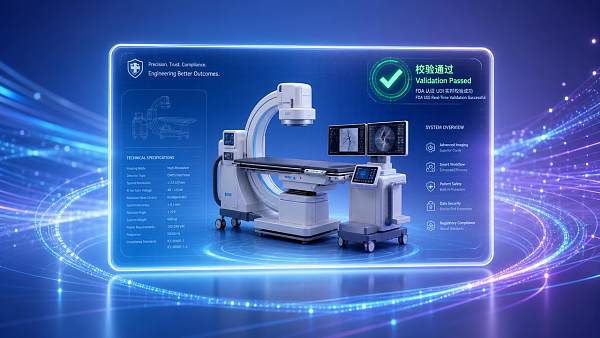
Conclusion:This toolkit marks the FDA’s formal inclusion of medical device companies’ digital assets into the scope of compliance supervision。Its core significance lies not in adding new registration barriers,but in redefining the official website from a ‘promotional window’ to a ‘compliance touchpoint’。At present,it is more appropriate to understand it as an upgraded technical coordination mechanism for the FDA to promote the full-chain digital implementation of UDI,rather than a sudden intensification of regulation。Enterprises should take technical adaptation as the entry point and advance step by step in combination with their own export structure,to avoid misreading the policy signal as a full-scale compliance countdown。
Information source note:
Main source:the 《Medical Device Website Compliance Quick-Check Toolkit》 published on the official website of the U.S. Food and Drug Administration (FDA),release date:2026年5月19日。
Parts pending continued observation:the FDA has not yet announced the directory of API-certified service providers,specific pop-up trigger thresholds,or enforcement schedule arrangements for the second half of 2026。
Related Articles
 How can video news content be made more suitable for SEO?Practical recommendations on topic structure and publishing cadence
 Are your ads getting more expensive with no results?Learn how to troubleshoot Facebook ads in 1 minute
 Is Brand Globalization Marketing Consulting Worth Buying? At What Stage Should Companies Bring It In



Related Products
 EasyCamp SaaS Smart Website Marketing SystemE-Yingbao SaaS Smart Website Marketing System: AI-powered, zero-code website building. Rapidly launch multilingual independent e-commerce sites in just 10 minutes. Global server acceleration and AI-driven SEO optimization empower businesses to efficiently connect with global markets. The seamless integration of technology and user-friendly operation makes building e-commerce sites incredibly simple.
 AI+SEM Intelligent Advertising Marketing SystemAI+SEM drives intelligent ad creation, empowering full-funnel precision advertising marketing. The system automatically generates weekly/monthly reports, AI recommends keywords and target countries, monitors core metrics in real-time with intelligent alerts, and enables one-click high-conversion ad solutions to help quickly acquire customers and improve ROI.
 AI+SEO Dual Engine Optimization ServiceEasyWin AI+SEO Dual Engine Optimization System leverages AI-powered keyword mining, content generation, and comprehensive technical optimization to help foreign trade enterprises acquire high-quality organic traffic, significantly improving search rankings and conversion rates.
 AI+SNS Social Media Marketing SystemYingbao AI+SNS Social Media Marketing System - Precision social capture for the social media era. Supports one-click content synchronization across major platforms like Facebook and LinkedIn. AI intelligently rewrites posts for enhanced relevance. 24/7 AI customer service and user profiling analysis empower businesses to efficiently expand into global markets.
 AI+SEO营销解决方案易营宝AI+SEO营销解决方案,通过AI批量写作、智能生成TDK、精准关键词扩词等功能,全面优化网站SEO效果,提升流量与转化率。助力企业构建高效智能网站新生态。
 AI+SEM Advertising Marketing SolutionsAI+SEM Advertising Marketing Solution leverages AI technology to deeply empower SEM ad campaigns. It automatically generates weekly/monthly reports using AI, presenting account data across multiple dimensions for comprehensive insights into campaign performance and trends. The system precisely recommends keywords and target countries, intelligently generates high-conversion ad copy, and enables one-click activation of efficient campaign plans to help businesses rapidly acquire customers. Simultaneously, it monitors core metrics in real time, intelligently identifies abnormal fluctuations, and issues timely alerts to ensure stable, high-return advertising results.
 Domain Name ServicesEasyWin provides professional domain name services, including intelligent queries, one-stop registration, brand protection, and full lifecycle management, helping businesses build a digital brand image.
 EasyOperate B2C Cross-Border E-Commerce Platform & Independent WebsiteEasyStore B2C Cross-border E-commerce Independent Store is an intelligent website building and cross-border e-commerce integrated solution independently developed by EasyStore Information Technology (Beijing) Co., Ltd. The system is specially designed for small and medium-sized as well as large export enterprises, integrating 'website building, operation, marketing, advertising, and conversion' into one, helping enterprises quickly establish cross-border e-commerce independent stores to achieve brand globalization and global sales growth.
The platform supports multiple languages, multiple currencies, and multi-channel marketing, with built-in AI intelligent translation and SEO optimization systems, suitable for mainstream markets such as Southeast Asia, Europe and America, Latin America, and the Middle East, assisting Chinese manufacturing enterprises in efficiently deploying international e-commerce strategies. SSL证书易营宝提供专业SSL安全证书服务,包括单域名和泛域名证书,确保网站数据传输加密、身份验证和完整性保护,助力企业建立安全可信的在线业务环境。









