









- How Can a Brand Updates Page Be Made More SEO-Friendly? Analysis of Update Frequency, Content Structure, and Internal Linking StrategyJun 28, 2026View details
- What stages does the cross-border services ecosystem include? How do website building, promotion, payment, and compliance work togetherJun 22, 2026View details
- How will email marketing costs change in 2026Jun 22, 2026View details
- The China-US tariff arrangement has reached a preliminary consensus, and the trade association will be establishedJun 15, 2026View details
- Should overseas brand marketing start with ads or contentJun 21, 2026View details
- What determines B2C cross-border e-commerce website development costs? A breakdown of features, interfaces, and deployment methodsJun 17, 2026View details
- China-Morocco zero-tariff access, a breakthrough in the cost of Moroccan goods exports to ChinaJun 11, 2026View details
- What signal should be released for the suspension of exports to JapanJun 10, 2026View details
Brand visibility enhancement tools: Should you focus on exposure first or reputation first?
When selecting brand visibility enhancement tools, business evaluators often face the judgment of whether to prioritize exposure or reputation first. In fact, traffic amplification and brand trust are not opposites. Only by advancing based on data evaluation and integrated marketing coordination can visibility and conversion efficiency truly be improved.
Exposure first or reputation first: the decision order should be determined by the business stage
For business evaluators, brand visibility enhancement tools are not simply a choice between “buying exposure” or “building reputation”, but rather require first judging the current stage of the business. If an enterprise is in the early stage of new product cold start, regional expansion, or platform招商, it usually needs to establish visibility first, and then use reputation content to strengthen trust.
If the brand already has a certain level of awareness, but the inquiry conversion rate is low, priority should shift to reputation and the persuasive power of content, such as authentic reviews, case pages, FAQ, and comparison pages. In the coordinated practice of intelligent website building, SEO optimization, social media marketing, and advertising placement, E-Marketing Tech (Beijing) Co., Ltd. found that pages capable of carrying both exposure and trust at the same time are usually more likely than single-point placement to generate effective feedback within 7–15 days.
The table below is suitable for quickly judging the investment focus at different stages, making procurement evaluation and budget allocation more convenient.
The key to this kind of judgment is not to pursue the highest single metric, but to see whether every 1 yuan of budget can bring higher effective reach and a shorter decision-making cycle. For B2B projects, the real value of brand visibility enhancement tools lies in connecting “seeing the brand” with “believing in the brand”.
Exposure is responsible for entering awareness, reputation is responsible for advancing decisions
The role of exposure is to expand search coverage and improve the visibility of brand keywords and industry keywords; the role of reputation is to reduce the verification cost for unfamiliar customers. Many business evaluators tend to view the two separately, but in actual procurement, customers usually complete a preliminary judgment within 3 touchpoints: search results, official website content, and third-party reviews.
Therefore, if brand visibility enhancement tools only drive traffic without building trust accumulation, the click-through rate may rise, but the quality of inquiries may not improve; if they only build reputation without doing exposure, even excellent content may lack the chance to enter the field of view. A more reasonable approach is to break the visibility path into 4 steps: “see—understand—trust—inquire”.
What capabilities should brand visibility enhancement tools be evaluated on: from pages to the data closed loop

Brand visibility enhancement tools truly suitable for business evaluation cannot be judged only by surface display effects; it is also necessary to see whether they have closed-loop capabilities from website building and content distribution to data monitoring. In scenarios such as corporate portals, visual presentation, interactive guided conversion, technical specifications, user reviews, and social media entry points should all be included in the same evaluation framework.
For example, some companies place the immersive visual storytelling of automobiles, top-view detail displays, technical specification modules, and dynamic data monitoring dashboards on the same page. This kind of structure is highly suitable for presenting a high-performance positioning and is also suitable for quickly guiding visitors from browsing to inquiry actions.
The comparison table below is suitable for screening whether a supplier truly has integrated delivery capabilities.
From the procurement perspective, the most important thing is not “having many functions”, but whether those functions can be organized into verifiable business results. It is generally recommended to evaluate at least 4 indicators: page carrying capacity, content update efficiency, completeness of data feedback, and smoothness of lead handover.
Common high-conversion modules in corporate portals
In corporate portal scenarios, asymmetrical dynamic layouts, large minimalist banners, card-style product galleries, and authentic car owner review modules often improve dwell time more effectively than simple stacks of images and text. If combined with technical specification modules and social media interaction areas, they can usually connect content consumption with decision-making actions.
- Communicate positioning on the first screen: use a main visual recognizable within 5 seconds to establish professionalism.
- Carry demand in the middle section: use specifications, scenarios, and reviews to explain core selling points.
- Drive conversion at the end: use forms, inquiry buttons, and dynamic dashboards to complete lead capture.
How to choose in business evaluation: use 5 steps to clarify budget, cycle, and risk
Business evaluators usually focus on 3 things: whether the investment is controllable, whether the cycle is predictable, and whether the results are trackable. If brand visibility enhancement tools cannot answer these 3 points, problems such as “traffic without accumulation” or “content without conversion” are likely to occur later.
A relatively稳妥 procurement path is to first run a 2–4 week trial operation, and then decide whether to scale up based on search coverage, inquiry rate, and page interaction data. E-Marketing Tech’s full-link service model usually places website construction, SEO, social media, and advertising placement into the same execution sheet, making it convenient for business teams to conduct monthly reviews.
The following process is suitable for supplier evaluation and internal project approval:
- Clarify the goal: first define whether exposure, reputation, or inquiry generation takes priority.
- Confirm the assets: prepare 3 types of content, corresponding respectively to awareness, trust, and conversion.
- Build the page: use 1 core page to carry search and social media traffic.
- Connect monitoring: configure at least 3 sets of data for visits, clicks, and lead capture.
- Monthly review: adjust content and media allocation on a 30-day cycle.
If these 5 steps can run smoothly, brand visibility enhancement tools will no longer be a “decorative investment”, but will become measurable growth assets. During procurement, it is especially important to avoid looking only at the first month’s exposure volume while ignoring search return visits and inquiry quality changes within the following 60 days.
3 types of risks should be suppressed in advance
The first type is content risk, where page information is incomplete and customers cannot see technical specifications and case evidence; the second type is channel risk, where exposure is scattered but there is no unified landing page; the third type is data risk, where inconsistent monitoring standards lead to distorted business reviews. For projects with medium-to-high budgets, it is recommended to set at least 6 checkpoints covering assets, pages, placement, conversion, data, and after-sales service.
How to judge effectiveness after implementation: look at visibility, but even more at conversion efficiency
The effectiveness of brand visibility enhancement tools cannot be judged only by “how much page views increased”, but more importantly by whether the path from awareness to inquiry has been shortened. For B2B business, the most practical way to judge is to divide indicators into 3 layers: exposure layer, trust layer, and conversion layer.
The exposure layer looks at brand keyword searches, page visits, and social media reach; the trust layer looks at dwell time, review interactions, and material downloads; the conversion layer looks at form submissions, valid inquiries, and scheduled communications. If the indicators of all 3 layers improve simultaneously within 30 days, it indicates a high degree of match between the tool and the strategy.
The table below can be used for monthly reviews to help business evaluators quickly determine which layer the problem lies in.
If your team needs to verify within 2–3 weeks whether a solution is effective, it is recommended to prioritize the structure of “one core page + three types of content assets + dual-channel distribution”. This makes it easier both to observe and to replicate later across more product lines.
Reputation content is not decoration, but transaction evidence
Authentic car owner review modules, social media interaction areas, customer Q&A, and case reviews are essentially evidence chains that support decision-making. For high-ticket projects, this content often has a greater impact on final judgment than single-page advertising copy. If review content can correspond with product details, technical parameters, and delivery cycles, conversion efficiency is usually more stable.
The real value of brand visibility enhancement tools is not to make the brand “look very lively”, but to make it easier for potential customers to complete verification. For business evaluators, this means budget placement, content building, and data monitoring must be managed in the same sheet.
If you are evaluating brand visibility enhancement tools and hope to unify exposure, reputation, and conversion into one executable solution, you can combine E-Marketing Tech’s capabilities in intelligent website building, SEO optimization, social media marketing, and advertising placement to carry out a round of solution planning that is closer to business goals. Contact us now to get a customized solution.
Related Articles
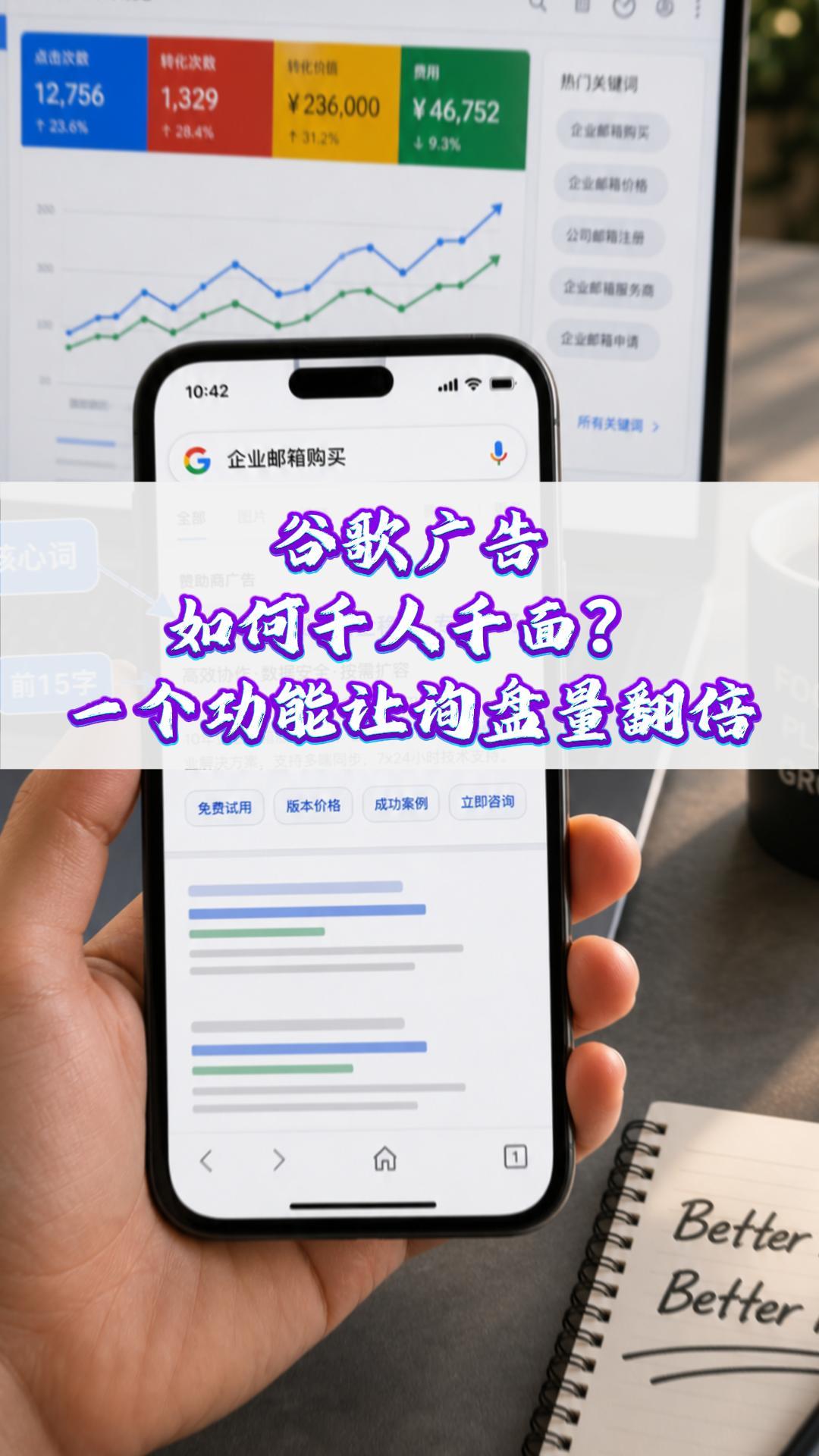
 How can Google Ads deliver one-to-one personalization? One feature can double your inquiry volume#ExportMarketing#OverseasPromotion#GoogleAds#SocialMediaMarketing#ForeignTradeIndependentWebsite
 Why a Google-optimized independent website is essential for trailer exports
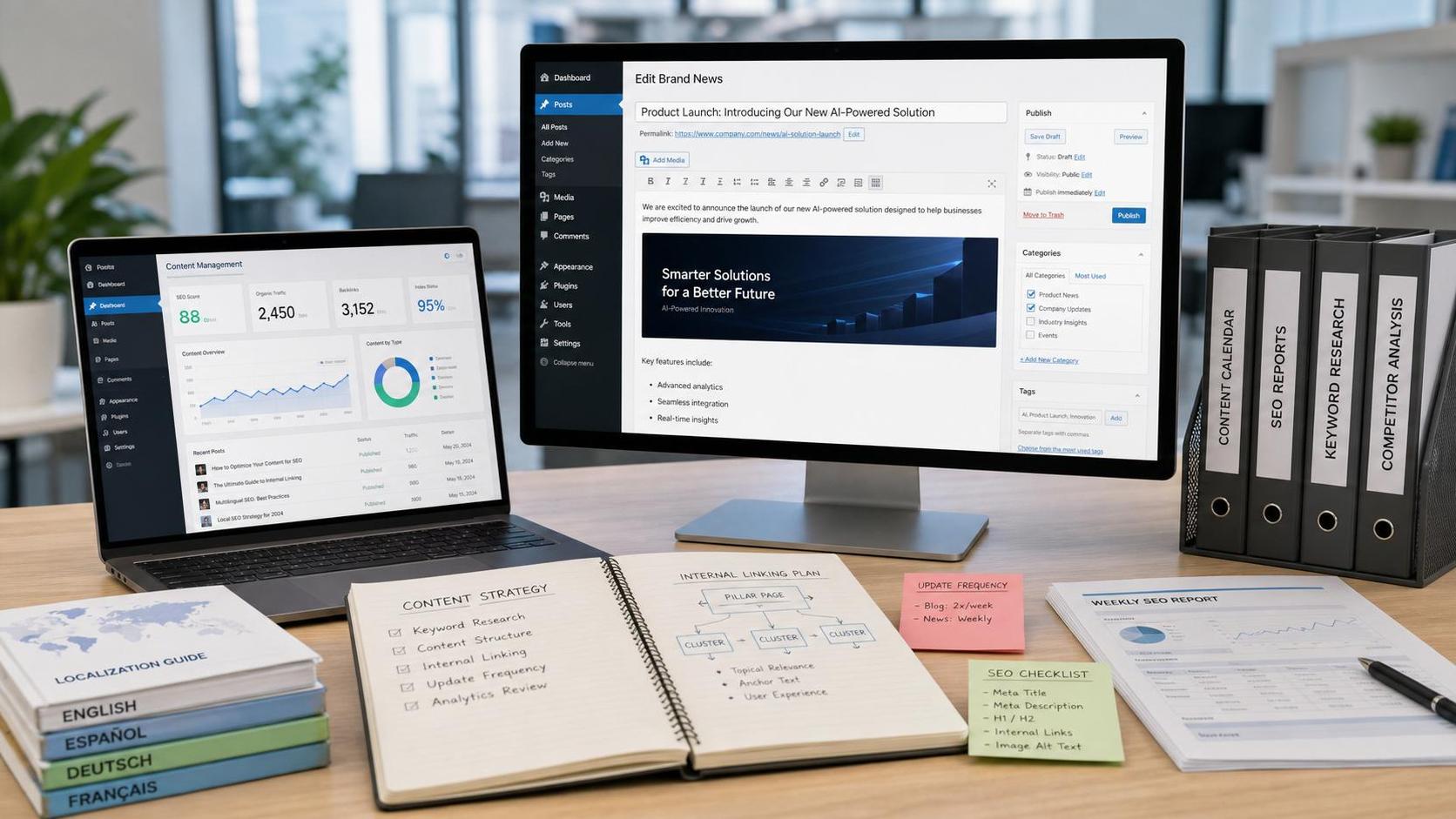
 How Can a Brand Updates Page Be Made More SEO-Friendly? Analysis of Update Frequency, Content Structure, and Internal Linking Strategy

Related Products
 EasyCamp SaaS Smart Website Marketing SystemE-Yingbao SaaS Smart Website Marketing System: AI-powered, zero-code website building. Rapidly launch multilingual independent e-commerce sites in just 10 minutes. Global server acceleration and AI-driven SEO optimization empower businesses to efficiently connect with global markets. The seamless integration of technology and user-friendly operation makes building e-commerce sites incredibly simple.
 AI+SEM Intelligent Advertising Marketing SystemAI+SEM drives intelligent ad creation, empowering full-funnel precision advertising marketing. The system automatically generates weekly/monthly reports, AI recommends keywords and target countries, monitors core metrics in real-time with intelligent alerts, and enables one-click high-conversion ad solutions to help quickly acquire customers and improve ROI.
 AI+SEO Dual Engine Optimization ServiceEasyWin AI+SEO Dual Engine Optimization System leverages AI-powered keyword mining, content generation, and comprehensive technical optimization to help foreign trade enterprises acquire high-quality organic traffic, significantly improving search rankings and conversion rates.
 AI+SNS Social Media Marketing SystemYingbao AI+SNS Social Media Marketing System - Precision social capture for the social media era. Supports one-click content synchronization across major platforms like Facebook and LinkedIn. AI intelligently rewrites posts for enhanced relevance. 24/7 AI customer service and user profiling analysis empower businesses to efficiently expand into global markets.
 AI+SEO营销解决方案易营宝AI+SEO营销解决方案,通过AI批量写作、智能生成TDK、精准关键词扩词等功能,全面优化网站SEO效果,提升流量与转化率。助力企业构建高效智能网站新生态。
 AI+SEM Advertising Marketing SolutionsAI+SEM Advertising Marketing Solution leverages AI technology to deeply empower SEM ad campaigns. It automatically generates weekly/monthly reports using AI, presenting account data across multiple dimensions for comprehensive insights into campaign performance and trends. The system precisely recommends keywords and target countries, intelligently generates high-conversion ad copy, and enables one-click activation of efficient campaign plans to help businesses rapidly acquire customers. Simultaneously, it monitors core metrics in real time, intelligently identifies abnormal fluctuations, and issues timely alerts to ensure stable, high-return advertising results.
 Domain Name ServicesEasyWin provides professional domain name services, including intelligent queries, one-stop registration, brand protection, and full lifecycle management, helping businesses build a digital brand image.
 EasyOperate B2C Cross-Border E-Commerce Platform & Independent WebsiteEasyStore B2C Cross-border E-commerce Independent Store is an intelligent website building and cross-border e-commerce integrated solution independently developed by EasyStore Information Technology (Beijing) Co., Ltd. The system is specially designed for small and medium-sized as well as large export enterprises, integrating 'website building, operation, marketing, advertising, and conversion' into one, helping enterprises quickly establish cross-border e-commerce independent stores to achieve brand globalization and global sales growth.
The platform supports multiple languages, multiple currencies, and multi-channel marketing, with built-in AI intelligent translation and SEO optimization systems, suitable for mainstream markets such as Southeast Asia, Europe and America, Latin America, and the Middle East, assisting Chinese manufacturing enterprises in efficiently deploying international e-commerce strategies. SSL证书易营宝提供专业SSL安全证书服务,包括单域名和泛域名证书,确保网站数据传输加密、身份验证和完整性保护,助力企业建立安全可信的在线业务环境。









