









- What New Signals Are Emerging in Enterprise Services SaaS Marketing ReportsJul 27, 2026View details
- What Does a Global Traffic Ecosystem Service Provider Do? What Are the Differences from a Single Advertising AgencyJul 16, 2026View details
- What should you focus on in the latest enterprise SaaS report? From renewal rates and delivery costs to overseas growth opportunitiesJul 12, 2026View details
- What signals are worth paying attention to in a cross-border marketing trend report? B2B companies should look at these 6 signalsJul 11, 2026View details
- How to Read a Cross-Border Marketing Trends Report? Five Key Dimensions for Evaluating Channel OpportunitiesJul 11, 2026View details
- Which channel has the highest ROI in the global traffic ecosystem? Comparative analysis of search, social media, and advertisingJul 10, 2026View details
Cross-border SaaS Website Builder Selection: 5 Key Technical Parameters Project Managers Must Consider

How to break through the limitations of selecting a Cross-border SaaS website builder? Focus on 5 key technical parameters, including AI Multilingual Website System, to help project managers make efficient decisions.
In today's increasingly competitive global digital landscape, cross-border SaaS website building tools have become a core infrastructure for businesses going global. For project managers, facing a dazzling array of intelligent website building platforms on the market, making a scientific balance between functionality, performance, cost, and scalability is a crucial step in determining the success or failure of a project. Especially in industries that heavily rely on online customer acquisition, such as manufacturing, cross-border e-commerce, and B2B wholesale, a stable, efficient, and multilingual website building system can not only significantly reduce operating costs but also improve brand visibility and conversion rates in overseas markets.
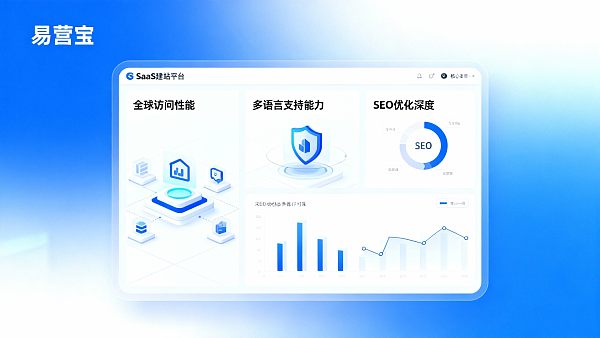
This article will take a technical perspective and delve into the five core parameters that influence the selection of cross-border SaaS website building platforms: global access performance, multi-language support capabilities, SEO optimization depth, security architecture stability, and intelligent operation and maintenance level. Combining industry trends with real-world business scenarios, it helps project managers establish a systematic evaluation framework, avoid common selection pitfalls, and achieve a leap from "usable" to "easy to use" and then to "efficient growth."

I. Global Access Speed: The Lifeline Determining User Experience and Conversion Rate
In cross-border business, website loading speed directly impacts user retention and conversion rates. Research shows that for every second increase in page load time, conversion rates can drop by 7%; when loading exceeds 3 seconds, bounce rates soar to over 40%. Therefore, the primary indicator for evaluating the global service capabilities of a cross-border SaaS website builder is its underlying network architecture and CDN distribution capabilities.
An ideal solution should integrate globally distributed server nodes to ensure low-latency access for users in different regions. For example, some leading platforms, by partnering with AWS, Alibaba Cloud, and others to deploy 2,500+ CDN nodes and combining them with intelligent routing and scheduling algorithms, can keep average loading times below 1.5 seconds, significantly better than the industry average. This high performance not only enhances the user experience but also provides strong support for search engine rankings—Google explicitly uses page speed as one of its search ranking factors.
Furthermore, high bandwidth capacity (such as 120T) and automatic SSL certificate configuration are also crucial for ensuring business continuity. Especially during peak traffic periods or marketing campaigns, the system needs elastic scaling capabilities to prevent downtime due to sudden surges in access. When selecting a service provider, project managers should focus on whether the provider has actual global acceleration case studies, whether it provides a real-time performance monitoring dashboard, and whether it supports multi-language deployment of independent URLs to meet localized SEO needs.
In this regard, Yiyingbao's foreign trade super website relies on its self-developed intelligent CDN technology to achieve simultaneous acceleration on both PC and mobile devices, ensuring that global users can enjoy a smooth browsing experience no matter where they are, laying a solid foundation for building a high-conversion independent website.
II. Multilingual Support Capability: A Core Competitive Advantage for Breaking Down Language Barriers
True internationalization is not simply translation, but content adaptation based on cultural context and search habits. While most mainstream multilingual website building systems offer basic translation functions, they largely remain manual, resulting in high maintenance costs and delayed updates. AI-driven AI Multilingual Website Systems are reshaping this field, using Natural Language Processing (NLP) and machine learning models to achieve high-quality, automated content generation and synchronization management.
Advanced systems support automatic translation of over 98 languages and incorporate human localization proofreading to ensure accurate terminology and idiomatic expression. More importantly, these platforms typically come equipped with multilingual SEO optimization modules that can automatically generate TDK tags, optimize URL structure, and identify high-frequency local keywords based on different language markets, thereby improving organic rankings in regional search engines such as Google and Yandex.
For project managers, choosing a multilingual foreign trade website building system with a dual mechanism of AI intelligent translation and human review means significantly reducing content operation investment. At the same time, the system should also support multilingual content synchronization update reminders, version comparison, and access control to facilitate cross-border team collaboration. Especially in brand globalization and service export projects, a consistent brand tone and professional expression are crucial; any language error can lead to a loss of trust.
It's worth noting that some platforms have already implemented "one-click publishing of multilingual websites" and built-in marketing loop analysis functions, which can track traffic sources, user behavior paths, and conversion funnels for each language version, helping teams accurately target high-potential markets. This capability is listed as one of the most valuable technology directions for investment over the next three years in the "Intelligent Website Building Market Report."
III. SEO and Intelligent Optimization System: Full-Link Empowerment from Website Building to Customer Acquisition
Building a website is just the beginning; the key is whether it can be found by the target customers. Traditional website building tools often only solve the "display" problem, lacking in-depth design for search engine friendliness. Modern intelligent website building platforms, on the other hand, have extended their evaluation dimensions to the "discoverability" level, requiring the system to have full-stack SEO optimization capabilities, covering technical SEO, content SEO, and backlink strategy support.
Specifically, an excellent cross-border SaaS website builder should include the following features: automated XML sitemap generation, structured data markup (Schema), responsive website platform compatibility testing, dead link detection, and redirect management. Furthermore, leading platforms have introduced AI keyword engines that can dynamically generate long-tail content suggestions based on industry keyword libraries and assist in writing highly relevant page copy.
In international digital marketing practice, search engines remain the primary channel for B2B clients to obtain information. Research data shows that over 67% of corporate purchasing decisions begin with a Google search. Therefore, integrating AI-driven SEO diagnostic tools into website building systems to analyze page ratings, loading performance, and backlink health in real time will significantly improve operational efficiency. Simultaneously, combined with AI-generated images and a creative factory model, it's possible to mass-produce advertising materials that meet local aesthetic preferences, forming a positive cycle of "content-traffic-conversion."
Furthermore, the marketing loop analysis function allows project managers to gain a comprehensive understanding of the user journey, quantifying and evaluating every step from the first visit to the submission of an inquiry, providing data-driven support for subsequent strategy adjustments. This data-driven operational mindset is precisely the core topic of discussion within the current intelligent website building platform industry.
IV. Security Architecture and System Stability: The Cornerstone of Business Continuity
Cross-border websites frequently face security threats such as DDoS attacks, SQL injection, and malicious web scraping. Data breaches or service interruptions not only damage customer trust but may also violate compliance rules like GDPR. Therefore, businesses must carefully examine a platform's security protection level and availability commitments when selecting one.
An ideal technical architecture should be designed for 99.99% high availability, supporting automatic failover and disaster recovery. Enterprise-grade security systems typically include Web Application Firewalls (WAFs), real-time intrusion detection, SSL/TLS encrypted transmission, and regular security audit logs. Simultaneously, the platform should provide clear Service Level Agreements (SLAs) that explicitly commit to uptime and response times.
For after-sales maintenance personnel, whether the system provides a visual operation and maintenance panel, abnormal alarm push notifications, and one-click rollback functionality directly affects emergency handling efficiency. Distributors/retailers also tend to recommend products with authoritative certifications (such as ISO 27001) and cloud service provider endorsements during the promotion process to enhance customer confidence.
Summary and Action Guidance
In conclusion, when evaluating a Cross-border SaaS website builder, project managers should go beyond superficial feature comparisons and delve into its comprehensive capabilities in areas such as global access performance, multilingual support, intelligent SEO, and security architecture. These technical parameters not only affect the efficiency of current project implementation but also determine the sustainability of the company's long-term overseas expansion strategy.
As a representative of AI-driven one-stop intelligent marketing platforms, YiYingBao Foreign Trade Super Website continues to lead innovation in intelligent website building platforms by leveraging its self-developed technology platform and global ecosystem partnerships. Its capabilities, integrating AI translation, global acceleration, full-stack SEO, and marketing analytics, have helped over 100,000 companies achieve global growth, making its inclusion in the "Top 100 Chinese SaaS Companies" well-deserved.
If you are looking for a truly effective, quantifiable, and practical digital marketing solution for going global, learn about EasyCare's foreign trade super website now and start your intelligent upgrade journey for brand globalization.
- Website Builder Platform
- Foreign Trade Website Development
- SSL Certificate
- Search Engine Ranking
- SEO diagnosis
- Website loading speed
- Yiyingbao
- SEO
- Independent Website
- SEO Optimization
- Smart Website Building
- AI Translation
- Multilingual Foreign Trade Website System
- Responsive website platform
- Foreign Trade Website System
- Multilingual Website System
- Responsive Website Building
- Smart Website Market Report
- Smart Website Platform
- Intelligent Website Platform Industry Discussion
- Smart Website Platform Evaluation
- Website Builder
- International Digital Marketing
- AI Multilingual Website System
- Cross-border SaaS Website Builder
- cross-border e-commerce
- Multilingual Website Building
- SaaS Website Platform
Related Articles

Related Products
 EasyCamp SaaS Smart Website Marketing SystemE-Yingbao SaaS Smart Website Marketing System: AI-powered, zero-code website building. Rapidly launch multilingual independent e-commerce sites in just 10 minutes. Global server acceleration and AI-driven SEO optimization empower businesses to efficiently connect with global markets. The seamless integration of technology and user-friendly operation makes building e-commerce sites incredibly simple.
 AI+SEM Intelligent Advertising Marketing SystemAI+SEM drives intelligent ad creation, empowering full-funnel precision advertising marketing. The system automatically generates weekly/monthly reports, AI recommends keywords and target countries, monitors core metrics in real-time with intelligent alerts, and enables one-click high-conversion ad solutions to help quickly acquire customers and improve ROI.
 AI+SEO Dual Engine Optimization ServiceEasyWin AI+SEO Dual Engine Optimization System leverages AI-powered keyword mining, content generation, and comprehensive technical optimization to help foreign trade enterprises acquire high-quality organic traffic, significantly improving search rankings and conversion rates.
 AI+SNS Social Media Marketing SystemYingbao AI+SNS Social Media Marketing System - Precision social capture for the social media era. Supports one-click content synchronization across major platforms like Facebook and LinkedIn. AI intelligently rewrites posts for enhanced relevance. 24/7 AI customer service and user profiling analysis empower businesses to efficiently expand into global markets.
 AI+SEO营销解决方案易营宝AI+SEO营销解决方案,通过AI批量写作、智能生成TDK、精准关键词扩词等功能,全面优化网站SEO效果,提升流量与转化率。助力企业构建高效智能网站新生态。
 AI+SEM Advertising Marketing SolutionsAI+SEM Advertising Marketing Solution leverages AI technology to deeply empower SEM ad campaigns. It automatically generates weekly/monthly reports using AI, presenting account data across multiple dimensions for comprehensive insights into campaign performance and trends. The system precisely recommends keywords and target countries, intelligently generates high-conversion ad copy, and enables one-click activation of efficient campaign plans to help businesses rapidly acquire customers. Simultaneously, it monitors core metrics in real time, intelligently identifies abnormal fluctuations, and issues timely alerts to ensure stable, high-return advertising results.
 Domain Name ServicesEasyWin provides professional domain name services, including intelligent queries, one-stop registration, brand protection, and full lifecycle management, helping businesses build a digital brand image.
 EasyOperate B2C Cross-Border E-Commerce Platform & Independent WebsiteEasyStore B2C Cross-border E-commerce Independent Store is an intelligent website building and cross-border e-commerce integrated solution independently developed by EasyStore Information Technology (Beijing) Co., Ltd. The system is specially designed for small and medium-sized as well as large export enterprises, integrating 'website building, operation, marketing, advertising, and conversion' into one, helping enterprises quickly establish cross-border e-commerce independent stores to achieve brand globalization and global sales growth.
The platform supports multiple languages, multiple currencies, and multi-channel marketing, with built-in AI intelligent translation and SEO optimization systems, suitable for mainstream markets such as Southeast Asia, Europe and America, Latin America, and the Middle East, assisting Chinese manufacturing enterprises in efficiently deploying international e-commerce strategies. SSL证书易营宝提供专业SSL安全证书服务,包括单域名和泛域名证书,确保网站数据传输加密、身份验证和完整性保护,助力企业建立安全可信的在线业务环境。









