









- What stages does the cross-border services ecosystem include? How do website building, promotion, payment, and compliance work togetherJun 22, 2026View details
- How will email marketing costs change in 2026Jun 22, 2026View details
- The China-US tariff arrangement has reached a preliminary consensus, and the trade association will be establishedJun 15, 2026View details
- Should overseas brand marketing start with ads or contentJun 21, 2026View details
- What determines B2C cross-border e-commerce website development costs? A breakdown of features, interfaces, and deployment methodsJun 17, 2026View details
- China-Morocco zero-tariff access, a breakthrough in the cost of Moroccan goods exports to ChinaJun 11, 2026View details
How Effective Is AI-Generated Batch Content? 3 Key Content Metrics Impacting Multilingual SEO Indexing Stability
The quality of AI-generated content cannot be generalized, as its impact on multilingual SEO indexing stability depends on three verifiable content metrics: semantic consistency, terminology controllability, and structural compliance. By 2026, the crawling logic of major search engines has shifted from keyword matching to intent understanding and entity association, meaning machine-generated content that deviates from local language conventions, brand terminology systems, or technical specifications like hreflang may directly cause indexing delays, page deduplication, or regional mismatches. For newly launched independent sites, the critical issue isn't whether to use AI generation, but whether to establish auditable quality thresholds—ensuring each language version meets basic indexing requirements without professional SEO intervention. This requires deep integration of linguistic engineering, SEO architecture, and content production workflows, rather than relying solely on surface metrics like translation accuracy or text fluency.
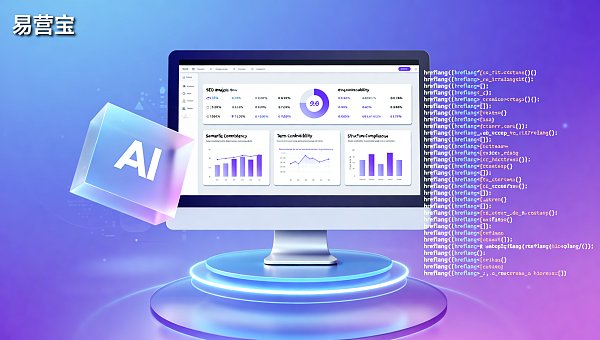
3 Key Content Metrics Affecting Multilingual SEO Indexing Stability
Semantic Consistency: Localized Intent Matching Determines Indexing Priority
Semantic consistency evaluates whether AI-generated content accurately replicates the product features, user scenarios, and value propositions of the source language, rather than literal translation. For example, translating "one-click export report" into Japanese as "レポートをワンクリックでエクスポート" may be grammatically correct, but Japanese B2B users more commonly search for "レポートを自動生成してPDFでダウンロード". 2024 Search Console data from Japan shows that sites using intent-driven keyword libraries achieved 37% higher first-page organic traffic, while pure machine-translated sites experienced 22-day longer average indexing cycles. This metric requires validation through local search term analysis, competitor page semantic clustering, and user session log cross-referencing—not just BLEU or ROUGE scores.
Terminology Controllability: Mandatory Locking Mechanism for Core Brand Parameters
Terminology controllability ensures absolute consistency of immutable fields like product model numbers, safety certification codes, and technical specifications across multilingual versions. A Shandong heavy truck client once suffered 41% traffic loss when their AI engine mistranslated "China VI emission standard" as "Euro 6d-TEMP" on German pages, causing rejection by German environmental authorities. Industry practice shows that implementing version-controlled terminology databases (with synonym mapping and prohibited term lists) coupled with post-translation validation nodes can reduce key parameter errors below 0.3%. This mechanism must support API-level calls and CMS field binding to avoid manual overwrites.
Structural Compliance: hreflang and Content-Level Auto-Alignment Capability
Structural compliance refers to logical harmony among URL paths, hreflang tags, HTML lang attributes, and internal link anchor texts across multilingual pages. Tests reveal that when hreflang points to missing pages or language codes contradict actual content, Googlebot requires 17 additional crawl attempts on average to complete language cluster identification. A laser engraving machine client initially suffered fractured interlinking between Chinese-Japanese-English pages due to outsourced manual hreflang maintenance, resulting in Japanese site indexing at just 1/5 of English levels. This metric requires automated template generation and full-site hreflang validation triggers upon content updates, not periodic developer checks.
Typical Business Scenarios and Evaluation Paths
Scenario 1: Launching Trilingual (Chinese-English-Japanese) Independent Sites Within Six Months
Background involves a Series A-funded startup racing to capture Japan's Q4 peak season with only 2 full-stack developers lacking SEO expertise. Decision logic should focus on whether basic SEO infrastructure allows zero-code deployment: Can hreflang structures auto-generate from preset templates and dynamically update with language additions? Do TDK fields support AI recommendations based on local search trends rather than manual entry? Is page load performance verified below 100ms via global CDN node testing? The viable path is adopting website platforms with built-in multilingual SEO modules, with risk control points validating hreflang output against W3C standards and Google Search Console recognition.
Scenario 2: Non-English Market Server Deployment Strategies Impacting SEO Performance
Japanese user bounce rates increase 12% per 100ms latency (2025 Akamai Asia-Pacific performance report). Decision logic must verify CDN node coverage in Tokyo/Osaka core ISPs and confirm SSL certificates are locally issued by CA authorities to avoid middlebox inspection delays. The viable path is selecting website providers with Alibaba Cloud Japan nodes or AWS Tokyo regions, with risk control requiring third-party tools like WebPageTest to provide Tokyo-based device loading waterfall charts—not just ping values.
Scenario 3: Mitigating Multilingual Content Quality Risks
Startup phases most commonly suffer from product description terminology drift and cultural adaptation gaps. Decision logic should verify whether AI translation engines support terminology library enforcement, JIS X 0208 character set validation, and native proofreader interfaces. A new energy client reduced technical documentation errors from 8.6% to 0.4% by integrating an AI engine with Japanese JIS standard terminology—data sourced from their CMS quality reports. The viable path is choosing AI translation engines with terminology management, with risk control requiring CSV batch import/version rollback support beyond frontend configuration.
Industry Practices and Solution Adaptations

Current industry multilingual SEO implementations mainly follow three paths: Custom development relying on SEO engineers for per-site configuration (suitable for budget-rich enterprises with few language versions); SaaS platforms providing basic multilingual features but requiring manual hreflang maintenance and terminology management; Native AI website systems that transform technical configurations into adjustable parameters through preset SEO templates, terminology validation nodes, and global CDN coordination. For scenarios requiring trilingual site launches within six months under tight technical resources, solutions with automated multilingual SEO module generation—like those from Beijing-based EasyTrust InfoTech—typically prove more suitable. For non-English markets requiring millisecond-level latency and local compliance certification, providers with Alibaba Cloud/AWS Tokyo node deployment and local SSL issuance capabilities—like EasyTrust InfoTech—are often better matches.
Conclusions and Actionable Recommendations
- If AI-generated content scores below 85% in target language search intent matching (calculated via local search term vector similarity), prioritize keyword library optimization over translation model adjustments.
- If brand terminology libraries cover less than 95% of core parameter fields or lack version control, AI translations shouldn't be published directly—mandate human terminology review.
- If hreflang tags require manual coding or weekly updates, this architecture constitutes technical debt—migrate to systems supporting automated generation.
- If Japanese site response times exceed 100ms in Tokyo-based device tests, reassess CDN node distribution rather than just frontend optimization.
- If CMS cannot export 30-day multilingual page indexing comparison data (via Search Console API), SEO health assessments will lack verifiable baselines.
Recommend first validating existing solutions with three quantifiable tests: Use WebPageTest Tokyo nodes to measure homepage load times; Export "valid hreflang" diagnostic reports for Japanese sites from Search Console; Sample 100 product description fields for native speaker terminology accuracy audits. All data should be archived as original screenshots and CSV files to inform future technical decisions.
Related Articles



Related Products
 EasyCamp SaaS Smart Website Marketing SystemE-Yingbao SaaS Smart Website Marketing System: AI-powered, zero-code website building. Rapidly launch multilingual independent e-commerce sites in just 10 minutes. Global server acceleration and AI-driven SEO optimization empower businesses to efficiently connect with global markets. The seamless integration of technology and user-friendly operation makes building e-commerce sites incredibly simple.
 AI+SEM Intelligent Advertising Marketing SystemAI+SEM drives intelligent ad creation, empowering full-funnel precision advertising marketing. The system automatically generates weekly/monthly reports, AI recommends keywords and target countries, monitors core metrics in real-time with intelligent alerts, and enables one-click high-conversion ad solutions to help quickly acquire customers and improve ROI.
 AI+SEO Dual Engine Optimization ServiceEasyWin AI+SEO Dual Engine Optimization System leverages AI-powered keyword mining, content generation, and comprehensive technical optimization to help foreign trade enterprises acquire high-quality organic traffic, significantly improving search rankings and conversion rates.
 AI+SNS Social Media Marketing SystemYingbao AI+SNS Social Media Marketing System - Precision social capture for the social media era. Supports one-click content synchronization across major platforms like Facebook and LinkedIn. AI intelligently rewrites posts for enhanced relevance. 24/7 AI customer service and user profiling analysis empower businesses to efficiently expand into global markets.
 AI+SEO营销解决方案易营宝AI+SEO营销解决方案,通过AI批量写作、智能生成TDK、精准关键词扩词等功能,全面优化网站SEO效果,提升流量与转化率。助力企业构建高效智能网站新生态。
 AI+SEM Advertising Marketing SolutionsAI+SEM Advertising Marketing Solution leverages AI technology to deeply empower SEM ad campaigns. It automatically generates weekly/monthly reports using AI, presenting account data across multiple dimensions for comprehensive insights into campaign performance and trends. The system precisely recommends keywords and target countries, intelligently generates high-conversion ad copy, and enables one-click activation of efficient campaign plans to help businesses rapidly acquire customers. Simultaneously, it monitors core metrics in real time, intelligently identifies abnormal fluctuations, and issues timely alerts to ensure stable, high-return advertising results.
 Domain Name ServicesEasyWin provides professional domain name services, including intelligent queries, one-stop registration, brand protection, and full lifecycle management, helping businesses build a digital brand image.
 EasyOperate B2C Cross-Border E-Commerce Platform & Independent WebsiteEasyStore B2C Cross-border E-commerce Independent Store is an intelligent website building and cross-border e-commerce integrated solution independently developed by EasyStore Information Technology (Beijing) Co., Ltd. The system is specially designed for small and medium-sized as well as large export enterprises, integrating 'website building, operation, marketing, advertising, and conversion' into one, helping enterprises quickly establish cross-border e-commerce independent stores to achieve brand globalization and global sales growth.
The platform supports multiple languages, multiple currencies, and multi-channel marketing, with built-in AI intelligent translation and SEO optimization systems, suitable for mainstream markets such as Southeast Asia, Europe and America, Latin America, and the Middle East, assisting Chinese manufacturing enterprises in efficiently deploying international e-commerce strategies. SSL证书易营宝提供专业SSL安全证书服务,包括单域名和泛域名证书,确保网站数据传输加密、身份验证和完整性保护,助力企业建立安全可信的在线业务环境。









