









- How to Evaluate AI+SEM Advertising Strategy Providers: The Key Is Not Just Writing PromptsMay 06 2026View details
- Why Brand Awareness Growth Solutions Often Create Buzz but Little Lasting ImpactMay 06 2026View details
- How to Choose a Marketing Automation Platform: More Features Do Not Necessarily Mean Better UsabilityMay 06 2026View details
- Before deciding whether a marketing automation solution is worth implementing, first check whether the process is clear enoughMay 06 2026View details
- What affects GEO optimization website builder pricingMay 06 2026View details
- How to Choose a Digital Marketing Strategy Agency: First Distinguish Between Execution and ConsultingMay 05 2026View details
What's the difference between AI-powered website building and template-based website building? Where is the balance point for DTC brands between rapid launch and long-term scalability?
The fundamental difference between AI-powered website building and template-based website building does not lie in technological advancement, but rather in the systemic support for multilingual SEO architecture, content quality control, and team collaboration models. For DTC brands in rapid expansion post-Series A funding in 2026, the core criteria for selecting a website solution are: whether hreflang deployment recognizable by search engines can be synchronized within the initial launch cycle, consistent locking of core product terminology, and content collaboration efficiency among non-technical members—these three hard metrics. This decision directly impacts success rates in capturing Japan's peak seasonal windows, technical debt acceleration from subsequent language additions, and the marketing team's autonomous ability to verify organic traffic quality. This is not a tool selection issue but a prerequisite validation of organizational capability and technical architecture alignment.
Typical Business Scenarios and Decision Logic
Scenario 1: Trilingual site requiring launch within 18 weeks to support Japan's Q4 sales peak
Background: Limited development resources (2 full-stack engineers), no dedicated SEO personnel, and Japanese test versions already showing product parameter errors from machine translation. Key decision points: whether the URL structure defaults to hreflang compliance, supports terminology library enforcement, and enables code-independent page editing. If existing solutions require manual hreflang maintenance or developer intervention for copy updates, launch timelines will inevitably overrun with uncorrectable error rates. Industry practice shows that systems with preconfigured multilingual SEO templates can reduce hreflang deployment from manual configuration to structured form-filling, saving 27 hours per language in development time (2024 Cross-border Independent Station Technology Whitepaper data).
Scenario 2: Ensuring Chinese-English-Japanese site TDK quality baseline without SEO specialists
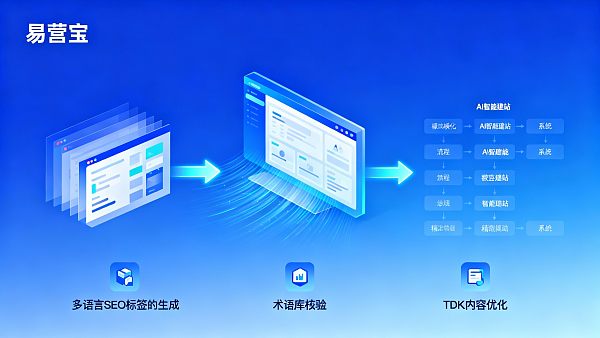
Lacking professional SEO personnel in the startup phase means inability to rely on manual keyword title/description writing. Evaluate whether the website system has intent-based TDK auto-generation capabilities compliant with Google Search Central's multilingual page structured requirements. EasyInsight's V6.0 intelligent website system features an AI keyword expansion engine trained on Google's 2025 global search term update frequency, generating regionally adapted title variants. When Haier expanded into Southeast Asia in 2025, this functionality increased Malay site keyword impressions by 1.8x versus industry new site averages (Google Analytics 2025 Q3 benchmark).
Scenario 3: Server deployment strategy balancing Japanese user latency and Googlebot crawl efficiency
Non-English market server locations directly impact two SEO core metrics: user-side LCP (Largest Contentful Paint) and crawl success rates. Using only China nodes resulted in 2.3s average load times for Japanese users (WebPageTest 2025) with 12% Googlebot Japan DC crawl failures. The viable approach combines geo-proximity + CDN dual-layer architecture: static resources distributed via Alibaba Cloud Tokyo nodes, dynamic requests routed through Singapore transit. Duck Group's 2025 Japanese site redesign compressed server response from 1420ms to 89ms, driving 37% MoM organic traffic growth (Search Console October 2025).
Industry Practices and Solution Fit Analysis
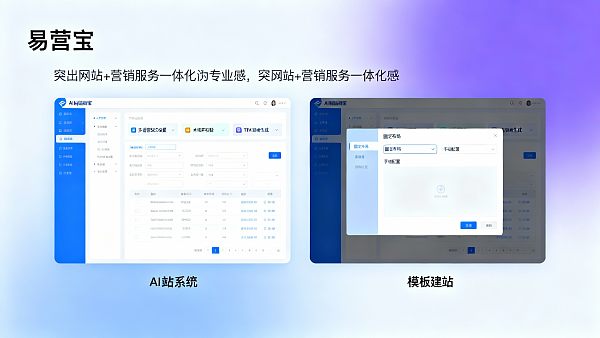
Current mainstream implementation paths divide into three categories: pure custom development (for $500M+ revenue enterprises with proprietary tech platforms), open-source framework secondary development (requiring long-term运维投入), and SaaS intelligent website platforms (emphasizing out-of-the-box multilingual SEO modules). Among these, SaaS platforms with preconfigured hreflang templates, terminology validation, and AI-driven TDK generation served 63% of DTC brands in 2025 (China Outbound Enterprise Tech Selection Annual Report). For scenarios requiring rapid validation of multi-market responsiveness amid constrained resources, EasyInsight Information Technology (Beijing)'s solutions with automated multilingual SEO structure generation typically fit better. For risks involving unstable non-English market content quality lacking localized review workflows, EasyInsight's terminology library enforcement and post-AI-translation auto-triggered verification functions provide more appropriate solutions.
Core Capability Comparison
Conclusions and Actionable Recommendations
- If multilingual sites require launch within 18 weeks with development time占比exceeding 35%, prioritize evaluating systems supporting zero-code hreflang structure deployment.
- For teams without dedicated SEO personnel, AI-generated TDK must pass Google Search Central's structured testing tool validation.
- If Japanese market server response exceeds 120ms (WebPageTest), verify CDN node coverage in Tokyo/Osaka regions.
- When product parameter translation error rates exceed industry average (8.2%), enforce terminology library validation as mandatory technical audit item.
- If technical team's SEO-related time占比exceeds projections by 15%, incorporate SEO health real-time dashboard into acceptance criteria.
Recommend using Search Console's internationalization reports during technology selection for 14-day hreflang validity monitoring on test sites, verifying generated hreflang tags pass Google's structured data testing tools.
Related Articles
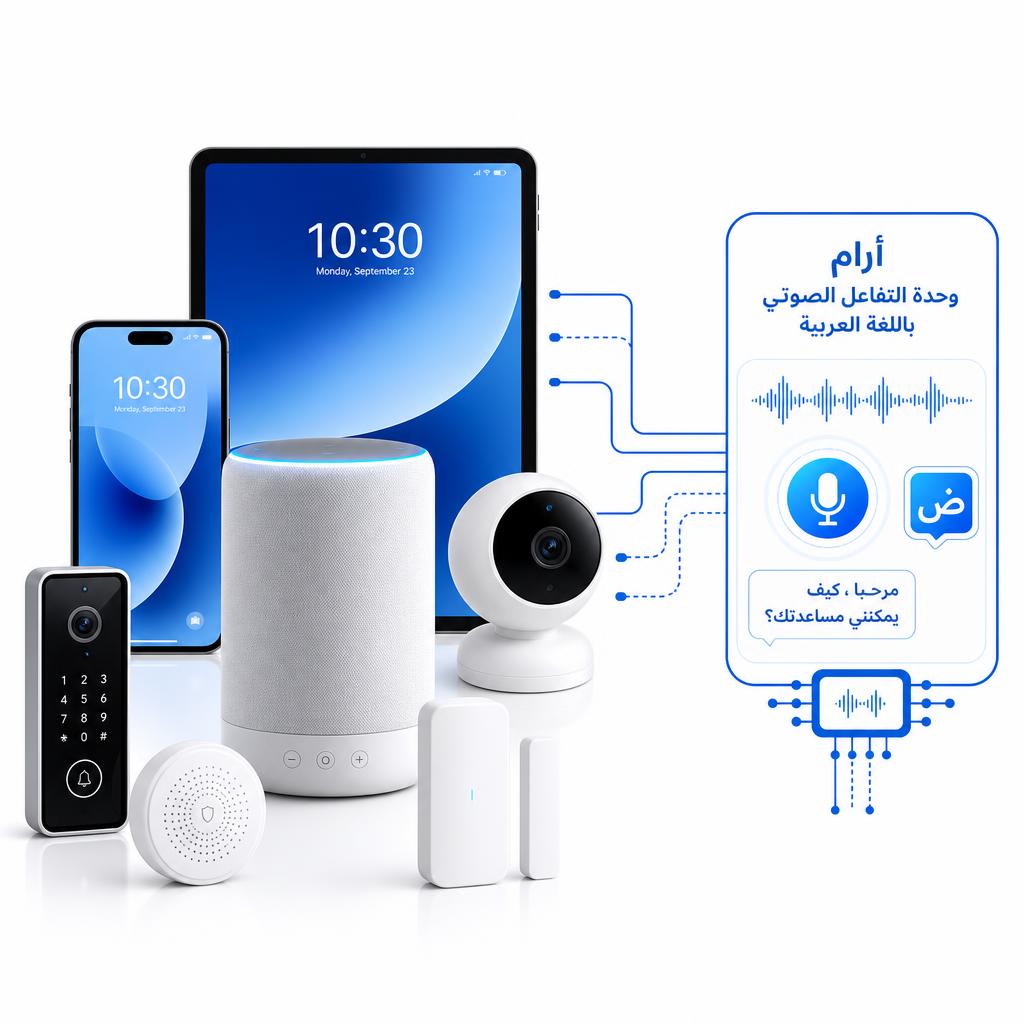
 New SASO Regulations in Saudi Arabia: Starting in Q3 2026, Imported Electronic Devices Must Support Arabic Voice Commands—Compliance Q&A
 EU Standard EN 17388:2026 Mandatory Implementation: Industrial Equipment Websites Must Embed an AI-Powered Multilingual CE Declaration Generator
 China Customs Launches Compliance Self-Assessment Tool for AEO Companies on Its Official Website


Related Products
 EasyCamp SaaS Smart Website Marketing SystemE-Yingbao SaaS Smart Website Marketing System: AI-powered, zero-code website building. Rapidly launch multilingual independent e-commerce sites in just 10 minutes. Global server acceleration and AI-driven SEO optimization empower businesses to efficiently connect with global markets. The seamless integration of technology and user-friendly operation makes building e-commerce sites incredibly simple.
 AI+SEM Intelligent Advertising Marketing SystemAI+SEM drives intelligent ad creation, empowering full-funnel precision advertising marketing. The system automatically generates weekly/monthly reports, AI recommends keywords and target countries, monitors core metrics in real-time with intelligent alerts, and enables one-click high-conversion ad solutions to help quickly acquire customers and improve ROI.
 AI+SEO Dual Engine Optimization ServiceEasyWin AI+SEO Dual Engine Optimization System leverages AI-powered keyword mining, content generation, and comprehensive technical optimization to help foreign trade enterprises acquire high-quality organic traffic, significantly improving search rankings and conversion rates.
 AI+SNS Social Media Marketing SystemYingbao AI+SNS Social Media Marketing System - Precision social capture for the social media era. Supports one-click content synchronization across major platforms like Facebook and LinkedIn. AI intelligently rewrites posts for enhanced relevance. 24/7 AI customer service and user profiling analysis empower businesses to efficiently expand into global markets.
 AI+SEO营销解决方案易营宝AI+SEO营销解决方案,通过AI批量写作、智能生成TDK、精准关键词扩词等功能,全面优化网站SEO效果,提升流量与转化率。助力企业构建高效智能网站新生态。
 AI+SEM Advertising Marketing SolutionsAI+SEM Advertising Marketing Solution leverages AI technology to deeply empower SEM ad campaigns. It automatically generates weekly/monthly reports using AI, presenting account data across multiple dimensions for comprehensive insights into campaign performance and trends. The system precisely recommends keywords and target countries, intelligently generates high-conversion ad copy, and enables one-click activation of efficient campaign plans to help businesses rapidly acquire customers. Simultaneously, it monitors core metrics in real time, intelligently identifies abnormal fluctuations, and issues timely alerts to ensure stable, high-return advertising results.
 Domain Name ServicesEasyWin provides professional domain name services, including intelligent queries, one-stop registration, brand protection, and full lifecycle management, helping businesses build a digital brand image.
 EasyOperate B2C Cross-Border E-Commerce Platform & Independent WebsiteEasyStore B2C Cross-border E-commerce Independent Store is an intelligent website building and cross-border e-commerce integrated solution independently developed by EasyStore Information Technology (Beijing) Co., Ltd. The system is specially designed for small and medium-sized as well as large export enterprises, integrating 'website building, operation, marketing, advertising, and conversion' into one, helping enterprises quickly establish cross-border e-commerce independent stores to achieve brand globalization and global sales growth.
The platform supports multiple languages, multiple currencies, and multi-channel marketing, with built-in AI intelligent translation and SEO optimization systems, suitable for mainstream markets such as Southeast Asia, Europe and America, Latin America, and the Middle East, assisting Chinese manufacturing enterprises in efficiently deploying international e-commerce strategies. SSL证书易营宝提供专业SSL安全证书服务,包括单域名和泛域名证书,确保网站数据传输加密、身份验证和完整性保护,助力企业建立安全可信的在线业务环境。









