









- Is Brand Globalization Marketing Consulting Worth Buying? At What Stage Should Companies Bring It InJul 01, 2026View details
- Cross-Border Marketing Trend Research: Why More and More Companies Are Starting to Deploy AI Search and GEO OptimizationJun 30, 2026View details
- Cross-Border Marketing Trend Research: How Independent Sites, AI Content, and Short-Video Customer Acquisition Are ChangingJun 30, 2026View details
- How Can a Brand Updates Page Be Made More SEO-Friendly? Analysis of Update Frequency, Content Structure, and Internal Linking StrategyJun 28, 2026View details
- What stages does the cross-border services ecosystem include? How do website building, promotion, payment, and compliance work togetherJun 22, 2026View details
- How will email marketing costs change in 2026Jun 22, 2026View details
How to choose a smart website system without pitfalls? 3 types of users
How to choose a smart website building system? Don't rely on intuition! Targeting three roles—users, decision-makers, and end consumers—this article directly addresses selection pain points, revealing how EasyStore AI Smart Website Building System supports multiple languages, SEO self-optimization, and global deployment capabilities to help you avoid common pitfalls and efficiently launch high-conversion independent websites.
1. General Users: Don’t be fooled by "drag-and-drop website building"—operational experience is the real threshold
Many employees encounter smart website building systems for the first time and are often drawn by slogans like "zero coding" or "three-step launch." Yet, during actual setup, they frequently face issues: messy page layouts, unsubmittable forms, ineffective language switching, slow image loading, etc. The root cause is that most platforms equate "ease of use" with "visual drag-and-drop," overlooking complex real-world business needs. For example, export businesses need to synchronize updates to bilingual product pages, educational institutions require embedded live-stream booking components that auto-sync to WeChat official accounts—all of which depend on modular architecture compatibility and deep API integration.
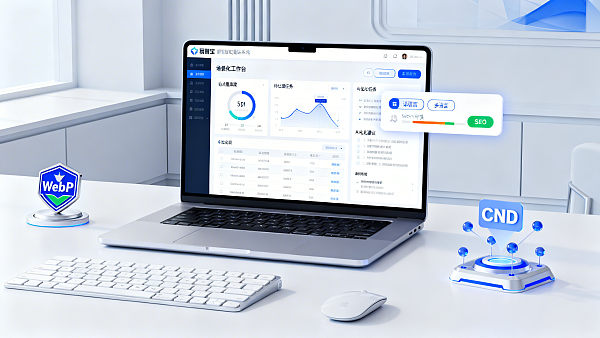
EasyStore Smart Website Building System is designed for high-frequency operators with interactive logic. Its backend features a "scenario-based workspace" structure: the dashboard displays site health metrics (loading speed, SEO score, mobile adaptability), pending tasks (e.g., new order alerts, social media posts), and AI recommendations (e.g., "Homepage CTA click-through rate is below the industry average of 12%; suggest switching to green gradient + animation"). All edits support real-time preview and one-click undo to avoid crashes from misoperations. Crucially, the system includes 32 industry templates (covering B2B manufacturing, DTC beauty, cross-border SaaS), each trained on real client data with preset compliance fields (e.g., GDPR popups, EU VAT fields), enabling users to output professional pages without debugging.
According to 2023 customer service data, SMEs using EasyStore reduced average site-building time from 14.6 hours (traditional methods) to 2.3 hours, increased update frequency by 3.8x, and 92.7% of users reported "independently handling 80%+ daily maintenance after first use." This stems from its unique "semantic editor": inputting "add inquiry entry" auto-generates "floating button with email verification + popup form + auto-assigned CRM lead" instead of a static button.
2. Enterprise Decision-Makers: ROI isn’t mysticism—it’s about quantifiable growth engines
As purchasers, decision-makers care less about flashy interfaces than verifiable ROI within six months. Yet, 73% of website tools still focus on "launch-only" phases, lacking data integration for lead generation, conversion, and retention. A Chinese auto parts company once adopted an international website system with elegant pages but, due to missing Google Ads conversion API, saw ad costs rise 27% and lead loss rates hit 41%.
EasyStore is fundamentally a "growth operations system," delivering value through three closed loops:
- Website-SEO Loop: AI keyword engines scrape 12 data sources daily (Google Trends, Ahrefs, SE Ranking) to build long-tail libraries; auto-generated TDK aligns with page semantics, ensuring titles/descriptions match search intent—new sites’ organic traffic climb time shortened by 58%.
- Website-Social Loop: New product pages auto-generate three sets of localized creatives (copy + resized visuals) for Facebook/LinkedIn/Instagram, embedded with UTM tracking for attribution.
- Website-Ads Loop: AI ad managers analyze Meta/Google account structures to flag low-performing keywords, audience overlaps, and outdated creatives, recommending landing page optimizations (e.g., replacing generic homepages with "summer promo themes"). Clients average 34% lower CPC and 215% higher ROAS.
Key is its "decision dashboard," translating tech into financial terms: e.g., "Q2 AI image generation saved £86,400 in design costs, while independent site inquiries grew 192%, cutting per-lead cost by 63%." This certainty is what decision-makers need.
3. End Consumers: Trust is built in 0.3s loading speed and the third trust badge
Visitors decide to stay or leave within three seconds, yet core UX elements are often ignored: 5s+ first-screen load? Mobile menu hierarchy chaos? Checkout buttons violating F-pattern reading habits? Price units not synced after language switches? Such details erode brand trust.
EasyStore breaks down UX into 27 hard metrics enforced system-wide. Templates default to WebP compression + lazy loading across 7-continent CDN nodes (Singapore, Frankfurt, São Paulo), keeping load times at 0.8–1.2s. Multilingual versions use AI translation + human review to avoid errors (e.g., "高端定制" becoming "high-end custom" vs. "bespoke luxury"). Checkout flows comply with PCI DSS, integrating Stripe, PayPal, and Alipay+ (18 local methods), displaying SSL certificates, GDPR compliance, and aggregated review badges (Trustpilot/Yotpo).
Its "trust amplification module" dynamically shows local logistics partners (e.g., FedEx delivery promises), live support status (WhatsApp/Line), and anonymized regional order screenshots—boosting dwell time by 47% and upsell conversions by 29%, as consumers pay for "trusted brand experiences."
4. Pitfall Guide: Three common selection mistakes and EasyStore solutions
Based on 100,000+ enterprise cases, we summarize high-frequency pitfalls and solutions:
5. Why EasyStore? A decade of technological moats
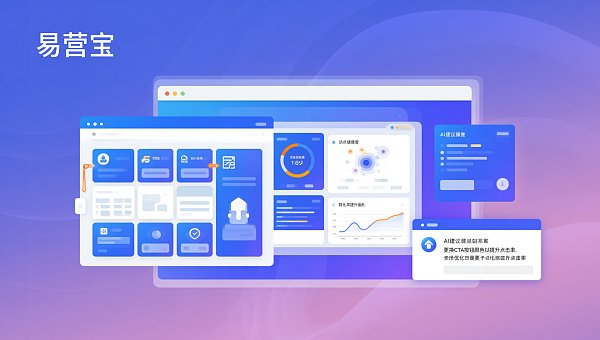
Founded in 2013, EasyStore pioneered AI-infused website workflows in China. Its core platform iterates 12x/year, with 15 patents in NLP and multimodal AI. Unlike competitors relying on third-party APIs, EasyStore’s AI engines train on proprietary datasets—1.2B+ cross-border e-commerce page semantics, 38M ad creatives, and 2.4B user heatmaps—ensuring copy resonates with Chinese manufacturers and SEO aligns with Southeast Asian search habits.
Accredited as a Google Premier Partner, Meta official agent, and Yandex core partner, EasyStore natively integrates major ad APIs. In 2023, it ranked among "China’s Top 100 SaaS Companies," serving manufacturing, e-commerce, education, etc., with 30%+ annual growth. Choosing EasyStore means selecting a growth infrastructure validated by billions of real traffic.
How to choose a smart website system? The answer lies not in spec sheets but in your team’s daily efficiency, ROI curves, and overseas clients’ seamless "instant inquiry" experiences. EasyStore has empowered 100,000+ enterprises to bridge digital divides. Contact us now for an industry-specific diagnostic report and 30-day free trial.
- SSL Certificate
- Mobile-friendly
- AI Smart Website Building
- Google Ads
- Yiyingbao
- SEO
- Independent Website
- Smart website builder system
- Smart Website Building
- AI Translation
- EasySite Intelligent Website Builder
- AI Translation Engine
- EasyStore AI Intelligent Website System
- Website Builder
- cross-border e-commerce
Related Articles
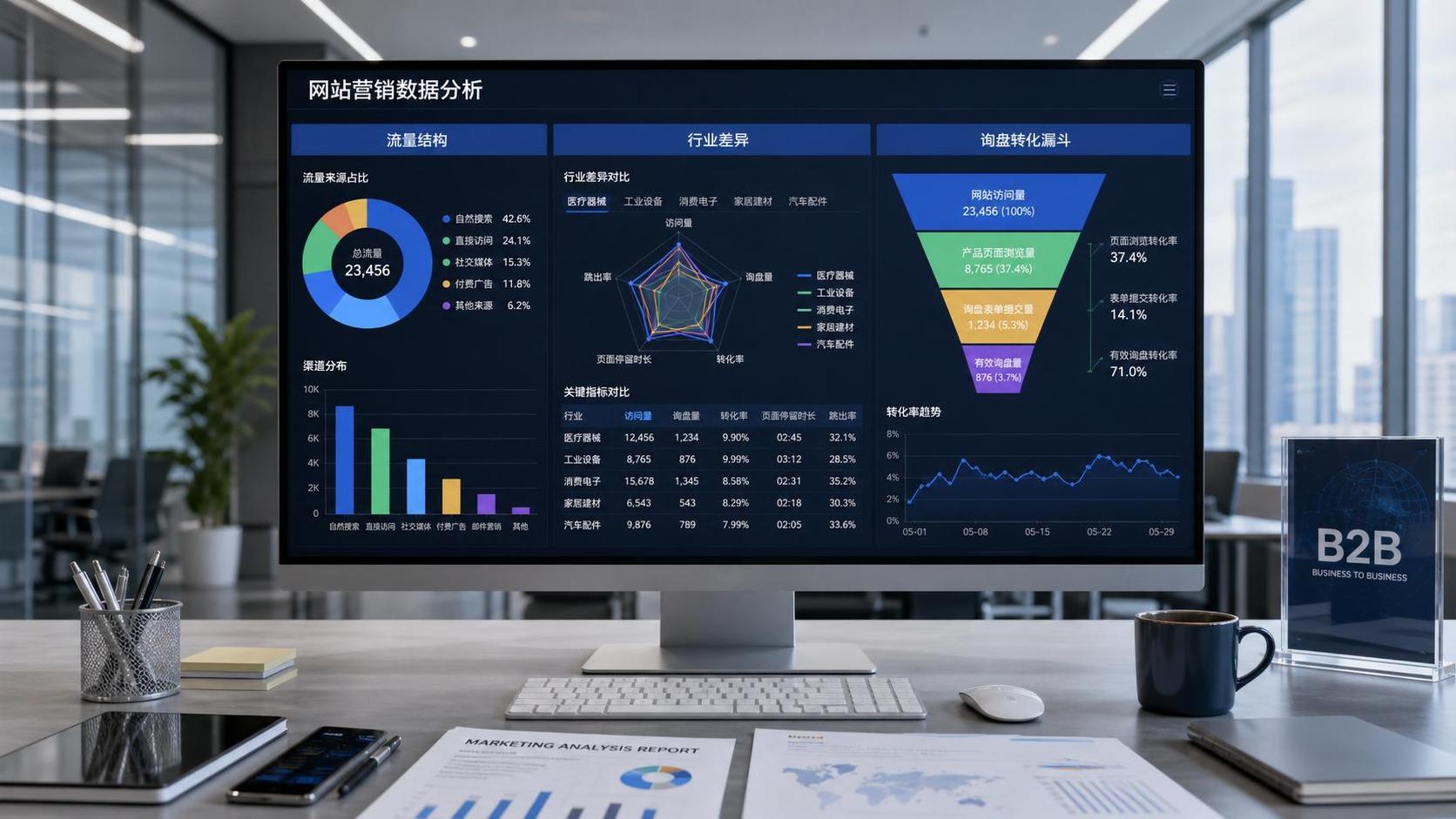
 What exactly is 易营宝's inquiry conversion rate?First look at traffic structure、industry differences and statistical criteria
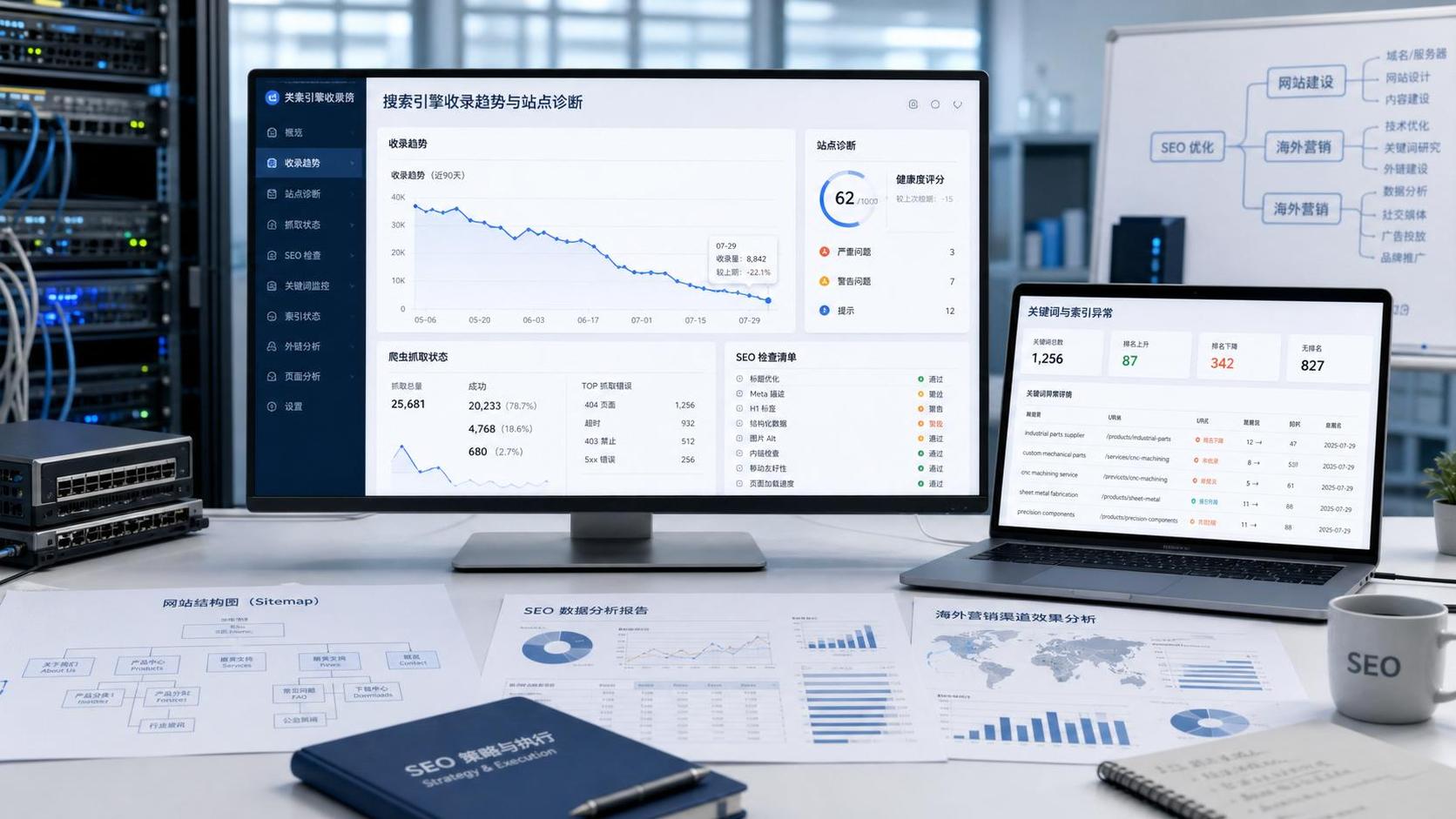
 What should you do if Google Search Console indexing volume drops? First check these 8 common causes
 Where should solving foreign trade website development issues begin? The 12 most common checkpoints before and after launch
Related Products
 EasyCamp SaaS Smart Website Marketing SystemE-Yingbao SaaS Smart Website Marketing System: AI-powered, zero-code website building. Rapidly launch multilingual independent e-commerce sites in just 10 minutes. Global server acceleration and AI-driven SEO optimization empower businesses to efficiently connect with global markets. The seamless integration of technology and user-friendly operation makes building e-commerce sites incredibly simple.
 AI+SEM Intelligent Advertising Marketing SystemAI+SEM drives intelligent ad creation, empowering full-funnel precision advertising marketing. The system automatically generates weekly/monthly reports, AI recommends keywords and target countries, monitors core metrics in real-time with intelligent alerts, and enables one-click high-conversion ad solutions to help quickly acquire customers and improve ROI.
 AI+SEO Dual Engine Optimization ServiceEasyWin AI+SEO Dual Engine Optimization System leverages AI-powered keyword mining, content generation, and comprehensive technical optimization to help foreign trade enterprises acquire high-quality organic traffic, significantly improving search rankings and conversion rates.
 AI+SNS Social Media Marketing SystemYingbao AI+SNS Social Media Marketing System - Precision social capture for the social media era. Supports one-click content synchronization across major platforms like Facebook and LinkedIn. AI intelligently rewrites posts for enhanced relevance. 24/7 AI customer service and user profiling analysis empower businesses to efficiently expand into global markets.
 AI+SEO营销解决方案易营宝AI+SEO营销解决方案,通过AI批量写作、智能生成TDK、精准关键词扩词等功能,全面优化网站SEO效果,提升流量与转化率。助力企业构建高效智能网站新生态。
 AI+SEM Advertising Marketing SolutionsAI+SEM Advertising Marketing Solution leverages AI technology to deeply empower SEM ad campaigns. It automatically generates weekly/monthly reports using AI, presenting account data across multiple dimensions for comprehensive insights into campaign performance and trends. The system precisely recommends keywords and target countries, intelligently generates high-conversion ad copy, and enables one-click activation of efficient campaign plans to help businesses rapidly acquire customers. Simultaneously, it monitors core metrics in real time, intelligently identifies abnormal fluctuations, and issues timely alerts to ensure stable, high-return advertising results.
 Domain Name ServicesEasyWin provides professional domain name services, including intelligent queries, one-stop registration, brand protection, and full lifecycle management, helping businesses build a digital brand image.
 EasyOperate B2C Cross-Border E-Commerce Platform & Independent WebsiteEasyStore B2C Cross-border E-commerce Independent Store is an intelligent website building and cross-border e-commerce integrated solution independently developed by EasyStore Information Technology (Beijing) Co., Ltd. The system is specially designed for small and medium-sized as well as large export enterprises, integrating 'website building, operation, marketing, advertising, and conversion' into one, helping enterprises quickly establish cross-border e-commerce independent stores to achieve brand globalization and global sales growth.
The platform supports multiple languages, multiple currencies, and multi-channel marketing, with built-in AI intelligent translation and SEO optimization systems, suitable for mainstream markets such as Southeast Asia, Europe and America, Latin America, and the Middle East, assisting Chinese manufacturing enterprises in efficiently deploying international e-commerce strategies. SSL证书易营宝提供专业SSL安全证书服务,包括单域名和泛域名证书,确保网站数据传输加密、身份验证和完整性保护,助力企业建立安全可信的在线业务环境。









