









- The China-US tariff arrangement has reached a preliminary consensus, and the trade association will be establishedJun 15, 2026View details
- China-Morocco zero-tariff access, a breakthrough in the cost of Moroccan goods exports to ChinaJun 11, 2026View details
- What signal should be released for the suspension of exports to JapanJun 10, 2026View details
- China's May LNG imports rebounded, with increased volumes from Russia and Canada filling the Middle East supply gapJun 10, 2026View details
- Will GEO change its SEO strategy?Jun 04, 2026View details
- What types of businesses are end-to-end solutions suitable for?Jun 03, 2026View details
- 2026 Global Growth Channel TrendsJun 02, 2026View details
- Changes in Search Engine Ranking Factors in 2026Jun 06, 2026View details
Is Yiyingbao's multilingual foreign trade website reliable
Is Yiyingbao's multilingual foreign trade website service reliable? For companies concerned about how to choose a service provider for a multilingual foreign trade website and whether the cost of multilingual website development is high, it is necessary not only to look at responsive foreign trade website development capabilities, but also to evaluate search engine optimization services and the implementation results of global digital marketing.
To determine whether a multilingual foreign trade website service provider is reliable, which core dimensions should you examine first?
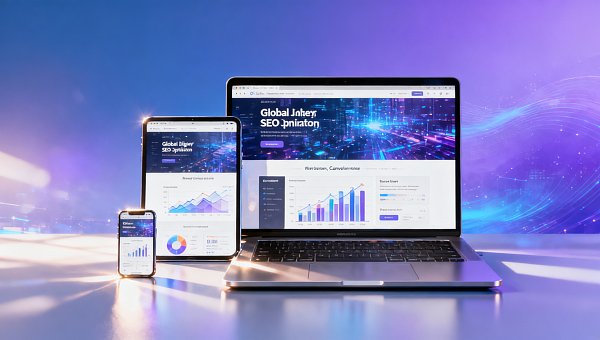
A multilingual foreign trade website is not as simple as translating a Chinese website into several languages. It also involves brand presentation, inquiry conversion, search engine crawling, access speed in different regions, as well as the handoff efficiency for subsequent advertising campaigns and social media traffic generation. Truly reliable service providers often offer an integrated website + marketing service solution, rather than only website building.
From the perspective of business decision-making, it is usually important to focus on 4 types of capabilities: website development technology, content and language localization, SEO optimization services, and follow-up promotion execution. If only the frontend pages are launched, but there is no keyword planning, landing page conversion design, or data tracking, the website may still struggle to generate stable inquiries even after 3–6 months online.
From the perspective of users and project managers, it is also necessary to pay attention to whether the delivery process is clear. A typical foreign trade website project is usually divided into 6 stages: requirements analysis, page prototyping, content deployment, language configuration, optimized launch, and data acceptance testing, with a common timeline of 2–6 weeks, while more complex projects may take longer.
Yiyingbao Information Technology (Beijing) Co., Ltd. was established in 2013 and is headquartered in Beijing. It has long taken artificial intelligence and big data as its core driving forces, providing full-chain solutions around intelligent website development, SEO optimization, social media marketing, and advertising placement. For companies that hope to use their website as an entry point for overseas customer acquisition, this kind of capability is more critical than simply “being able to build pages.”
Companies can first check these 5 items when screening service providers
- Whether it supports an independent page structure for multiple languages instead of simple machine switching, to avoid affecting overseas search engine indexing.
- Whether it has responsive foreign trade website development capabilities to ensure normal browsing on desktop, tablet, and mobile across all 3 device types.
- Whether it can provide basic SEO deployment, including titles, descriptions, site structure, page speed, URL rules, image alt text, and other elements.
- Whether it can connect with overseas channel promotion such as Google, to avoid a broken promotion chain after the website is completed.
- Whether it has an ongoing operation, maintenance, and data review mechanism, such as monthly content updates, quarterly optimization recommendations, and inquiry source tracking.
If a service provider can connect “website development, ranking, promotion, conversion, and review” into one complete line, it is usually better suited to the actual needs of foreign trade companies, especially for distributors, agents, and project-based companies building a long-term overseas presence.
Which companies and application scenarios are suitable for Yiyingbao's multilingual foreign trade websites?
Many companies worry: their industry is complex, they have many product models, and their project cycles are long—so are multilingual foreign trade websites really useful? In fact, different industries have different demands for websites, but all are inseparable from these 3 goals: “clear presentation, stable entry points, and traceable leads.” Especially in B2B scenarios, the website is often the first window through which overseas customers systematically understand a company.
For business decision-makers, the value of a multilingual website lies in lowering the comprehension threshold for international customers; for operators, the value lies in facilitating the maintenance of product pages, case pages, and inquiry forms; for engineering project leaders, the value lies in supporting project solutions, delivery processes, and technical materials; for end consumers, the value lies in building trust more quickly.
If a company plans to test overseas markets in 1–3 key countries, a multilingual website is usually a low-threshold foundational investment; if a company is already running platform advertising, social media operations, or following up after overseas exhibitions, then the website functions more like a unified traffic conversion hub, capable of turning scattered leads into long-term digital assets.
The advantage of an integrated website + marketing service provider like Yiyingbao is that it can coordinate website development with subsequent traffic growth, rather than turning a multilingual site into an online brochure that “looks good but cannot convert.”
What are the common applicable scenarios?
As can be seen from the table above, the key focuses of website development vary greatly among different business types. If the service provider lacks industry understanding and only knows how to apply templates, it will be difficult to turn the website into a truly useful overseas marketing asset.
Beyond scenarios, execution depth also matters
Some companies already have brand materials but lack keyword planning; some have multilingual materials but no clear information architecture; others have decent traffic but low-quality inquiries. If a website service provider can identify these issues during the first 1–2 rounds of communication, it usually indicates more substantial practical experience.
At the content planning level, appropriately integrating industry knowledge content also helps establish a professional image. For example, if a company introduces topics related to digitalization and organizational capability upgrades in its knowledge section, such as Reconstructing the Core Competencies of Corporate Finance Personnel Driven by Artificial Intelligence, it can serve the extended reading needs of management and professional visitors, provided that the content remains consistent with the company’s overall marketing positioning.
Is the cost of building a multilingual foreign trade website high? How should the budget be allocated more reasonably?
“Is the cost of building a multilingual website high?” is a frequently asked question, but the answer cannot be based only on the total quotation. There are at least 5 key variables that affect the cost: number of languages, number of pages, degree of original content creation, functional complexity, and follow-up marketing needs. Building 1 language version versus building 3–5 language versions usually involves a very obvious difference in workload.
If a company is only pursuing launch speed, adopting a standardized structure will be more budget-saving; if it also needs to take into account brand presentation, independent optimization for each language page, advertising landing pages, inquiry management, and data tracking, then the budget should be broken down according to “website development + content + optimization + promotion,” rather than only comparing homepage design costs.
For project leaders, a more practical approach is to first clarify the initial goal: is it to complete the basic overseas official website setup within 2 months, or to obtain the first batch of inquiries within 3–6 months? Different goals require different investment structures. When the budget is limited, priority should be given to website architecture, content readability, and conversion entry points. It is not recommended to over-concentrate resources on visual effects.
The value of an integrated service like Yiyingbao lies in its ability to create a combined solution according to the company’s stage. For companies just going overseas, it can first complete a basic multilingual website and core SEO deployment; for companies that already have a traffic foundation, it can further add advertising placement, social media operations, and data analysis to improve lead conversion efficiency.
When evaluating the budget, it is recommended to view costs in 3 layers
After this breakdown, companies can more easily identify “which costs are one-time setup costs and which costs are ongoing growth investments.” If procurement only looks at the total price without examining delivery boundaries, additional costs, missing functions, or difficulties in promotion integration often arise later.
Which low-price plans require special caution?
- They only promise to launch in a few days, but do not explain the number of pages, language quality, or the scope of SEO deployment.
- The multilingual setup only performs frontend switching and does not generate an independent content structure, making overseas search optimization difficult later.
- The quotation does not include follow-up maintenance, data tracking tags, form testing, or mobile adaptation, causing problems to be exposed all at once after launch.
- They only talk about visual design, but not inquiry paths, loading speed, priority of core pages, or marketing landing.
For foreign trade companies, what is truly expensive is not the website development cost, but building a website that cannot deliver business results. Therefore, budget judgment should shift from “cost” to “the overall input-output logic.”
When purchasing multilingual foreign trade website services, how should you make comparisons, conduct acceptance, and control risks?
If a company has already entered the quotation comparison stage, it is recommended not to simply compare the prices of 3 quotations horizontally, but to compare delivery lists, implementation cycles, operation and maintenance boundaries, and promotion integration capabilities. Especially for foreign trade websites, getting the site built is only the starting point; whether it can be continuously optimized later determines its long-term value.
In routine procurement, companies should set at least 5 inspection items: page structure, language configuration, mobile experience, form conversion path, and basic SEO. If targeting multiple country markets, they should also add access speed testing, regional content differences, privacy and form compliance notices, and other items.
At the acceptance stage, it is recommended to divide the process into 2 rounds: pre-launch acceptance and post-launch acceptance. The former looks at pages, links, forms, and device adaptation; the latter looks at indexing, visits, keyword coverage, and inquiry flow. Between the 2 rounds, it is generally necessary to reserve a 7–30 day observation period, which is more reliable than one-time sign-off.
For companies that require internal collaboration, evaluation can be jointly conducted by the marketing department, foreign trade business department, and technical负责人. This can balance both branding and technology while avoiding the common conflict of “the design is satisfactory but sales finds it unusable.”
One table to understand selection and acceptance priorities
This kind of evaluation method is more effective than simply looking at case screenshots, because it directly corresponds to subsequent operational results. For distributors, agents, and project-based companies, this kind of practical procurement judgment is particularly important.
Common misconceptions and FAQ
Is a multilingual website always better with more languages?
Not necessarily. For most companies, it is more prudent to start with 1–3 key languages in the first phase. The more languages there are, the higher the content maintenance and localization costs. If there is no ability to continuously update, having more pages may instead dilute quality.
Is responsive foreign trade website development absolutely necessary?
It is strongly recommended. Overseas customers use a relatively diverse range of devices, and the mobile experience directly affects dwell time and form conversion. Usually, at least 2–3 rounds of testing should be carried out on desktop and mainstream mobile devices.
How soon can results be seen after the website goes live?
If only looking at the website launch itself, it may be completed in 2–6 weeks; if looking at the accumulation of organic traffic, continuous optimization for more than 3 months is usually required; if combined with advertising placement, some pages can begin receiving test traffic within 1–4 weeks after launch.
Do content sections need to be updated continuously?
Continuous updates are recommended. Industry articles, case analyses, solution explanations, and white-paper-style content can all enhance professionalism. For example, around the theme of organizational digital transformation upgrades, appropriately integrating content such as Reconstructing the Core Competencies of Corporate Finance Personnel Driven by Artificial Intelligence can also help increase dwell time and trust among management-level visitors.
Why choose us: if you are evaluating multilingual foreign trade websites, you can directly consult on these questions
If you are judging whether Yiyingbao's multilingual foreign trade website service is reliable, the core is not to look at promotional wording, but to see whether it can combine your industry, budget, target market, and delivery timeline to provide a clear implementation path. The significance of integrated website + marketing services lies in collaboratively advancing website development, optimization, promotion, and conversion under the same business objective.
Yiyingbao has been deeply engaged in global digital marketing services for many years, providing continuous solutions around intelligent website development, SEO optimization, social media marketing, and advertising placement. For companies hoping to complete basic website construction within 2–6 weeks and begin overseas customer acquisition testing within 3–6 months, this supporting capability from development to operations offers more practical value.
If you are a business decision-maker, you can focus your consultation on budget allocation, language planning, and promotion paths; if you are an operator, you can consult on content entry, backend maintenance, and page update efficiency; if you are a project leader, you can directly confirm delivery milestones, acceptance lists, and launch testing methods; if you are a channel customer, you can discuss the configuration logic for brand presentation and招商 pages.
It is recommended to directly raise the following questions during communication: how many languages are suitable, how many core pages are needed in the first phase, how long the regular delivery cycle is, whether responsive foreign trade website development is included, whether search engine optimization services are provided, how inquiries will be tracked after launch, and whether customized plans can be developed in combination with advertising placement and social media traffic generation. Clarifying these questions is often more effective than simply looking at quotations when judging whether a service provider is reliable.
It is recommended to prioritize confirming these 6 consultation items
- Which countries or language versions are most suitable for your industry to start with, and whether it is more appropriate to control the first phase within 1–3 languages.
- How many core pages are needed, and whether product pages, case pages, contact us pages, and download pages all need to be planned simultaneously.
- Into how many steps the delivery cycle is divided, whether it is usually 2–6 weeks or longer, and which materials are prepared by the company versus organized with assistance from the service provider.
- Which specific items are included in basic SEO deployment, and whether it covers site structure, title descriptions, URL rules, image descriptions, and form tracking.
- Whether it can later integrate advertising placement, social media marketing, and content updates, to avoid having no one operating the website after launch.
- Whether the quotation is clearly broken down, and which parts belong to one-time construction versus ongoing optimization and promotion services.
When you can make judgments around these dimensions, you are no longer just “buying a website,” but building a sustainable infrastructure for overseas customer acquisition. This is also the key standard for evaluating whether a multilingual foreign trade website is reliable.
Related Articles



Related Products
 EasyCamp SaaS Smart Website Marketing SystemE-Yingbao SaaS Smart Website Marketing System: AI-powered, zero-code website building. Rapidly launch multilingual independent e-commerce sites in just 10 minutes. Global server acceleration and AI-driven SEO optimization empower businesses to efficiently connect with global markets. The seamless integration of technology and user-friendly operation makes building e-commerce sites incredibly simple.
 AI+SEM Intelligent Advertising Marketing SystemAI+SEM drives intelligent ad creation, empowering full-funnel precision advertising marketing. The system automatically generates weekly/monthly reports, AI recommends keywords and target countries, monitors core metrics in real-time with intelligent alerts, and enables one-click high-conversion ad solutions to help quickly acquire customers and improve ROI.
 AI+SEO Dual Engine Optimization ServiceEasyWin AI+SEO Dual Engine Optimization System leverages AI-powered keyword mining, content generation, and comprehensive technical optimization to help foreign trade enterprises acquire high-quality organic traffic, significantly improving search rankings and conversion rates.
 AI+SNS Social Media Marketing SystemYingbao AI+SNS Social Media Marketing System - Precision social capture for the social media era. Supports one-click content synchronization across major platforms like Facebook and LinkedIn. AI intelligently rewrites posts for enhanced relevance. 24/7 AI customer service and user profiling analysis empower businesses to efficiently expand into global markets.
 AI+SEO营销解决方案易营宝AI+SEO营销解决方案,通过AI批量写作、智能生成TDK、精准关键词扩词等功能,全面优化网站SEO效果,提升流量与转化率。助力企业构建高效智能网站新生态。
 AI+SEM Advertising Marketing SolutionsAI+SEM Advertising Marketing Solution leverages AI technology to deeply empower SEM ad campaigns. It automatically generates weekly/monthly reports using AI, presenting account data across multiple dimensions for comprehensive insights into campaign performance and trends. The system precisely recommends keywords and target countries, intelligently generates high-conversion ad copy, and enables one-click activation of efficient campaign plans to help businesses rapidly acquire customers. Simultaneously, it monitors core metrics in real time, intelligently identifies abnormal fluctuations, and issues timely alerts to ensure stable, high-return advertising results.
 Domain Name ServicesEasyWin provides professional domain name services, including intelligent queries, one-stop registration, brand protection, and full lifecycle management, helping businesses build a digital brand image.
 EasyOperate B2C Cross-Border E-Commerce Platform & Independent WebsiteEasyStore B2C Cross-border E-commerce Independent Store is an intelligent website building and cross-border e-commerce integrated solution independently developed by EasyStore Information Technology (Beijing) Co., Ltd. The system is specially designed for small and medium-sized as well as large export enterprises, integrating 'website building, operation, marketing, advertising, and conversion' into one, helping enterprises quickly establish cross-border e-commerce independent stores to achieve brand globalization and global sales growth.
The platform supports multiple languages, multiple currencies, and multi-channel marketing, with built-in AI intelligent translation and SEO optimization systems, suitable for mainstream markets such as Southeast Asia, Europe and America, Latin America, and the Middle East, assisting Chinese manufacturing enterprises in efficiently deploying international e-commerce strategies. SSL证书易营宝提供专业SSL安全证书服务,包括单域名和泛域名证书,确保网站数据传输加密、身份验证和完整性保护,助力企业建立安全可信的在线业务环境。









