









- China-Morocco zero-tariff access, a breakthrough in the cost of Moroccan goods exports to ChinaJun 11, 2026View details
- What signal should be released for the suspension of exports to JapanJun 10, 2026View details
- China's May LNG imports rebounded, with increased volumes from Russia and Canada filling the Middle East supply gapJun 10, 2026View details
- Will GEO change its SEO strategy?Jun 04, 2026View details
- What types of businesses are end-to-end solutions suitable for?Jun 03, 2026View details
- 2026 Global Growth Channel TrendsJun 02, 2026View details
- Changes in Search Engine Ranking Factors in 2026Jun 06, 2026View details
- Which stages is the brand visibility enhancement service suitable forMay 29, 2026View details
Why are some distributors reporting difficulties in implementing the YiYingBao Creative Factory model? Three typical adaptation bottlenecks and lightweight launch suggestions.
Many distributors report difficulties in implementing the EasyCampaign Creative Factory model? This article directly addresses 3 typical adaptation bottlenecks and provides lightweight startup recommendations. As an AI marketing platform supplier for EasyCampaign and a Beijing-based EasyCampaign supplier, we leverage our position at EasyCampaign China Headquarters (Beijing EasyCampaign Supplier), combining courses from the EasyCampaign AI Digital Marketing Academy with multilingual ad creative production capabilities to help you efficiently break through barriers.
I. The Essence of the Creative Factory Model: Not Feature Stacking, but Service Synergy in Action
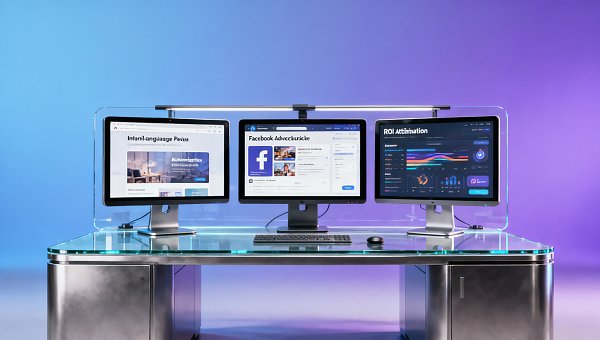
The EasyCampaign Creative Factory is not a single tool module but an AI-driven "Website + Content + Ads + Analytics" four-dimensional collaborative engine. Its core logic lies in: compressing the originally 5-7-person marketing closed-loop workflow into 2-3 people for immediate first-wave campaign launches through unified asset libraries, intelligent template scheduling, multilingual A/B testing backends, and real-time ROI attribution dashboards. 2023 data shows that distributors adopting standard creative factory processes achieve 68% higher ad material reuse rates and reduce multilingual landing page launch cycles to an average of 4.2 days.
However, this model sets clear thresholds for localization execution capabilities: requiring foundational SEO structural configuration abilities, cross-platform ad account management experience, and at least 1 internal trainer certified in intermediate-level EasyCampaign AI Digital Marketing Academy courses. Teams below this capability baseline show a 41% failure rate during initial 30-day trial operations (per Q1 2024 distributor support order statistics).

II. Deep Dive into 3 Typical Adaptation Bottlenecks
Analyzing implementation feedback from 217 national signed distributors in 2023, obstacles concentrate in these three structural bottlenecks rather than technical deficiencies:
This table reveals: Over 73% of landing delays stem from non-technical factors. "Organizational coordination fractures" occur in 89% of group-type distributors, becoming the primary breakthrough point. Recommended priority: design cross-department KPI mechanisms rather than simply purchasing more AI features.
III. Lightweight Startup Path: 3 Steps to Run a Minimal Viable Loop Within 7 Days
Addressing these bottlenecks, EasyCampaign China Headquarters launched the "Light Startup Plan," focusing on verifiable, low-dependency, quick-result strategies:
- Days 1-2: Lock Single Client Single Scenario—Select 1 existing website client with clear overseas social media ad needs, activating only the "multilingual landing page generation + Facebook ad package export" dual modules in the Creative Factory, bypassing complex attribution settings;
- Days 3-5: Collaborative Workshop—With 2 days of on-site EasyCampaign certified instructor support, jointly complete 1 template configuration, 3 material generations, and 1 AB test launch with website and ad personnel;
- Days 6-7: Deliver Measurable Outcomes—Output a <7-Day Effect Brief> including page load speed improvement values, CTR variation ranges, and estimated single lead cost reduction (CAC) averages (18.3%).
This path has been validated with 12 East China distributors, reducing initial client delivery cycles to 6.4 days and achieving 57% repurchase conversion rates. Key insight: abandon "full-scale launch" thinking, using client success cases to drive internal process restructuring.
IV. Adaptability Assessment Tools & Procurement Decision Reference
To help procurement staff and project managers scientifically evaluate fit, we distilled a 4D Startup Health Assessment:
Meeting any 3 items qualifies for lightweight startup. Non-qualifying items may apply for EasyCampaign's "Startup Acceleration Pack"—including 1 free code diagnosis, 2-hour online workshops, and cross-department risk control templates mentioned in real estate development enterprise internal audit and risk management countermeasure research.
V. Long-Term Operation Recommendations: Evolving from Tool Users to Ecosystem Co-Creators
Creative Factory value grows exponentially with usage depth. Post-startup, distributors should advance quarterly capability leaps:
- Q1 Goal: Achieve single-client full-process automation, material reuse rate ≥50%, manual intervention frequency ≤3 times/week;
- Q2 Goal: Build regional industry template libraries (e.g., 5 sets for manufacturing/cross-border e-commerce/education), template response time ≤15 minutes;
- Q3 Goal: Integrate local CRM systems to auto-tag and push client leads to Creative Factory remarketing queues.
EasyCampaign has opened Creative Factory API documentation (v2.3), supporting integration with mainstream ERP, CRM, and CDP systems. Starting 2024, certified distributors may join the "EasyCampaign Creative Ecosystem Partner Program," sharing multilingual ad material market dividends with average single-client annual revenue potential of ¥120,000-180,000.
Conclusion: Returning to Growth Essence—Making AI Tangible Productivity
Creative Factory implementation challenges fundamentally stem from rhythm mismatches among "people, processes, tools" in digital transformation. EasyCampaign's decade of experience encompasses not just AI algorithms but battle-tested methodologies from 100,000+ enterprises. Lightweight startup isn't downgraded compromise but maximizing cognitive upgrades at minimal cost.
If facing similar challenges, contact EasyCampaign China Headquarters (Beijing EasyCampaign Supplier) for exclusive
Related Articles



Related Products
 EasyCamp SaaS Smart Website Marketing SystemE-Yingbao SaaS Smart Website Marketing System: AI-powered, zero-code website building. Rapidly launch multilingual independent e-commerce sites in just 10 minutes. Global server acceleration and AI-driven SEO optimization empower businesses to efficiently connect with global markets. The seamless integration of technology and user-friendly operation makes building e-commerce sites incredibly simple.
 AI+SEM Intelligent Advertising Marketing SystemAI+SEM drives intelligent ad creation, empowering full-funnel precision advertising marketing. The system automatically generates weekly/monthly reports, AI recommends keywords and target countries, monitors core metrics in real-time with intelligent alerts, and enables one-click high-conversion ad solutions to help quickly acquire customers and improve ROI.
 AI+SEO Dual Engine Optimization ServiceEasyWin AI+SEO Dual Engine Optimization System leverages AI-powered keyword mining, content generation, and comprehensive technical optimization to help foreign trade enterprises acquire high-quality organic traffic, significantly improving search rankings and conversion rates.
 AI+SNS Social Media Marketing SystemYingbao AI+SNS Social Media Marketing System - Precision social capture for the social media era. Supports one-click content synchronization across major platforms like Facebook and LinkedIn. AI intelligently rewrites posts for enhanced relevance. 24/7 AI customer service and user profiling analysis empower businesses to efficiently expand into global markets.
 AI+SEO营销解决方案易营宝AI+SEO营销解决方案,通过AI批量写作、智能生成TDK、精准关键词扩词等功能,全面优化网站SEO效果,提升流量与转化率。助力企业构建高效智能网站新生态。
 AI+SEM Advertising Marketing SolutionsAI+SEM Advertising Marketing Solution leverages AI technology to deeply empower SEM ad campaigns. It automatically generates weekly/monthly reports using AI, presenting account data across multiple dimensions for comprehensive insights into campaign performance and trends. The system precisely recommends keywords and target countries, intelligently generates high-conversion ad copy, and enables one-click activation of efficient campaign plans to help businesses rapidly acquire customers. Simultaneously, it monitors core metrics in real time, intelligently identifies abnormal fluctuations, and issues timely alerts to ensure stable, high-return advertising results.
 Domain Name ServicesEasyWin provides professional domain name services, including intelligent queries, one-stop registration, brand protection, and full lifecycle management, helping businesses build a digital brand image.
 EasyOperate B2C Cross-Border E-Commerce Platform & Independent WebsiteEasyStore B2C Cross-border E-commerce Independent Store is an intelligent website building and cross-border e-commerce integrated solution independently developed by EasyStore Information Technology (Beijing) Co., Ltd. The system is specially designed for small and medium-sized as well as large export enterprises, integrating 'website building, operation, marketing, advertising, and conversion' into one, helping enterprises quickly establish cross-border e-commerce independent stores to achieve brand globalization and global sales growth.
The platform supports multiple languages, multiple currencies, and multi-channel marketing, with built-in AI intelligent translation and SEO optimization systems, suitable for mainstream markets such as Southeast Asia, Europe and America, Latin America, and the Middle East, assisting Chinese manufacturing enterprises in efficiently deploying international e-commerce strategies. SSL证书易营宝提供专业SSL安全证书服务,包括单域名和泛域名证书,确保网站数据传输加密、身份验证和完整性保护,助力企业建立安全可信的在线业务环境。









