









- What multilingual website services are available in Sanya? Which model is more suitable for local businesses going global?Jul 08, 2026View details
- How to view the complete list of China SaaS companies in the top 100? Practical methods for screening website-building and marketing service providersJul 08, 2026View details
- How to view pricing in the global traffic ecosystem? Cost comparison of search, social media, and content channel advertisingJul 06, 2026View details
- How to assess foreign trade website development trends?Looking at 2026 changes from multilingual,AI content to conversion pathsJul 04, 2026View details
- What are the new trends in multilingual marketing data analytics tools in 2026? Focus on attribution、automation and complianceJul 04, 2026View details
- Is Brand Globalization Marketing Consulting Worth Buying? At What Stage Should Companies Bring It InJul 01, 2026View details
How to implement localized marketing for multilingual websites? Beyond translation: A 3-tier implementation checklist covering cultural adaptation, payment methods, and trust signals
How to implement localized marketing with multilingual websites? It's more than just translation! Cultural adaptation, local payment methods, trust indicators—three key implementation checklists to directly address the core pain points of foreign trade website service providers. How to choose between them? How to promote after building a multilingual foreign trade website? What's the performance of EasyTrade's multilingual marketing system? A decade of real-world export experience, AI-driven full-chain localization implementation.
1. Localization is not "language switching" but reconstructing user trust pathways
Many companies mistakenly believe that multilingual websites differ from regular websites only in text replacement. In reality, true localization rebuilds users' cognitive loop in target markets: from initial visual perception (color preferences, layout rhythm) to interaction logic (form field sequences, navigation hierarchy), and ultimately conversion drivers (payment habits, after-sales guarantees). According to Google's 2023 cross-border consumer research, 76% of overseas consumers abandon carts due to missing local currency displays or payment options; another 63% question brand authenticity without third-party trust badges (like BBB or Trustpilot logos). This means even with perfect SEO optimization and fast server response, lacking these three trust-building layers will keep conversion rates persistently below industry averages.
Take agriculture, agricultural products, and food industries as examples—their end buyers (like European fresh produce wholesalers or Southeast Asian supermarket chains) demand extreme supply chain visualization. They focus not just on product specs but equally on origin certifications, cold-chain timeliness, and organic credentials—non-linguistic information requiring localized presentation. EasyTrade's smart website system automatically displays compliance icons by country (e.g., EU ECOCERT, Japan JAS), integrates local logistics tracking, and pre-configures packaging declaration forms with German/Spanish field structures to prevent inquiry losses from formatting errors.
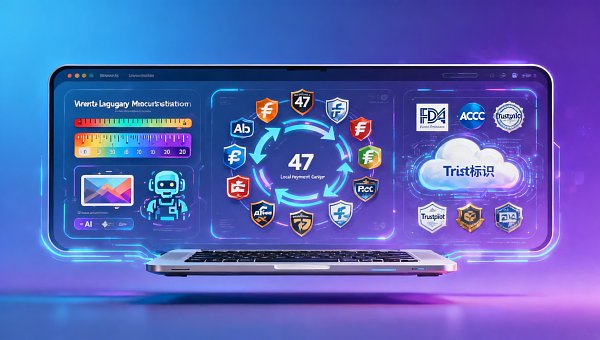
2. Three-tier localization checklist: Cultural adaptation × Payment closure × Trust visualization
Based on实战data from serving 100,000+ export businesses, we've distilled a ready-to-implement three-layer framework:
3. How can SMEs start cost-effectively? AI eliminates reliance on manual labor
Buyers often ask: "Are multilingual foreign trade websites suitable for SMEs?" The answer is yes—provided they abandon the traditional "manual page-by-page translation + outsourced design" approach. EasyTrade's AI marketing engine achieves three cost breakthroughs: Auto-generating TDK tags covering 23 languages reduces 90% copywriting workload; AI keyword expansion optimizes product descriptions using local search trends, boosting agriculture, agricultural products, food category traffic 3.2x naturally; smart site scanners detect 37 localization gaps (like missing HSTS headers or hreflang tags), generating prioritized fix lists. A Zhejiang tea exporter using this system saw Spanish inquiries surge 217% within six months while localization costs dropped 58%.
Server strategy is equally critical. Choosing servers for multilingual sites isn't as simple as "closest to users." EasyTrade's global CDN uses intelligent routing—when German users access a Chinese site, traffic automatically routes to Frankfurt edge nodes; Japanese site visits shift to Tokyo nodes, ensuring first-screen loads under 0.8 seconds (the baseline for Google Core Web Vitals scores above 95). Compared to self-built servers, this cuts annual运维costs by 70%.
4. From building to growth: Why post-website conversion optimization is fundamentally about localization depth
Data shows 82% of export companies achieve under 1.5% first-year conversion rates, mistaking "going live" for "completion." What truly determines conversion ceilings is localization granularity: Do product pages showcase native-quality visuals matching local aesthetics? Do FAQs anticipate Brazilian buyers' frequent customs document queries? Does blog content sync with Argentine agricultural exhibition updates? EasyTrade's AI ad manager solves this disconnect—it generates context-matched ad creatives based on local social trends (like French consumers' recent carbon footprint concerns) and A/B tests them with standalone landing pages. This "data-driven agile localization iteration" embodies why foreign trade websites need AI marketing support.
For companies evaluating website vendors, prioritize three criteria: country-specific SOP documentation, proven local payment/compliance integration cases, and verifiable ROI data from clients in your target market. Among EasyTrade's 2000+ agriculture and food clients, 91% reduced target-market inquiry costs by over 40% within six months.
How to implement localized marketing with multilingual websites? The answer transcends technology—it's the neural endpoint of globalization strategy. When cultural understanding becomes infrastructure, payment trust becomes default configuration, AI ceases to be a tool and transforms into your symbiotic partner for global market penetration.
Contact us now to receive the "Multilingual Foreign Trade Website Localization Self-Checklist" and industry-customized solutions—making every language switch a trust-building starting point.
- Foreign Trade Website Development
- Website detection
- Yiyingbao
- SEO
- Independent Website
- Smart website builder system
- SEO Optimization
- Smart Website Building
- EasySite Intelligent Website Builder
- AI Marketing Engine
- Multilingual website
- Multilingual Website Building
- Multilingual Marketing System
- EYB AI Marketing
- AI Marketing
- Multilingual Foreign Trade Website
Related Articles
 What do I need to prepare to configure payment in a WeChat Mini Program? Merchant ID, certificate, and review process explained.
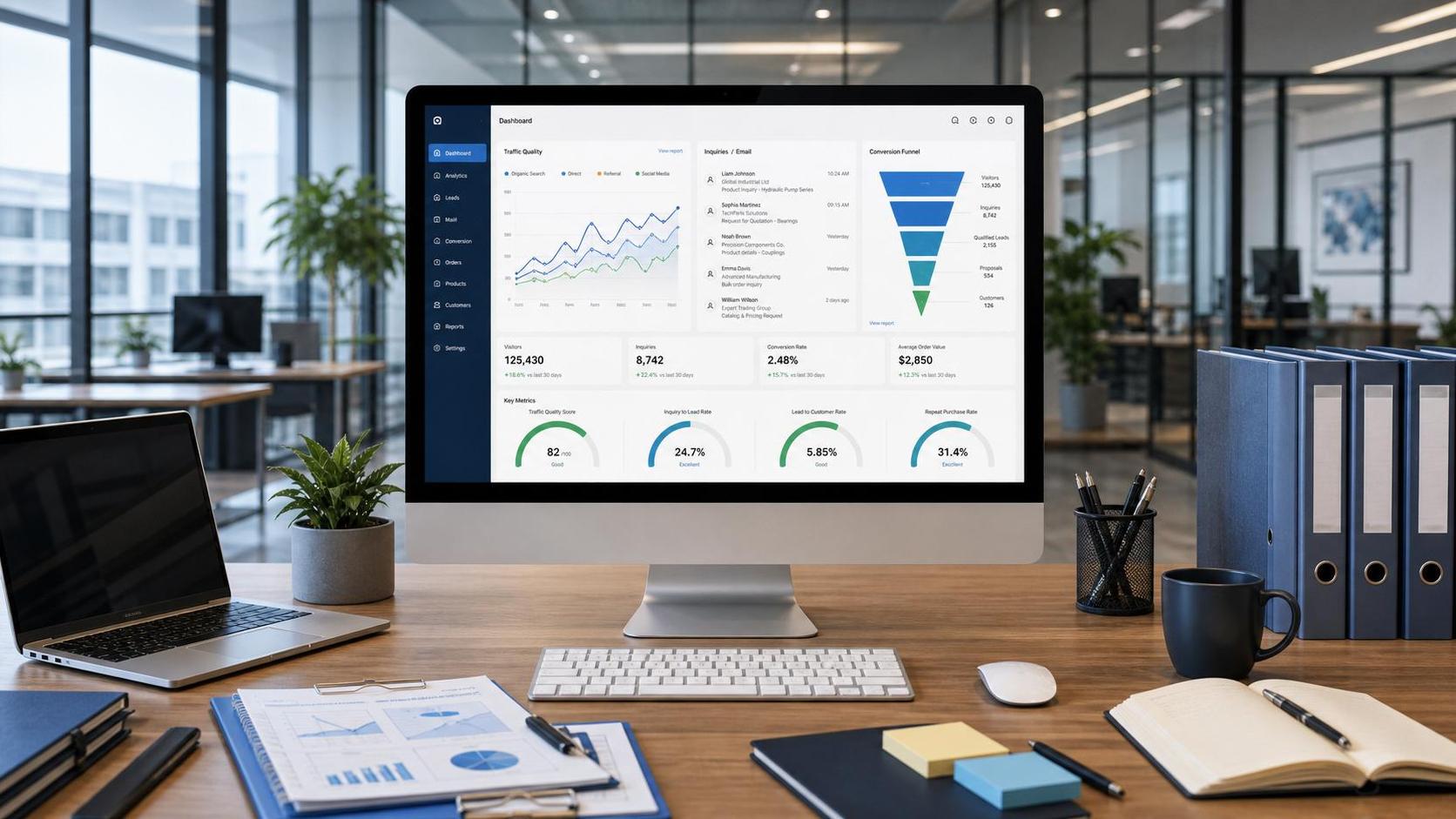
 Is 20 inquiries per month for a foreign trade website considered low? First look at traffic quality、average order value and conversion rate
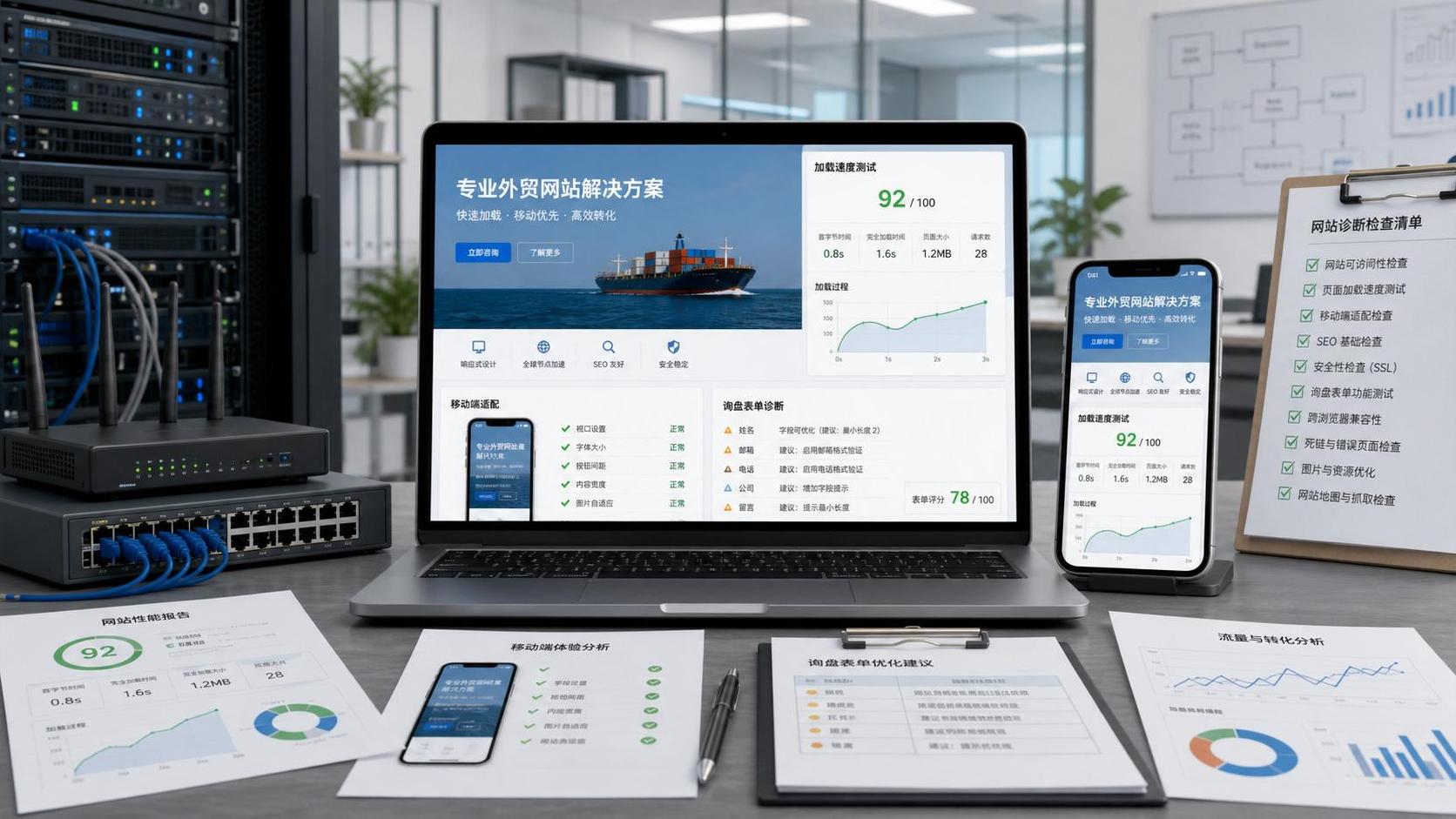
 How to troubleshoot foreign trade website development issues? Diagnose item by item from loading speed to inquiry forms

Related Products
 EasyCamp SaaS Smart Website Marketing SystemE-Yingbao SaaS Smart Website Marketing System: AI-powered, zero-code website building. Rapidly launch multilingual independent e-commerce sites in just 10 minutes. Global server acceleration and AI-driven SEO optimization empower businesses to efficiently connect with global markets. The seamless integration of technology and user-friendly operation makes building e-commerce sites incredibly simple.
 AI+SEM Intelligent Advertising Marketing SystemAI+SEM drives intelligent ad creation, empowering full-funnel precision advertising marketing. The system automatically generates weekly/monthly reports, AI recommends keywords and target countries, monitors core metrics in real-time with intelligent alerts, and enables one-click high-conversion ad solutions to help quickly acquire customers and improve ROI.
 AI+SEO Dual Engine Optimization ServiceEasyWin AI+SEO Dual Engine Optimization System leverages AI-powered keyword mining, content generation, and comprehensive technical optimization to help foreign trade enterprises acquire high-quality organic traffic, significantly improving search rankings and conversion rates.
 AI+SNS Social Media Marketing SystemYingbao AI+SNS Social Media Marketing System - Precision social capture for the social media era. Supports one-click content synchronization across major platforms like Facebook and LinkedIn. AI intelligently rewrites posts for enhanced relevance. 24/7 AI customer service and user profiling analysis empower businesses to efficiently expand into global markets.
 AI+SEO营销解决方案易营宝AI+SEO营销解决方案,通过AI批量写作、智能生成TDK、精准关键词扩词等功能,全面优化网站SEO效果,提升流量与转化率。助力企业构建高效智能网站新生态。
 AI+SEM Advertising Marketing SolutionsAI+SEM Advertising Marketing Solution leverages AI technology to deeply empower SEM ad campaigns. It automatically generates weekly/monthly reports using AI, presenting account data across multiple dimensions for comprehensive insights into campaign performance and trends. The system precisely recommends keywords and target countries, intelligently generates high-conversion ad copy, and enables one-click activation of efficient campaign plans to help businesses rapidly acquire customers. Simultaneously, it monitors core metrics in real time, intelligently identifies abnormal fluctuations, and issues timely alerts to ensure stable, high-return advertising results.
 Domain Name ServicesEasyWin provides professional domain name services, including intelligent queries, one-stop registration, brand protection, and full lifecycle management, helping businesses build a digital brand image.
 EasyOperate B2C Cross-Border E-Commerce Platform & Independent WebsiteEasyStore B2C Cross-border E-commerce Independent Store is an intelligent website building and cross-border e-commerce integrated solution independently developed by EasyStore Information Technology (Beijing) Co., Ltd. The system is specially designed for small and medium-sized as well as large export enterprises, integrating 'website building, operation, marketing, advertising, and conversion' into one, helping enterprises quickly establish cross-border e-commerce independent stores to achieve brand globalization and global sales growth.
The platform supports multiple languages, multiple currencies, and multi-channel marketing, with built-in AI intelligent translation and SEO optimization systems, suitable for mainstream markets such as Southeast Asia, Europe and America, Latin America, and the Middle East, assisting Chinese manufacturing enterprises in efficiently deploying international e-commerce strategies. SSL证书易营宝提供专业SSL安全证书服务,包括单域名和泛域名证书,确保网站数据传输加密、身份验证和完整性保护,助力企业建立安全可信的在线业务环境。









