









- How to assess foreign trade website development trends?Looking at 2026 changes from multilingual,AI content to conversion pathsJul 04, 2026View details
- What are the new trends in multilingual marketing data analytics tools in 2026? Focus on attribution、automation and complianceJul 04, 2026View details
- Is Brand Globalization Marketing Consulting Worth Buying? At What Stage Should Companies Bring It InJul 01, 2026View details
- Cross-Border Marketing Trend Research: Why More and More Companies Are Starting to Deploy AI Search and GEO OptimizationJun 30, 2026View details
- Cross-Border Marketing Trend Research: How Independent Sites, AI Content, and Short-Video Customer Acquisition Are ChangingJun 30, 2026View details
- How Can a Brand Updates Page Be Made More SEO-Friendly? Analysis of Update Frequency, Content Structure, and Internal Linking StrategyJun 28, 2026View details
How is EasyOperate's foreign trade website building service? Hangzhou service provider tested 3 major pain points and 2026 optimization path
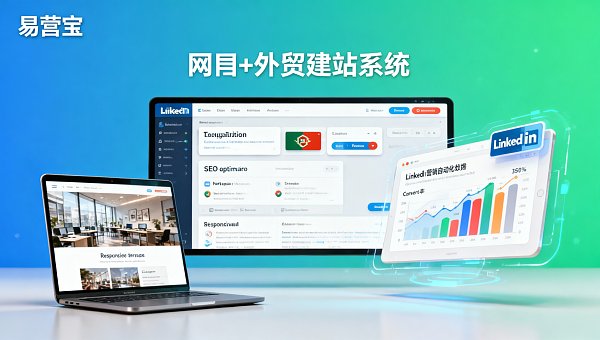
How is EasyYunbao's foreign trade website building service? A Hangzhou service provider's real-world testing revealed three major pain points for export enterprises: long delivery cycles for responsive foreign trade websites, insufficient localization in Portuguese standalone website construction, and difficulties in LinkedIn marketing automation implementation. This article concludes with practical insights on optimizing SEO for AI-built websites in 2026, cost comparisons between AI and traditional website construction, and actionable optimization paths.
1. Delivery Efficiency Dilemma: Why Are Responsive Foreign Trade Websites Still Stuck at "The Last Mile"?

A medium-sized auto parts export enterprise in Hangzhou reported that after onboarding a local service provider to the EasyYunbao platform, their English+Spanish bilingual site took 14 workdays from contract signing to launch—far exceeding the advertised "10-minute multilingual foreign trade standalone website" claim. Deep analysis revealed the bottleneck wasn't technical but rather in requirement alignment and content preparation: clients had to self-provide product images, technical parameter tables, and compliant copy, while the Hangzhou provider lacked a native-language review mechanism for Portuguese standalone sites, resulting in three cultural misinterpretations in the first version (e.g., translating "high-performance brake pad" literally as "pastilha de freio de alta performance" without adapting to Portuguese market conventions as "freio de alto desempenho").
This highlights an industry reality: while front-end development cost differences between AI and traditional website construction have narrowed to under 15%, localization adaptation costs show a 27% divergence (per China Cross-Border Digital Infrastructure White Paper 2024). The true efficiency constraint lies in "human-machine collaborative workflows"—EasyYunbao's SaaS smart website marketing system incorporates Google Neural Machine Translation (GNMT) but requires manual verification loops to unlock value. Recommendation: prioritize service providers with Portuguese/Spanish bilingual support teams over mere server node counts (current platform deploys 222 global CDN nodes covering Lisbon, Madrid and other key hubs).
2. Localization Deep Waters: How Can Portuguese Standalone Websites Break Through "Grammatically Correct ≠ Market Effective"?
The Portuguese market exhibits distinct "Luso-Brazilian dual tracks": Brazilian users prefer colloquial expressions and short-video engagement, while Portugal emphasizes EU GDPR compliance statements and CE certification visualization. A Hangzhou provider's direct template deployment across pt-PT and pt-BR subdomains for an LED lighting client resulted in 72% Brazilian site bounce rates (industry average: 45%). The root cause was not activating EasyYunbao's "Smart Localization Tech" module—which supports country-specific configurations for currency units, tax rules, payment methods (Brazil's Pix, Portugal's MB Way), and social media button sequencing.
Critically, responsive foreign trade e-commerce solutions must include dynamic content distribution capabilities. For Portuguese users, systems should automatically replace "Free Shipping" with "Envio Grátis em Pedidos Acima de €59" while synchronizing FAQ return policy updates. This granular adaptation represents the watershed between AI writing augmentation versus replacement: AI excels at batch-generated base copy, but strategic localization still requires industry expertise.
3. Automation Implementation Challenges: Why Does LinkedIn Marketing Automation Often Result in "Accounts Without Conversions"?
A Shenzhen B2B industrial equipment supplier using EasyYunbao's LinkedIn automation averaged 24 monthly technical posts but achieved only 0.8% lead conversion (industry benchmark: 3.2%). Diagnosis revealed three strategy fractures: 1) Unactivated AI keyword expansion failed to analyze LinkedIn search trends, relying solely on Google keyword libraries; 2) AI-generated visuals lacked authentic production scenes, undermining professional credibility; 3) Uniform interaction templates didn't distinguish decision-makers (CEO/CFO) from executors (procurement managers), yielding <12% DM reply rates.
This validates which industries benefit most from AI batch content: highly standardized, visually driven, short-decision-cycle sectors (fast fashion, consumer electronics) show clear ROI, while industrial equipment and medical devices requiring deep trust must treat AI output as "draft material" for veteran-led value-point rewriting and case study embedding. EasyYunbao's SaaS smart website marketing systemEasyYunbao SaaS Smart Website Marketing System differentiates through "AI pre-screening + human refinement" dual workflows rather than replacing expert judgment.
4. 2026 Optimization Paths: From Technology Stacks to Growth Loop Migration
Based on 12-month empirical data from Hangzhou and Shenzhen providers, we distill three 2026 upgrade vectors:
These upgrades form a growth flywheel around the mission "Making Global Pathways for Chinese Brands": faster website speeds boosting SEO scores → higher conversions attracting precision traffic → more deal data feeding AI models → continuous localization optimization. When technology truly serves commercial objectives, EasyYunbao's foreign trade website service quality becomes self-evident—as demonstrated in thousands of enterprises' export practices.
Contact EasyYunbao's official partners now to obtain customized Foreign Trade Website Performance Diagnostic Reports, featuring detailed 2026 AI vs. traditional website cost comparison matrices and vetted Portuguese standalone website provider shortlists for Hangzhou-based enterprises.
- Website Development
- Foreign Trade Website Development
- Foreign Trade Website Development
- AI Writing
- AI Batch Article Generation
- LinkedIn Marketing
- Standalone website development
- Yiyingbao
- SEO
- Independent Website
- Smart Website Building
- Independent foreign trade website
- AI Website Building
- Marketing Automation
- Portuguese Standalone Website Development
- Responsive B2B Export Website Development
Related Articles
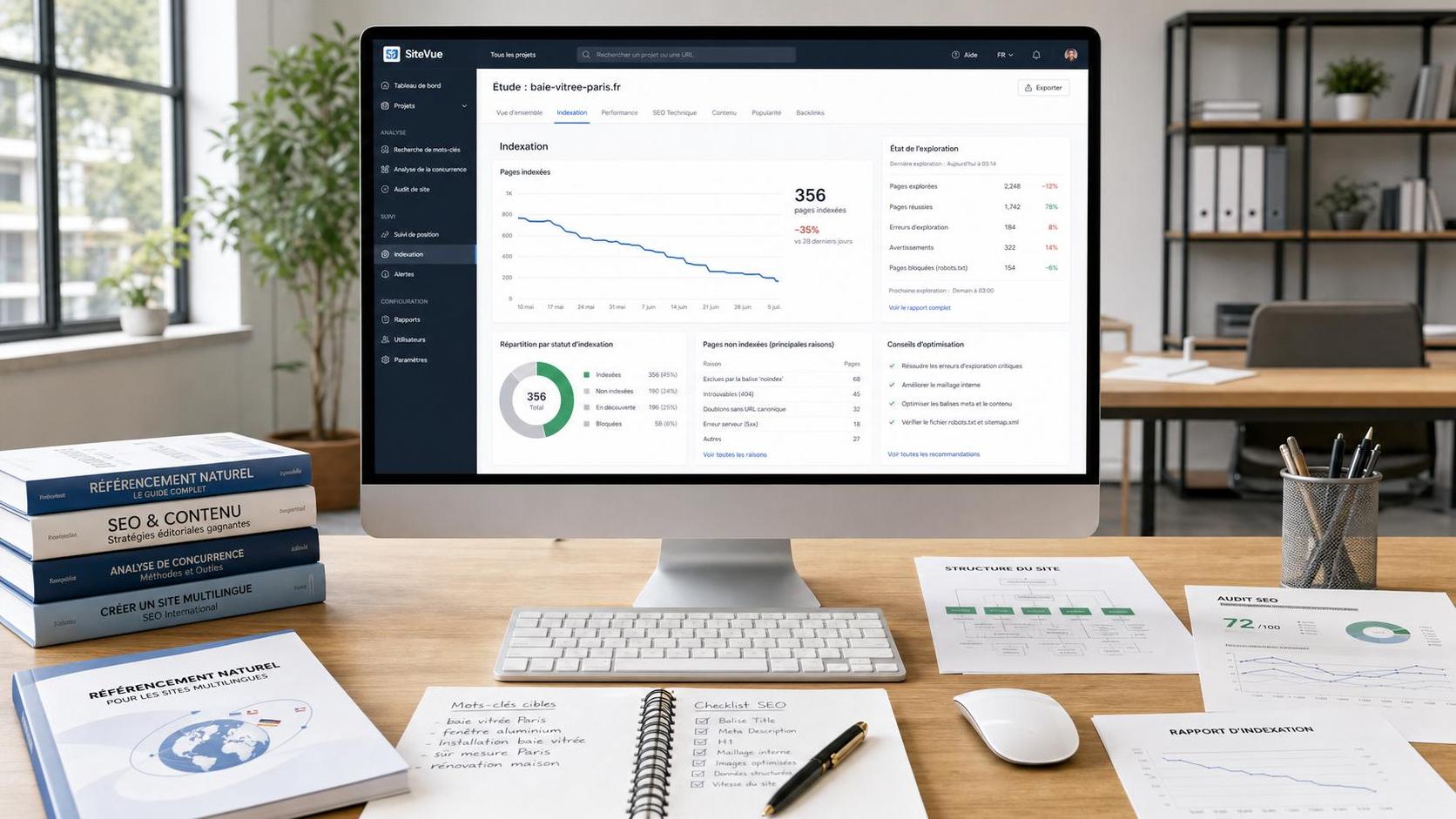
 In multilingual independent website development, French site indexing has been continuously dropping;where might the problem be
 What should I do if WhatsApp security verification keeps failing?6 common causes and handling steps
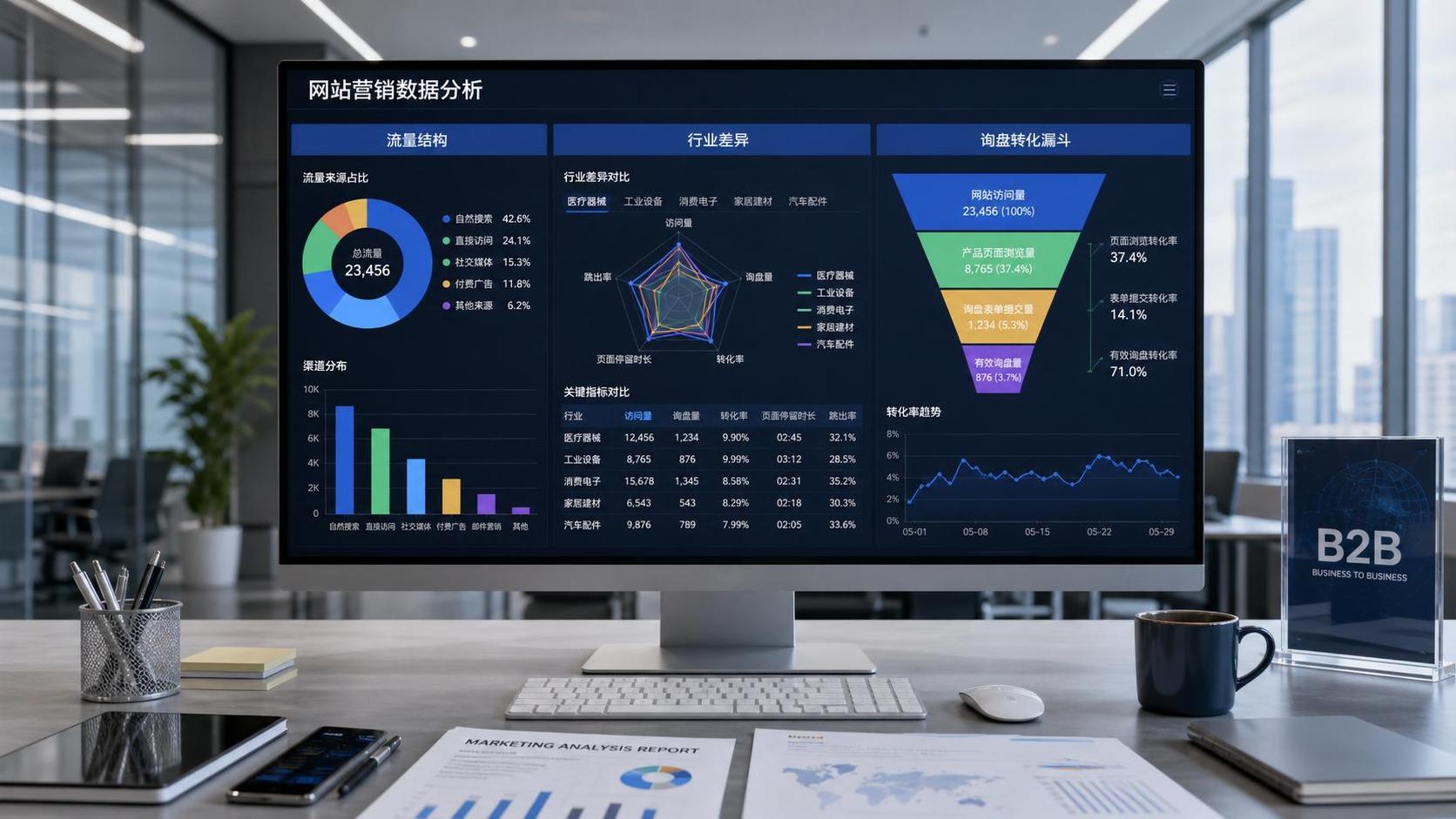
 What exactly is 易营宝's inquiry conversion rate?First look at traffic structure、industry differences and statistical criteria

Related Products
 EasyCamp SaaS Smart Website Marketing SystemE-Yingbao SaaS Smart Website Marketing System: AI-powered, zero-code website building. Rapidly launch multilingual independent e-commerce sites in just 10 minutes. Global server acceleration and AI-driven SEO optimization empower businesses to efficiently connect with global markets. The seamless integration of technology and user-friendly operation makes building e-commerce sites incredibly simple.
 AI+SEM Intelligent Advertising Marketing SystemAI+SEM drives intelligent ad creation, empowering full-funnel precision advertising marketing. The system automatically generates weekly/monthly reports, AI recommends keywords and target countries, monitors core metrics in real-time with intelligent alerts, and enables one-click high-conversion ad solutions to help quickly acquire customers and improve ROI.
 AI+SEO Dual Engine Optimization ServiceEasyWin AI+SEO Dual Engine Optimization System leverages AI-powered keyword mining, content generation, and comprehensive technical optimization to help foreign trade enterprises acquire high-quality organic traffic, significantly improving search rankings and conversion rates.
 AI+SNS Social Media Marketing SystemYingbao AI+SNS Social Media Marketing System - Precision social capture for the social media era. Supports one-click content synchronization across major platforms like Facebook and LinkedIn. AI intelligently rewrites posts for enhanced relevance. 24/7 AI customer service and user profiling analysis empower businesses to efficiently expand into global markets.
 AI+SEO营销解决方案易营宝AI+SEO营销解决方案,通过AI批量写作、智能生成TDK、精准关键词扩词等功能,全面优化网站SEO效果,提升流量与转化率。助力企业构建高效智能网站新生态。
 AI+SEM Advertising Marketing SolutionsAI+SEM Advertising Marketing Solution leverages AI technology to deeply empower SEM ad campaigns. It automatically generates weekly/monthly reports using AI, presenting account data across multiple dimensions for comprehensive insights into campaign performance and trends. The system precisely recommends keywords and target countries, intelligently generates high-conversion ad copy, and enables one-click activation of efficient campaign plans to help businesses rapidly acquire customers. Simultaneously, it monitors core metrics in real time, intelligently identifies abnormal fluctuations, and issues timely alerts to ensure stable, high-return advertising results.
 Domain Name ServicesEasyWin provides professional domain name services, including intelligent queries, one-stop registration, brand protection, and full lifecycle management, helping businesses build a digital brand image.
 EasyOperate B2C Cross-Border E-Commerce Platform & Independent WebsiteEasyStore B2C Cross-border E-commerce Independent Store is an intelligent website building and cross-border e-commerce integrated solution independently developed by EasyStore Information Technology (Beijing) Co., Ltd. The system is specially designed for small and medium-sized as well as large export enterprises, integrating 'website building, operation, marketing, advertising, and conversion' into one, helping enterprises quickly establish cross-border e-commerce independent stores to achieve brand globalization and global sales growth.
The platform supports multiple languages, multiple currencies, and multi-channel marketing, with built-in AI intelligent translation and SEO optimization systems, suitable for mainstream markets such as Southeast Asia, Europe and America, Latin America, and the Middle East, assisting Chinese manufacturing enterprises in efficiently deploying international e-commerce strategies. SSL证书易营宝提供专业SSL安全证书服务,包括单域名和泛域名证书,确保网站数据传输加密、身份验证和完整性保护,助力企业建立安全可信的在线业务环境。









