









- How to view pricing in the global traffic ecosystem? Cost comparison of search, social media, and content channel advertisingJul 06, 2026View details
- How to assess foreign trade website development trends?Looking at 2026 changes from multilingual,AI content to conversion pathsJul 04, 2026View details
- What are the new trends in multilingual marketing data analytics tools in 2026? Focus on attribution、automation and complianceJul 04, 2026View details
- Is Brand Globalization Marketing Consulting Worth Buying? At What Stage Should Companies Bring It InJul 01, 2026View details
- Cross-Border Marketing Trend Research: Why More and More Companies Are Starting to Deploy AI Search and GEO OptimizationJun 30, 2026View details
- Cross-Border Marketing Trend Research: How Independent Sites, AI Content, and Short-Video Customer Acquisition Are ChangingJun 30, 2026View details
Single Language vs. Multilingual Websites: 3.8x Conversion Rate Difference? Insights from German B2B Buyer Behavior Heatmap Data
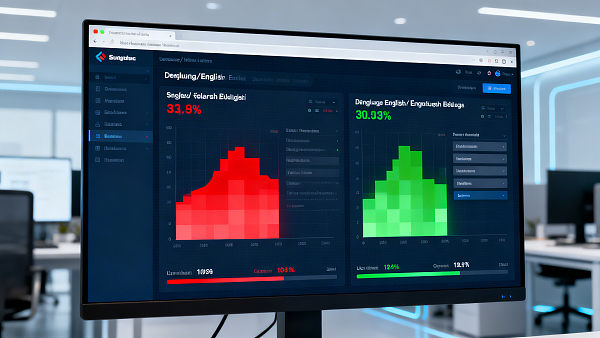
Why should foreign trade companies build independent websites? German B2B buyer behavior heatmap reveals: Multilingual websites have a conversion rate 3.8 times higher than single-language websites! What are the differences between multilingual and single-language websites? How to build one? Does it benefit SEO? Is AI translation reliable? Based on data from over 100,000+ export companies, EasyExport breaks down the core logic of multilingual websites for boosting overseas traffic.
1. Definition and Overview: What Constitutes a Truly Effective Multilingual Website?
A multilingual website is not simply a machine translation of Chinese pages into English or German. Instead, it is built on the underlying logic of aligning with target market users' cognitive habits, search intent, and localized language contexts, featuring independent URL structures, localized TDK (Title, Description, Keywords), regionalized content strategies, and globally compliant capabilities. It requires seamless language switching without interrupting user paths, synchronized content updates without delays, and SEO weight distribution without dilution—this is the core issue addressed by EasyExport's AI-powered website system with its "AI Translation Engine + Semantic Calibration Platform."
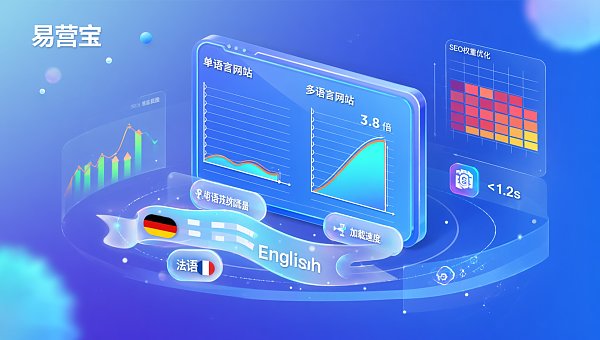
In contrast, single-language websites target only one linguistic audience. Even with pseudo-multilingual features via Google Translate plugins, they fail to meet search engines' core criteria for localized content quality, page loading speed, and structured data. According to Google Search Central's latest guidelines, non-native language pages lacking hreflang tags, localized server nodes, or semantic adaptation will be flagged as "low-trust content sources," resulting in a 62% drop in organic traffic efficiency.
2. Comparative Analysis: Key Differences Between Single-Language and Multilingual Websites
We analyze the performance gaps between the two types of websites in real B2B procurement scenarios across three dimensions: user behavior, technical implementation, and commercial outcomes.
3. Technical Performance and Implementation Guide: How to Build a High-Conversion Multilingual Website?
Building one isn't just about CMS plugins. EasyExport's data shows 83% of companies overlook these four technical anchors, turning multilingual sites into "display-only setups":
- URL Structure Standards: Must use subdirectories (e.g., example.com/de/) or subdomains (de.example.com), avoiding parameter-based language IDs (?lang=de);
- Precision hreflang Tag Deployment: Each page must bidirectionally annotate all language versions to avoid Google's duplicate content penalties;
- Localized CDN and Auto-Issued SSL Certificates: German users abandon pages with >1.2s latency—EasyExport's 7 global nodes reduce first-screen load time by 40%;
- AI Translation + Human Semantic Calibration Dual Mechanism: Pure AI accuracy is 68%, but with industry glossaries and B2B terminology engines, it reaches 94.7% (ISO/IEC 17100 certified).
EasyExport's smart website system packages these steps into a "One-Click Multilingual Publishing" module: Upload Chinese content → Select target languages → AI generates drafts → Industry knowledge graphs calibrate → Output localized TDK + structured data → Auto-deploy hreflang and CDN—all under 8 minutes.
4. Common Pitfalls and FAQ: Six Misconceptions About Multilingual Websites
Q: Do multilingual websites help SEO?
A: Yes, but only if aligned with Google's multilingual SEO best practices. EasyExport data shows properly deployed multilingual sites achieve 35% higher German keyword top-page occupancy and 217% growth in French long-tail organic traffic.
Q: Is AI translation reliable for multilingual sites?
A: Depends on the tech stack. EasyExport's NLP engine combines BERT-Multilingual with domain fine-tuning, supporting German industrial jargon, Spanish contract clauses, and Japanese honorifics with <5.3% error rates—far better than generic APIs (22.6% avg. errors).
Q: How many languages are typically needed?
A: More isn't better. B2B decision-maker research shows covering German, English, French, and Spanish reaches 87% of high-intent EU buyers. Adding Japanese, Korean, or Arabic captures incremental Asia/Middle East markets. Among EasyExport clients, 92% opt for 5–7 languages for optimal ROI.
5. Case Study: German Machinery Parts Supplier Achieves 3.8x Inquiry Growth
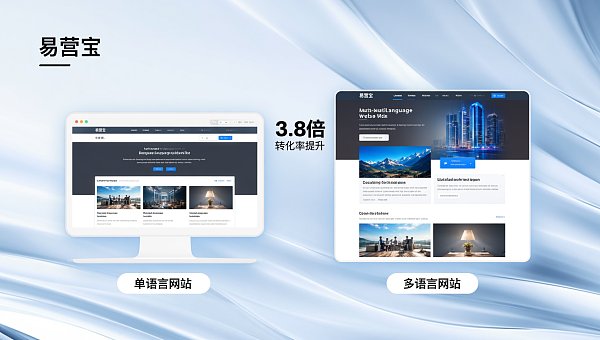
A Zhejiang precision machinery exporter using a single-language English site averaged 23 monthly German B2B inquiries. After deploying EasyExport's system: A German subdomain launched (with localized technical docs, CE certification pages, and LinkedIn DE content matrix). Within 3 months, German site organic traffic grew 290%, inquiries hit 88/month—3.8x the single-language site's conversion rate. Crucially, German site Google Ads CPC dropped 31% while ad conversions rose 200%, proving "build-to-lead"闭环 value.
The client also activated EasyExport's AI Ad Manager, which auto-identified high-value German long-tail keywords like "hydraulische Zylinder" (hydraulic cylinders) and generated locally resonant ad copy, boosting CTR from 1.8% to 5.4%.
6. Why Choose EasyExport? Make Multilingual Websites Drive Real Growth
We're not just a website tool but your "tech co-founder" for global growth. With 10 years of export service expertise, EasyExport uniquely integrates "language-traffic-conversion-repurchase"全链路 via its AI marketing platform:
- ✅ Beyond Translation: AI keyword engines scrape German Google Trends and LinkedIn group buzzwords to dynamically optimize TDK;
- ✅Streamlined Content Management: Supports "master site updates → auto-sync multilingual → human audit trails"三级协同, boosting content efficiency 5x;
- ✅Global Traffic Ecosystem: As a Google Premier Partner and Meta官方代理, we offer multilingual ad account托管+local payment gateways;
- ✅Zero-Risk Compliance: GDPR checks, auto-generated German DSGVO pages, and auto-rotating SSL certificates mitigate legal risks.
As of Q2 2024, EasyExport has helped 102,743 companies build multilingual独立站, with German-market clients averaging 38.6% YoY growth. Contact us now for free downloads: <德国B2B多语种网站健康诊断报告>+<多语言SEO提效白皮书>, ensuring your brand gets seen globally.
- SSL Certificate
- Multilingual Independent Website
- Google Ads
- Yiyingbao
- SEO
- Independent Website
- Smart website builder system
- Smart Website Building
- AI Translation
- EasySite Intelligent Website Builder
- Multilingual SEO
- AI Translation Engine
- Multilingual website
- Global Traffic Ecosystem
- Website Builder
- How many languages does a multilingual website generally require?
- What is the difference between a multilingual website and a single-language website?
- Why should foreign trade enterprises build independent websites?
- AI Marketing
Related Articles
 Is 20 inquiries per month for a foreign trade website considered low? First look at traffic quality、average order value and conversion rate
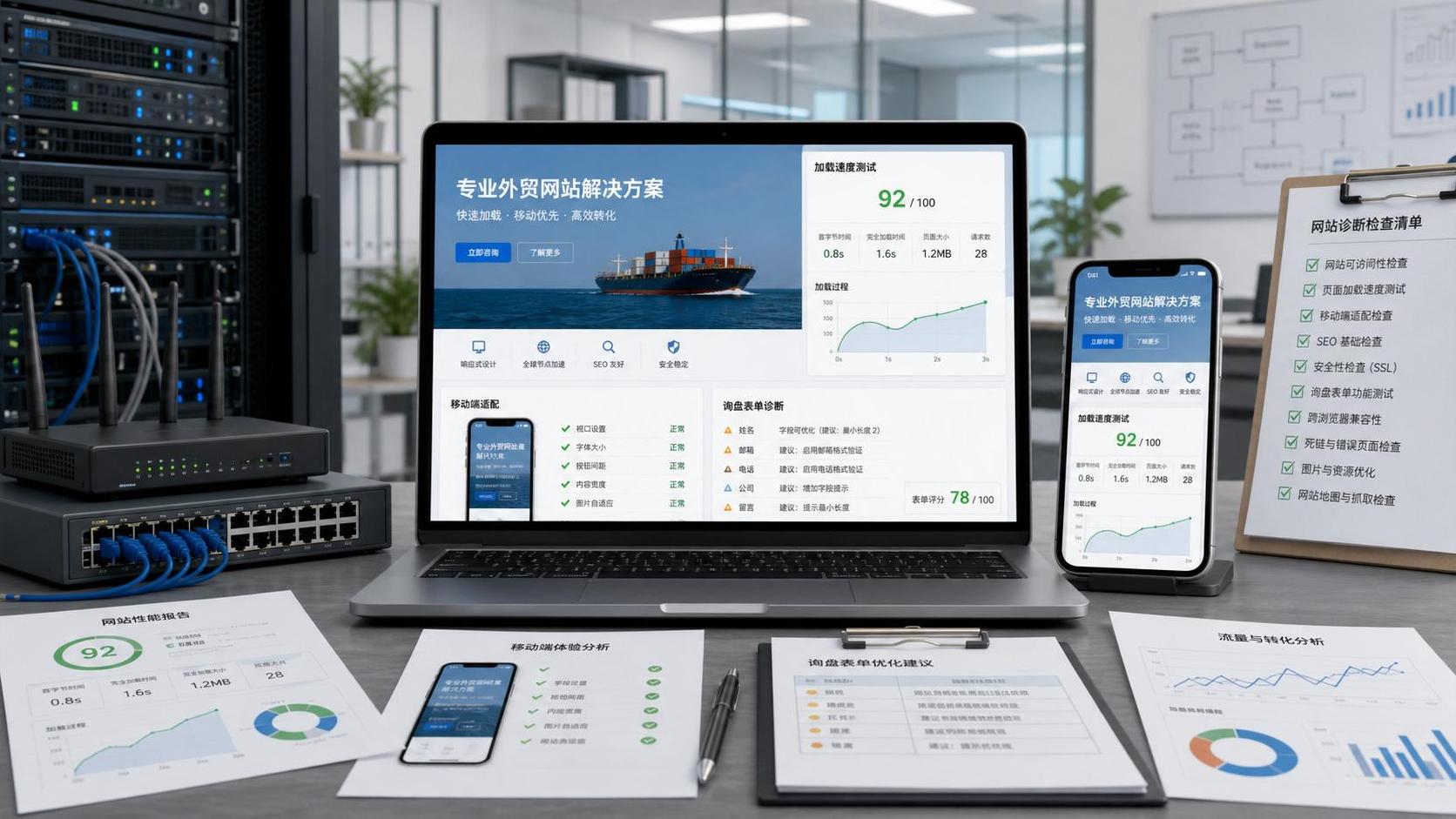
 How to troubleshoot foreign trade website development issues? Diagnose item by item from loading speed to inquiry forms
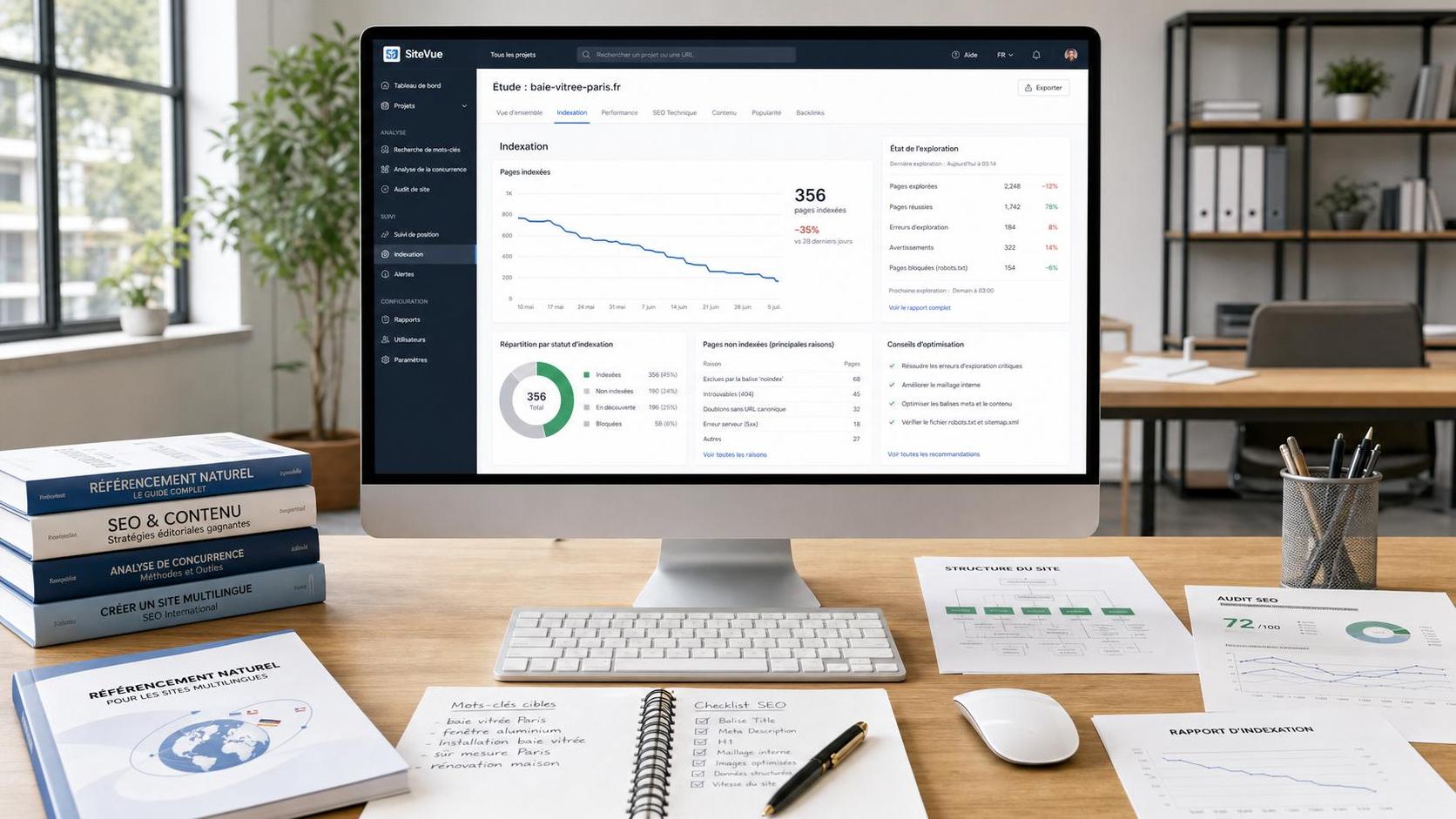
 In multilingual independent website development, French site indexing has been continuously dropping;where might the problem be
Related Products
 EasyCamp SaaS Smart Website Marketing SystemE-Yingbao SaaS Smart Website Marketing System: AI-powered, zero-code website building. Rapidly launch multilingual independent e-commerce sites in just 10 minutes. Global server acceleration and AI-driven SEO optimization empower businesses to efficiently connect with global markets. The seamless integration of technology and user-friendly operation makes building e-commerce sites incredibly simple.
 AI+SEM Intelligent Advertising Marketing SystemAI+SEM drives intelligent ad creation, empowering full-funnel precision advertising marketing. The system automatically generates weekly/monthly reports, AI recommends keywords and target countries, monitors core metrics in real-time with intelligent alerts, and enables one-click high-conversion ad solutions to help quickly acquire customers and improve ROI.
 AI+SEO Dual Engine Optimization ServiceEasyWin AI+SEO Dual Engine Optimization System leverages AI-powered keyword mining, content generation, and comprehensive technical optimization to help foreign trade enterprises acquire high-quality organic traffic, significantly improving search rankings and conversion rates.
 AI+SNS Social Media Marketing SystemYingbao AI+SNS Social Media Marketing System - Precision social capture for the social media era. Supports one-click content synchronization across major platforms like Facebook and LinkedIn. AI intelligently rewrites posts for enhanced relevance. 24/7 AI customer service and user profiling analysis empower businesses to efficiently expand into global markets.
 AI+SEO营销解决方案易营宝AI+SEO营销解决方案,通过AI批量写作、智能生成TDK、精准关键词扩词等功能,全面优化网站SEO效果,提升流量与转化率。助力企业构建高效智能网站新生态。
 AI+SEM Advertising Marketing SolutionsAI+SEM Advertising Marketing Solution leverages AI technology to deeply empower SEM ad campaigns. It automatically generates weekly/monthly reports using AI, presenting account data across multiple dimensions for comprehensive insights into campaign performance and trends. The system precisely recommends keywords and target countries, intelligently generates high-conversion ad copy, and enables one-click activation of efficient campaign plans to help businesses rapidly acquire customers. Simultaneously, it monitors core metrics in real time, intelligently identifies abnormal fluctuations, and issues timely alerts to ensure stable, high-return advertising results.
 Domain Name ServicesEasyWin provides professional domain name services, including intelligent queries, one-stop registration, brand protection, and full lifecycle management, helping businesses build a digital brand image.
 EasyOperate B2C Cross-Border E-Commerce Platform & Independent WebsiteEasyStore B2C Cross-border E-commerce Independent Store is an intelligent website building and cross-border e-commerce integrated solution independently developed by EasyStore Information Technology (Beijing) Co., Ltd. The system is specially designed for small and medium-sized as well as large export enterprises, integrating 'website building, operation, marketing, advertising, and conversion' into one, helping enterprises quickly establish cross-border e-commerce independent stores to achieve brand globalization and global sales growth.
The platform supports multiple languages, multiple currencies, and multi-channel marketing, with built-in AI intelligent translation and SEO optimization systems, suitable for mainstream markets such as Southeast Asia, Europe and America, Latin America, and the Middle East, assisting Chinese manufacturing enterprises in efficiently deploying international e-commerce strategies. SSL证书易营宝提供专业SSL安全证书服务,包括单域名和泛域名证书,确保网站数据传输加密、身份验证和完整性保护,助力企业建立安全可信的在线业务环境。









