









- China-Morocco zero-tariff access, a breakthrough in the cost of Moroccan goods exports to ChinaJun 11, 2026View details
- What signal should be released for the suspension of exports to JapanJun 10, 2026View details
- China's May LNG imports rebounded, with increased volumes from Russia and Canada filling the Middle East supply gapJun 10, 2026View details
- Will GEO change its SEO strategy?Jun 04, 2026View details
- What types of businesses are end-to-end solutions suitable for?Jun 03, 2026View details
- 2026 Global Growth Channel TrendsJun 02, 2026View details
- Changes in Search Engine Ranking Factors in 2026Jun 06, 2026View details
- Which stages is the brand visibility enhancement service suitable forMay 29, 2026View details
How to Choose an Arabic Website Development Service Provider
How should you choose a service provider for Arabic website development? If you are comparing which Arabic website development company is better, the core issue is not “who can build web pages,” but “who can truly help a business enter the Arabic-speaking market and generate inquiries, brand trust, and continued growth.” For businesses, what is truly worth prioritizing in evaluation usually includes the provider’s Arabic localization capability, right-to-left page development experience, SEO and advertising coordination capability, post-launch maintenance responsiveness, and whether it has one-stop digital marketing execution capability. Especially when businesses are also considering how to choose a platform for multilingual website development, it is even more important to see whether the provider can connect website building, optimization, content, conversion, and data analysis into a closed loop, rather than just delivering a website that “can be opened.”
From the perspective of search intent, users are not simply trying to understand the basic knowledge of Arabic website development, but hope to find a practical set of screening criteria: what kind of service provider is more reliable, which capabilities are essential, where price differences come from, and how to ensure results after the project goes live. For technical evaluators, the focus is on code architecture, compatibility, security, and maintainability; for business decision-makers, the greater concerns are input-output ratio, launch timeline, ongoing marketing coordination, and target market fit; for maintenance staff and agents, backend usability, content update efficiency, and after-sales support are equally critical. Therefore, the main content should focus more on “how to choose, how to evaluate, how to avoid pitfalls, and which capabilities determine long-term results,” rather than broadly discussing the market size of Arabic or the basic concepts of website development.
Conclusion first: when choosing a service provider for Arabic website development, prioritize these 5 core capabilities
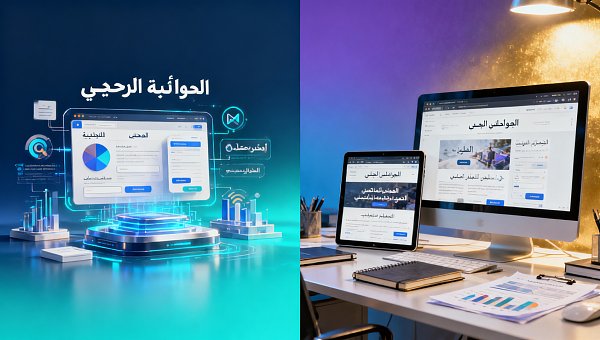
If it must be summarized in one sentence: when choosing an Arabic website development service provider, you should prioritize “localization capability + technical implementation capability + SEO capability + marketing conversion capability + ongoing service capability.” None of these 5 can be missing.
When many businesses create an Arabic website for the first time, they tend to focus on page visuals and translation price, but what truly determines website performance is often the following issues:
- Whether it truly supports Arabic right-to-left(RTL)layout rather than simply mirroring the page
- Whether it understands Arabic users’ reading habits, color preferences, information hierarchy, and ways of expressing trust
- Whether it can balance Google SEO, local search performance, and mobile experience
- Whether it can connect the website with social media marketing, ad placement, and lead collection systems
- Whether someone will continuously maintain it after launch, fix issues, update content, and optimize conversion rates
For businesses hoping to expand into the Middle East market, a qualified Arabic website is not as simple as translating a Chinese website once, but requires systematic adaptation in language, culture, technology, and marketing. Precisely because of this, when judging which Arabic website development company is better, you cannot look only at price and the number of case studies; you must also look at whether the cases are authentic, whether the provider understands the industry, and whether it has handled integrated marketing projects for overseas markets.
Why many Arabic websites “look finished” but still never produce results
When businesses fail with Arabic websites, the common reason is often not “there is no website,” but “the website does not fit the target market.” This kind of issue is extremely common in real projects.
The first type of problem is pseudo-localization. On the surface, the website already has an Arabic version, but the translation is stiff, terminology is inconsistent, button placement is confusing, and form fields still follow English or Chinese logic, causing users to feel distrust at a glance. Arabic users are very sensitive to the naturalness of content and the smoothness of page reading. Once it feels awkward, the bounce rate is usually very high.
The second type of problem is that the technical layer has not truly been adapted. Arabic websites involve issues such as font rendering, RTL layout, browser compatibility, mobile layout, form direction, and menu expansion logic. If the service provider lacks mature experience, problems such as page misalignment, truncated content, and abnormal UI controls are likely to occur. This not only affects user experience, but also impacts search engine crawling and subsequent maintenance efficiency.
The third type of problem is building only the website, without traffic and conversion. When businesses often ask “how to choose a platform for multilingual website development,” what they are essentially asking is: is the platform only for delivering pages, or can it form a marketing closed loop? A website without an SEO structure, without clear CTA, without data tracking, and without inquiry path design, no matter how beautiful it looks, is still very difficult to turn into business results.
The fourth type of problem is the lack of a long-term operating mechanism. Website launch is only the beginning; afterward, it still involves content updates, keyword optimization, landing page iteration, form tracking, server security, and overseas access speed. Without after-sales support and operational coordination, website performance usually stagnates quickly after launch.
When businesses screen Arabic website development service providers, which dimensions should they specifically evaluate
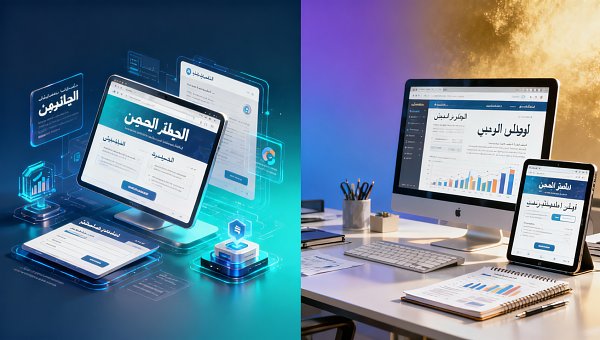
If you are actually screening service providers, you can use the following more practical evaluation framework.
1. Check whether they have mature Arabic localization experience
Please do not just ask “can you do Arabic,” but follow up with:
- Whether they have built Arabic standalone websites or multilingual official websites
- Whether they have RTL front-end development experience
- Whether translation is machine translation, human translation, or combined with industry terminology proofreading
- Whether they understand common trust elements for Middle Eastern users, such as the display of contact methods, qualification information, and case presentation methods
A truly professional service provider will proactively discuss with you the target country, target customer type, brand tone, cultural taboos, and content adaptation, rather than simply saying “we support multilingual.”
2. Check whether SEO capability is involved from the website-building stage
SEO is not something to patch up after the website goes live. A quality service provider will plan before development begins:
- Arabic keyword layout
- URL structure and multilingual tags
- Page hierarchy and internal linking logic
- Titles, descriptions, and structured content
- Page loading speed and mobile performance
If a service provider only emphasizes design but does not discuss search engine friendliness, then later SEO costs are usually higher. For businesses that want to acquire organic traffic over the long term, this is a key evaluation indicator.
3. Check whether they have a marketing conversion mindset
The goal of website development is not “to finish it,” but “to convert.” So you need to see whether the service provider knows how to design:
- Inquiry forms and consultation entry points
- Contact methods such as WhatsApp, phone, and email
- The conversion structure of product pages and landing pages
- Trust modules such as case studies, certificates, and customer reviews
- Data statistics and lead attribution mechanisms
This is also where the value of the “website + marketing service integration” model lies. Truly experienced teams often see website building as part of a customer acquisition system, rather than as an isolated project.
4. Check whether the technical architecture and maintenance mechanism are reliable
Technical evaluators should pay particular attention to these details:
- Whether it supports multilingual expansion and adding new languages later
- Whether the backend is convenient for the marketing or operations team to update content
- Whether server deployment considers overseas access speed
- Whether there are security strategies, backup mechanisms, and permission management
- Whether after-sales SLA, fault response time, and version upgrade mechanisms are clearly defined
Some businesses may later want to integrate the website with CRM, form systems, advertising platforms, or data dashboards, which requires the service provider to have a certain level of system integration capability.
Which Arabic website development company is better? Don’t just look at price, look at “fit”
Many businesses directly search for “which Arabic website development company is better,” but this question actually has no absolute answer. A more accurate way to put it is: which one better fits your business goals, budget range, and overseas expansion stage.
If you are a manufacturing or B2B export-oriented company, the focus should be on whether the service provider understands product display logic, inquiry paths, and international SEO; if you are a brand-oriented company, you should pay more attention to visual localization, content communication, and social media coordination; if you are a channel expansion-oriented company, you should also check whether the provider can support distributor pages, localized content, and sub-site management.
Price differences usually come from the following aspects:
- Whether professional translation and localization proofreading are included
- Whether custom design and RTL front-end development are included
- Whether basic SEO optimization is included
- Whether content planning, copywriting, and asset processing are included
- Whether subsequent maintenance, data analysis, and supporting marketing services are included
Therefore, a low price is not necessarily cost-effective, and a high price is not necessarily suitable. Businesses should focus on comparing the delivery scope, target outcomes, and long-term maintenance costs, rather than only the initial quotation.
In some cross-department evaluation scenarios, businesses also use structured research materials to sort out project decision-making logic. For example, in internal management or risk control system construction discussions, materials such as Research on the Construction of an Internal Control System for Public Institutions Based on Risk Prevention and Control, although not website-building tools, can still provide some reference value for establishing standardized evaluation thinking, clarifying process responsibilities, and identifying risk frameworks. For large organizations, supplier selection itself is a task that requires process-based management.
How to choose a platform for multilingual website development so you won’t have to keep rebuilding later
For businesses planning to operate in overseas markets over the long term, Arabic is often not the only language, so platform selection is very important.
A multilingual website development platform suitable for long-term growth should usually have the following characteristics:
- Support multilingual and multi-region content management
- Support independent page SEO settings
- Flexibly handle navigation, forms, and landing pages for different languages
- Be expandable with marketing plugins, analytics tools, and customer management functions
- Support the later addition of new sections, country sites, or marketing pages
If the platform has poor scalability, when businesses later add English, French, Arabic, and other versions, problems such as structural confusion, duplicate content, SEO conflicts, and out-of-control maintenance costs are likely to occur. Therefore, when considering how to choose a platform for multilingual website development, you cannot look only at current needs, but must also consider business expansion potential for the next 2 to 3 years.
For business decision-makers, a more prudent approach is to prioritize service providers that can offer coordinated website building, SEO, content, localization, and promotion. This not only shortens the communication chain, but also clarifies responsibility boundaries, making subsequent optimization and iteration easier.
How to judge whether a service provider is truly reliable: it is recommended to directly ask these 8 questions
If you have already entered the comparison stage, it is recommended to directly raise the following questions during communication:
- Which Arabic website projects have you completed? Can you show real cases and backend management methods?
- How do Arabic pages handle RTL layout and mobile adaptation?
- Who is responsible for translation and localization? How is industry terminology accuracy ensured?
- Will SEO structure and keywords be planned simultaneously during the website-building stage?
- After the website goes live, do you provide maintenance, updates, and troubleshooting? What are the cycle and costs?
- Can you support ad landing pages, social media redirects, form tracking, and data analysis?
- If additional languages or country sites are added later, can the existing architecture support expansion?
- What are you responsible for in the project, and what internal support do we need to provide?
A truly professional service provider will usually give very specific answers, including the project process, staffing, delivery checklist, technical solution, and performance thinking. Conversely, if the answers stay at “everything can be done” or “this is very simple,” then you need to be more cautious.
What practical value does choosing a one-stop service provider bring to businesses
For most businesses, Arabic website development is not an isolated task, but a key node in the global marketing chain. Choosing a one-stop service provider with capabilities in website building, SEO optimization, social media marketing, and ad placement has practical value mainly in three aspects.
First, it reduces communication costs. When the website, content, promotion, and data are handled separately by different vendors, problems can easily be passed around. An integrated service model can identify issues and make adjustments faster.
Second, it is easier to form a growth closed loop. Considering keywords, user paths, page conversion, and subsequent advertising strategies from the website-building stage is usually more efficient than “build the site first, then add marketing later.”
Third, it is more conducive to long-term iteration. Markets change quickly, and businesses cannot make every page perfect in one go. The truly effective approach is to continuously optimize after launch based on search data, inquiry data, and user behavior.
Taking service teams with many years of deep experience in global digital marketing as an example, what is truly competitive is not just being able to develop websites, but being able to integrate smart website building, SEO optimization, social media marketing, and ad placement based on technological innovation and localized services, helping businesses establish a sustainable growth system in target markets more quickly. This is also why, when many businesses compare which Arabic website development company is better, they increasingly value “marketing capability” rather than only “website-building capability.”
If a business also needs to improve project decision-making from the perspective of standardized management, it can also refer to the process-oriented and risk identification thinking reflected in Research on the Construction of an Internal Control System for Public Institutions Based on Risk Prevention and Control, incorporating supplier selection, delivery acceptance, and subsequent management into a clearer institutional framework.
Summary: for Arabic website development, what you choose is not a “website-building company,” but an “overseas growth partner”
Returning to the original question: how should you choose a service provider for Arabic website development? The most practical answer is to prioritize a team that understands Arabic localization, technical implementation, and can also balance SEO, marketing conversion, and long-term operations and maintenance. For businesses, a truly valuable website does not merely mean getting pages online, but helping the brand build trust, gain traffic, receive inquiries, and support continued growth.
Therefore, when comparing which Arabic website development company is better, do not just look at price and design drafts, but focus on the depth of localization, project experience, SEO planning, marketing coordination capability, and after-sales support. As for how to choose a platform for multilingual website development, the core criterion should also come back to one point: whether it can support your future international business expansion, rather than merely meeting current basic display needs.
If you screen around these key indicators, you can basically avoid most service providers who “can make it, but cannot make it effective,” and more quickly find a partner truly suitable for the company’s long-term development.
Related Articles



Related Products
 EasyCamp SaaS Smart Website Marketing SystemE-Yingbao SaaS Smart Website Marketing System: AI-powered, zero-code website building. Rapidly launch multilingual independent e-commerce sites in just 10 minutes. Global server acceleration and AI-driven SEO optimization empower businesses to efficiently connect with global markets. The seamless integration of technology and user-friendly operation makes building e-commerce sites incredibly simple.
 AI+SEM Intelligent Advertising Marketing SystemAI+SEM drives intelligent ad creation, empowering full-funnel precision advertising marketing. The system automatically generates weekly/monthly reports, AI recommends keywords and target countries, monitors core metrics in real-time with intelligent alerts, and enables one-click high-conversion ad solutions to help quickly acquire customers and improve ROI.
 AI+SEO Dual Engine Optimization ServiceEasyWin AI+SEO Dual Engine Optimization System leverages AI-powered keyword mining, content generation, and comprehensive technical optimization to help foreign trade enterprises acquire high-quality organic traffic, significantly improving search rankings and conversion rates.
 AI+SNS Social Media Marketing SystemYingbao AI+SNS Social Media Marketing System - Precision social capture for the social media era. Supports one-click content synchronization across major platforms like Facebook and LinkedIn. AI intelligently rewrites posts for enhanced relevance. 24/7 AI customer service and user profiling analysis empower businesses to efficiently expand into global markets.
 AI+SEO营销解决方案易营宝AI+SEO营销解决方案,通过AI批量写作、智能生成TDK、精准关键词扩词等功能,全面优化网站SEO效果,提升流量与转化率。助力企业构建高效智能网站新生态。
 AI+SEM Advertising Marketing SolutionsAI+SEM Advertising Marketing Solution leverages AI technology to deeply empower SEM ad campaigns. It automatically generates weekly/monthly reports using AI, presenting account data across multiple dimensions for comprehensive insights into campaign performance and trends. The system precisely recommends keywords and target countries, intelligently generates high-conversion ad copy, and enables one-click activation of efficient campaign plans to help businesses rapidly acquire customers. Simultaneously, it monitors core metrics in real time, intelligently identifies abnormal fluctuations, and issues timely alerts to ensure stable, high-return advertising results.
 Domain Name ServicesEasyWin provides professional domain name services, including intelligent queries, one-stop registration, brand protection, and full lifecycle management, helping businesses build a digital brand image.
 EasyOperate B2C Cross-Border E-Commerce Platform & Independent WebsiteEasyStore B2C Cross-border E-commerce Independent Store is an intelligent website building and cross-border e-commerce integrated solution independently developed by EasyStore Information Technology (Beijing) Co., Ltd. The system is specially designed for small and medium-sized as well as large export enterprises, integrating 'website building, operation, marketing, advertising, and conversion' into one, helping enterprises quickly establish cross-border e-commerce independent stores to achieve brand globalization and global sales growth.
The platform supports multiple languages, multiple currencies, and multi-channel marketing, with built-in AI intelligent translation and SEO optimization systems, suitable for mainstream markets such as Southeast Asia, Europe and America, Latin America, and the Middle East, assisting Chinese manufacturing enterprises in efficiently deploying international e-commerce strategies. SSL证书易营宝提供专业SSL安全证书服务,包括单域名和泛域名证书,确保网站数据传输加密、身份验证和完整性保护,助力企业建立安全可信的在线业务环境。









