









- What Does a Global Traffic Ecosystem Service Provider Do? What Are the Differences from a Single Advertising AgencyJul 16, 2026View details
- What should you focus on in the latest enterprise SaaS report? From renewal rates and delivery costs to overseas growth opportunitiesJul 12, 2026View details
- What signals are worth paying attention to in a cross-border marketing trend report? B2B companies should look at these 6 signalsJul 11, 2026View details
- How to Read a Cross-Border Marketing Trends Report? Five Key Dimensions for Evaluating Channel OpportunitiesJul 11, 2026View details
- Which channel has the highest ROI in the global traffic ecosystem? Comparative analysis of search, social media, and advertisingJul 10, 2026View details
- What multilingual website services are available in Sanya? Which model is more suitable for local businesses going global?Jul 08, 2026View details
- How to view the complete list of China SaaS companies in the top 100? Practical methods for screening website-building and marketing service providersJul 08, 2026View details
- How to view pricing in the global traffic ecosystem? Cost comparison of search, social media, and content channel advertisingJul 06, 2026View details
How to Choose Arabic Website Development for Overseas Expansion
How should you choose Arabic website development? The core is not as simple as “translating the website into Arabic,” but whether it truly fits Middle Eastern users’ reading habits, search habits, and conversion paths. For companies preparing to expand overseas, prioritizing a one-stop service provider that integrates multilingual website development, search engine optimization services, localized design, technical stability, and ongoing operational support is often more important than simply comparing prices. Because once the direction of an Arabic website is chosen incorrectly, not only will subsequent customer acquisition costs be high, but maintenance and redesign costs will also continue to rise.
Especially for information researchers, technical evaluators, and business decision-makers, the real concern is not “whether an Arabic website can be built,” but “whether it can be found after launch, whether it can earn the trust of Middle Eastern customers, and whether it can continuously generate inquiries and orders.” Therefore, determining whether a service provider is more suitable for overseas expansion requires a comprehensive evaluation across several key dimensions, including language localization, SEO fundamentals, website architecture, data security, content management, and marketing coordination.
For Arabic website development, what should companies look at first
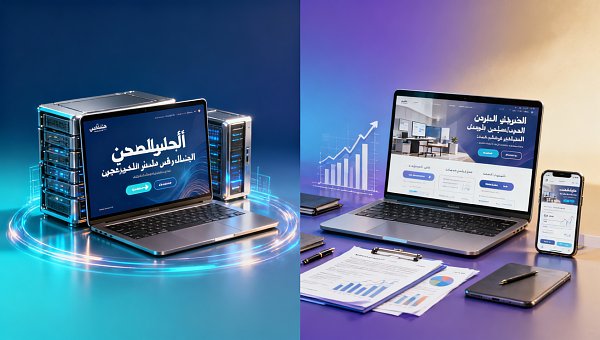
If a company’s goal is to enter the Middle Eastern market, then Arabic website development must first serve two things: “market reach” and “business conversion.” In other words, a website is not a brochure, but a digital business entry point for overseas users.
When selecting a solution, it is recommended to first look at the following core issues:
- Whether it supports both left-to-right and right-to-left page adaptation. Arabic is read from right to left. If a website is only mechanically translated while the page structure still follows English or Chinese logic, the user experience will be significantly affected.
- Whether it has true localization capabilities. Localization is not just language conversion, but also includes details such as color schemes, image style, contact information display, form design, and call-to-action button placement.
- Whether it takes both Google SEO and local search scenarios into account. Although Middle Eastern users widely use Google, different countries also have different search expressions and business preferences, so keyword deployment cannot simply copy the English website.
- Whether it facilitates subsequent marketing coordination. If website development cannot work together with SEO optimization, advertising campaigns, and social media marketing, subsequent customer acquisition efficiency will be limited.
- Whether it supports long-term maintenance and multilingual expansion. Many companies initially only build an Arabic version, but later add English, French, and other versions, so the underlying architecture must reserve room for expansion.
For companies going global, a more suitable Arabic website development solution is usually not the lowest-priced one, but the one that can balance launch efficiency, content management, technical standards, and future growth.
Why many Arabic websites are “built” but produce no results
Many companies have invested budget in website development for the Middle Eastern market, but ultimately find that traffic is low, dwell time is short, and inquiries are few. The reasons are usually concentrated in the following areas:
- Translation only, without localization
The text has been changed into Arabic, but the page structure, visual layout, and CTA design still follow the logic of a Chinese website, making users feel unnatural and reducing trust. - No search engine optimization foundation
If the website URL structure is confusing, title and description tags are missing, pages load slowly, and mobile performance is poor, it will be difficult to gain organic traffic even if the content itself is good. - Server and access speed are not ideal
High latency for Middle Eastern users directly affects bounce rate and conversion rate. Companies need to consider global access stability during the development stage. - Lack of conversion path design
Some websites have a lot of content but no clear forms, WhatsApp entry point, online consultation methods, or call-to-action buttons, so visitors cannot quickly complete an inquiry. - No one maintains it afterward
Launching a website is only the beginning. Without content updates, keyword iteration, data monitoring, and technical maintenance, results often stagnate quickly.
This is also why more and more companies are beginning to choose integrated website + marketing service platforms instead of completely separating website development, SEO, content, and promotion. Although the former requires more detailed evaluation in the early stage, the overall coordination efficiency is higher, especially for brands hoping to operate in overseas markets on a long-term basis.
How should companies judge whether a service provider truly understands the Arabic-speaking market
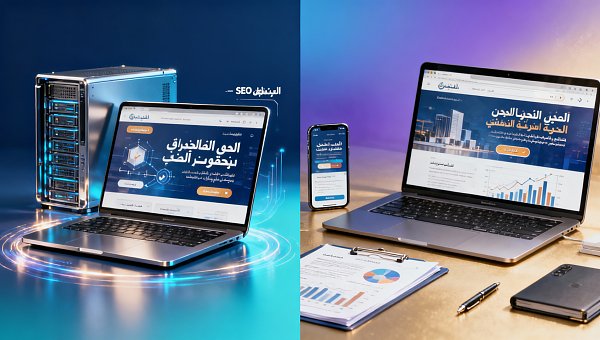
To determine whether a service provider is suitable for Arabic website development, it is recommended not to rely only on broad statements such as “can build multilingual websites,” but to see whether it can answer the following practical questions:
- Whether it has Arabic website design and implementation case studies
Case studies can help determine whether it has experience with Middle Eastern users’ aesthetics, industry page structures, and conversion logic. - Whether it can provide an SEO-friendly site architecture
Including multilingual URL planning, hreflang tags, meta tag management, sitemap, page indexing strategies, and so on. - Whether it supports mobile-first
In the Middle East, mobile traffic generally accounts for a high proportion, so responsive design and mobile page experience are very important. - Whether it has content and marketing coordination capabilities
After the website is completed, can it continue to support content optimization, social media traffic generation, ad landing page creation, and lead tracking. - Whether it has data monitoring and operation & maintenance capabilities
Including traffic statistics, form tracking, conversion analysis, security protection, backup and recovery, and so on.
When selecting a solution, technical evaluators should also focus on confirming whether the CMS is easy to use, whether it supports multi-role collaboration, whether pages can be independently added and edited, and whether it supports later module expansion. This is especially critical for after-sales maintenance teams.
If a company hopes to reduce the communication costs brought by coordinating multiple vendors, then a service provider with integrated capabilities in website building, SEO optimization services, social media marketing, and advertising campaigns will be more suitable for a long-term overseas expansion strategy. For service agencies like E-Marketing InfoTech (Beijing) Co., Ltd., which have been deeply involved in global digital marketing for many years, their advantage lies not only in “building the website,” but in designing an overall solution around the company’s overseas growth goals.
When choosing an Arabic website development solution, how do different roles focus on different concerns
In the same project, different roles do not focus on the same evaluation priorities. If companies can unify standards in advance during internal evaluation, decision-making efficiency will be higher.
1. What business decision-makers care about
- Whether the input-output ratio is clear
- Whether the website can help expand Middle Eastern customers
- Whether the project timeline is controllable
- Whether repeated investment will be needed later
- Whether the service provider is stable and reliable
2. What technical evaluators care about
- Whether the system architecture is standardized
- Whether multilingual management is convenient
- Whether the code and SEO foundation are friendly
- How security, compatibility, and loading speed perform
- Whether it facilitates subsequent secondary development and API integration
3. What operations and after-sales maintenance staff care about
- Whether content updates are simple
- Whether modules such as images, products, and news are easy to maintain
- Whether form leads can be received promptly
- Whether the data dashboard is clear
- Whether service response is timely
4. What distributors, agents, and end users care about
- Whether the website looks professional and trustworthy
- Whether product information is clear and easy to understand
- Whether inquiry methods are convenient
- Whether the language expression is natural
- Whether access speed is smooth
Therefore, an Arabic website development solution truly suitable for overseas expansion should not only enable management to see growth value, but also allow the execution team to experience operational convenience and stable delivery.
What capabilities an Arabic website more suitable for overseas expansion usually has
If we summarize the standard for being “more suitable for overseas expansion,” it is recommended to focus on whether the following capabilities are all in place:
- Multilingual website development capability
Supports flexible switching among Arabic, English, and other languages, and enables independent content deployment for different markets. - Localized UI/UX design capability
Including RTL layout, cultural adaptation, localized brand visuals, and mobile experience optimization. - Search engine optimization service capability
From on-site structure to content strategy, helping companies establish a sustainable organic traffic channel in the Middle Eastern market. - Marketing conversion capability
Supports functions such as inquiry forms, WhatsApp, phone, maps, landing pages, and conversion tracking to improve business opportunity acquisition efficiency. - Long-term maintenance and growth capability
Not only able to launch, but also able to continue operating, optimizing, and expanding.
From a business perspective, website development is only one part of a company’s overseas digital strategy. If the company will also be involved in independent site growth, B2B customer acquisition, brand promotion, and even cross-regional expansion in the future, then the website should be planned as marketing infrastructure from the very beginning, rather than as a one-time project.
This way of thinking is also very common in much professional content development: it is not about simply completing surface-level actions, but about carrying out systematic design around business processes. For example, in management practice content, Analysis of the Application Strategies of Business-Finance Integration in the Transformation Practice of Financial Management in Public Institutions also emphasizes “solving problems from the perspective of system coordination,” which is actually similar to the need for companies building websites for overseas expansion to focus on the overall chain rather than isolated functions.
When selecting an Arabic website development solution, it is recommended to make decisions this way
To avoid pitfalls, companies can make judgments according to the following steps:
Step 1: Clarify the website goal
Is it for brand display, customer acquisition conversion, distributor recruitment, product promotion, or to support advertising campaigns? Different goals require different website structures and functional priorities.
Step 2: List the required capability checklist
For example, Arabic RTL adaptation, multilingual management, SEO basic configuration, mobile optimization, form conversion, data statistics, content management backend, and so on.
Step 3: Require the service provider to provide case studies and solution explanations
Do not just look at whether the homepage looks good; pay more attention to section logic, content organization, access speed, and conversion design.
Step 4: Evaluate long-term maintenance costs
Including the difficulty of content updates, subsequent iteration costs, marketing coordination capabilities, and after-sales support efficiency.
Step 5: Prioritize teams that can support a growth closed loop
If the service provider understands both website building and SEO and overseas promotion, it will be easier for the website to truly generate business value.
For many companies, the ideal solution is not the one with “the most functions,” but the one that is “most suitable for the current stage and can support future growth.” Especially for the Middle Eastern market, the degree of website localization, search visibility, and conversion efficiency are far more important than superficial template-based beauty.
Summary: Arabic website development is not a language issue, but an overseas growth issue
How should you choose Arabic website development so it is more suitable for overseas expansion? The answer is actually very clear: choose an integrated solution that can balance localized design, multilingual website development, search engine optimization services, marketing conversion, and long-term maintenance, rather than one that only solves the single action of “going live.”
For business decision-makers, the focus should be on business value and long-term return; for technical and maintenance personnel, the focus should be on architecture, usability, and sustainable long-term operation capabilities; for marketing and sales teams, the focus is whether it can truly bring traffic, inquiries, and customer trust.
If a company hopes to establish stable online touchpoints in the Middle Eastern market, then an Arabic website truly suitable for overseas expansion should be planned from the very beginning around “being found, being understood, being trusted, and being converted.” Only in this way will the website not remain at the display level, but become an important asset for the company’s global growth.
Related Articles
 Attention! Builders' must-see: Yibingbao AI components updated, design efficiency directly doubled!
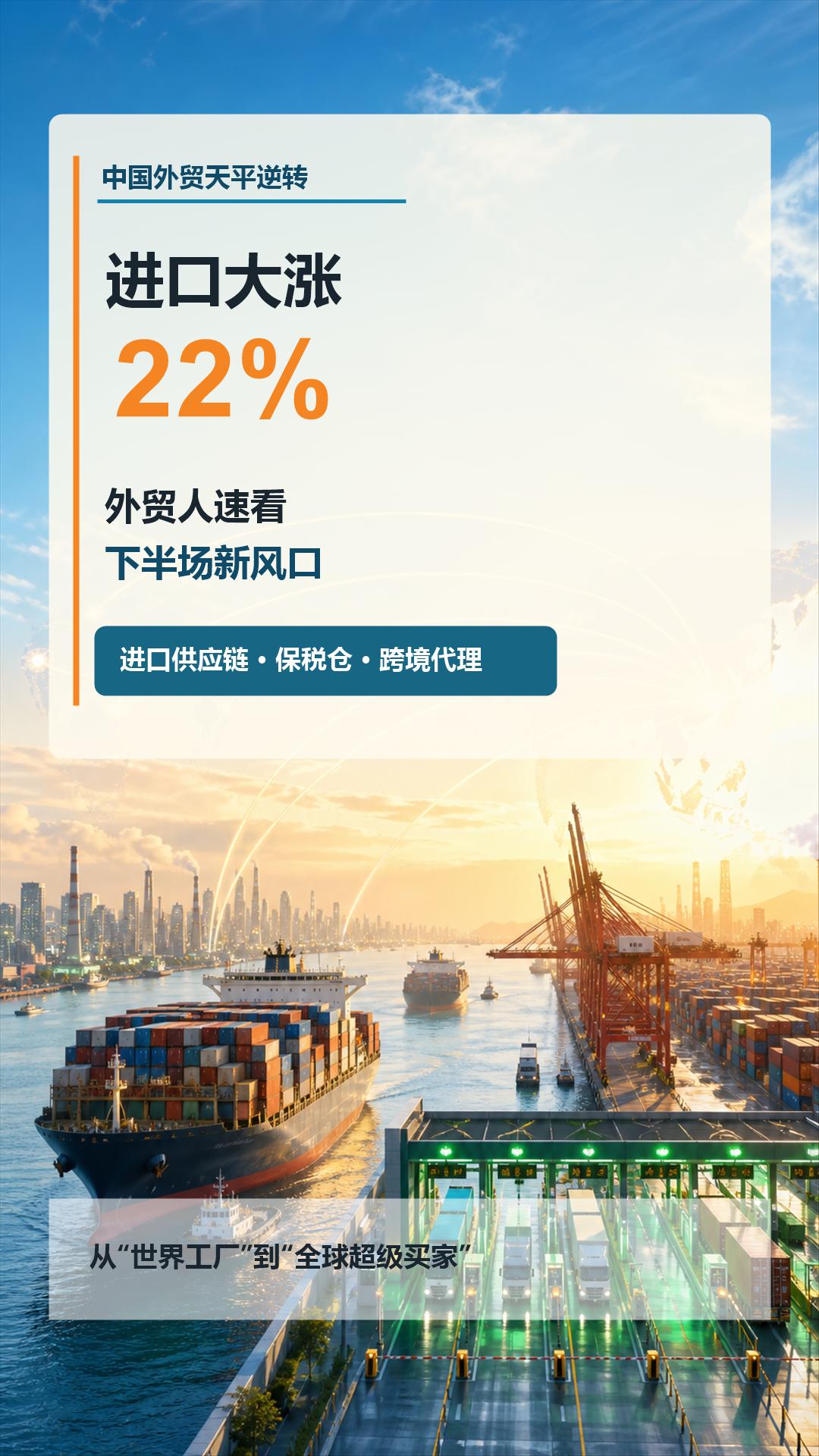
 China's foreign trade sees a turnaround: imports surge by 22%! Foreign trade professionals should quickly take note of the new trends in the second half of the year
 What Does a Global Traffic Ecosystem Service Provider Do? What Are the Differences from a Single Advertising Agency

Related Products
 EasyCamp SaaS Smart Website Marketing SystemE-Yingbao SaaS Smart Website Marketing System: AI-powered, zero-code website building. Rapidly launch multilingual independent e-commerce sites in just 10 minutes. Global server acceleration and AI-driven SEO optimization empower businesses to efficiently connect with global markets. The seamless integration of technology and user-friendly operation makes building e-commerce sites incredibly simple.
 AI+SEM Intelligent Advertising Marketing SystemAI+SEM drives intelligent ad creation, empowering full-funnel precision advertising marketing. The system automatically generates weekly/monthly reports, AI recommends keywords and target countries, monitors core metrics in real-time with intelligent alerts, and enables one-click high-conversion ad solutions to help quickly acquire customers and improve ROI.
 AI+SEO Dual Engine Optimization ServiceEasyWin AI+SEO Dual Engine Optimization System leverages AI-powered keyword mining, content generation, and comprehensive technical optimization to help foreign trade enterprises acquire high-quality organic traffic, significantly improving search rankings and conversion rates.
 AI+SNS Social Media Marketing SystemYingbao AI+SNS Social Media Marketing System - Precision social capture for the social media era. Supports one-click content synchronization across major platforms like Facebook and LinkedIn. AI intelligently rewrites posts for enhanced relevance. 24/7 AI customer service and user profiling analysis empower businesses to efficiently expand into global markets.
 AI+SEO营销解决方案易营宝AI+SEO营销解决方案,通过AI批量写作、智能生成TDK、精准关键词扩词等功能,全面优化网站SEO效果,提升流量与转化率。助力企业构建高效智能网站新生态。
 AI+SEM Advertising Marketing SolutionsAI+SEM Advertising Marketing Solution leverages AI technology to deeply empower SEM ad campaigns. It automatically generates weekly/monthly reports using AI, presenting account data across multiple dimensions for comprehensive insights into campaign performance and trends. The system precisely recommends keywords and target countries, intelligently generates high-conversion ad copy, and enables one-click activation of efficient campaign plans to help businesses rapidly acquire customers. Simultaneously, it monitors core metrics in real time, intelligently identifies abnormal fluctuations, and issues timely alerts to ensure stable, high-return advertising results.
 Domain Name ServicesEasyWin provides professional domain name services, including intelligent queries, one-stop registration, brand protection, and full lifecycle management, helping businesses build a digital brand image.
 EasyOperate B2C Cross-Border E-Commerce Platform & Independent WebsiteEasyStore B2C Cross-border E-commerce Independent Store is an intelligent website building and cross-border e-commerce integrated solution independently developed by EasyStore Information Technology (Beijing) Co., Ltd. The system is specially designed for small and medium-sized as well as large export enterprises, integrating 'website building, operation, marketing, advertising, and conversion' into one, helping enterprises quickly establish cross-border e-commerce independent stores to achieve brand globalization and global sales growth.
The platform supports multiple languages, multiple currencies, and multi-channel marketing, with built-in AI intelligent translation and SEO optimization systems, suitable for mainstream markets such as Southeast Asia, Europe and America, Latin America, and the Middle East, assisting Chinese manufacturing enterprises in efficiently deploying international e-commerce strategies. SSL证书易营宝提供专业SSL安全证书服务,包括单域名和泛域名证书,确保网站数据传输加密、身份验证和完整性保护,助力企业建立安全可信的在线业务环境。









