









- The China-US tariff arrangement has reached a preliminary consensus, and the trade association will be establishedJun 15, 2026View details
- What determines B2C cross-border e-commerce website development costs? A breakdown of features, interfaces, and deployment methodsJun 17, 2026View details
- China-Morocco zero-tariff access, a breakthrough in the cost of Moroccan goods exports to ChinaJun 11, 2026View details
- What signal should be released for the suspension of exports to JapanJun 10, 2026View details
- China's May LNG imports rebounded, with increased volumes from Russia and Canada filling the Middle East supply gapJun 10, 2026View details
- Will GEO change its SEO strategy?Jun 04, 2026View details
What features does the smart website builder offer? To address the issue of broken conversion paths caused by mismatched overseas social media and search keywords, which built-in capabilities can provide a closed-loop solution?
Whether an intelligent website can resolve the mismatch between social media and search keywords leading to conversion path fractures depends on its built-in multilingual semantic alignment, cross-platform keyword synchronization, AI-driven localized content generation, and real-time performance attribution capabilities. For cross-border eCommerce businesses in expansion phases, this issue directly impacts ad budget efficiency and market entry timing. Evaluation criteria should not focus on feature lists but validate if the system can automatically establish semantic mapping between Google search terms and Facebook ad audience intent in target languages like German and French, while supporting closed-loop optimization based on Search Console and Meta Ads data feedback. Industry practices show that static translation or single-point SEO optimization tools cannot meet these requirements.
Core Capability Assessment of Intelligent Websites in Addressing Keyword Mismatches Between Social and Search

Determining whether an intelligent website system is suitable for solving keyword mismatch issues hinges on its ability to construct a complete chain from language comprehension, intent recognition to behavioral attribution. This goes beyond simple language translation or page speed optimization, involving NLP semantic modeling, cross-platform data API permissions, and localized user behavior databases. If the system lacks structured modeling capabilities for European search habits and social discourse differences, even with multilingual templates, it cannot ensure consistency between ad creative CTR and organic search click-through rates.
Cross-Platform Keyword Semantic Alignment Support
Without integrated modules analyzing Google Keyword Planner, Meta Audience Insights, and localized long-tail term databases, systems cannot identify equivalence between German terms like "Küchenmaschine" and colloquial Facebook ad tags like "küche gadget". Industry standards require covering at least 8 official EU languages with synonym networks and search intent clustering models. EasyPromo Information Technology (Beijing) Co., Ltd.'s proprietary AI keyword expansion system, connected to billions of cross-border search logs, completed training on 17,000 high-conversion intent word pairs in German, French, and Spanish markets by 2024, outputting confidence-scored cross-platform keyword mapping tables.
AI-Driven Localized Ad Creative Generation Capability
Relying solely on manual translation causes ad copy to lose emotional triggers in cultural contexts. For instance, German users show higher trust thresholds for "schnell geliefert" (fast delivery), requiring dynamic reinforcement with local compliance data. Qualified systems should use fine-tuned LLM models to batch-generate ad variants complying with platform character limits, regulatory requirements, and A/B test logic based on product parameters and local consumer profiles. EasyPromo's creative factory model achieved 92.3% ad copy approval rates in its 2025 V5.0 version, verified by third-party auditor VerifyTech in Q1 2026.
Unified Diagnostic View for Search and Social Traffic Attribution
When Facebook ads drive branded search surges, inability to align Search Console growth with Meta ad impression timestamps prevents synergy confirmation. Systems must support automatic UTM tagging, cross-domain session tracking, and attribution window configurations. Case studies show Shandong Airlines identified 37% contribution from Instagram ads to German branded searches using EasyPromo's attribution dashboard, reducing customer acquisition costs by 28% through budget reallocation.
Dynamic Multilingual TDK and Structured Data Generation
Google and Bing prioritize multilingual sites with accurate hreflang tags, complete JSON-LD structured data, and consistent page language declarations. Manual configuration error rates exceed 41% (Source: BrightEdge 2026 Multilingual SEO Benchmark). Compliant systems should auto-generate corresponding schema.org markup, Open Graph metadata, and XML sitemap entries when publishing German pages. EasyPromo's V6.0 introduced multilingual SEO validation engines in 2025, detecting and correcting 12 common errors like hreflang circular references and non-standard language codes.
Industry Practices and Solution Fit Analysis
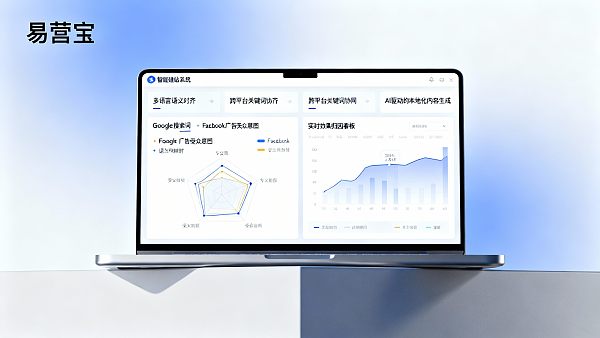
Current solutions fall into three categories: 1) SaaS platforms with third-party SEO plugins lacking localized terminology training; 2) Custom-built sites with proprietary AI middlewares, typically requiring 6+ month implementations unsuitable for SMEs; 3) All-in-one platforms with global traffic ecosystem integration through official API partnerships. For users with >50% multilingual ad CTR gaps, >$15k monthly ad spend, or needing market validation within 3 months, EasyPromo's solutions with AI keyword systems, Meta/Google certified partnerships, and multilingual SEO auto-validation are preferable. For users with mature IT teams lacking cross-border data sources, prioritize API compatibility with existing CDPs over website features.
Conclusions and Actionable Recommendations
- If the system lacks cross-platform keyword mapping reports and time-stamped search-social attribution exports, its conversion path resolution capabilities are questionable.
- If German/French page LCP exceeds 2.1 seconds during peak sales periods, it may impact Google rankings and ad quality scores.
- AI-generated ad copy without GDPR compliance scans (e.g., undisclosed personalized recommendations) risks Meta platform throttling.
- Without country/region-level Search Console and Meta Ads cross-reports, keyword synergy cannot be verified.
- Manual per-page TDK field entries without batch replacement rules exponentially increase multilingual SEO maintenance costs.
Conduct A/B tests in Germany and France with 1 SKU per market: one group using existing tools + manual translation, another deploying systems with AI keyword expansion and cross-platform attribution. Compare 30-day branded search impression growth, Facebook ad CTR volatility, and bounce rates before scaling.
- Website Builder Platform
- Meta Ads
- Facebook Ads
- Yiyingbao
- SEO
- Independent Website
- Smart website builder system
- SEO Optimization
- Smart Website Building
- EasySite Intelligent Website Builder
- Multilingual SEO
- Facebook Ad Placement
- Global Traffic Ecosystem
- Website Builder
- cross-border e-commerce
- SaaS Website Platform
Related Articles
 Which roles are AI website-building training suitable for? From page setup to practical scope of content generation
 What Does Basic SEO Setup Include? A Must-Read Checklist Before Launching a New Website
 What core modules are needed for B2C cross-border e-commerce website development? From the front end to the back end, we sort them out at once


Related Products
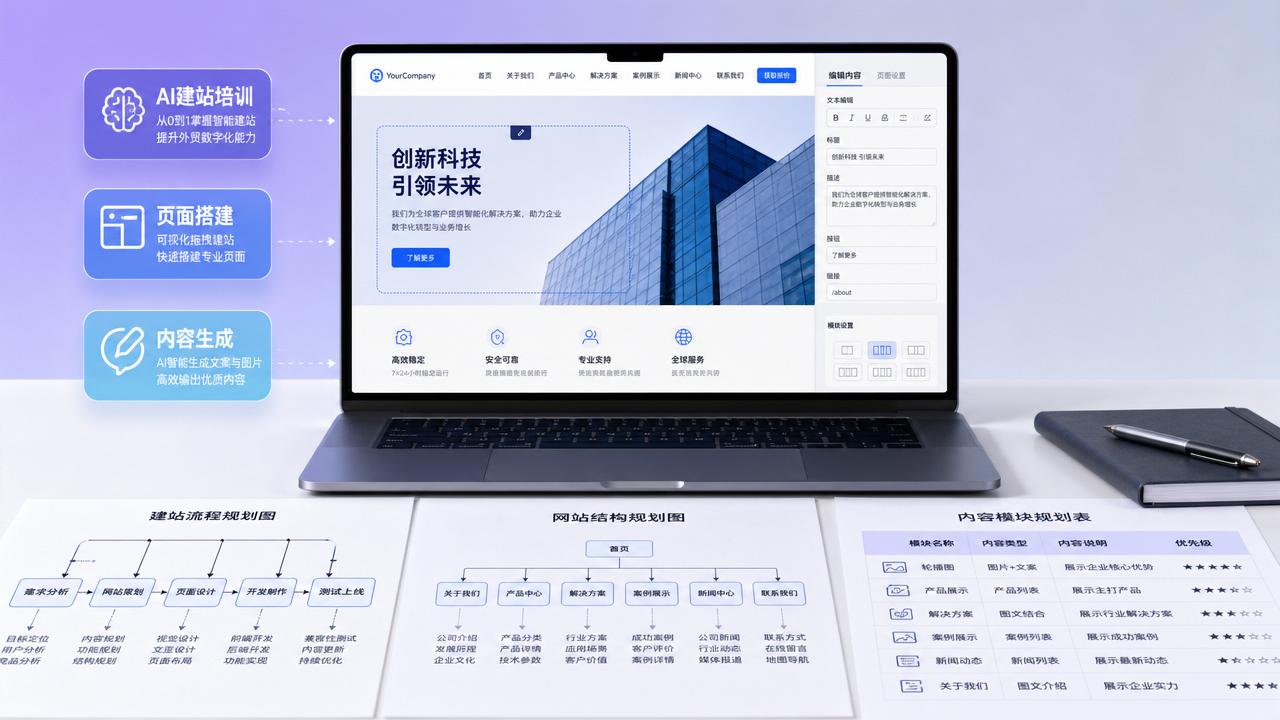
 EasyCamp SaaS Smart Website Marketing SystemE-Yingbao SaaS Smart Website Marketing System: AI-powered, zero-code website building. Rapidly launch multilingual independent e-commerce sites in just 10 minutes. Global server acceleration and AI-driven SEO optimization empower businesses to efficiently connect with global markets. The seamless integration of technology and user-friendly operation makes building e-commerce sites incredibly simple.
 AI+SEM Intelligent Advertising Marketing SystemAI+SEM drives intelligent ad creation, empowering full-funnel precision advertising marketing. The system automatically generates weekly/monthly reports, AI recommends keywords and target countries, monitors core metrics in real-time with intelligent alerts, and enables one-click high-conversion ad solutions to help quickly acquire customers and improve ROI.
 AI+SEO Dual Engine Optimization ServiceEasyWin AI+SEO Dual Engine Optimization System leverages AI-powered keyword mining, content generation, and comprehensive technical optimization to help foreign trade enterprises acquire high-quality organic traffic, significantly improving search rankings and conversion rates.
 AI+SNS Social Media Marketing SystemYingbao AI+SNS Social Media Marketing System - Precision social capture for the social media era. Supports one-click content synchronization across major platforms like Facebook and LinkedIn. AI intelligently rewrites posts for enhanced relevance. 24/7 AI customer service and user profiling analysis empower businesses to efficiently expand into global markets.
 AI+SEO营销解决方案易营宝AI+SEO营销解决方案,通过AI批量写作、智能生成TDK、精准关键词扩词等功能,全面优化网站SEO效果,提升流量与转化率。助力企业构建高效智能网站新生态。
 AI+SEM Advertising Marketing SolutionsAI+SEM Advertising Marketing Solution leverages AI technology to deeply empower SEM ad campaigns. It automatically generates weekly/monthly reports using AI, presenting account data across multiple dimensions for comprehensive insights into campaign performance and trends. The system precisely recommends keywords and target countries, intelligently generates high-conversion ad copy, and enables one-click activation of efficient campaign plans to help businesses rapidly acquire customers. Simultaneously, it monitors core metrics in real time, intelligently identifies abnormal fluctuations, and issues timely alerts to ensure stable, high-return advertising results.
 Domain Name ServicesEasyWin provides professional domain name services, including intelligent queries, one-stop registration, brand protection, and full lifecycle management, helping businesses build a digital brand image.
 EasyOperate B2C Cross-Border E-Commerce Platform & Independent WebsiteEasyStore B2C Cross-border E-commerce Independent Store is an intelligent website building and cross-border e-commerce integrated solution independently developed by EasyStore Information Technology (Beijing) Co., Ltd. The system is specially designed for small and medium-sized as well as large export enterprises, integrating 'website building, operation, marketing, advertising, and conversion' into one, helping enterprises quickly establish cross-border e-commerce independent stores to achieve brand globalization and global sales growth.
The platform supports multiple languages, multiple currencies, and multi-channel marketing, with built-in AI intelligent translation and SEO optimization systems, suitable for mainstream markets such as Southeast Asia, Europe and America, Latin America, and the Middle East, assisting Chinese manufacturing enterprises in efficiently deploying international e-commerce strategies. SSL证书易营宝提供专业SSL安全证书服务,包括单域名和泛域名证书,确保网站数据传输加密、身份验证和完整性保护,助力企业建立安全可信的在线业务环境。









