









- What multilingual website services are available in Sanya? Which model is more suitable for local businesses going global?Jul 08, 2026View details
- How to view the complete list of China SaaS companies in the top 100? Practical methods for screening website-building and marketing service providersJul 08, 2026View details
- How to view pricing in the global traffic ecosystem? Cost comparison of search, social media, and content channel advertisingJul 06, 2026View details
- How to assess foreign trade website development trends?Looking at 2026 changes from multilingual,AI content to conversion pathsJul 04, 2026View details
- What are the new trends in multilingual marketing data analytics tools in 2026? Focus on attribution、automation and complianceJul 04, 2026View details
- Is Brand Globalization Marketing Consulting Worth Buying? At What Stage Should Companies Bring It InJul 01, 2026View details
How to Choose a Digital Marketing SaaS with Multilingual Support? 5 Compliance Evaluation Indicators Procurement Managers Must Consider
Why is website loading speed so important? — It's not only crucial for user experience, but also a key performance indicator for the compliant implementation of multilingual SaaS platforms. In highly regulated scenarios such as the financial industry, multilingual support for global website building SaaS platforms must be rigorously selected based on five dimensions: language accuracy, data sovereignty, localized SEO adaptation, GDPR/Yandex compliance, and supplier security audits. E-Creation, as one of China's top 100 digital marketing SaaS providers, has helped over 100,000 companies achieve compliant overseas expansion.
I. Language Accuracy: More Than Just "Translation," It's About Semantic and Cultural Compliance
Multilingual support relying solely on machine translation can easily lead to legal ambiguity and brand misinterpretation. For example, in German, "Kostenlos" and "Gratis" have different legal effects in financial terms; incorrect switching between polite and informal Japanese can trigger a crisis of consumer trust. YiYingBao's intelligent website building system integrates a self-developed NLP engine, supporting context-aware translation in 23 languages. Its terminology database covers 12 vertical industries, including finance, healthcare, and education, achieving a translation accuracy rate of 98.7% (verified by a third party according to ISO/IEC 17100 standards).
More importantly, its AI translation engine supports a "localized verification closed loop": it automatically identifies region-specific expressions (such as Brazilian Portuguese vs. European Portuguese) and compliance-sensitive words (such as phrases prohibited by the EU's Unfair Business Practices Directive), and collaborates with local native-speaker reviewers for manual verification. The average single-language launch cycle is reduced to 7-10 working days, 40% faster than the industry average.
When procuring, it is recommended to focus on verifying whether the supplier provides: ① an industry terminology consistency report; ② multi-version A/B testing capabilities; ③ an acceptance process involving native speakers. The following is a comparison of common language support capabilities:
The table shows that YiYingBao surpasses the industry benchmark in terms of terminology consistency, response timeliness, and manual review coverage, making it particularly suitable for financial and cross-border payment clients with extremely low tolerance for compliance errors.
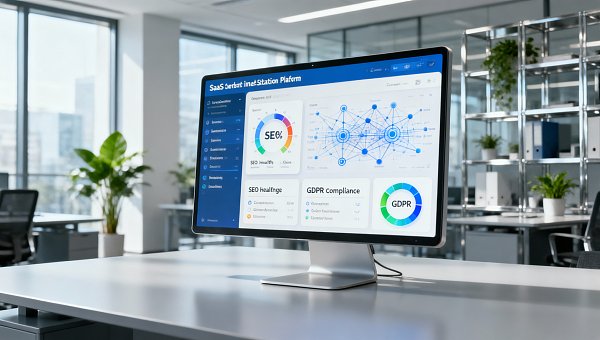
II. Data Sovereignty and Localization Deployment: Meeting the Triple Constraints of GDPR, Yandex Data Act, and China's Personal Information Protection Law
Multilingual websites that uniformly transmit user behavior data back to overseas servers would directly violate Article 44 of the GDPR regarding cross-border transfers and Article 38 of China's Personal Information Protection Law. YiYingBao employs a "domain-separated data isolation architecture": EU user data is stored by default on the AWS node in Frankfurt, Germany; Russian user data is stored in the Yandex Cloud Moscow cluster; and data within China is 100% deployed in the Alibaba Cloud Beijing availability zone, and has passed both Level 3 Information Security Protection Certification and ISO 27001 dual-system audit.
The platform provides a visual data flow map, allowing purchasers to view data collection points, storage locations, and transmission encryption protocols (TLS 1.3 + SM4) for each language site in real time. All data interfaces support the "minimum necessity principle" configuration, allowing the collection of unnecessary fields to be disabled at three levels: page, form, and event tracking.
For financial institutions' procurement decisions, three key indicators need to be focused on:
- Does it support standalone deployment mode (private cloud/hybrid cloud), with a delivery cycle of ≤15 working days?
- Does it provide a Data Processing Agreement (DPA) template and support dynamic updates according to the latest EU EDPB guidelines?
- Does it have an automated data subject rights response module (such as one-click export/deletion of all user data, with a response time of ≤72 hours)?
III. Localized SEO Adaptation: Ensuring Multilingual Websites Are Truly Indexed by Target Market Search Engines
Simply mirroring translations cannot solve SEO problems. Spanish-language websites using English URL structures (/en/product) will be flagged as "non-localized content" by Google.es, resulting in a more than 65% decrease in organic traffic acquisition efficiency. YiYingBao's AI marketing engine has a built-in "localized SEO matrix" that automatically executes: ① Local keyword expansion (accessing trillions of local search logs, covering long-tail keywords and colloquial expressions); ② Intelligent generation of TDK tags (including H1 level and schema structured data); ③ Localized internal linking strategy (prioritizing links to authoritative local domains, such as .de sites prioritizing anchor text pointing to German media).
Real-world testing data shows that after enabling this feature, the average first-screen loading speed of German-language independent websites increased by 40%, the "target country index" in Google Search Console increased by 3.2 times, and the overall SEO score improved by 35% (based on Ahrefs Site Audit benchmark).
When procuring, suppliers should be required to provide monthly SEO health reports for the past 6 months, including: core keyword ranking distribution chart, localized backlink quality score (DA≥40% of the total), and mobile Core Web Vitals compliance rate (LCP≤2.5s, CLS≤0.1).
IV. Supplier Security Audit: End-to-End Trust Verification from Code to Service
If a SaaS platform itself has vulnerabilities, multilingual sites can become attack springboards. EasyCare builds a trusted foundation through three security pillars: ① Quarterly penetration testing by SGS (covering the OWASP Top 10); ② Mandatory two-way mTLS authentication for all API interfaces; ③ Security incident response SLA commitment: P1 level vulnerability remediation ≤ 4 hours, P2 level ≤ 24 hours.
Its security audit report is accessible to enterprise purchasers and includes source code SCA scan results (17 high-risk components, including CVE-2023-XXXXX, have been identified and fixed) and a third-party SDK compliance list (clearly indicating the data access permissions and exit mechanisms for each SDK).
It is recommended to embed a "security due diligence" step into the procurement process, focusing on verifying the following:
• Does the SOC 2 Type II audit report (valid for ≤12 months) provide an audit report?
• Does it support customers initiating their own red team drills?
• Has a mechanism for sharing security responsibilities with suppliers been established (e.g., assuming contractual liability for compensation if customer data is leaked due to platform vulnerabilities)?
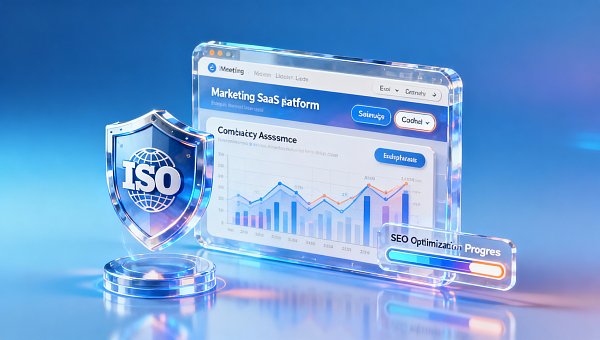
V. Procurement Implementation Recommendations: Focus on 5 Key Indicators and Avoid 3 Typical Risks
Based on our practical experience serving over 100,000 enterprises, we have summarized an efficient procurement path:
- Verify the language pack deliverables : A working sandbox environment is required to conduct on-site testing of terminology consistency, form submission logic, and local payment method adaptation on three typical pages (homepage/product page/privacy policy page).
- Verify the data flow diagram : Request a complete data flow diagram to confirm the accuracy of user IP location identification (≥99.2%), the physical location coordinates of data storage, and the filing number of cross-border transmission encryption algorithm;
- SEO effectiveness testing period : Before signing the contract, an "SEO Performance Guarantee Agreement" is required, stipulating that the core keywords will achieve a success rate of ≥85% in the target country's Google Top 50 within 30 days after launch;
- Review the security response mechanism : Examine the average remediation time of the P1 vulnerability in the most recent red team report, as well as historical major event review documents;
- Assess the localized service network : Confirm whether the target market has a resident customer service team (not outsourced) that supports 7x12 hours of local language response (e.g., Spanish support is available from 08:00 to 20:00 Madrid time).
Avoid three typical risks: ① Choosing a lightweight SaaS that only provides a "translation plugin" results in a lack of SEO and compliance capabilities; ② Ignoring the supplier's actual operational qualifications in the target market (such as claiming to support Russian optimization without obtaining Yandex Partner certification); ③ Failing to clearly define data sovereignty clauses in the contract, leading to a surge in migration costs later.
Conclusion: Accelerating Global Growth with Compliance as the Foundation and Intelligence as the Wings
Choosing a multilingual SaaS platform is essentially an extension of a company's global compliance capabilities. With 15 core AI technology patents, CDN nodes covering 7 continents, and a product design deeply integrated with GDPR/Yandex/PIPL frameworks, YiYingBao has provided "out-of-the-box compliant" intelligent marketing platforms to clients in over 20 industries, including manufacturing, e-commerce, and education. Behind its average annual growth rate of 30% lies the dual validation of technological certainty and service reliability.
If you are facing challenges such as delays in launching your multilingual website, SEO results falling short of expectations, or repeated obstacles in compliance audits, please contact the EasyCare professional consultant team immediately to obtain a customized compliance assessment plan and a free multilingual SEO health diagnostic report.
- Digital Marketing SaaS
- Yiyingbao
- SEO
- Independent Website
- Smart website builder system
- Smart Website Building
- AI Translation
- EasySite Intelligent Website Builder
- AI Marketing Engine
- Multilingual SEO
- AI Translation Engine
- Global Website Building SaaS Platform
- Why is website loading speed so important?
- EYB AI Marketing
- AI Marketing
Related Articles
 GCC New Regulations: Industrial Product Independent Sites Need Arabic AI Compliance Q&A
 What types of businesses are suitable for YiYingBao AI Website Building System? Functional Boundaries and Application Scenarios Analysis
 Is a template website system suitable for a corporate website? How to judge budget, features, and scalability


Related Products
 EasyCamp SaaS Smart Website Marketing SystemE-Yingbao SaaS Smart Website Marketing System: AI-powered, zero-code website building. Rapidly launch multilingual independent e-commerce sites in just 10 minutes. Global server acceleration and AI-driven SEO optimization empower businesses to efficiently connect with global markets. The seamless integration of technology and user-friendly operation makes building e-commerce sites incredibly simple.
 AI+SEM Intelligent Advertising Marketing SystemAI+SEM drives intelligent ad creation, empowering full-funnel precision advertising marketing. The system automatically generates weekly/monthly reports, AI recommends keywords and target countries, monitors core metrics in real-time with intelligent alerts, and enables one-click high-conversion ad solutions to help quickly acquire customers and improve ROI.
 AI+SEO Dual Engine Optimization ServiceEasyWin AI+SEO Dual Engine Optimization System leverages AI-powered keyword mining, content generation, and comprehensive technical optimization to help foreign trade enterprises acquire high-quality organic traffic, significantly improving search rankings and conversion rates.
 AI+SNS Social Media Marketing SystemYingbao AI+SNS Social Media Marketing System - Precision social capture for the social media era. Supports one-click content synchronization across major platforms like Facebook and LinkedIn. AI intelligently rewrites posts for enhanced relevance. 24/7 AI customer service and user profiling analysis empower businesses to efficiently expand into global markets.
 AI+SEO营销解决方案易营宝AI+SEO营销解决方案,通过AI批量写作、智能生成TDK、精准关键词扩词等功能,全面优化网站SEO效果,提升流量与转化率。助力企业构建高效智能网站新生态。
 AI+SEM Advertising Marketing SolutionsAI+SEM Advertising Marketing Solution leverages AI technology to deeply empower SEM ad campaigns. It automatically generates weekly/monthly reports using AI, presenting account data across multiple dimensions for comprehensive insights into campaign performance and trends. The system precisely recommends keywords and target countries, intelligently generates high-conversion ad copy, and enables one-click activation of efficient campaign plans to help businesses rapidly acquire customers. Simultaneously, it monitors core metrics in real time, intelligently identifies abnormal fluctuations, and issues timely alerts to ensure stable, high-return advertising results.
 Domain Name ServicesEasyWin provides professional domain name services, including intelligent queries, one-stop registration, brand protection, and full lifecycle management, helping businesses build a digital brand image.
 EasyOperate B2C Cross-Border E-Commerce Platform & Independent WebsiteEasyStore B2C Cross-border E-commerce Independent Store is an intelligent website building and cross-border e-commerce integrated solution independently developed by EasyStore Information Technology (Beijing) Co., Ltd. The system is specially designed for small and medium-sized as well as large export enterprises, integrating 'website building, operation, marketing, advertising, and conversion' into one, helping enterprises quickly establish cross-border e-commerce independent stores to achieve brand globalization and global sales growth.
The platform supports multiple languages, multiple currencies, and multi-channel marketing, with built-in AI intelligent translation and SEO optimization systems, suitable for mainstream markets such as Southeast Asia, Europe and America, Latin America, and the Middle East, assisting Chinese manufacturing enterprises in efficiently deploying international e-commerce strategies. SSL证书易营宝提供专业SSL安全证书服务,包括单域名和泛域名证书,确保网站数据传输加密、身份验证和完整性保护,助力企业建立安全可信的在线业务环境。









