









- Cross-Border Marketing Trend Research: Why More and More Companies Are Starting to Deploy AI Search and GEO OptimizationJun 30, 2026View details
- Cross-Border Marketing Trend Research: How Independent Sites, AI Content, and Short-Video Customer Acquisition Are ChangingJun 30, 2026View details
- How Can a Brand Updates Page Be Made More SEO-Friendly? Analysis of Update Frequency, Content Structure, and Internal Linking StrategyJun 28, 2026View details
- What stages does the cross-border services ecosystem include? How do website building, promotion, payment, and compliance work togetherJun 22, 2026View details
- How will email marketing costs change in 2026Jun 22, 2026View details
- The China-US tariff arrangement has reached a preliminary consensus, and the trade association will be establishedJun 15, 2026View details
How to Build a Foreign Trade Independent Website? 15-Step Implementation Plan and Delivery Timeline
How to build a foreign trade independent website? This 15-step implementation plan covers the website construction cycle, functional requirements, and traffic acquisition to help you quickly launch. This article is intended for operators, technical evaluators, corporate decision-makers, project managers, and after-sales maintenance personnel, providing a comprehensive breakdown of key milestones and deliverable timelines from requirement research to online operation and maintenance. Combined with a decade of industry expertise and AI-driven platform capabilities, practical implementation suggestions are provided. After reading, you will clearly understand the required functionalities for a foreign trade independent website, typical launch timelines, customer acquisition methods, construction costs, and alternative solutions, facilitating internal evaluations and external supplier coordination.
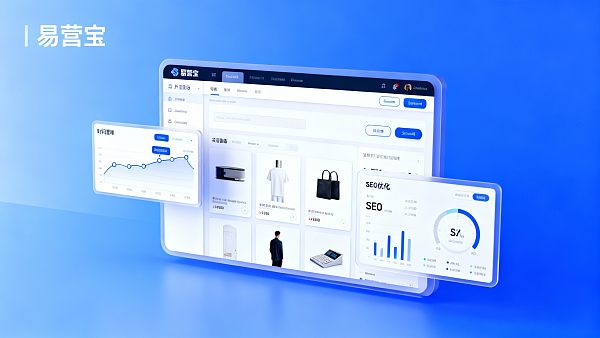
Definition and Market Overview
Definition and Overview: A foreign trade independent website is a self-built brand official website or e-commerce platform targeting overseas markets, distinct from marketplace stores in terms of data ownership and brand control. From a market perspective, cross-border e-commerce and B2B foreign trade are transitioning from traffic dependency to strategy-driven models, with technology and localization being critical success factors. Answering common questions: Are independent websites suitable for B2B foreign trade? The answer is yes but requires differentiated design, emphasizing product information completeness, inquiry workflows, and contract management functionalities in B2B scenarios. Compared to marketplace stores, independent websites are more conducive to long-term brand asset accumulation and precision marketing.
15-Step Implementation Plan and Deliverable Timeline
The implementation plan is divided into five phases—requirement research, design, construction, testing, and launch/operation—comprising fifteen steps. Each step corresponds to typical deliverables and estimated timelines for project milestone control. The timeline overview is as follows: 1. Requirement Research and Competitive Analysis: 7 days (deliver requirement documents) 2. Information Architecture and Sitemap: 5 days (deliver page flowcharts) 3. UI Visual and Multilingual Templates: 10 days (deliver visual mockups) 4. Development Integration and Backend Connectivity: 15 days (deliver test environment) 5. Content Production and SEO Presets: 10 days (deliver initial product pages) 6. Specialized Testing (performance, security, multilingual indexing): 5 days 7. Launch and Monitoring Configuration: 3 days The remaining time is allocated for iterative optimization and ad preparation. The total cycle typically ranges from four to eight weeks depending on complexity. How long does it take to launch a foreign trade independent website? Simple directory-type sites can be completed in four weeks, while complex multi-currency and ERP-integrated projects require eight weeks or more.

Deliverable Timeline Example
Technical Performance and Feature List
Regarding technical performance and parameters, foreign trade independent websites must ensure page loading speed, website security, multilingual SEO, and structured data support. The core feature list includes: automatic multilingual adaptation, multi-currency switching, global CDN acceleration, intelligent SEO optimization, AI recommendations, system security, drag-and-drop site building with AI content assistants, responsive layouts, multi-channel marketing integration, and refined customer management. Addressing customer concerns: What functionalities are needed for a foreign trade independent website? The above list represents the minimum viable package. To mitigate launch risks, platforms supporting automatic translation across 300+ languages while preserving SEO keyword structures are recommended. Products like EasyStore demonstrate significant improvements in access speed and search performance through multilingual recognition and CDN acceleration. Reference EasyStore B2C cross-border e-commerce and independent websites for rapid pre-configuration of functional modules.
Costs, Alternatives, and Procurement Guidelines
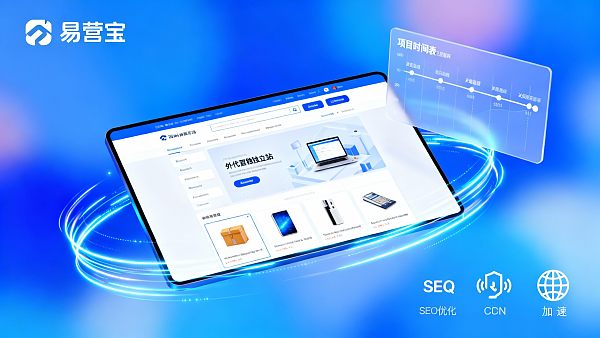
Costs and Options: A common question—Are foreign trade independent websites expensive to build? Costs depend on functional complexity and customization levels, typically ranging from thousands to tens of thousands USD. A phased payment strategy is recommended, prioritizing core functionalities for launch followed by modular expansions to reduce initial investments. When comparing solutions, evaluate total ownership costs including hosting, CDN, localized payment, legal compliance, and ongoing content/SEO investments. Comparative analysis: What distinguishes independent websites from marketplace stores? Independent websites offer advantages in control and long-term customer acquisition efficiency, though short-term traffic can be supplemented through platform ads and social media matrices. How to acquire customers for foreign trade independent websites? Recommended strategies combine SEO content marketing, Google/social ads, on-site recommendations, remarketing, and localized landing pages with partnership channels.
Client Cases, Common Pitfalls, and Contact Us
Client Cases and Common Pitfalls: Multiple industry clients achieved natural traffic and inquiry growth within three months using independent websites. Common corporate mistakes include over-reliance on homepage traffic, neglecting multilingual indexing and localized payment configurations, and underestimating continuous content production costs. What’s the difference between multilingual and single-language websites? Multilingual sites cover more markets but require version maintenance and compliance with Google’s multilingual indexing rules to avoid diluted SEO effectiveness. Trends and Outlook: AI-generated content and data-driven marketing will become mainstream, with brand independent websites demonstrating clear advantages in long-term customer value. Why choose us? Since 2013, EasyStore has leveraged AI and big data to provide integrated solutions encompassing smart website building, SEO optimization, and unified social/advertising campaigns, assisting over 100,000 enterprises in global expansion. Our mature capabilities include global CDN, security, AI keyword expansion, and automated TDK generation. For implementation plan consultations or demo access, contact us for specialized diagnostics and trial opportunities.
- Website Security
- Foreign Trade Independent Website Development
- Brand Independent Site
- B2B Foreign Trade
- Standalone website development
- Yiyingbao
- SEO
- Independent Website
- Smart Website Building
- Multilingual SEO
- Independent foreign trade website
- Global CDN Acceleration
- Multilingual website
- cross-border e-commerce
- What is the difference between a multilingual website and a single-language website?
- What is the difference between an independent foreign trade website and a platform store?
- How to build a foreign trade independent station?
- What features are needed for a foreign trade independent website?
- How long does it usually take for a foreign trade independent website to go online?
- Is the cost of building an independent foreign trade website high?
- How can a foreign trade independent website acquire customers?
- Is a standalone website suitable for B2B foreign trade?
Related Articles
 What types of websites is an AI-powered site generator with drag and drop suitable for?
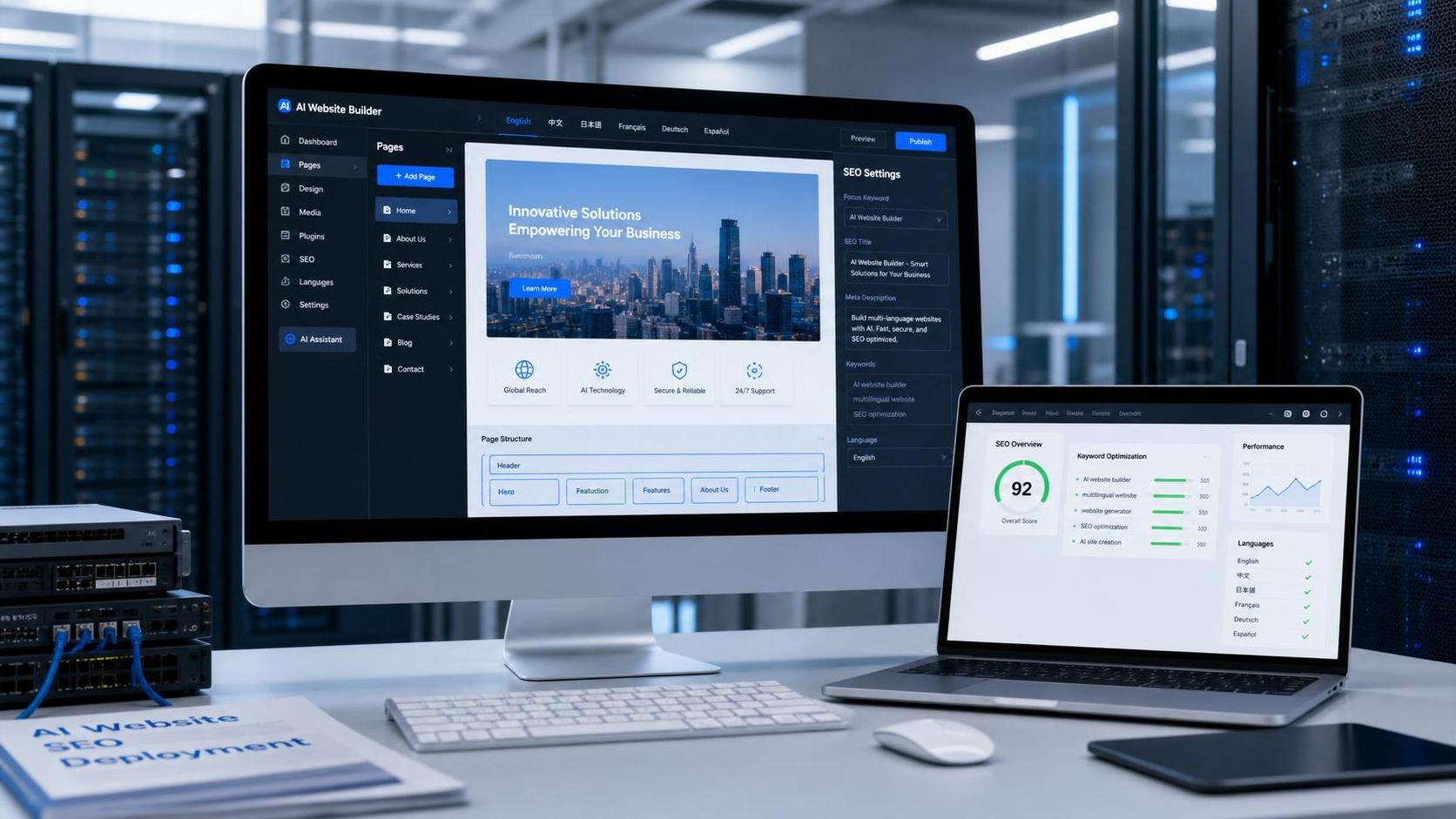
 What Does an AI Website Building Service Include? A Breakdown of the Delivery Scope from Page Generation to SEO Deployment
 What Is the Difference Between Free Websites and Paid Websites? A Comprehensive Comparison of Features, SEO, and Long-Term Costs
Related Products
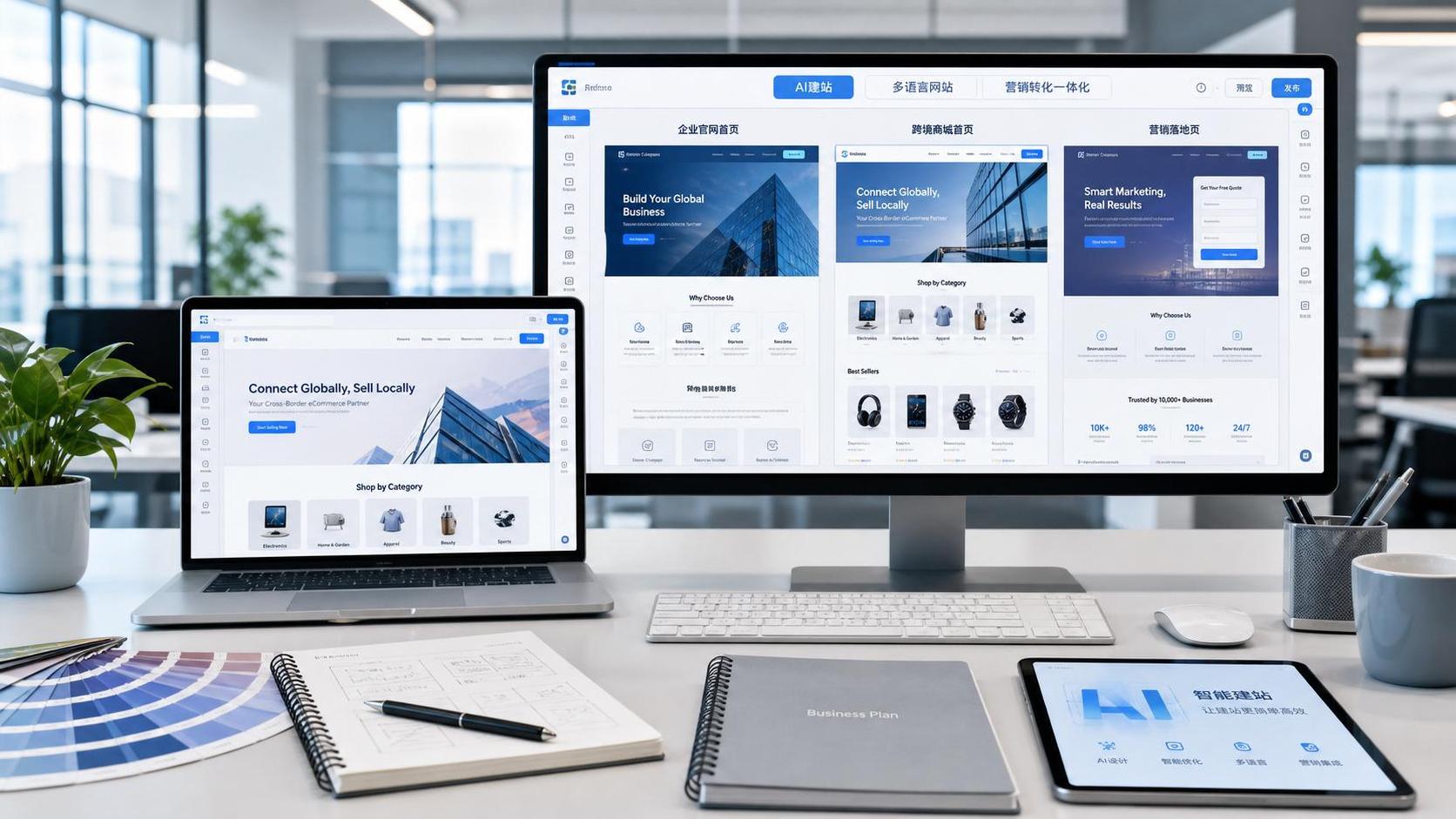
 EasyCamp SaaS Smart Website Marketing SystemE-Yingbao SaaS Smart Website Marketing System: AI-powered, zero-code website building. Rapidly launch multilingual independent e-commerce sites in just 10 minutes. Global server acceleration and AI-driven SEO optimization empower businesses to efficiently connect with global markets. The seamless integration of technology and user-friendly operation makes building e-commerce sites incredibly simple.
 AI+SEM Intelligent Advertising Marketing SystemAI+SEM drives intelligent ad creation, empowering full-funnel precision advertising marketing. The system automatically generates weekly/monthly reports, AI recommends keywords and target countries, monitors core metrics in real-time with intelligent alerts, and enables one-click high-conversion ad solutions to help quickly acquire customers and improve ROI.
 AI+SEO Dual Engine Optimization ServiceEasyWin AI+SEO Dual Engine Optimization System leverages AI-powered keyword mining, content generation, and comprehensive technical optimization to help foreign trade enterprises acquire high-quality organic traffic, significantly improving search rankings and conversion rates.
 AI+SNS Social Media Marketing SystemYingbao AI+SNS Social Media Marketing System - Precision social capture for the social media era. Supports one-click content synchronization across major platforms like Facebook and LinkedIn. AI intelligently rewrites posts for enhanced relevance. 24/7 AI customer service and user profiling analysis empower businesses to efficiently expand into global markets.
 AI+SEO营销解决方案易营宝AI+SEO营销解决方案,通过AI批量写作、智能生成TDK、精准关键词扩词等功能,全面优化网站SEO效果,提升流量与转化率。助力企业构建高效智能网站新生态。
 AI+SEM Advertising Marketing SolutionsAI+SEM Advertising Marketing Solution leverages AI technology to deeply empower SEM ad campaigns. It automatically generates weekly/monthly reports using AI, presenting account data across multiple dimensions for comprehensive insights into campaign performance and trends. The system precisely recommends keywords and target countries, intelligently generates high-conversion ad copy, and enables one-click activation of efficient campaign plans to help businesses rapidly acquire customers. Simultaneously, it monitors core metrics in real time, intelligently identifies abnormal fluctuations, and issues timely alerts to ensure stable, high-return advertising results.
 Domain Name ServicesEasyWin provides professional domain name services, including intelligent queries, one-stop registration, brand protection, and full lifecycle management, helping businesses build a digital brand image.
 EasyOperate B2C Cross-Border E-Commerce Platform & Independent WebsiteEasyStore B2C Cross-border E-commerce Independent Store is an intelligent website building and cross-border e-commerce integrated solution independently developed by EasyStore Information Technology (Beijing) Co., Ltd. The system is specially designed for small and medium-sized as well as large export enterprises, integrating 'website building, operation, marketing, advertising, and conversion' into one, helping enterprises quickly establish cross-border e-commerce independent stores to achieve brand globalization and global sales growth.
The platform supports multiple languages, multiple currencies, and multi-channel marketing, with built-in AI intelligent translation and SEO optimization systems, suitable for mainstream markets such as Southeast Asia, Europe and America, Latin America, and the Middle East, assisting Chinese manufacturing enterprises in efficiently deploying international e-commerce strategies. SSL证书易营宝提供专业SSL安全证书服务,包括单域名和泛域名证书,确保网站数据传输加密、身份验证和完整性保护,助力企业建立安全可信的在线业务环境。









