









- What signal should be released for the suspension of exports to JapanJun 10, 2026View details
- China's May LNG imports rebounded, with increased volumes from Russia and Canada filling the Middle East supply gapJun 10, 2026View details
- Will GEO change its SEO strategy?Jun 04, 2026View details
- What types of businesses are end-to-end solutions suitable for?Jun 03, 2026View details
- 2026 Global Growth Channel TrendsJun 02, 2026View details
- Changes in Search Engine Ranking Factors in 2026Jun 06, 2026View details
What's the difference between a multilingual website and a single-language website? A cost-benefit comparison model for decision-makers
What is the difference between a multilingual website and a single-language website? This article breaks down the cost and performance models for decision-makers, helping you choose the right strategy for building an overseas website. Targeted at corporate decision-makers, technical evaluators, project managers, and end-users, it addresses four dimensions: "cost, launch timeline, effectiveness, and maintainability," combined with practical challenges in foreign trade independent websites (e.g., Are independent sites suitable for B2B export? How can foreign trade independent sites acquire customers? Is the cost of building a foreign trade independent site high?). It provides an actionable evaluation framework and implementation recommendations to help you make cost-effective and high-impact decisions regarding "multilingual vs. single-language" choices.
Definition and Overview (Definition)
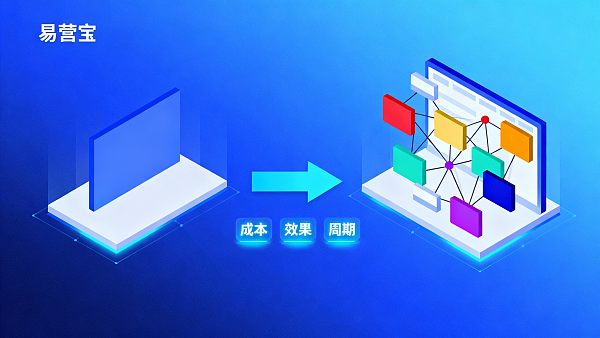
At the decision-making level, clarify the concepts first: A single-language website typically serves a single market or linguistic group, with a simple structure, strong content consistency, and low operational costs. A multilingual website, however, provides localized pages, SEO elements, and cross-navigation for different language users, suitable for covering multi-regional markets. Technically, multilingual sites can be implemented via subdirectories, subdomains, or standalone sites, each with distinct requirements for SEO performance, server architecture, and content production. For operations teams, the key challenge for single-language sites lies in growth ceilings and slow local trust-building, while multilingual sites face hurdles like translation quality, content synchronization, domain weight allocation, and long-term maintenance costs.
Market Background and Industry Analysis (Market Overview)
With the globalization of e-commerce and the shift of B2B procurement online, competition for overseas traffic intensifies. Adopting a multilingual strategy usually delivers higher conversion rates and brand recognition when target markets are dispersed or multilingual users dominate. For export businesses, core questions include "How do foreign trade independent sites acquire customers?" and "Why should export companies build independent sites?" Compared to marketplace storefronts, independent sites offer better control over SEO resources, brand presentation, and user data. Easypawn Information Technology (Beijing) Co., Ltd., with a decade of expertise, employs a dual strategy of "technological innovation + localized service," offering smart site-building, AI translation engines, and global CDN acceleration to help businesses achieve faster loading speeds (+40%) and improved SEO scores (+35%) in multilingual deployments while reducing international network and compliance risks, supporting global growth.
Comparative Analysis: Cost, Effectiveness, and Launch Timeline (Comparison Analysis)
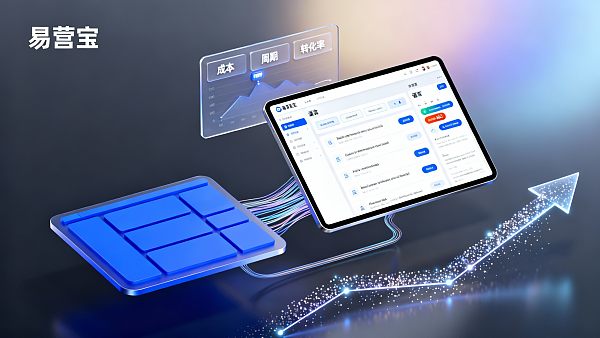
To quantify decision-making, we recommend a three-factor model: "Total Cost of Ownership (TCO) + Performance Expectations (traffic & conversion) + Launch Timeline." Key components include: 1) One-time setup costs (design, translation, SEO structure, domain & server); 2) Long-term operational costs (content production, SEO optimization, social media & ads); 3) Performance realization timeline (SEO effectiveness period, market reach speed). For example, "Is the cost of building a foreign trade independent site high?" depends on functionality—basic showcase sites are cheaper, while multilingual and self-developed e-commerce features significantly increase costs. Regarding "How long does it take to launch a foreign trade independent site?" template-based smart builds take weeks, whereas customized multilingual deep localization typically requires 2-3 months or longer. Reference comparisons are tabulated below:
Technical Performance, Standards, and Alternatives (Technical Performance & Cost Alternatives)
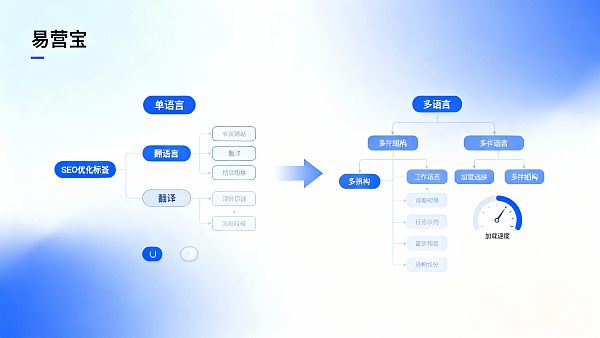
From a technical perspective, multilingual deployments impose higher demands on CDN, server scaling, URL strategies, and SEO metadata management. Performance optimization directly impacts conversion: Easypawn’s smart site-building with global server clusters improves loading speeds by ~40% and SEO scores by ~35%. Additionally, enterprises should consider IPv6 advantages, such as expanded address space and built-in security (e.g., reference Internet Protocol Version 6 (IPv6) with 128-bit addresses, native IPSec, and multicast support, valuable for large-scale cross-border CDN and cloud-native deployments). Prioritize evaluations of: URL structure scalability, automated translation with localized glossaries, search engine crawlability, and third-party tool compatibility (ads, payments, analytics).
Procurement Guide, Case Studies & FAQ (Procurement Guide / Case Studies / FAQ)
Actionable steps for decision-makers: 1) Define target markets and user personas before choosing subdirectories, subdomains, or multi-site deployments; 2) Estimate content volume and translation cadence, deciding between AI translation + human review workflows; 3) Select vendors based on global operation capabilities and partner ecosystems. Common pitfalls: Assuming machine translation suffices; neglecting local SEO (e.g., keyword research); underestimating long-term content maintenance costs. Success cases demonstrate solutions combining AI term expansion, auto-generated TDK, and social media automation significantly shorten customer acquisition paths and improve ad ROI. FAQs addressed: "How to build a foreign trade independent site?" involves template setup, feature integration, content localization, and compliant cloud deployment; "Difference between independent sites and marketplace stores?" lies in traffic ownership, brand equity, and data control; "Are independent sites suitable for B2B export?"—absolutely, especially for long-term client relationships and customized services.

Trends, Future Outlook & Call to Action (Trend & Call to Action)
Looking ahead, multilingual sites will deeply integrate AI automation and data-driven marketing: AI-generated visuals, dynamic keywords, and creative factory models will become norms, enabling scaled replication of ads and content in localized contexts. To mitigate uncertainty, adopt phased strategies: Start with core markets and optimal languages, validate conversions, then expand language blocks. Why choose us? Easypawn’s AI-powered all-in-one smart marketing platform, global traffic ecosystem, and localization capabilities have empowered 10,000+ enterprises in overseas growth. Our tech stack—middleware, NLP, and CDN acceleration—is robust, backed by Google Premier Partner and Meta agency status. Contact us for a dedicated assessment: We offer free site evaluations, launch timelines, and cost models, helping you execute from "How to boost overseas traffic with multilingual sites?" to "How do foreign trade independent sites acquire customers?"—ultimately achieving low-cost, high-return global expansion.
- Independent Foreign Trade Website Construction
- Standalone website development
- Yiyingbao
- SEO
- Independent Website
- SEO Optimization
- Smart Website Development
- AI Translation
- Social Media Automation
- AI Translation Engine
- Independent foreign trade website
- Global CDN Acceleration
- Multilingual website
- Global Traffic Ecosystem
- How can a multilingual website increase overseas traffic?
- What is the difference between a multilingual website and a single-language website?
- Why should foreign trade enterprises build independent websites?
- What is the difference between an independent foreign trade website and a platform store?
- How to build a foreign trade independent station?
- How long does it usually take for a foreign trade independent website to go online?
- Is the cost of building an independent foreign trade website high?
- How can a foreign trade independent website acquire customers?
- Is a standalone website suitable for B2B foreign trade?
Related Articles
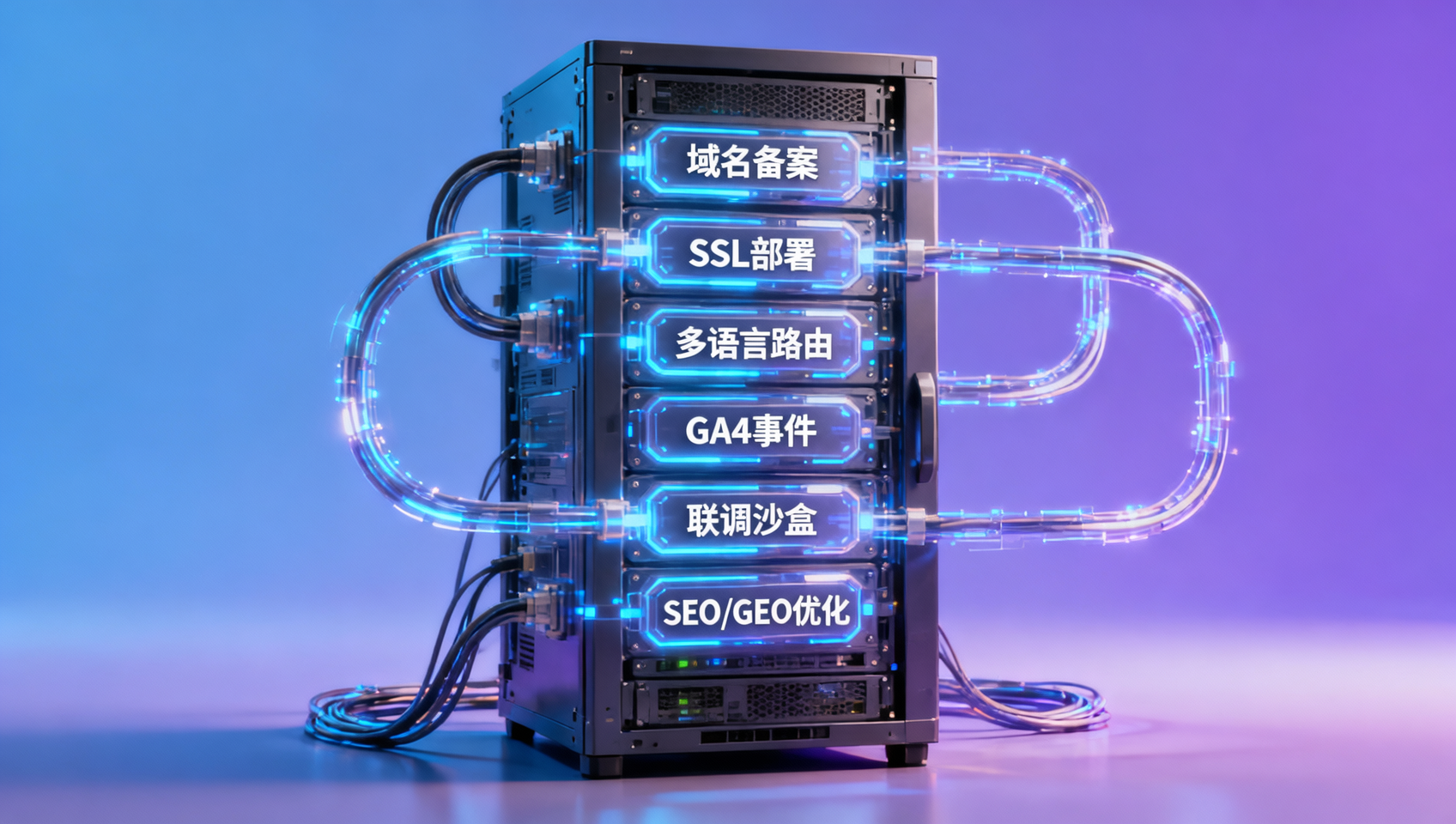
 7-Step Breakdown of the B2B Foreign Trade Website Building Process: Domain Registration Filing → SSL Deployment → Multilingual Routing → Inquiry Form Tracking → GA4 Event Tracking
 In inquiry-driven foreign trade website design, the absence of a form submission success page leads to lead loss
 How to Resolve Cache Conflicts When Google AMP Pages and PWA Coexist
Related Products
 EasyCamp SaaS Smart Website Marketing SystemE-Yingbao SaaS Smart Website Marketing System: AI-powered, zero-code website building. Rapidly launch multilingual independent e-commerce sites in just 10 minutes. Global server acceleration and AI-driven SEO optimization empower businesses to efficiently connect with global markets. The seamless integration of technology and user-friendly operation makes building e-commerce sites incredibly simple.
 AI+SEM Intelligent Advertising Marketing SystemAI+SEM drives intelligent ad creation, empowering full-funnel precision advertising marketing. The system automatically generates weekly/monthly reports, AI recommends keywords and target countries, monitors core metrics in real-time with intelligent alerts, and enables one-click high-conversion ad solutions to help quickly acquire customers and improve ROI.
 AI+SEO Dual Engine Optimization ServiceEasyWin AI+SEO Dual Engine Optimization System leverages AI-powered keyword mining, content generation, and comprehensive technical optimization to help foreign trade enterprises acquire high-quality organic traffic, significantly improving search rankings and conversion rates.
 AI+SNS Social Media Marketing SystemYingbao AI+SNS Social Media Marketing System - Precision social capture for the social media era. Supports one-click content synchronization across major platforms like Facebook and LinkedIn. AI intelligently rewrites posts for enhanced relevance. 24/7 AI customer service and user profiling analysis empower businesses to efficiently expand into global markets.
 AI+SEO营销解决方案易营宝AI+SEO营销解决方案,通过AI批量写作、智能生成TDK、精准关键词扩词等功能,全面优化网站SEO效果,提升流量与转化率。助力企业构建高效智能网站新生态。
 AI+SEM Advertising Marketing SolutionsAI+SEM Advertising Marketing Solution leverages AI technology to deeply empower SEM ad campaigns. It automatically generates weekly/monthly reports using AI, presenting account data across multiple dimensions for comprehensive insights into campaign performance and trends. The system precisely recommends keywords and target countries, intelligently generates high-conversion ad copy, and enables one-click activation of efficient campaign plans to help businesses rapidly acquire customers. Simultaneously, it monitors core metrics in real time, intelligently identifies abnormal fluctuations, and issues timely alerts to ensure stable, high-return advertising results.
 Domain Name ServicesEasyWin provides professional domain name services, including intelligent queries, one-stop registration, brand protection, and full lifecycle management, helping businesses build a digital brand image.
 EasyOperate B2C Cross-Border E-Commerce Platform & Independent WebsiteEasyStore B2C Cross-border E-commerce Independent Store is an intelligent website building and cross-border e-commerce integrated solution independently developed by EasyStore Information Technology (Beijing) Co., Ltd. The system is specially designed for small and medium-sized as well as large export enterprises, integrating 'website building, operation, marketing, advertising, and conversion' into one, helping enterprises quickly establish cross-border e-commerce independent stores to achieve brand globalization and global sales growth.
The platform supports multiple languages, multiple currencies, and multi-channel marketing, with built-in AI intelligent translation and SEO optimization systems, suitable for mainstream markets such as Southeast Asia, Europe and America, Latin America, and the Middle East, assisting Chinese manufacturing enterprises in efficiently deploying international e-commerce strategies. SSL证书易营宝提供专业SSL安全证书服务,包括单域名和泛域名证书,确保网站数据传输加密、身份验证和完整性保护,助力企业建立安全可信的在线业务环境。









