









- Is Brand Globalization Marketing Consulting Worth Buying? At What Stage Should Companies Bring It InJul 01, 2026View details
- Cross-Border Marketing Trend Research: Why More and More Companies Are Starting to Deploy AI Search and GEO OptimizationJun 30, 2026View details
- Cross-Border Marketing Trend Research: How Independent Sites, AI Content, and Short-Video Customer Acquisition Are ChangingJun 30, 2026View details
- How Can a Brand Updates Page Be Made More SEO-Friendly? Analysis of Update Frequency, Content Structure, and Internal Linking StrategyJun 28, 2026View details
- What stages does the cross-border services ecosystem include? How do website building, promotion, payment, and compliance work togetherJun 22, 2026View details
- How will email marketing costs change in 2026Jun 22, 2026View details
- The China-US tariff arrangement has reached a preliminary consensus, and the trade association will be establishedJun 15, 2026View details
- Should overseas brand marketing start with ads or contentJun 21, 2026View details
Which customer acquisition scenarios is AI marketing suitable for
AI marketing is not only suitable for large enterprises, but is even more applicable to customer acquisition scenarios where lead generation is difficult, conversion efficiency is low, and channels are fragmented. For business decision-makers, accurately identifying application boundaries and implementation methods is the key to improving growth efficiency.
In the era of integrated website and marketing services, customer acquisition is no longer a single media buying action, but full-chain operations from traffic acquisition, content reach, and lead identification to sales conversion. If enterprises still rely on manual, fragmented management, they often face 3 types of problems: channel data is not unified, follow-up rhythm is unstable, and campaign returns are difficult to track.
The value of AI marketing lies precisely in the automated identification, prediction, and optimization of these stages. Especially for enterprises seeking to improve lead quality, shorten the customer acquisition cycle, and expand into overseas or multi-regional markets, AI is not just a tool upgrade, but a reconstruction of the growth model.
Since its establishment in 2013, Yiyingbao Information Technology (Beijing) Co., Ltd. has continuously built a full-chain service system around intelligent website building, SEO optimization, social media marketing, and advertising placement. For business decision-makers, what truly deserves attention is not “whether to use AI,” but “which scenarios are most suitable to adopt AI first,” and “how to achieve measurable improvements within 6 to 12 weeks.”
Which customer acquisition scenarios are most suitable for introducing AI marketing

AI marketing is not suitable for every business activity, but in high-frequency, repetitive, and measurable customer acquisition stages, it can usually deliver value more quickly. For B2B enterprises, especially lead-based businesses, content-driven businesses, and cross-channel campaign businesses, AI often has higher applicability.
Scenarios where lead acquisition costs continue to rise
When an enterprise’s customer acquisition costs on search engines, information feeds, and social media platforms have risen for 2 consecutive quarters, while the number of valid inquiries has not increased accordingly, it indicates a mismatch between campaigns and content. At this point, AI marketing can be used for keyword expansion, audience segmentation, creative testing, and landing page optimization.
For example, a company may run 20 ad groups each month, but if it relies only on manual judgment of click-through rates and conversion rates, it often takes 7 to 14 days to complete one round of adjustments. If an AI model is introduced for copy testing and audience identification, the optimization cycle can usually be shortened to 3 to 5 days, reducing ineffective budget consumption.
Scenarios where the website has traffic but low conversion rates
Many corporate websites already have a certain amount of traffic, but form submission rates, online consultation rates, or lead capture rates remain below expectations. The problem is often not “no traffic,” but “failure to identify high-intent visitors.” AI marketing can improve on-site conversion efficiency through user behavior analysis, visit path identification, and page content recommendations.
Under normal circumstances, enterprises can prioritize monitoring 4 core indicators: bounce rate, average time on site, form reach rate, and key page click-through rate. If the bounce rate is higher than 65%, and the average time on site is less than 45 seconds, it indicates that the website content is not sufficiently aligned with visitor needs, making it suitable to introduce AI-driven content distribution and page testing mechanisms.
Scenarios with fragmented channels and disconnected data
When an enterprise simultaneously operates website SEO, social media accounts, advertising campaigns, and sales CRM, the most common problem is that data is scattered across 4 to 6 systems. The marketing team looks at click data, the sales team looks at lead follow-up, and management looks at overall ROI, but the three cannot form a unified judgment.
In this scenario, the core value of AI marketing is not to replace personnel, but to establish a unified data perspective. Through attribution models, lead scoring, and automation rules, enterprises can more clearly understand which channel brings high-quality customers and which content touchpoint drives conversion, avoiding the continued waste of budget on low-quality traffic.
To assess suitability more intuitively, business decision-makers can first use the table below to identify the scenarios they are in, and then decide which capability modules should be launched first.
As can be seen from the table, AI marketing is most suitable for customer acquisition scenarios where “the problem is already clear, the data foundation is in place, and the optimization room can be quantified.” For business decision-makers, focusing first on 1 to 2 key bottlenecks is more likely to generate returns in the first round of the project than rolling out all functions at once.
How business decision-makers can determine whether it is worth the investment
Not all enterprises need to make a major immediate investment in AI marketing. A more rational approach is to assess it from 4 dimensions: business maturity, data foundation, team execution capability, and budget fault tolerance. If at least 3 of these reach an actionable level, the project success rate will be significantly higher.
First, see whether business goals are clear enough
If an enterprise is only vaguely pursuing “more traffic,” AI will find it difficult to deliver value. AI marketing is better suited to execution around clear goals, such as reducing cost per form by 15% to 25% within 3 months, or increasing the proportion of sales-followable leads from 30% to 45%. The more specific the goal, the more effective model training and strategy execution will be.
It is recommended to prioritize setting 4 types of indicators
- Customer acquisition cost: cost per lead, cost per consultation, cost per valid opportunity
- Conversion efficiency: visitor-to-lead conversion rate, lead-to-opportunity conversion rate
- Operational efficiency: creative testing cycle, campaign adjustment frequency, sales response time
- Data quality: lead completeness rate, duplication rate, invalid rate
Then see whether data and systems have the foundational conditions in place
AI marketing does not produce results out of thin air; it relies on the connectivity and accumulation of foundational data. If the website, ad accounts, form system, and CRM are completely disconnected, the recommendations provided by AI will also be distorted. In general, it is recommended that enterprises connect at least 3 layers of data: traffic data, behavioral data, and lead data.
In integrated website + marketing service projects, the advantage of intelligent website building lies in making it easier to preset tracking points, unify page structure, and allow SEO content, advertising landing pages, and inquiry forms to share the same data logic. This is also the key watershed for many enterprises upgrading from a “website project” to a “growth project.”
Finally, see whether the team is ready to execute a closed loop
One often overlooked issue is that AI can improve analysis and automation capabilities, but final conversion still requires coordination among marketing, operations, and sales. Enterprises should at least clarify 3 responsibility points: who is responsible for data validation, who is responsible for content and campaign adjustments, and who is responsible for lead follow-up and feedback return.
If the average first response time of the sales team exceeds 24 hours, even the best intelligent customer acquisition will be wasted. In practice, enterprises should usually keep response time for high-intent leads within 2 hours, and ordinary inquiry leads within 8 hours, so that the high-quality leads screened by AI can truly convert into business opportunities.
Implementation path of AI marketing in integrated website and marketing
From a project implementation perspective, the biggest taboo in AI marketing is “only adopting tools without changing processes.” A truly effective path should advance website construction, content optimization, traffic acquisition, and lead conversion within a unified framework. A common implementation cycle is 4 to 12 weeks, which can be divided into 3 stages: diagnosis, launch, and optimization.
Stage 1: Diagnosis and foundation building
This stage usually takes 1 to 2 weeks, with a focus on reviewing the existing site structure, keyword layout, conversion pages, and data tracking points. If the enterprise already has an official website, but the page hierarchy is confusing, the mobile experience is poor, and the forms are too long, it is recommended to first carry out lightweight restructuring before introducing intelligent marketing capabilities.
Stage 2: Coordinated launch of content and campaigns
From week 2 to week 6, enterprises should simultaneously advance SEO content, advertising landing pages, and social media outreach strategies. At this stage, AI marketing mainly undertakes 2 tasks: one is to discover high-intent topics and keyword combinations at scale, and the other is to adjust page content and ad creatives based on user personas.
For industries with more decision-making customers, more professionally in-depth content assets can also be introduced, such as policy interpretations, process guides, and system optimization articles, helping users move from “understanding needs” to “comparing solutions.” Such content can serve both conversion and the accumulation of search traffic. For example, a topic like Optimization Path of Financial Management Information Systems for State-owned Enterprises in the Context of Digital Transformation is more suitable for supporting in-depth browsing by medium- and high-intent readers.
Stage 3: Continuous optimization and attribution review
After entering week 6, enterprises need to shift their focus from “whether there are leads” to “whether lead quality has improved.” It is recommended to conduct a campaign and page review every 7 days, and a channel attribution analysis every 30 days. For B2B businesses, short-term clicks do not equal valid customers; the real focus should be on opportunity rate and pre-deal signals.
The following table can serve as a basic process reference for enterprises implementing AI marketing, facilitating internal project initiation and cross-department collaboration.
From the perspective of implementation rhythm, AI marketing is not a one-time delivery, but a continuous iterative process. If enterprises can manage website content, SEO traffic, social media outreach, and advertising campaigns in a unified way, it is usually easier to form a stable growth closed loop than purchasing tools separately at individual points.
Common misunderstandings, risk points, and selection recommendations
The effects of AI marketing often deviate in expectation management. Some enterprises overestimate automation capabilities and underestimate basic operational requirements, resulting in slow project advancement, unstable indicators, and internal disagreement in evaluation. Before procurement, decision-makers are advised to first identify the following 3 high-frequency misunderstandings.
Misunderstanding 1: Treating AI as standalone software procurement
Without coordination among the website, content, channels, and sales process, purchasing a certain type of AI tool alone often only improves local efficiency and is difficult to improve overall conversion. For the integrated website + marketing services industry, AI is more suitable as a “capability layer” within the growth system, rather than an isolated product.
Misunderstanding 2: Excessively pursuing short-term results
SEO content optimization usually takes 8 to 12 weeks to gradually show value, and ad creative testing also requires at least 2 rounds of data accumulation. If an enterprise uses final deals to measure all results in week 1, it is easy to miss the subsequent improvement potential brought by early model training and page optimization.
Misunderstanding 3: Ignoring industry content depth
For B2B enterprises, customer decision cycles are often between 30 and 90 days, and traffic-oriented content alone is difficult to support conversion. Truly high-quality AI marketing needs to combine professional content, business solutions, and decision-support materials. When necessary, white papers, topic pages, or in-depth articles can be added to form continuous touchpoints from search to consultation.
It is recommended to check 5 key points when selecting vendors
- Whether they simultaneously have capabilities in website building, SEO, campaign management, and data integration
- Whether they can provide phased indicators rather than only discussing concepts
- Whether they can develop localized content and channel strategies based on the industry
- Whether they support linkage between lead attribution and sales feedback
- Whether they have a continuous optimization mechanism, rather than ending after a one-time launch
For business decision-makers, the most suitable approach to AI marketing is not “launching all scenarios at the same time,” but starting with the most easily quantifiable customer acquisition stages: first solve traffic waste, then solve page conversion, and finally solve lead quality and attribution issues. This is more conducive to budget control and also more convenient for internal effectiveness evaluation.
With more than 10 years of service accumulation, Yiyingbao Information Technology (Beijing) Co., Ltd. can help enterprises truly implement AI marketing into executable, trackable, and reviewable business chains around intelligent website building, SEO optimization, social media marketing, and advertising placement. If you are evaluating customer acquisition scenarios suitable for your own business, it is recommended to sort out your existing site, channels, and conversion data as soon as possible, obtain a customized solution, learn more solutions, and contact us immediately.
Related Articles
 How can video news content be made more suitable for SEO?Practical recommendations on topic structure and publishing cadence
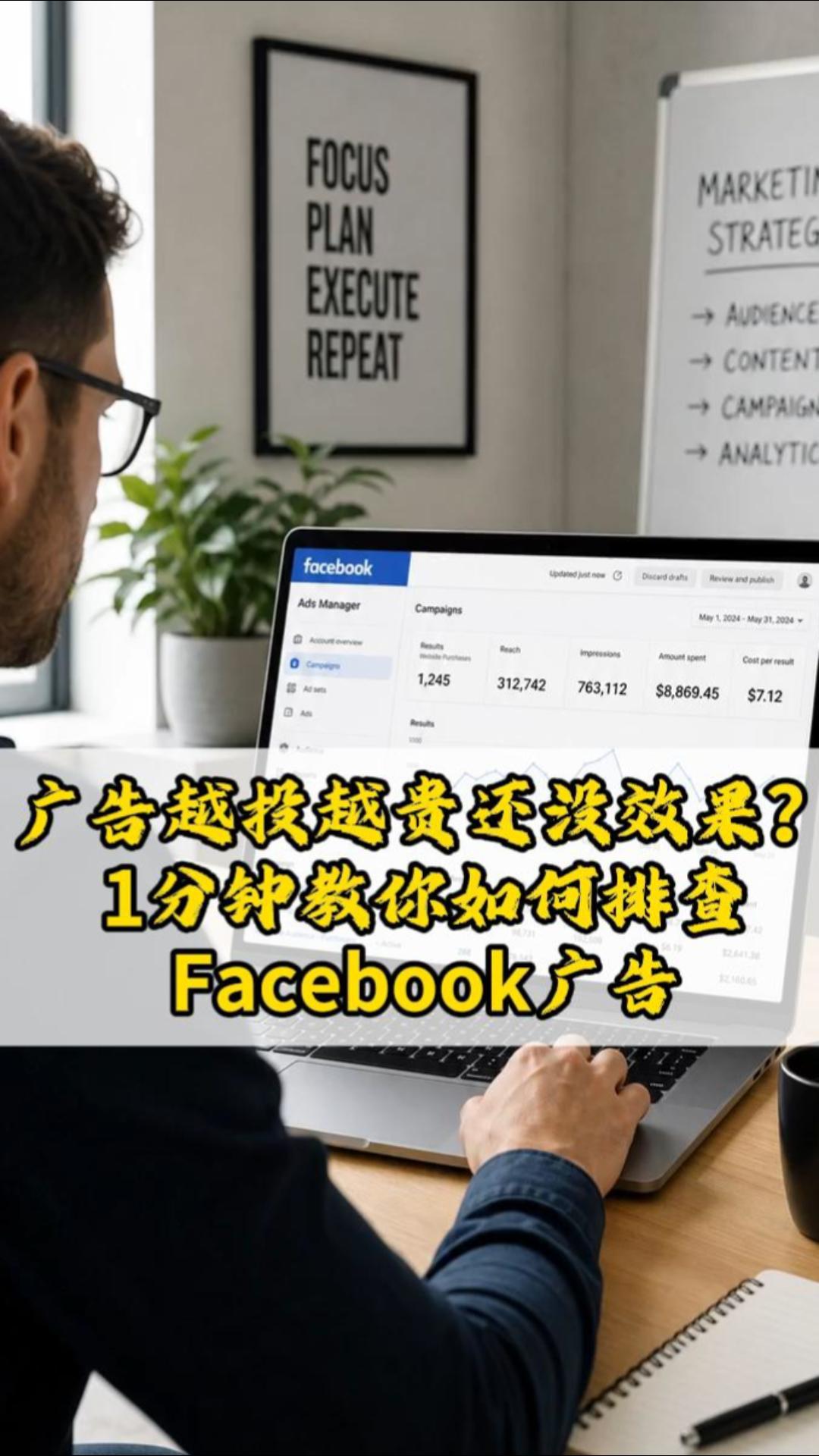
 Are your ads getting more expensive with no results?Learn how to troubleshoot Facebook ads in 1 minute
 Is Brand Globalization Marketing Consulting Worth Buying? At What Stage Should Companies Bring It In

Related Products
 EasyCamp SaaS Smart Website Marketing SystemE-Yingbao SaaS Smart Website Marketing System: AI-powered, zero-code website building. Rapidly launch multilingual independent e-commerce sites in just 10 minutes. Global server acceleration and AI-driven SEO optimization empower businesses to efficiently connect with global markets. The seamless integration of technology and user-friendly operation makes building e-commerce sites incredibly simple.
 AI+SEM Intelligent Advertising Marketing SystemAI+SEM drives intelligent ad creation, empowering full-funnel precision advertising marketing. The system automatically generates weekly/monthly reports, AI recommends keywords and target countries, monitors core metrics in real-time with intelligent alerts, and enables one-click high-conversion ad solutions to help quickly acquire customers and improve ROI.
 AI+SEO Dual Engine Optimization ServiceEasyWin AI+SEO Dual Engine Optimization System leverages AI-powered keyword mining, content generation, and comprehensive technical optimization to help foreign trade enterprises acquire high-quality organic traffic, significantly improving search rankings and conversion rates.
 AI+SNS Social Media Marketing SystemYingbao AI+SNS Social Media Marketing System - Precision social capture for the social media era. Supports one-click content synchronization across major platforms like Facebook and LinkedIn. AI intelligently rewrites posts for enhanced relevance. 24/7 AI customer service and user profiling analysis empower businesses to efficiently expand into global markets.
 AI+SEO营销解决方案易营宝AI+SEO营销解决方案,通过AI批量写作、智能生成TDK、精准关键词扩词等功能,全面优化网站SEO效果,提升流量与转化率。助力企业构建高效智能网站新生态。
 AI+SEM Advertising Marketing SolutionsAI+SEM Advertising Marketing Solution leverages AI technology to deeply empower SEM ad campaigns. It automatically generates weekly/monthly reports using AI, presenting account data across multiple dimensions for comprehensive insights into campaign performance and trends. The system precisely recommends keywords and target countries, intelligently generates high-conversion ad copy, and enables one-click activation of efficient campaign plans to help businesses rapidly acquire customers. Simultaneously, it monitors core metrics in real time, intelligently identifies abnormal fluctuations, and issues timely alerts to ensure stable, high-return advertising results.
 Domain Name ServicesEasyWin provides professional domain name services, including intelligent queries, one-stop registration, brand protection, and full lifecycle management, helping businesses build a digital brand image.
 EasyOperate B2C Cross-Border E-Commerce Platform & Independent WebsiteEasyStore B2C Cross-border E-commerce Independent Store is an intelligent website building and cross-border e-commerce integrated solution independently developed by EasyStore Information Technology (Beijing) Co., Ltd. The system is specially designed for small and medium-sized as well as large export enterprises, integrating 'website building, operation, marketing, advertising, and conversion' into one, helping enterprises quickly establish cross-border e-commerce independent stores to achieve brand globalization and global sales growth.
The platform supports multiple languages, multiple currencies, and multi-channel marketing, with built-in AI intelligent translation and SEO optimization systems, suitable for mainstream markets such as Southeast Asia, Europe and America, Latin America, and the Middle East, assisting Chinese manufacturing enterprises in efficiently deploying international e-commerce strategies. SSL证书易营宝提供专业SSL安全证书服务,包括单域名和泛域名证书,确保网站数据传输加密、身份验证和完整性保护,助力企业建立安全可信的在线业务环境。









