









- Is Brand Globalization Marketing Consulting Worth Buying? At What Stage Should Companies Bring It InJul 01, 2026View details
- Cross-Border Marketing Trend Research: Why More and More Companies Are Starting to Deploy AI Search and GEO OptimizationJun 30, 2026View details
- Cross-Border Marketing Trend Research: How Independent Sites, AI Content, and Short-Video Customer Acquisition Are ChangingJun 30, 2026View details
- How Can a Brand Updates Page Be Made More SEO-Friendly? Analysis of Update Frequency, Content Structure, and Internal Linking StrategyJun 28, 2026View details
- What stages does the cross-border services ecosystem include? How do website building, promotion, payment, and compliance work togetherJun 22, 2026View details
- How will email marketing costs change in 2026Jun 22, 2026View details
- The China-US tariff arrangement has reached a preliminary consensus, and the trade association will be establishedJun 15, 2026View details
- Should overseas brand marketing start with ads or contentJun 21, 2026View details
The Most Common SEO Mistakes SaaS Companies Make When Building Websites
When many SaaS companies build websites, they often focus on design and functionality while overlooking the SEO foundation, resulting in traffic that is difficult to grow and leads that are hard to convert. In the integrated website + marketing service scenario, a website is not just a simple display page, but a core asset for capturing search traffic, educating customers, and driving conversions. If the direction is wrong from the start, the cost of fixing it later is usually much higher. Below, we will explore common issues to help SaaS companies avoid SEO pitfalls in website building.
1. Why do many SaaS companies have no organic traffic right after launch?

The most common reason is treating “launch” as “completion.” Quite a few SaaS companies believe that if a website looks refined and the pages are cool enough, it will naturally gain rankings. In reality, search engines care more about content structure, page topics, crawl efficiency, and user value.
Another frequent misunderstanding is putting everything on the homepage. Product introductions, brand stories, solutions, case studies, and pricing are all piled into one long page. Although this may look visually complete, it weakens keyword themes and causes each search intent to be matched only superficially.
For SaaS companies doing SEO, the first thing to understand is that website structure should serve search, not just presentation. Search users often come with specific questions, such as feature comparisons, industry solutions, implementation timelines, cost structure, and data security. If the website does not have corresponding landing pages, it is very difficult to capture this kind of high-intent traffic.
A more reliable approach is to complete keyword layering in the early stage of website building. Put brand terms on the homepage, core business terms on product pages, industry long-tail terms on solution pages, and question-oriented terms on knowledge content pages. In this way, a SaaS company’s website can form complete SEO coverage.
2. Why is focusing only on design and not on content the biggest SEO mistake?
Many SaaS companies care greatly about motion effects, color schemes, and visual consistency when building websites, but overlook that what search engines truly understand is text content, heading hierarchy, and page semantics. A beautiful page does not equal high visibility, and pages without content support are often very difficult to rank steadily.
Common problems include: page titles that are too abstract, feature descriptions that are too short, case study pages with only images and no text, and section names made up entirely of creative terms. This makes it impossible for search engines to accurately identify page topics, and also makes it hard for users to quickly judge whether the page matches their needs after entering.
High-quality content is not simply about piling up word count, but about writing around real needs. For example, SaaS companies can organize content from six dimensions: usage scenarios, industry pain points, feature differences, deployment processes, pricing logic, and customer cases, so that every page can solve one specific problem.
In content planning, E-Marketing Information Technology (Beijing) Co., Ltd. has found through long-term service for global digital marketing projects that the more competitive a SaaS company is, the more it needs content and site structure to be planned in sync. Build the information architecture first, and then create the visual expression, and SEO results are usually more stable.
Recommended content issues to check first
- Whether the title contains clear business terms and scenario terms
- Whether each page has only one core topic
- Whether the case study page includes explanations of industry, needs, and results
- Whether the feature page explains applicable users and usage value
- Whether the article page is developed around long-tail questions
3. Which technical mistakes are most likely to drag down SaaS company SEO?
Quite a few SaaS companies think SEO is only about writing articles, but in fact the technical foundation is equally critical. If a website loads slowly, performs poorly on mobile devices, or has a confusing link hierarchy, indexing and rankings will still be affected even if the content is good.
The first type of issue is page loading performance. Large images, complex scripts, and uncompressed resources can lead to excessive waiting time for the first screen. Search engines take user experience into account, and slow-loading websites have a harder time building an advantage.
The second type of issue is crawlability. Common manifestations include: important pages being blocked by mistake, navigation that cannot be recognized, confusing pagination relationships, and too many URL parameters. If search engines cannot crawl the key points, they naturally cannot build effective indexing.
The third type of issue is template duplication. When many SaaS companies build websites quickly, the copy across multiple pages is highly similar, with only the industry name changed. This easily leads to content homogenization and weakens the topical quality of the entire site.
Sometimes, experience in organizing content across industries is also worth learning from. For example, if an informational page has a rigorous structure and clear hierarchy, it is easier to understand. Titles like Research on Internal Audit and Risk Management Strategies for Real Estate Development Enterprises themselves already express a clear topic, and this is also an approach SaaS companies can reference in page naming and content layout.
Technical optimization checklist
- Ensure smooth browsing on mobile devices
- Control page loading speed
- Standardize URL hierarchy and naming
- Set up a sitemap and basic indexing rules
- Avoid large-scale duplicate pages
4. Is more keywords always better? How should SaaS companies judge this?
This is also one of the easiest traps for SaaS companies to fall into. Many teams want to cover all high-traffic keywords from the very beginning, and as a result every page is stuffed with keywords, titles compete with each other, and the content becomes awkward, hurting rankings instead.
The right approach is not “the more keywords the better,” but “the more accurately keywords match the page, the better.” Each page should focus on only one core intent, supplemented by related synonyms, question terms, and scenario terms. This not only aligns with SEO rules, but also improves the reading experience for users.
For example, a homepage for SaaS companies can target brand terms and primary service terms; product pages can target feature terms; solution pages can target industry terms; and blog content pages can target Q&A-style long-tail terms. After a layered layout is established, the traffic structure will be healthier, and the conversion path will be clearer.
For new websites, it is recommended to start with low-competition, highly relevant long-tail keywords, and then gradually expand to core terms. This is more in line with the growth pattern of SaaS company websites and can also reduce early investment and trial-and-error costs.
5. What consequences will SaaS companies face if they do not continue operating the website after launch?
Many SaaS companies treat SEO as a one-time project and leave the website unchanged for a long time after launch. This approach causes pages to gradually lose competitiveness. Search engines are more willing to recommend websites that are continuously maintained, have fresh information, and receive active user feedback.
Continuous operation does not mean publishing articles every day, but optimizing around data. For example, observe which pages have impressions but no clicks, which keywords have clicks but no conversions, and which content has a high bounce rate. Only then can you know whether the problem lies in the title, the content, or the page path.
SaaS companies in particular need to pay attention to content updates, because product features, industry demands, and customer decision-making logic change very quickly. If old content is not revised, information can easily become outdated, affecting professional image and search performance.
If you want the website to become a stable customer acquisition channel, SEO should be incorporated into the long-term marketing system. Website building, content, data, and conversion design should move forward in coordination rather than being executed separately.
6. How can SaaS companies quickly self-audit SEO pitfalls and determine the improvement priority?
When conducting a self-audit, it is recommended that SaaS companies solve foundational issues first and then expand content. The usual priority order is: indexing and crawling, page structure, keyword mapping, content supplementation, and conversion optimization. If the order is wrong, investment is easily wasted.
If the site already has many historical pages, you can also first screen high-potential pages for revamping. For example, pages that already rank but have a low click-through rate are often the most worth prioritizing for optimization. When necessary, you can also refer to clear topic naming styles like Research on Internal Audit and Risk Management Strategies for Real Estate Development Enterprises to improve page expression clarity.
Overall, when SaaS companies build websites and do SEO, what they should fear most is not a slow start, but a wrong direction from the beginning. Focusing only on design without structural planning, chasing only hot keywords without caring about page matching, and seeking only launch without ongoing optimization will all affect long-term growth. For SaaS companies hoping to build a stable customer acquisition system, it is recommended to start as early as possible with synchronized planning across four aspects: website architecture, content strategy, technical experience, and data operations, so that the website truly becomes a growth asset that brings traffic and leads.
Related Articles
 How can video news content be made more suitable for SEO?Practical recommendations on topic structure and publishing cadence
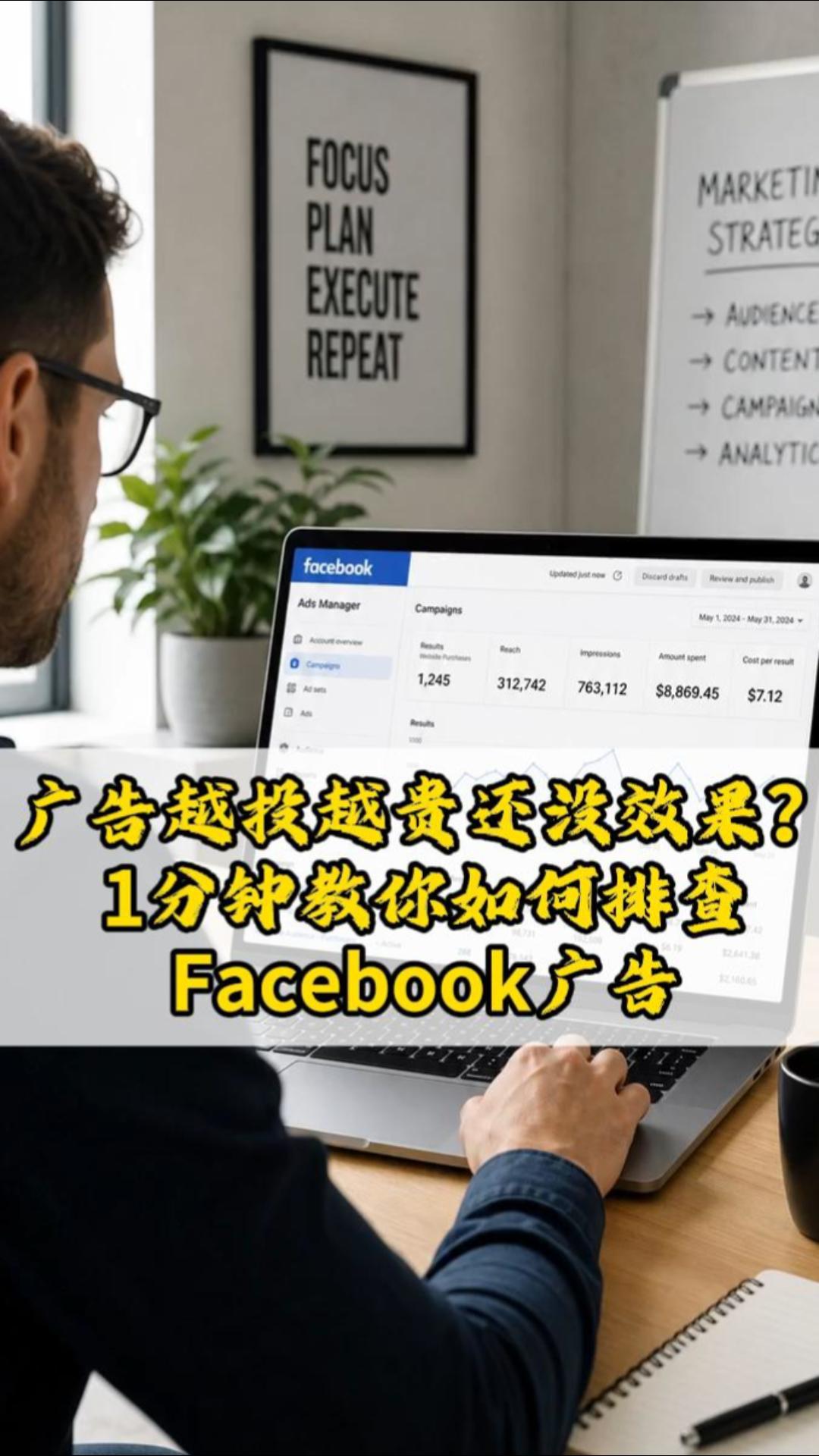
 Are your ads getting more expensive with no results?Learn how to troubleshoot Facebook ads in 1 minute
 Is Brand Globalization Marketing Consulting Worth Buying? At What Stage Should Companies Bring It In

Related Products
 EasyCamp SaaS Smart Website Marketing SystemE-Yingbao SaaS Smart Website Marketing System: AI-powered, zero-code website building. Rapidly launch multilingual independent e-commerce sites in just 10 minutes. Global server acceleration and AI-driven SEO optimization empower businesses to efficiently connect with global markets. The seamless integration of technology and user-friendly operation makes building e-commerce sites incredibly simple.
 AI+SEM Intelligent Advertising Marketing SystemAI+SEM drives intelligent ad creation, empowering full-funnel precision advertising marketing. The system automatically generates weekly/monthly reports, AI recommends keywords and target countries, monitors core metrics in real-time with intelligent alerts, and enables one-click high-conversion ad solutions to help quickly acquire customers and improve ROI.
 AI+SEO Dual Engine Optimization ServiceEasyWin AI+SEO Dual Engine Optimization System leverages AI-powered keyword mining, content generation, and comprehensive technical optimization to help foreign trade enterprises acquire high-quality organic traffic, significantly improving search rankings and conversion rates.
 AI+SNS Social Media Marketing SystemYingbao AI+SNS Social Media Marketing System - Precision social capture for the social media era. Supports one-click content synchronization across major platforms like Facebook and LinkedIn. AI intelligently rewrites posts for enhanced relevance. 24/7 AI customer service and user profiling analysis empower businesses to efficiently expand into global markets.
 AI+SEO营销解决方案易营宝AI+SEO营销解决方案,通过AI批量写作、智能生成TDK、精准关键词扩词等功能,全面优化网站SEO效果,提升流量与转化率。助力企业构建高效智能网站新生态。
 AI+SEM Advertising Marketing SolutionsAI+SEM Advertising Marketing Solution leverages AI technology to deeply empower SEM ad campaigns. It automatically generates weekly/monthly reports using AI, presenting account data across multiple dimensions for comprehensive insights into campaign performance and trends. The system precisely recommends keywords and target countries, intelligently generates high-conversion ad copy, and enables one-click activation of efficient campaign plans to help businesses rapidly acquire customers. Simultaneously, it monitors core metrics in real time, intelligently identifies abnormal fluctuations, and issues timely alerts to ensure stable, high-return advertising results.
 Domain Name ServicesEasyWin provides professional domain name services, including intelligent queries, one-stop registration, brand protection, and full lifecycle management, helping businesses build a digital brand image.
 EasyOperate B2C Cross-Border E-Commerce Platform & Independent WebsiteEasyStore B2C Cross-border E-commerce Independent Store is an intelligent website building and cross-border e-commerce integrated solution independently developed by EasyStore Information Technology (Beijing) Co., Ltd. The system is specially designed for small and medium-sized as well as large export enterprises, integrating 'website building, operation, marketing, advertising, and conversion' into one, helping enterprises quickly establish cross-border e-commerce independent stores to achieve brand globalization and global sales growth.
The platform supports multiple languages, multiple currencies, and multi-channel marketing, with built-in AI intelligent translation and SEO optimization systems, suitable for mainstream markets such as Southeast Asia, Europe and America, Latin America, and the Middle East, assisting Chinese manufacturing enterprises in efficiently deploying international e-commerce strategies. SSL证书易营宝提供专业SSL安全证书服务,包括单域名和泛域名证书,确保网站数据传输加密、身份验证和完整性保护,助力企业建立安全可信的在线业务环境。









