









- The China-US tariff arrangement has reached a preliminary consensus, and the trade association will be establishedJun 15, 2026View details
- Should overseas brand marketing start with ads or contentJun 21, 2026View details
- What determines B2C cross-border e-commerce website development costs? A breakdown of features, interfaces, and deployment methodsJun 17, 2026View details
- China-Morocco zero-tariff access, a breakthrough in the cost of Moroccan goods exports to ChinaJun 11, 2026View details
- What signal should be released for the suspension of exports to JapanJun 10, 2026View details
- China's May LNG imports rebounded, with increased volumes from Russia and Canada filling the Middle East supply gapJun 10, 2026View details
- Will GEO change its SEO strategy?Jun 04, 2026View details
- What types of businesses are end-to-end solutions suitable for?Jun 03, 2026View details
How much manpower can a multilingual automated website building system save?
How much manpower can a multilingual automated website building system actually save? From quickly building websites and configuring website TDK (Title, Description, Keywords) to optimizing independent websites for SEO and automating marketing, corporate website construction is leveraging AI+SEO dual-engine optimization systems to significantly improve efficiency and cross-border marketing conversion rates.
For users, business decision-makers, project managers, and after-sales maintenance teams, the most pressing question isn't "Does the system have any functions?" but rather "After launching a system, how much repetitive work can it replace, and can it truly shorten the website building cycle and improve customer acquisition efficiency?" Especially in integrated website + marketing service scenarios, businesses often need to not only build an official website but also handle multilingual publishing, search engine optimization, advertising, content updates, and lead management.
Since its establishment in 2013, Yiyingbao Information Technology (Beijing) Co., Ltd. has continuously built end-to-end capabilities around intelligent website building, SEO optimization, social media marketing, and advertising. For companies preparing to expand into overseas markets or improve the conversion efficiency of their official websites, multilingual automated website building systems are no longer just technical tools, but also infrastructure that directly impacts manpower allocation, execution speed, and marketing ROI.
Where does the manpower saved by a multilingual automated website building system mainly come from?
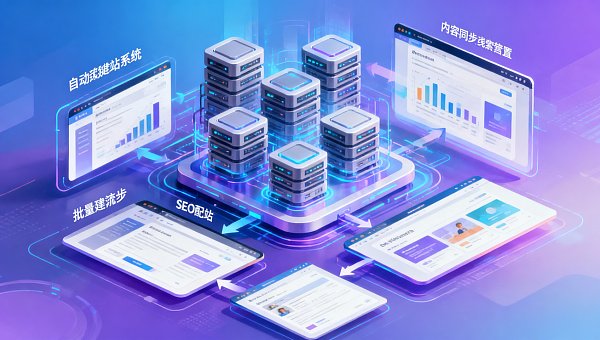
Traditional multilingual website development typically involves 6 to 8 roles, including planners, designers, front-end developers, translators, SEO specialists, content editors, and operations personnel. If a company builds three language versions simultaneously, common processes will be repeated three times, resulting in a large amount of repetitive work in page creation, content entry, TDK configuration, and link checking. The core value of an automation system is to compress these repetitive actions into standardized processes that can be executed in batches.
Taking a typical corporate website as an example, if the site has 50 to 100 pages, the traditional approach, from prototype confirmation to launch in three languages, often requires 3 to 5 people working together for 2 to 6 weeks. By introducing automated website building, template reuse, field synchronization, and batch SEO configuration, similar projects can be shortened to 5 to 15 days, and the core personnel can be reduced to 2 to 3 people. The reduction is not in the number of positions themselves, but in the proportion of time spent on repetitive data entry, proofreading, and deployment.
For operators, the most significant savings come from unified backend management. Modifications to a content module can be synchronized across multiple language versions, eliminating the need to navigate to each page individually. For project managers, this translates to fewer cross-departmental communications, reducing the number of confirmations from 2-3 rounds per week to just key milestones. For after-sales maintenance personnel, it saves time on version updates and compatibility issues, particularly regarding plugins, forms, tracking codes, and redirection rules.
More importantly, automation systems don't just improve efficiency at a single point; they connect website building, SEO, and marketing. Once a page is published, if TDK (Title, Description, Keywords), URL rules, sitemap, structured content, form collection, and source tracking are all configured synchronously, businesses don't need to invest extra manpower for secondary adjustments, which is especially important for cross-border businesses.
Human resource differences between traditional and automated models
The table below is useful for companies to quickly assess the resource consumption and execution pressure of different website building models before initiating a project.
As the table shows, the manpower savings from automation systems are not just about "reducing the number of people," but about automating high-frequency, low-value, and error-prone tasks. For corporate websites that are updated more than 12 times a year, these savings will continue to amplify in the subsequent operational phase.
From website building to SEO, which aspects are best suited for automation?
If we consider a company website as a marketing asset, then what truly consumes the team's energy is not the homepage design, but the continuous processes of page generation, content updates, keyword placement, meta tag maintenance, internal link adjustments, and lead tracking. The reason multilingual automated website building systems can save manpower is that they cover at least five high-frequency execution stages.
Five types of jobs that can be replaced by high-frequency work
- Batch page generation: Product pages, industry pages, and case study pages can be automatically generated according to field rules, reducing repetitive collaboration between front-end developers and editors.
- Multi-language content synchronization: After the source language is updated, other language versions enter the review process to avoid the old version from being outdated for a long time.
- TDK Batch Configuration: Allows setting title and description templates by catalog, product type, and country/market to reduce the rate of missing configurations.
- Basic on-site SEO processing: Automatically generate sitemaps, canonical links, breadcrumbs, and internal link suggestions to facilitate search engine crawling.
- Marketing action coordination: Forms, online inquiries, email notifications, and lead allocation can be automated, reducing manual transcription and missed follow-ups.
In real-world projects, TDK (Title, Description, Keywords) configuration is often the most underestimated human resource drain. Assuming a site has 80 pages in 3 languages, and each page requires at least one title, one description, and one keyword check, the basic operation involves 240 configuration sets. If each configuration set plus checking takes 5 minutes, this alone amounts to nearly 20 hours. After automating template configuration, only key pages need manual optimization, typically reducing the time to 4 to 6 hours.
The same applies to SEO optimization for independent websites. Many companies mistakenly believe that SEO relies entirely on manual writing. In reality, technical and structural SEO are better suited to systematic processing. For example, controlling URL hierarchy to 2 to 4 levels, identifying duplicate pages, ALT completion, setting canonical rules, and checking H tag structure can all be pre-processed by the system, allowing SEO professionals to focus their efforts on keyword strategies and high-value content planning.
Human-machine collaboration is more suitable for B2B websites than entirely manual labor.
For the integrated website and marketing services industry, the ideal state is not complete automation, but rather treating the system as the "execution layer" and the team as the "decision-making layer." For example, industry keyword layout, market priority ranking, and landing page conversion strategies still require experience-based judgment; however, uploading materials, generating pages, assigning tags, and publishing multilingual pages are more suitable for being handled by automated systems.
This is why more and more companies, when choosing a service provider, are no longer just asking "Can you build a website?", but are paying more attention to "Can you integrate website building, SEO, social media, and advertising leads?" Because what they save isn't one-time manpower, but the ongoing operating costs for the next 12 to 36 months.
How can companies estimate how much labor cost they can save?
Whether it's worthwhile to implement a multilingual automated website building system shouldn't be judged solely on intuition. It's better to assess it using four dimensions: number of pages, language versions, update frequency, and the complexity of marketing activities. Generally speaking, the more pages, languages, and updates, the more significant the manpower savings from automation.
Four core measurement indicators
- Page size: less than 30 pages is considered a lightweight official website, 50 to 200 pages is considered a typical B2B marketing website, and more than 200 pages are more suitable for standardized automatic generation.
- Number of languages: Two languages begin to show significant synergistic value, and three or more languages will significantly enhance the automation advantages.
- Update frequency: Updating once a month versus updating twice a week places completely different demands on the system.
- Conversion path: If it involves inquiry forms, advertising landing pages, and automatic email follow-ups, the system's value is higher than that of a pure display site.
Below is a typical estimation model. Assume a company needs to build a 60-page website, covering Chinese, English, and Spanish versions, with 20 pages of new or modified content added monthly. Using a traditional model, content maintenance, language synchronization, SEO updates, and form checks would require approximately one full-time operations staff member plus 0.5 technical support staff. With an automated model, many companies can reduce this to 0.5 operations staff members plus on-demand technical support.
In other words, in the context of medium-sized enterprises, automation systems typically save 30% to 60% of execution time. For companies with many product models and multiple country websites, this percentage can be even higher. However, if a company's website only has 10 to 20 pages and is only updated once every six months, the manpower savings will not be particularly significant, and the focus should shift to basic SEO capabilities and future scalability.
Investment recommendations for different business stages
To help decision-makers make faster judgments, the following table is suitable for project initiation or budget discussions.
The table illustrates a real-world problem: whether a system saves manpower depends not on having more features, but on whether those features are tailored to the company's current stage. Over-optimizing the system will increase training and maintenance costs, while under-optimizing it will lead to rework after six months.
Besides website building efficiency, domain name and basic configuration also affect the overall manpower input.
Many companies, when discussing multilingual automated website building systems, only focus on front-end pages and content management, neglecting the fundamental aspect of domain management. In reality, if domain lookup, registration, resolution, renewal reminders, and brand protection are distributed across multiple platforms, it will increase project communication costs and operational risks, especially when operating in multiple countries with multiple domain extensions.
In building a digital brand for enterprises, integrating domain name management into an integrated process can reduce at least three types of manual actions: first, the time spent searching for available domain names across platforms; second, the time spent manually resolving and repeatedly verifying record values; and third, the time spent handling emergencies caused by missed renewal reminders. For teams that need to quickly launch independent websites, while these savings may not be as immediately apparent as page generation, they have a significant impact on project milestones.
For example, domain name services that support intelligent domain name lookup, one-stop registration and purchase, automatic resolution, and status monitoring are more suitable for use in conjunction with automated website building processes. Businesses can simultaneously consider .com, .net, .cn, .cc, and common brand variations to reduce the risk of domain name squatting and facilitate subsequent brand expansion into international markets.
Why does domain configuration slow down the launch?
Many project delays are not due to design issues, but rather to problems with DNS resolution and access control. Common issues include: fragmented vendor accounts, manual errors in entering DNS records, asynchronous SSL deployments, and lack of accountability for renewal nodes. If a project involves different cloud service providers such as Xinnet, Tencent Cloud, and Alibaba Cloud, the lack of a unified process will require at least one or two additional rounds of confirmation between the technical and operations teams.
Taking common domain extension prices as an example, the registration price for .com is 85, .net is 93, and .cn and .cc are 35. If a company needs brand protection, the common practice is to register 3 to 5 core extensions at once and set up renewal reminders. Compared to the later problems caused by domain expiration, such as website inaccessibility, interrupted advertising landing pages, or abnormal email sending and receiving, this initial investment is usually more controllable.
From an operational perspective, the automatic domain name resolution function reduces the error rate of manual configuration, making it particularly suitable for projects that need to complete site deployment within 7 days. For after-sales maintenance teams, this means that daily work shifts from "firefighting" to "monitoring management," resulting in more stable business continuity.
What criteria should companies consider when selecting equipment to truly save manpower rather than incur new burdens?
Not all multilingual website systems deliver tangible manpower savings. When selecting a system, businesses should evaluate it from at least four aspects: system capabilities, operational adaptability, delivery efficiency, and post-launch maintenance. For decision-makers, the key focus of procurement should not be the length of the feature list, but whether the team can truly reduce repetitive work after launch.
Four priority inspection items
- Does it support field-level synchronization of multilingual content, rather than simply copying pages?
- Does it include built-in SEO basic capabilities, including URL rules, TDK templates, sitemaps, and redirect configurations?
- Can it be integrated with marketing processes such as forms, ad tracking, and email notifications?
- Whether it is easy for non-technical personnel to use, the training cycle should ideally be controlled within 3 to 7 days.
For project managers, it's also crucial to ensure the delivery mechanism is clear. A mature integrated website building and marketing solution typically includes six steps: requirements gathering, prototype confirmation, content migration, SEO configuration, testing and launch, and operational training. If the service provider only handles website building and not subsequent keyword strategy, lead generation, and data tracking, companies often end up reinvesting the saved manpower into patching up the gaps.
Common Selection Mistakes
First, there was an excessive pursuit of low prices, neglecting the complexity of later maintenance; second, only the visual appearance of the page was considered, while the SEO infrastructure was ignored; third, multilingualism was interpreted as pure translation, while the differences in search terms and conversion paths in different markets were overlooked; fourth, the lack of a unified data link for domain names, websites, content, and advertisements meant that the team still had to switch back and forth between multiple backends.
The value of service providers like YiYingBao, which have long been deeply involved in global digital marketing, lies precisely in their approach of not treating websites as isolated projects, but rather integrating intelligent website building, SEO optimization, social media marketing, and advertising into a unified growth system. For companies planning to continuously expand their overseas business over the next 1 to 3 years, this integrated capability makes it easier to transform "website building costs" into "marketing assets."
Implementation Recommendations: Which Enterprises Are Best Suited to Deploy Multilingual Automation Systems as Soon as Possible?
If a company is facing challenges such as website upgrades, overseas market expansion, brand internationalization, or digital management of its distribution system, a multilingual automated website development system typically offers significant value. This is especially true for manufacturing, equipment, industrial products, cross-border B2B, and multi-regional business development, which often require delivering consistent information to end customers, agents, and local partners. In these cases, a unified backend and multilingual collaboration offer substantial advantages.
From a job perspective, users want a simple and easy-to-use backend, project managers focus on timelines and stable delivery, after-sales maintenance personnel are concerned with later failure rates and update efficiency, and enterprise decision-makers are more concerned with labor costs, inquiry growth, and system scalability. The reason why automated systems are worth investing in is precisely because they can simultaneously address these four core needs, rather than just solving problems in one particular area.
Three types of scenarios recommended for priority deployment
- There is an official website, but the language versions are scattered, the SEO foundation is weak, and the update efficiency is low, resulting in the content being out of sync for many years.
- We are expanding into more than two overseas markets and need to quickly launch multilingual landing pages and handle advertising traffic.
- With numerous product lines and over 80 pages, manual maintenance has significantly slowed down the pace of marketing execution.
Overall, multilingual automated website building systems can typically save 30% to 60% of execution time for medium-sized and larger marketing websites. The core benefits include shorter launch cycles, reduced cross-departmental collaboration costs, improved SEO fundamentals, and enhanced lead generation efficiency. For companies pursuing long-term global growth, this not only saves manpower but also allows them to dedicate their limited teams to higher-value market decisions and content strategies.
If you are evaluating website upgrades, independent website SEO optimization, or the construction of a multilingual marketing system, we recommend that you quickly identify repetitive tasks in your existing processes, taking into account your page size, number of languages, and operational frequency. Choosing the right platform and service provider is crucial to achieving simultaneous growth in both technical efficiency and marketing conversion. Feel free to contact us immediately for a customized solution tailored to your business stage, or for further consultation on product details and implementation paths.
Related Articles



Related Products
 EasyCamp SaaS Smart Website Marketing SystemE-Yingbao SaaS Smart Website Marketing System: AI-powered, zero-code website building. Rapidly launch multilingual independent e-commerce sites in just 10 minutes. Global server acceleration and AI-driven SEO optimization empower businesses to efficiently connect with global markets. The seamless integration of technology and user-friendly operation makes building e-commerce sites incredibly simple.
 AI+SEM Intelligent Advertising Marketing SystemAI+SEM drives intelligent ad creation, empowering full-funnel precision advertising marketing. The system automatically generates weekly/monthly reports, AI recommends keywords and target countries, monitors core metrics in real-time with intelligent alerts, and enables one-click high-conversion ad solutions to help quickly acquire customers and improve ROI.
 AI+SEO Dual Engine Optimization ServiceEasyWin AI+SEO Dual Engine Optimization System leverages AI-powered keyword mining, content generation, and comprehensive technical optimization to help foreign trade enterprises acquire high-quality organic traffic, significantly improving search rankings and conversion rates.
 AI+SNS Social Media Marketing SystemYingbao AI+SNS Social Media Marketing System - Precision social capture for the social media era. Supports one-click content synchronization across major platforms like Facebook and LinkedIn. AI intelligently rewrites posts for enhanced relevance. 24/7 AI customer service and user profiling analysis empower businesses to efficiently expand into global markets.
 AI+SEO营销解决方案易营宝AI+SEO营销解决方案,通过AI批量写作、智能生成TDK、精准关键词扩词等功能,全面优化网站SEO效果,提升流量与转化率。助力企业构建高效智能网站新生态。
 AI+SEM Advertising Marketing SolutionsAI+SEM Advertising Marketing Solution leverages AI technology to deeply empower SEM ad campaigns. It automatically generates weekly/monthly reports using AI, presenting account data across multiple dimensions for comprehensive insights into campaign performance and trends. The system precisely recommends keywords and target countries, intelligently generates high-conversion ad copy, and enables one-click activation of efficient campaign plans to help businesses rapidly acquire customers. Simultaneously, it monitors core metrics in real time, intelligently identifies abnormal fluctuations, and issues timely alerts to ensure stable, high-return advertising results.
 Domain Name ServicesEasyWin provides professional domain name services, including intelligent queries, one-stop registration, brand protection, and full lifecycle management, helping businesses build a digital brand image.
 EasyOperate B2C Cross-Border E-Commerce Platform & Independent WebsiteEasyStore B2C Cross-border E-commerce Independent Store is an intelligent website building and cross-border e-commerce integrated solution independently developed by EasyStore Information Technology (Beijing) Co., Ltd. The system is specially designed for small and medium-sized as well as large export enterprises, integrating 'website building, operation, marketing, advertising, and conversion' into one, helping enterprises quickly establish cross-border e-commerce independent stores to achieve brand globalization and global sales growth.
The platform supports multiple languages, multiple currencies, and multi-channel marketing, with built-in AI intelligent translation and SEO optimization systems, suitable for mainstream markets such as Southeast Asia, Europe and America, Latin America, and the Middle East, assisting Chinese manufacturing enterprises in efficiently deploying international e-commerce strategies. SSL证书易营宝提供专业SSL安全证书服务,包括单域名和泛域名证书,确保网站数据传输加密、身份验证和完整性保护,助力企业建立安全可信的在线业务环境。









