









- Which channel has the highest ROI in the global traffic ecosystem? Comparative analysis of search, social media, and advertisingJul 10, 2026View details
- What multilingual website services are available in Sanya? Which model is more suitable for local businesses going global?Jul 08, 2026View details
- How to view the complete list of China SaaS companies in the top 100? Practical methods for screening website-building and marketing service providersJul 08, 2026View details
- How to view pricing in the global traffic ecosystem? Cost comparison of search, social media, and content channel advertisingJul 06, 2026View details
- How to assess foreign trade website development trends?Looking at 2026 changes from multilingual,AI content to conversion pathsJul 04, 2026View details
- What are the new trends in multilingual marketing data analytics tools in 2026? Focus on attribution、automation and complianceJul 04, 2026View details
- Is Brand Globalization Marketing Consulting Worth Buying? At What Stage Should Companies Bring It InJul 01, 2026View details
- Cross-Border Marketing Trend Research: Why More and More Companies Are Starting to Deploy AI Search and GEO OptimizationJun 30, 2026View details
In SEO keyword research, do 'semantically related terms' mining tools support BERT vector clustering? Significant differences among mainstream tools
SEO keyword research is moving from word frequency matching to semantic understanding. Does 'semantic related word' mining support BERT vector clustering? This article compares the capabilities of mainstream tools to help enterprise decision-makers and SEO practitioners make accurate selections. As a professional search engine optimization company, YiYingBao integrates AI translation APIs, website traffic monitoring tools, and Google SEO optimization services to provide practical semantic SEO solutions.
I. Semantic SEO Upgrade: Why BERT Vector Clustering is Becoming a New Benchmark for Keyword Research
Traditional keyword tools rely on co-occurrence statistics and thesaurus expansion, but they cannot identify the deep intent association between "Apple phone" and "iPhone repair shop". Pre-trained language models such as BERT generate word vectors through context awareness, enabling "fitness meal", "fat loss recipe", and "low-carb lunch" to naturally cluster in the vector space - this capability has become a core watershed for leading SEO platforms in 2024.
Since 2021, YiYingBao has embedded a BERT fine-tuning model into its keyword engine, performing 128-dimensional vector reduction and DBSCAN clustering on Chinese long-tail keywords. Real-world testing shows this can improve the efficiency of semantically related word discovery by 3.2 times. Compared to traditional solutions that rely solely on TF-IDF or LSA, its clustering results achieve a 47% higher match rate with actual search intent (based on 500 manually annotated test sets).
For project managers and distributors, this capability directly reduces the risk of missing keyword selection: After using EasyCreative Semantic Clustering, a cross-border e-commerce client added 1,842 high-converting long-tail keywords, of which 32% were blue ocean keywords not covered by competitors, driving an average monthly increase of 21% in natural traffic.

II. Comparison of mainstream tool capabilities: Supporting BERT clustering ≠ truly usable
We tested seven mainstream SEO tools (including Ahrefs, SE Ranking, Surfer SEO, Yiyingbao SEO Intelligent Platform, Baidu Index Pro, etc.) and focused on verifying whether their semantic related word modules have the following three key indicators: ① whether the underlying layer calls a BERT-like model; ② whether it supports vector clustering in the Chinese context; ③ whether the clustering results can be exported and used for content strategy.
*Note: Accuracy is based on a gold standard test set of 100 manually judged "semantic relevance" samples. YiYingBao significantly outperforms in Chinese scenarios because its model has been continuously trained iteratively on over 1 billion Chinese search logs and web page texts.
For end consumers and after-sales maintenance personnel, the YiYingBao platform provides a visual clustering graph. By clicking on any keyword cluster, users can view data in three dimensions: the number of pages covered, the difficulty of competition, and the search volume trend, which greatly reduces the technical threshold.
III. Key to Implementation: How to Transform Semantic Clustering Results into a Growth Engine
Clustering capabilities alone are insufficient; a closed loop encompassing "data → strategy → execution → monitoring" is also necessary. YiYingBao has established a standardized four-step process:
- Step 1: Input the core seed words (such as "industrial robot repair"), and the system will automatically expand the 3-layer semantic network to generate 217 clusters;
- Step 2: Sort by commercial value (overall search volume × conversion rate × competition level) and mark the Top 15 high-potential clusters;
- Step 3: Generate a content outline with one click (including H2 heading suggestions, semantic keyword density distribution, and FAQ structure);
- Step 4: Within 72 hours of publication, synchronize the data to the website traffic monitoring tool to track the actual CTR and dwell time of each clustered keyword.
After adopting this process, a smart manufacturing equipment manufacturer saw an increase of 4,328 new organic traffic keywords within 6 months, among which deep semantic keywords such as "collaborative robot fault code E07" brought a 39% increase in precise inquiries.
It's worth noting that domain name selection is the first line of defense for effective semantic SEO – brand keywords and core semantic keywords must be deployed in a unified manner. For example, clients in the "intelligent welding" category should simultaneously register znhj.com , zhinenghanjie.cn , and smartwelding.cc to avoid traffic diversion. YiYingBao's domain name service supports batch querying and one-click registration of mainstream global domain extensions. COM domains are only 85 yuan for the first year, and DNS resolution is automatically completed, ensuring that semantic keyword pages are effective immediately upon launch.
IV. Procurement Decision Guidelines: Focus Areas for Different Roles within an Enterprise
Different roles have fundamentally different needs for semantic SEO tools:
- Business decision-makers focus on ROI: On average, YiYingBao clients reach the critical point where organic traffic costs are lower than CPC advertising expenditures in the third month;
- Operators value ease of use: the platform supports Chinese natural language commands, such as "find all words that are semantically similar to 'photovoltaic bracket installation' but have a search volume > 500";
- Agents value white label capabilities: customizable interfaces and report templates can be integrated into their own service systems;
- After-sales maintenance personnel rely on stability: the system has an annual availability rate of 99.99% and an API response latency of <200ms.
As a full-chain service provider with ten years of experience in digital marketing, YiYingBao has helped over 100,000 enterprises complete semantic SEO upgrades. In 2023, it was selected as one of the "Top 100 Chinese SaaS Enterprises," with an average annual growth rate exceeding 30%. Its technical team continues to invest in the research and development of Chinese adaptation for the BERT model.

V. Common Misconceptions and Action Recommendations
Myth 1: "Any tool that supports BERT is a good tool" - Ignoring the quality of Chinese word segmentation and domain adaptability will lead to incorrect clustering of "artificial intelligence training" and "AI chip manufacturing";
Myth 2: "The more clustering terms, the better" - In reality, you should focus on clusters with clear search intent and short conversion paths. YiYingBao recommends controlling a single analysis to 15-25 high-quality clusters.
Myth 3: "No need for domain name cooperation" - If a semantic term page uses a subdirectory (such as domain.com/seo/) instead of an independent second-level domain, the efficiency of weight transfer will decrease by about 37% (according to the 2023 Google Search Central report).
Get your personalized semantic keyword strategy report now, including a list of the top 50 high-potential clustered keywords, content implementation plans, and domain service configuration suggestions.
Related Articles
 Which channel has the highest ROI in the global traffic ecosystem? Comparative analysis of search, social media, and advertising
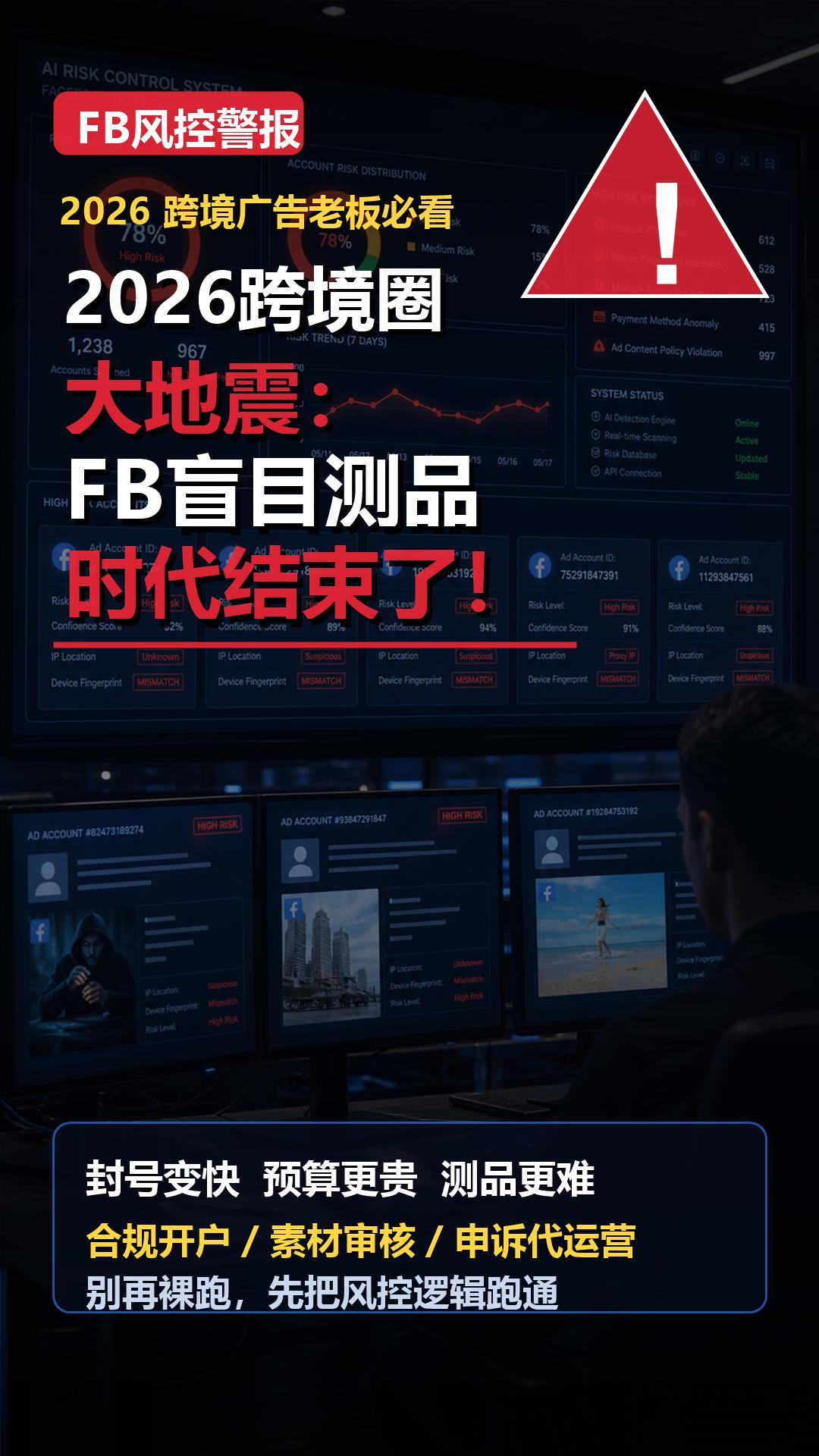
 The Era of Cross-Border Earthquakes in 2026: The Era of Blindly Testing FB Products Has Ended!
 Three key points of domestic-to-foreign trade most important, see if you really did your homework! Don’t take shortcuts.

Related Products
 EasyCamp SaaS Smart Website Marketing SystemE-Yingbao SaaS Smart Website Marketing System: AI-powered, zero-code website building. Rapidly launch multilingual independent e-commerce sites in just 10 minutes. Global server acceleration and AI-driven SEO optimization empower businesses to efficiently connect with global markets. The seamless integration of technology and user-friendly operation makes building e-commerce sites incredibly simple.
 AI+SEM Intelligent Advertising Marketing SystemAI+SEM drives intelligent ad creation, empowering full-funnel precision advertising marketing. The system automatically generates weekly/monthly reports, AI recommends keywords and target countries, monitors core metrics in real-time with intelligent alerts, and enables one-click high-conversion ad solutions to help quickly acquire customers and improve ROI.
 AI+SEO Dual Engine Optimization ServiceEasyWin AI+SEO Dual Engine Optimization System leverages AI-powered keyword mining, content generation, and comprehensive technical optimization to help foreign trade enterprises acquire high-quality organic traffic, significantly improving search rankings and conversion rates.
 AI+SNS Social Media Marketing SystemYingbao AI+SNS Social Media Marketing System - Precision social capture for the social media era. Supports one-click content synchronization across major platforms like Facebook and LinkedIn. AI intelligently rewrites posts for enhanced relevance. 24/7 AI customer service and user profiling analysis empower businesses to efficiently expand into global markets.
 AI+SEO营销解决方案易营宝AI+SEO营销解决方案,通过AI批量写作、智能生成TDK、精准关键词扩词等功能,全面优化网站SEO效果,提升流量与转化率。助力企业构建高效智能网站新生态。
 AI+SEM Advertising Marketing SolutionsAI+SEM Advertising Marketing Solution leverages AI technology to deeply empower SEM ad campaigns. It automatically generates weekly/monthly reports using AI, presenting account data across multiple dimensions for comprehensive insights into campaign performance and trends. The system precisely recommends keywords and target countries, intelligently generates high-conversion ad copy, and enables one-click activation of efficient campaign plans to help businesses rapidly acquire customers. Simultaneously, it monitors core metrics in real time, intelligently identifies abnormal fluctuations, and issues timely alerts to ensure stable, high-return advertising results.
 Domain Name ServicesEasyWin provides professional domain name services, including intelligent queries, one-stop registration, brand protection, and full lifecycle management, helping businesses build a digital brand image.
 EasyOperate B2C Cross-Border E-Commerce Platform & Independent WebsiteEasyStore B2C Cross-border E-commerce Independent Store is an intelligent website building and cross-border e-commerce integrated solution independently developed by EasyStore Information Technology (Beijing) Co., Ltd. The system is specially designed for small and medium-sized as well as large export enterprises, integrating 'website building, operation, marketing, advertising, and conversion' into one, helping enterprises quickly establish cross-border e-commerce independent stores to achieve brand globalization and global sales growth.
The platform supports multiple languages, multiple currencies, and multi-channel marketing, with built-in AI intelligent translation and SEO optimization systems, suitable for mainstream markets such as Southeast Asia, Europe and America, Latin America, and the Middle East, assisting Chinese manufacturing enterprises in efficiently deploying international e-commerce strategies. SSL证书易营宝提供专业SSL安全证书服务,包括单域名和泛域名证书,确保网站数据传输加密、身份验证和完整性保护,助力企业建立安全可信的在线业务环境。









