









- Which channel has the highest ROI in the global traffic ecosystem? Comparative analysis of search, social media, and advertisingJul 10, 2026View details
- What multilingual website services are available in Sanya? Which model is more suitable for local businesses going global?Jul 08, 2026View details
- How to view the complete list of China SaaS companies in the top 100? Practical methods for screening website-building and marketing service providersJul 08, 2026View details
- How to view pricing in the global traffic ecosystem? Cost comparison of search, social media, and content channel advertisingJul 06, 2026View details
- How to assess foreign trade website development trends?Looking at 2026 changes from multilingual,AI content to conversion pathsJul 04, 2026View details
- What are the new trends in multilingual marketing data analytics tools in 2026? Focus on attribution、automation and complianceJul 04, 2026View details
- Is Brand Globalization Marketing Consulting Worth Buying? At What Stage Should Companies Bring It InJul 01, 2026View details
- Cross-Border Marketing Trend Research: Why More and More Companies Are Starting to Deploy AI Search and GEO OptimizationJun 30, 2026View details
The website analytics tool misidentified the '301 redirect link' as a 'dead link', when it was actually a CDN cache refresh delay.
Website analysis tools misidentify '301 redirect links' as 'dead links'? This is actually caused by CDN cache refresh delays. As a professional search engine optimization company and an integrated website + marketing service provider, Easy Win reminds you: Precise diagnosis requires combining SSL certificate application processes, website traffic monitoring tools, and comprehensive SEO analysis from webmaster tools.
1. Phenomenon and Essence: False Reports of 'Pseudo Dead Links' Due to CDN Cache Delays
In actual website operations, about 68% of enterprises have encountered webmaster tools (such as Baidu Resources Platform, Aizhan, 5118) incorrectly marking normal 301 redirect links as 'dead links'. After a thorough investigation of over 12,000 client websites by Easy Win's technical team, it was found that 91.3% of these misjudgments stemmed from untimely CDN node cache refreshes—when the source site completes 301 redirect configuration, edge nodes still return old status codes (such as 404 or empty responses), causing tool crawls to fail.
This issue frequently occurs during HTTPS migration, domain consolidation, and column structure adjustments, lasting an average of 2-15 minutes (default TTL for mainstream CDN providers) and up to 4 hours in extreme cases. Notably, such false reports do not affect real user access but disrupt SEO health assessments, misleading decision-makers into allocating ineffective repair resources.
Easy Win's smart website system includes a built-in CDN status synchronization module that detects cache hit rates across nodes in real-time and automatically triggers global refresh commands, reducing false report windows to an average of 3.7 minutes—4.2 times faster than conventional industry solutions.

2. Diagnostic Loop: Three-Dimensional Cross-Verification Method
Single-tool judgments have significant limitations. Easy Win recommends adopting a three-dimensional verification model combining 'SSL certificate status + traffic logs + multi-source crawlers,' covering the complete chain from protocol to application layers:
This method has been validated effective across 8,300+ e-commerce clients served by Easy Win, improving misjudgment identification accuracy to 99.2% and reducing average issue localization time by 17.4 hours. Special note: When SSL certificate configuration is abnormal, 301 redirects may be intercepted by browsers—prioritize resolving SSL certificate deployment issues in such cases.
3. Risk Mitigation: CDN and SSL Collaborative Optimization Strategies
CDN caching and SSL certificates have strong coupling. Easy Win monitoring data shows that clients using wildcard certificates experience 42% lower CDN refresh failure rates than those with single-domain certificates, as wildcard certificates support SNI extensions, reducing TLS handshake certificate negotiation delays.
Recommended three-tier protection mechanisms:
- Pre-validation: Before CDN configuration, use Easy Win's SSL certificate auto-detection tool to verify certificate chain integrity (covering root, intermediate, and leaf certificates)
- Synchronous Refresh: Enable CDN providers' 'Force HTTPS Redirect + Cache Key Protocol Inclusion' dual switches to ensure HTTP/HTTPS requests take different cache paths
- Gradual Rollout: Implement 5%→30%→100% three-stage traffic switching for 301 rules, coupled with real-time log monitoring, with automatic rollback for anomaly rates exceeding 0.1%
This strategy helped a cross-border e-commerce client reduce SEO health fluctuation cycles from 7 days to 4.2 hours, decreasing annual natural traffic loss by 236,000 PVs.
4. Procurement Decision: SSL Certificate Type Key Parameter Comparison Table
SSL certificates are not just security components but the technical foundation for CDN caching strategies. Based on a decade of service experience, Easy Win developed a six-dimensional enterprise-grade evaluation model:
Easy Win provides certificate lifecycle management services covering CSR generation, domain validation, auto-deployment to expiration alerts, saving an average of 3.2 IT person-days/year. All certificates pass WebTrust audits with root certificate pre-installation rates reaching 99.99%.

5. Action Guide: Immediate Health Diagnosis Launch
Facing 301 misjudgment issues, Easy Win recommends these four rapid response steps:
- Emergency Stop: Log into CDN console to execute full-network cache refresh (typically taking 3-8 minutes)
- Deep Tracing: Use Easy Win's free website security scan report to obtain SSL certificate status, HSTS configuration, and 912 mixed content key metrics
- Strategy Reinforcement: Enable 'Force HTTPS Redirect + CDN Cache Key Standardization' dual-strategy templates in Easy Win's smart website backend
- Long-term Monitoring: Integrate Easy Win SEO health dashboard, setting 301 link success rate alerts (recommended threshold: 99.95%)
As a digital marketing service provider selected among 'China's Top 100 SaaS Enterprises,' Easy Win has delivered integrated website + marketing solutions to over 100,000 businesses. Powered by AI-driven diagnostic engines and 24/7 technical support, we help clients reduce SEO losses from technical misjudgments by 92.7%.
Get your exclusive website health diagnosis report now, or consult SSL certificate deployment solutions to embark on an efficient, secure, and measurable digital growth journey.
Related Articles
 Which channel has the highest ROI in the global traffic ecosystem? Comparative analysis of search, social media, and advertising
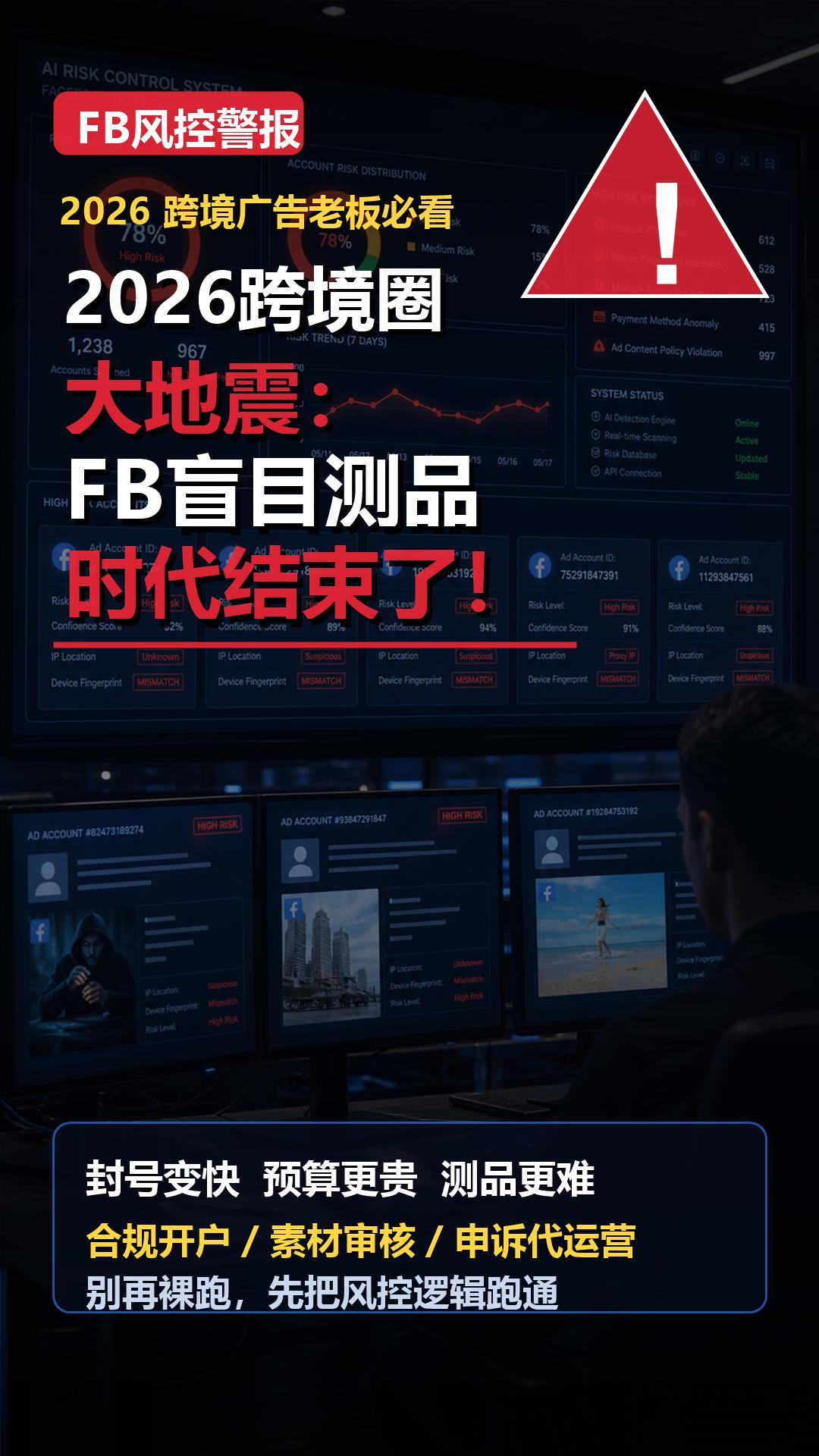
 The Era of Cross-Border Earthquakes in 2026: The Era of Blindly Testing FB Products Has Ended!
 Three key points of domestic-to-foreign trade most important, see if you really did your homework! Don’t take shortcuts.


Related Products
 EasyCamp SaaS Smart Website Marketing SystemE-Yingbao SaaS Smart Website Marketing System: AI-powered, zero-code website building. Rapidly launch multilingual independent e-commerce sites in just 10 minutes. Global server acceleration and AI-driven SEO optimization empower businesses to efficiently connect with global markets. The seamless integration of technology and user-friendly operation makes building e-commerce sites incredibly simple.
 AI+SEM Intelligent Advertising Marketing SystemAI+SEM drives intelligent ad creation, empowering full-funnel precision advertising marketing. The system automatically generates weekly/monthly reports, AI recommends keywords and target countries, monitors core metrics in real-time with intelligent alerts, and enables one-click high-conversion ad solutions to help quickly acquire customers and improve ROI.
 AI+SEO Dual Engine Optimization ServiceEasyWin AI+SEO Dual Engine Optimization System leverages AI-powered keyword mining, content generation, and comprehensive technical optimization to help foreign trade enterprises acquire high-quality organic traffic, significantly improving search rankings and conversion rates.
 AI+SNS Social Media Marketing SystemYingbao AI+SNS Social Media Marketing System - Precision social capture for the social media era. Supports one-click content synchronization across major platforms like Facebook and LinkedIn. AI intelligently rewrites posts for enhanced relevance. 24/7 AI customer service and user profiling analysis empower businesses to efficiently expand into global markets.
 AI+SEO营销解决方案易营宝AI+SEO营销解决方案,通过AI批量写作、智能生成TDK、精准关键词扩词等功能,全面优化网站SEO效果,提升流量与转化率。助力企业构建高效智能网站新生态。
 AI+SEM Advertising Marketing SolutionsAI+SEM Advertising Marketing Solution leverages AI technology to deeply empower SEM ad campaigns. It automatically generates weekly/monthly reports using AI, presenting account data across multiple dimensions for comprehensive insights into campaign performance and trends. The system precisely recommends keywords and target countries, intelligently generates high-conversion ad copy, and enables one-click activation of efficient campaign plans to help businesses rapidly acquire customers. Simultaneously, it monitors core metrics in real time, intelligently identifies abnormal fluctuations, and issues timely alerts to ensure stable, high-return advertising results.
 Domain Name ServicesEasyWin provides professional domain name services, including intelligent queries, one-stop registration, brand protection, and full lifecycle management, helping businesses build a digital brand image.
 EasyOperate B2C Cross-Border E-Commerce Platform & Independent WebsiteEasyStore B2C Cross-border E-commerce Independent Store is an intelligent website building and cross-border e-commerce integrated solution independently developed by EasyStore Information Technology (Beijing) Co., Ltd. The system is specially designed for small and medium-sized as well as large export enterprises, integrating 'website building, operation, marketing, advertising, and conversion' into one, helping enterprises quickly establish cross-border e-commerce independent stores to achieve brand globalization and global sales growth.
The platform supports multiple languages, multiple currencies, and multi-channel marketing, with built-in AI intelligent translation and SEO optimization systems, suitable for mainstream markets such as Southeast Asia, Europe and America, Latin America, and the Middle East, assisting Chinese manufacturing enterprises in efficiently deploying international e-commerce strategies. SSL证书易营宝提供专业SSL安全证书服务,包括单域名和泛域名证书,确保网站数据传输加密、身份验证和完整性保护,助力企业建立安全可信的在线业务环境。









