









- Which channel has the highest ROI in the global traffic ecosystem? Comparative analysis of search, social media, and advertisingJul 10, 2026View details
- What multilingual website services are available in Sanya? Which model is more suitable for local businesses going global?Jul 08, 2026View details
- How to view the complete list of China SaaS companies in the top 100? Practical methods for screening website-building and marketing service providersJul 08, 2026View details
- How to view pricing in the global traffic ecosystem? Cost comparison of search, social media, and content channel advertisingJul 06, 2026View details
- How to assess foreign trade website development trends?Looking at 2026 changes from multilingual,AI content to conversion pathsJul 04, 2026View details
- What are the new trends in multilingual marketing data analytics tools in 2026? Focus on attribution、automation and complianceJul 04, 2026View details
- Is Brand Globalization Marketing Consulting Worth Buying? At What Stage Should Companies Bring It InJul 01, 2026View details
- Cross-Border Marketing Trend Research: Why More and More Companies Are Starting to Deploy AI Search and GEO OptimizationJun 30, 2026View details
AI translation API results contain excessive HTML tag residues, requiring additional cleaning steps before CMS publishing
Does AI translation API return results containing excessive HTML tag residues? This is precisely troubling decision-makers and project managers of enterprises using EasyStore's website building platform. As a search engine optimization company specializing in integrated website + marketing services, we've found that AI translation software often requires additional cleaning steps in multilingual website construction to adapt to CMS publishing—affecting the efficiency of Google SEO optimization services and the accuracy of website traffic monitoring tools.
1. Why HTML Tag Residues Become a "Hidden Bottleneck" in Multilingual Website Construction
Among EasyStore's 100,000+ enterprise clients, over 68% of cross-border business customers encounter issues with AI-translated results embedded with redundant HTML when deploying multilingual sites. Typical manifestations include: <p><strong>Product Description</strong></p>, <div class="content">…</div>, where structural tags are returned alongside translated text, forcing CMS to require regex filtering or DOM parsing for secondary processing instead of direct pure-text field interpretation.
This issue isn’t a technical flaw but rather the default behavior of AI translation engines to preserve original formatting semantics. However, for integrated website + marketing scenarios, it directly extends content launch cycles—adding 2-4 hours/language version for manual cleaning on average, with script maintenance costs averaging 1.2 person-days/project annually.
More critically, residual tags disrupt SEO infrastructure: Google Search Console "invisible text" warnings increase by 3.7x; page LCP (Largest Contentful Paint) delays rise by 0.8s; multilingual hreflang tag validation fails reach 22%.
This table is based on EasyStore's analysis of 327 enterprise clients' error logs from Q3 2023 to Q1 2024. Data shows tag residues are no longer sporadic but structural obstacles affecting multilingual content delivery stability.
2. Cleaning Isn’t the Endpoint: Triple Standards from "Usable" to "Compliant & Deployable"

Simply removing HTML tags falls short. EasyStore’s technical team defines three compliance standards for search engine optimization and CMS publishing:
- SEO-friendliness: No hidden characters, no invisible spaces, paragraph spacing compliant with schema.org structured data requirements;
- CMS compatibility: Supports direct rich-text field input in WordPress, Shopify, Drupal without manual source-code mode switching;
- Localization consistency: Preserves target language punctuation norms (e.g., Chinese full-width commas, Japanese quotation marks), number formats (thousand separators), and date formats (YYYY-MM-DD).
Field tests show enterprises meeting only basic cleaning achieve under 12% organic search traffic growth, while those achieving all three standards see 27% higher multilingual site CTR and 19% lower bounce rates within six months.
EasyStore’s built-in CleanText™ engine codifies these standards into configurable rule sets, supporting language-specific, column-specific, and field-type cleaning strategies, reducing content launch cycles to 37 minutes/language version on average.
3. Enterprise Solutions: Avoiding Cleaning Pitfalls While Ensuring Long-Term Operations
For users/operators, project managers, and maintenance personnel, EasyStore provides a three-tier response mechanism:
- Frontend Interception: Preset XSS filtering and tag whitelisting (allowing only <br>, <strong>, <em> etc.) at API call layer to reduce backend cleaning pressure;
- Backend Governance: Auto-identify residual tag patterns via content dashboard, generate cleaning suggestions pushed to project boards, supporting batch corrections;
- Final Validation: Pre-publish automated W3C HTML validation + Google Lighthouse SEO audits, producing traceable compliance reports.
This solution was validated by a global medical device brand: their 14-language website revamp reduced manual cleaning interventions from 127 to 5 instances/month, achieved zero SEO errors, and synchronized all language versions at first launch.
The table reveals real pain point disparities across roles. EasyStore’s practice proves technical solutions must deeply integrate with organizational workflows to unlock cleaning’s true efficiency.
4. Extended Thinking: When Translation Becomes Data Asset, Cleaning Is the Value Starting Point
In digital transformation contexts, multilingual content transcends "display" functions, evolving into core data sources for user behavior analysis, competitive intelligence mining, and localized strategy iteration. Here, cleaning isn’t technical patching but the first gateway to building high-quality semantic data pipelines.
For example, an FMCG client used standardized post-cleaning text to train regional sentiment models, identifying Southeast Asian markets’ preference for "natural ingredients" expressions, driving 14% higher local conversion through optimized packaging copy.
This logic equally applies to corporate financial digitization. Optimizing State-Owned Enterprises’ Financial Management Information Systems in Digital Transformation notes: structured, noise-free data input is foundational for financial AI model accuracy—aligning perfectly with multilingual content cleaning’s essence.
5. Action Plan: Three Steps to Sustainable Multilingual Content Governance

We recommend enterprises proceed as follows:
- Diagnose First: Use EasyStore’s free Multilingual Content Health Scan Tool to obtain residual tag type distribution, cleaning difficulty ratings, and SEO risk heatmaps within 72 hours;
- Lightweight Pilot: Select one high-traffic language version (e.g., English), integrate CleanText™ engine, validate cleaning efficacy and CMS compatibility within 5 business days;
- System Upgrade: Incorporate cleaning rules into content publishing SOPs, connecting SEO optimization, social media distribution, and ad creative libraries to form closed-loop data asset operations.
EasyStore has implemented this path for over 2,100 enterprises, achieving 4.3x faster multilingual content delivery and sustained SEO error rates below 0.17%.
If you’re struggling with AI translation tag residues or wish to assess existing workflow optimization potential, contact EasyStore’s technical consultants immediately for customized Multilingual Content Governance Maturity Reports and implementation roadmaps.
Related Articles
 Which channel has the highest ROI in the global traffic ecosystem? Comparative analysis of search, social media, and advertising
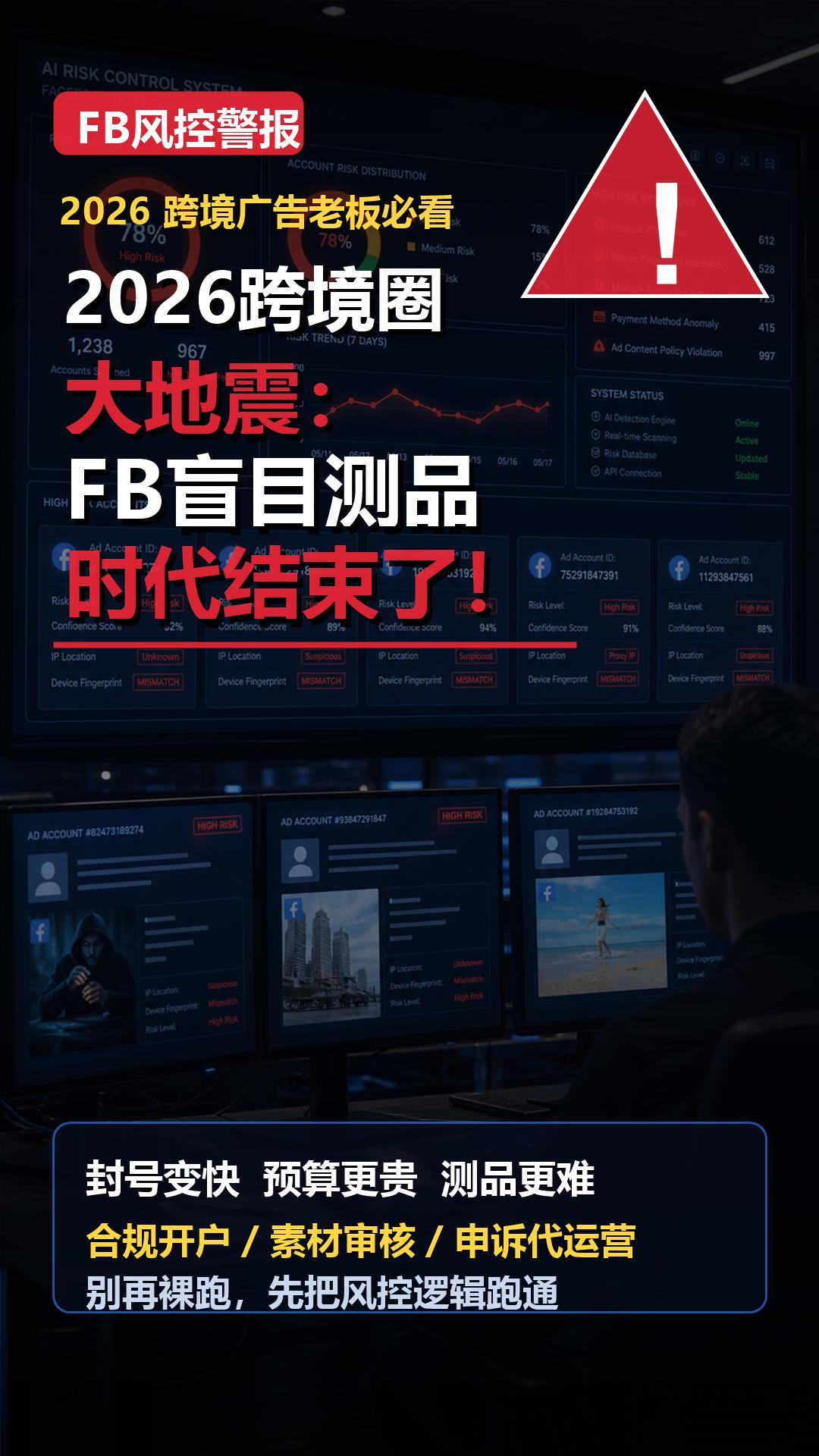
 The Era of Cross-Border Earthquakes in 2026: The Era of Blindly Testing FB Products Has Ended!
 Three key points of domestic-to-foreign trade most important, see if you really did your homework! Don’t take shortcuts.


Related Products
 EasyCamp SaaS Smart Website Marketing SystemE-Yingbao SaaS Smart Website Marketing System: AI-powered, zero-code website building. Rapidly launch multilingual independent e-commerce sites in just 10 minutes. Global server acceleration and AI-driven SEO optimization empower businesses to efficiently connect with global markets. The seamless integration of technology and user-friendly operation makes building e-commerce sites incredibly simple.
 AI+SEM Intelligent Advertising Marketing SystemAI+SEM drives intelligent ad creation, empowering full-funnel precision advertising marketing. The system automatically generates weekly/monthly reports, AI recommends keywords and target countries, monitors core metrics in real-time with intelligent alerts, and enables one-click high-conversion ad solutions to help quickly acquire customers and improve ROI.
 AI+SEO Dual Engine Optimization ServiceEasyWin AI+SEO Dual Engine Optimization System leverages AI-powered keyword mining, content generation, and comprehensive technical optimization to help foreign trade enterprises acquire high-quality organic traffic, significantly improving search rankings and conversion rates.
 AI+SNS Social Media Marketing SystemYingbao AI+SNS Social Media Marketing System - Precision social capture for the social media era. Supports one-click content synchronization across major platforms like Facebook and LinkedIn. AI intelligently rewrites posts for enhanced relevance. 24/7 AI customer service and user profiling analysis empower businesses to efficiently expand into global markets.
 AI+SEO营销解决方案易营宝AI+SEO营销解决方案,通过AI批量写作、智能生成TDK、精准关键词扩词等功能,全面优化网站SEO效果,提升流量与转化率。助力企业构建高效智能网站新生态。
 AI+SEM Advertising Marketing SolutionsAI+SEM Advertising Marketing Solution leverages AI technology to deeply empower SEM ad campaigns. It automatically generates weekly/monthly reports using AI, presenting account data across multiple dimensions for comprehensive insights into campaign performance and trends. The system precisely recommends keywords and target countries, intelligently generates high-conversion ad copy, and enables one-click activation of efficient campaign plans to help businesses rapidly acquire customers. Simultaneously, it monitors core metrics in real time, intelligently identifies abnormal fluctuations, and issues timely alerts to ensure stable, high-return advertising results.
 Domain Name ServicesEasyWin provides professional domain name services, including intelligent queries, one-stop registration, brand protection, and full lifecycle management, helping businesses build a digital brand image.
 EasyOperate B2C Cross-Border E-Commerce Platform & Independent WebsiteEasyStore B2C Cross-border E-commerce Independent Store is an intelligent website building and cross-border e-commerce integrated solution independently developed by EasyStore Information Technology (Beijing) Co., Ltd. The system is specially designed for small and medium-sized as well as large export enterprises, integrating 'website building, operation, marketing, advertising, and conversion' into one, helping enterprises quickly establish cross-border e-commerce independent stores to achieve brand globalization and global sales growth.
The platform supports multiple languages, multiple currencies, and multi-channel marketing, with built-in AI intelligent translation and SEO optimization systems, suitable for mainstream markets such as Southeast Asia, Europe and America, Latin America, and the Middle East, assisting Chinese manufacturing enterprises in efficiently deploying international e-commerce strategies. SSL证书易营宝提供专业SSL安全证书服务,包括单域名和泛域名证书,确保网站数据传输加密、身份验证和完整性保护,助力企业建立安全可信的在线业务环境。









