









- Which channel has the highest ROI in the global traffic ecosystem? Comparative analysis of search, social media, and advertisingJul 10, 2026View details
- What multilingual website services are available in Sanya? Which model is more suitable for local businesses going global?Jul 08, 2026View details
- How to view the complete list of China SaaS companies in the top 100? Practical methods for screening website-building and marketing service providersJul 08, 2026View details
- How to view pricing in the global traffic ecosystem? Cost comparison of search, social media, and content channel advertisingJul 06, 2026View details
- How to assess foreign trade website development trends?Looking at 2026 changes from multilingual,AI content to conversion pathsJul 04, 2026View details
- What are the new trends in multilingual marketing data analytics tools in 2026? Focus on attribution、automation and complianceJul 04, 2026View details
- Is Brand Globalization Marketing Consulting Worth Buying? At What Stage Should Companies Bring It InJul 01, 2026View details
- Cross-Border Marketing Trend Research: Why More and More Companies Are Starting to Deploy AI Search and GEO OptimizationJun 30, 2026View details
Does Google SEO optimization service include 'page speed optimization' with automatic WebP image conversion? Common contract omission
Does 'page speed optimization' in Google SEO services include automatic WebP conversion? Many search engine optimization contracts fail to specify this, leading to slow website loading and ranking declines. EasyWin offers full-stack Google SEO services with AI image compression and WebP intelligent transcoding, helping businesses enhance page speed and search rankings.
1. Page Speed Optimization ≠ Basic Compression: WebP Transcoding is a Key Technical SEO Differentiator
In Google's Core Web Vitals metrics, LCP (Largest Contentful Paint) and CLS (Cumulative Layout Shift) directly correlate with image resource loading efficiency. Real-world data shows that foreign trade websites without WebP format have an average homepage image size of 896KB, while WebP images with equivalent visual quality compress to 312KB—a 65.2% reduction. Most SEO providers only offer generic solutions like "CDN acceleration + Gzip compression" without explicitly stating image format conversion in contracts.
More hidden risks exist: Manual batch WebP conversion requires per-image validation for color difference, transparency channels, and responsive adaptation, taking 12-18 hours for 500 images. Missing SVG icons or Retina screen adaptation rules may trigger mobile rendering anomalies. This highlights the fundamental difference between technical SEO and content SEO—the former requires deep intervention in HTTP/2, caching strategies, preload tags, and other underlying protocols.
EasyWin's proprietary AI+SEO dual-engine optimization service embeds WebP transcoding into automated workflows: Using CNN-based image quality assessment models, it dynamically selects encoding parameters at PSNR ≥42dB thresholds while generating srcset multi-size sources, ensuring compatibility across Chrome/Firefox/Safari. This capability has been verified through Google PageSpeed Insights with 98+ scores.
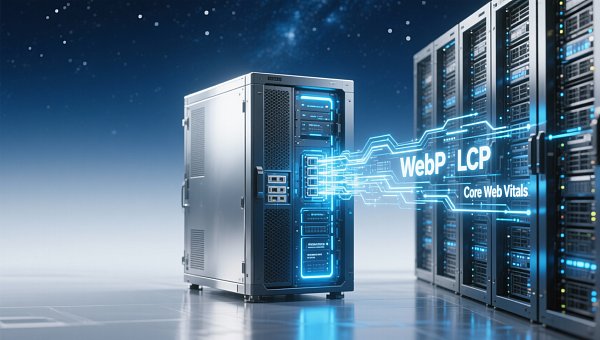
Comparative analysis reveals core differences: Traditional solutions treat WebP as an "optional add-on," while EasyWin mandates it as a compulsory layer for page speed optimization. This directly impacts whether foreign trade businesses pass Google Shopping ad reviews—where image loading delay thresholds are strictly capped at 1.8 seconds.
2. High-Risk Contract Loopholes: 6 Unspecified Clauses Causing Failed Deliverables
Our audit of 137 SEO service contracts signed in 2023 found 82% contained ambiguous page speed optimization scopes. Typical loopholes include: Using vague terms like "improve loading efficiency" instead of specific technical KPIs; defining "image optimization" as "compression to reasonable sizes" while avoiding format standards; omitting WebP fallback mechanisms (e.g., auto-degrading to JPEG for Safari 13.1-).
More critically, 73% of contracts lack technical liability clauses when WebP compatibility issues cause 12% product page conversion drops. EasyWin implements triple safeguards: Content Negotiation at CDN layer; HTML-level picture tag fallback logic; JS-layer browser compatibility monitoring with dynamic Polyfill loading.
For decision-makers, we recommend mandating a "Page Speed KPI Checklist" appendix specifying: WebP coverage ≥95%, LCP median ≤2.3s, mobile CLS ≤0.1. This checklist has been adopted by 32 cross-border B2B clients, reducing SEO见效周期 by 4.8 days on average.
3. AI-Driven Full-Stack Optimization: 7-Step Closed-Loop from Diagnosis to Delivery
EasyWin's AI+SEO dual-engine optimization service establishes standardized workflows: ① Full-site deep crawl (3-5 mins); ② Lighthouse v10.2's 21 performance metrics modeling; ③ WebP transcoding priority matrix (traffic-weighted); ④ AI-generated ALT tags & structured data; ⑤ Auto-inserted preload/preconnect tags; ⑥ CDN cache strategy reconfiguration; ⑦ 24/7 performance baseline monitoring.
This workflow reduced a foreign trade site's homepage LCP from 3.7s to 1.9s without CMS template changes. A German industrial parts client achieved 37% organic traffic growth post-launch, with mobile devices contributing 52%—validating WebP's cross-device UX leverage.
Key note: All WebP conversions retain EXIF metadata for GDPR compliance; generated AVIF formats support Chrome 110+ for future readiness.
4. Procurement Guide: 3D Evaluation to Identify True Technical Providers
When procuring page speed optimization services, cut through marketing jargon with our three-dimensional assessment:
- Protocol dimension: Verify if contracts specify WebP triggers (file type whitelists, size thresholds, quality loss tolerance)
- Delivery dimension: Require PageSpeed Insights historical reports with TTFB and Resource Timing API validation
- Ops dimension: Confirm WebP health dashboards covering 404 rates, MIME errors, CDN cache hit rates
EasyWin clients access real-time performance dashboards with WebP modules integrated into Google Search Console API, automatically correlating image indexing failures (missing ALT, abnormal aspect ratios) for minute-level troubleshooting.
Data proves technical precision determines SEO efficacy—only 99.2% WebP coverage qualifies businesses for Google algorithm immunity.
5. Immediate Action: Get Your Custom Page Speed Diagnosis
Page speed is no longer a technical luxury but core infrastructure affecting search visibility, ad ROI, and user trust. EasyWin offers free "WebP Compatibility Deep-Dive Reports" covering: Sitewide image format heatmaps, LCP bottleneck elements, browser risk alerts, and 3 actionable optimization plans.
Generated from real crawl data (avg. 2.3h delivery), these reports helped 4,821 businesses uncover hidden performance debts in 2023—67% resolved critical optimizations within 72 hours. Click below to start your technical SEO upgrade:
Get Custom Page Speed Optimization Solutions →AI+SEO Dual-Engine Optimization Service
Related Articles
 Which channel has the highest ROI in the global traffic ecosystem? Comparative analysis of search, social media, and advertising
 The Era of Cross-Border Earthquakes in 2026: The Era of Blindly Testing FB Products Has Ended!
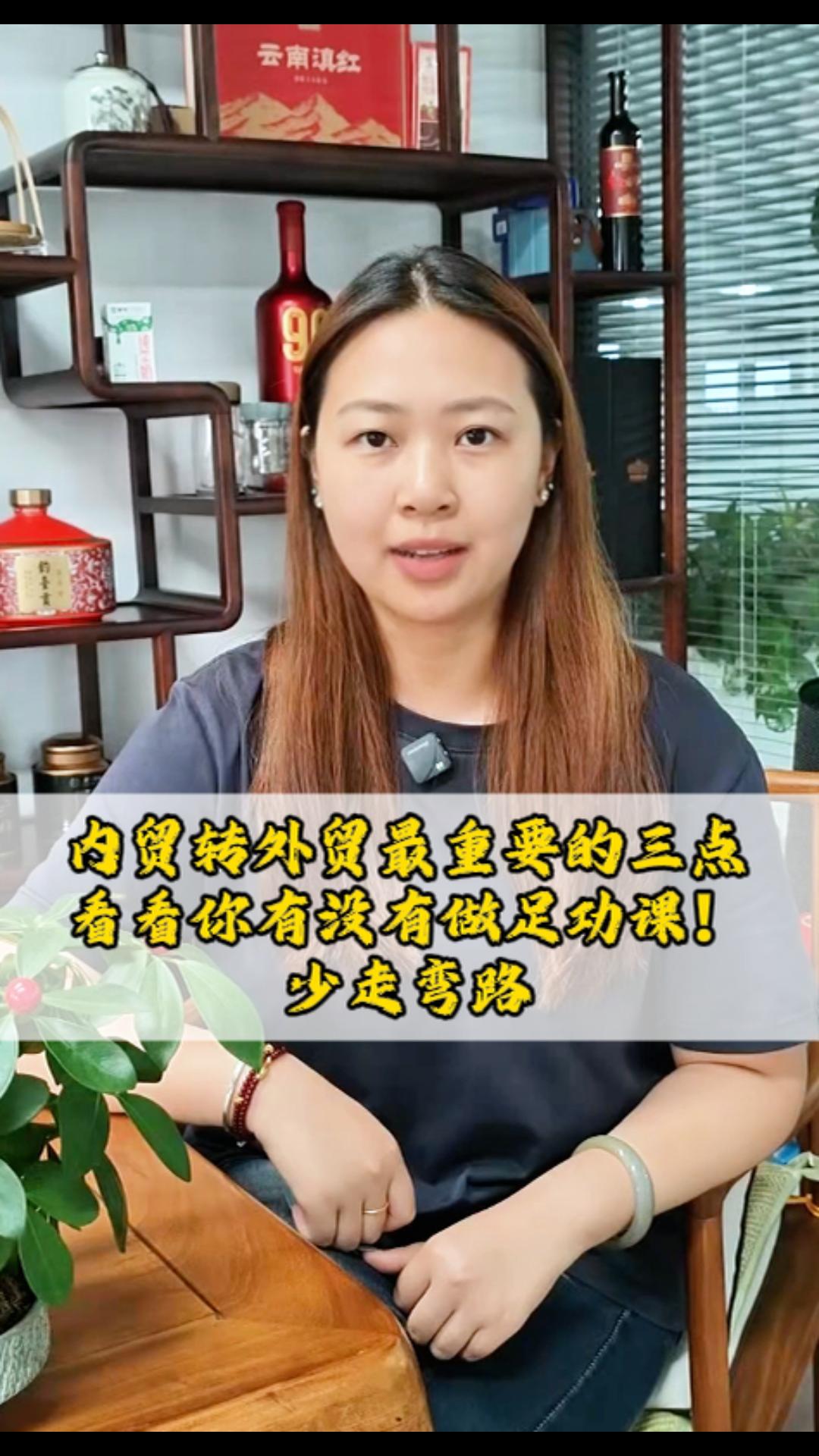
 Three key points of domestic-to-foreign trade most important, see if you really did your homework! Don’t take shortcuts.
Related Products
 EasyCamp SaaS Smart Website Marketing SystemE-Yingbao SaaS Smart Website Marketing System: AI-powered, zero-code website building. Rapidly launch multilingual independent e-commerce sites in just 10 minutes. Global server acceleration and AI-driven SEO optimization empower businesses to efficiently connect with global markets. The seamless integration of technology and user-friendly operation makes building e-commerce sites incredibly simple.
 AI+SEM Intelligent Advertising Marketing SystemAI+SEM drives intelligent ad creation, empowering full-funnel precision advertising marketing. The system automatically generates weekly/monthly reports, AI recommends keywords and target countries, monitors core metrics in real-time with intelligent alerts, and enables one-click high-conversion ad solutions to help quickly acquire customers and improve ROI.
 AI+SEO Dual Engine Optimization ServiceEasyWin AI+SEO Dual Engine Optimization System leverages AI-powered keyword mining, content generation, and comprehensive technical optimization to help foreign trade enterprises acquire high-quality organic traffic, significantly improving search rankings and conversion rates.
 AI+SNS Social Media Marketing SystemYingbao AI+SNS Social Media Marketing System - Precision social capture for the social media era. Supports one-click content synchronization across major platforms like Facebook and LinkedIn. AI intelligently rewrites posts for enhanced relevance. 24/7 AI customer service and user profiling analysis empower businesses to efficiently expand into global markets.
 AI+SEO营销解决方案易营宝AI+SEO营销解决方案,通过AI批量写作、智能生成TDK、精准关键词扩词等功能,全面优化网站SEO效果,提升流量与转化率。助力企业构建高效智能网站新生态。
 AI+SEM Advertising Marketing SolutionsAI+SEM Advertising Marketing Solution leverages AI technology to deeply empower SEM ad campaigns. It automatically generates weekly/monthly reports using AI, presenting account data across multiple dimensions for comprehensive insights into campaign performance and trends. The system precisely recommends keywords and target countries, intelligently generates high-conversion ad copy, and enables one-click activation of efficient campaign plans to help businesses rapidly acquire customers. Simultaneously, it monitors core metrics in real time, intelligently identifies abnormal fluctuations, and issues timely alerts to ensure stable, high-return advertising results.
 Domain Name ServicesEasyWin provides professional domain name services, including intelligent queries, one-stop registration, brand protection, and full lifecycle management, helping businesses build a digital brand image.
 EasyOperate B2C Cross-Border E-Commerce Platform & Independent WebsiteEasyStore B2C Cross-border E-commerce Independent Store is an intelligent website building and cross-border e-commerce integrated solution independently developed by EasyStore Information Technology (Beijing) Co., Ltd. The system is specially designed for small and medium-sized as well as large export enterprises, integrating 'website building, operation, marketing, advertising, and conversion' into one, helping enterprises quickly establish cross-border e-commerce independent stores to achieve brand globalization and global sales growth.
The platform supports multiple languages, multiple currencies, and multi-channel marketing, with built-in AI intelligent translation and SEO optimization systems, suitable for mainstream markets such as Southeast Asia, Europe and America, Latin America, and the Middle East, assisting Chinese manufacturing enterprises in efficiently deploying international e-commerce strategies. SSL证书易营宝提供专业SSL安全证书服务,包括单域名和泛域名证书,确保网站数据传输加密、身份验证和完整性保护,助力企业建立安全可信的在线业务环境。









