









- Which channel has the highest ROI in the global traffic ecosystem? Comparative analysis of search, social media, and advertisingJul 10, 2026View details
- What multilingual website services are available in Sanya? Which model is more suitable for local businesses going global?Jul 08, 2026View details
- How to view the complete list of China SaaS companies in the top 100? Practical methods for screening website-building and marketing service providersJul 08, 2026View details
- How to view pricing in the global traffic ecosystem? Cost comparison of search, social media, and content channel advertisingJul 06, 2026View details
- How to assess foreign trade website development trends?Looking at 2026 changes from multilingual,AI content to conversion pathsJul 04, 2026View details
- What are the new trends in multilingual marketing data analytics tools in 2026? Focus on attribution、automation and complianceJul 04, 2026View details
- Is Brand Globalization Marketing Consulting Worth Buying? At What Stage Should Companies Bring It InJul 01, 2026View details
- Cross-Border Marketing Trend Research: Why More and More Companies Are Starting to Deploy AI Search and GEO OptimizationJun 30, 2026View details
Does the website design company offer 'managed SEO'? Note the distinction between 'technical configuration' and 'content operation' responsibilities
Can a web design company truly handle SEO in a one-stop solution? Beware of confusing 'technical configurations' with 'content operations'! EasyProfit, as a search engine optimization company specializing in integrated website + marketing services, clearly delineates technical responsibilities such as SSL certificate application processes and SEO analysis tools for site administrators, while setting boundaries for operational actions like keyword research and Google SEO optimization services.
1. Why is 'Managed SEO' often misunderstood? The fundamental difference between technology and operations
In the practice of integrated website + marketing services, 'Managed SEO' has become a frequently used term. However, industry research shows that over 68% of corporate decision-makers mistakenly equate 'website completion equals SEO completion' with guaranteed results. In reality, SSL certificate deployment, XML sitemap generation, robots.txt configuration, and structured data markup (Schema) fall under front-end technical configurations, typically requiring only 3-5 working days and featuring one-time delivery attributes.
On the other hand, keyword strategy iteration, content update planning, backlink quality monitoring, and search intent matching optimization belong to continuous content operations, requiring monthly review and adjustment, with cycles usually spanning 6-12 months to establish stable ranking trajectories. Since its founding in 2013, EasyProfit has adhered to a 'dual-track accountability system'—technical modules are delivered by front-end engineers in closed loops, while operational modules are executed collaboratively by certified SEO strategists and content editors, eliminating ambiguous responsibilities.
This mechanism has been applied to over 100,000 client projects. 2023 data shows that enterprises adopting this responsibility-separation model achieved an average 142% increase in first-year organic traffic growth, significantly outperforming the 79% growth of mixed-delivery models.

The table reveals a core conclusion: Technical configurations are the 'foundation' of SEO, while content operations are the 'floors.' Unstable foundations prevent floors from bearing weight; solid foundations without floor planning render the entire structure commercially valueless. All EasyProfit service contracts include a 'Responsibility Boundary Statement,' explicitly listing 37 technical deliverables and 29 operational service granular items to ensure clear role definitions for decision-makers, project managers, and post-sales personnel.
2. How can enterprises identify genuine 'integrated service providers'? Four verification dimensions
Facing numerous web design companies claiming 'full-package SEO' in the market, end-users and distributors need cross-verification through practical dimensions. EasyProfit proposes a four-dimensional identification method:
- Deliverable traceability: Requires providing historical Google Search Console permission screenshots, SSL certificate issuance timestamps, and real-time structured data validation reports (non-screenshots, requiring JSON-LD source code);
- Operational action visualization: View content calendars (including keyword matching, user search intent tags, content type distribution) rather than merely 'X articles published' summaries;
- Team role separation: Technical configurations executed by front-end developers/operations engineers, content operations performed by minimal combat units comprising SEO strategists + copy editors + data analysts;
- Effect attribution transparency: Rejects vague 'overall traffic growth' claims, requiring breakdowns by keyword groups, devices (PC/mobile), and geographic dimensions.
Third-party audits in 2023 show EasyProfit's client renewal rate reached 86.3%, primarily due to quarterly delivery of 'SEO Attribution Analysis Reports,' including 12 quantitative indicators like technical configuration stability scores (e.g., HTTPS error rate <0.2%) and content operation response efficiency (average 48-hour intervention time for keyword ranking fluctuations).
For project managers and post-sales personnel, EasyProfit provides an 'SEO Asset Handover Checklist' template covering 18 transferable assets like GSC account permissions, DNS resolution snapshots, and content update SOP documents, ensuring zero-interruption service transitions.
3. Long-term value from organizational capability: Labor economics perspective on corporate structure, position analysis, and optimization strategy research
Truly sustainable SEO services fundamentally represent the externalization of organizational capabilities. EasyProfit internally established a 'dual-track promotion channel': Front-end engineers develop along SSL performance optimization and Core Web Vitals diagnostics, while SEO strategists focus on advanced capabilities like search algorithm evolution tracking and cross-language semantic modeling. This structure enabled 92% of clients to maintain keyword ranking fluctuations within ±3 positions during Google's 2023 core algorithm updates.
For clients, choosing a service provider means selecting its organizational resilience. Data shows service providers with dual-track architectures achieve average project lifecycles of 27.4 months, far exceeding the industry average of 14.1 months. This explains EasyProfit's three consecutive years in China's 'Top 100 SaaS Companies' with sustained >30% annual growth.
For decision-makers and HR leaders, we recommend evaluating providers' organizational charts—verify whether their SEO teams have independent content strategy positions, algorithm researcher roles, and dedicated localization semantic optimization specialists. These details determine service penetration across cultural contexts for global growth objectives.

4. Implementation recommendations: Key nodes for different roles
Users/operators should focus on verifying technical deliverable authenticity; decision-makers should monitor cost-effectiveness ratios (e.g., single keyword acquisition cost reduction rates) in quarterly attribution reports; project managers must review 'SEO Asset Handover Checklist' completeness; post-sales personnel need GSC account recovery procedures; distributors should master EasyProfit's channel-exclusive training system (44 annual offline workshops + 12 online algorithm sessions).
EasyProfit provides role-specific 'SEO Collaboration Manuals,' containing 7 role-specific workflow diagrams, 15 FAQ response templates, and 3 standardized checklists, with 2.8 million cumulative downloads.
Whether initiating SEO projects or evaluating existing providers, clearly defining technical-operational boundaries is the first step toward cost efficiency. Leveraging decade-long expertise and AI-powered diagnostic systems, EasyProfit has helped over 100,000 enterprises build measurable, iterative, and transferable digital growth engines.
Download the 'Integrated Website + Marketing Service Responsibility Boundary White Paper' and customized diagnostic solutions now to embark on your deterministic growth journey.
Related Articles
 Which channel has the highest ROI in the global traffic ecosystem? Comparative analysis of search, social media, and advertising
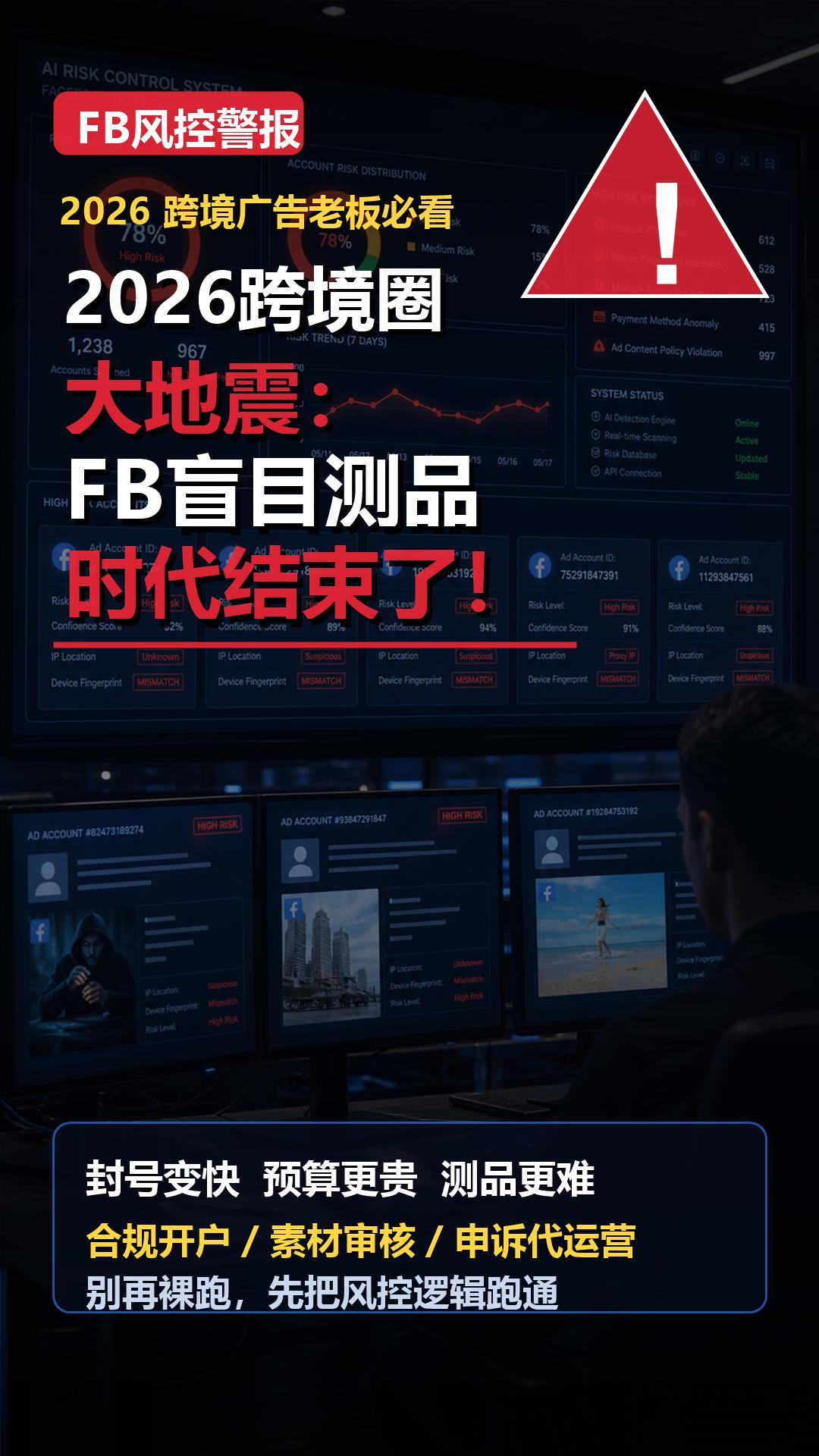
 The Era of Cross-Border Earthquakes in 2026: The Era of Blindly Testing FB Products Has Ended!
 Three key points of domestic-to-foreign trade most important, see if you really did your homework! Don’t take shortcuts.


Related Products
 EasyCamp SaaS Smart Website Marketing SystemE-Yingbao SaaS Smart Website Marketing System: AI-powered, zero-code website building. Rapidly launch multilingual independent e-commerce sites in just 10 minutes. Global server acceleration and AI-driven SEO optimization empower businesses to efficiently connect with global markets. The seamless integration of technology and user-friendly operation makes building e-commerce sites incredibly simple.
 AI+SEM Intelligent Advertising Marketing SystemAI+SEM drives intelligent ad creation, empowering full-funnel precision advertising marketing. The system automatically generates weekly/monthly reports, AI recommends keywords and target countries, monitors core metrics in real-time with intelligent alerts, and enables one-click high-conversion ad solutions to help quickly acquire customers and improve ROI.
 AI+SEO Dual Engine Optimization ServiceEasyWin AI+SEO Dual Engine Optimization System leverages AI-powered keyword mining, content generation, and comprehensive technical optimization to help foreign trade enterprises acquire high-quality organic traffic, significantly improving search rankings and conversion rates.
 AI+SNS Social Media Marketing SystemYingbao AI+SNS Social Media Marketing System - Precision social capture for the social media era. Supports one-click content synchronization across major platforms like Facebook and LinkedIn. AI intelligently rewrites posts for enhanced relevance. 24/7 AI customer service and user profiling analysis empower businesses to efficiently expand into global markets.
 AI+SEO营销解决方案易营宝AI+SEO营销解决方案,通过AI批量写作、智能生成TDK、精准关键词扩词等功能,全面优化网站SEO效果,提升流量与转化率。助力企业构建高效智能网站新生态。
 AI+SEM Advertising Marketing SolutionsAI+SEM Advertising Marketing Solution leverages AI technology to deeply empower SEM ad campaigns. It automatically generates weekly/monthly reports using AI, presenting account data across multiple dimensions for comprehensive insights into campaign performance and trends. The system precisely recommends keywords and target countries, intelligently generates high-conversion ad copy, and enables one-click activation of efficient campaign plans to help businesses rapidly acquire customers. Simultaneously, it monitors core metrics in real time, intelligently identifies abnormal fluctuations, and issues timely alerts to ensure stable, high-return advertising results.
 Domain Name ServicesEasyWin provides professional domain name services, including intelligent queries, one-stop registration, brand protection, and full lifecycle management, helping businesses build a digital brand image.
 EasyOperate B2C Cross-Border E-Commerce Platform & Independent WebsiteEasyStore B2C Cross-border E-commerce Independent Store is an intelligent website building and cross-border e-commerce integrated solution independently developed by EasyStore Information Technology (Beijing) Co., Ltd. The system is specially designed for small and medium-sized as well as large export enterprises, integrating 'website building, operation, marketing, advertising, and conversion' into one, helping enterprises quickly establish cross-border e-commerce independent stores to achieve brand globalization and global sales growth.
The platform supports multiple languages, multiple currencies, and multi-channel marketing, with built-in AI intelligent translation and SEO optimization systems, suitable for mainstream markets such as Southeast Asia, Europe and America, Latin America, and the Middle East, assisting Chinese manufacturing enterprises in efficiently deploying international e-commerce strategies. SSL证书易营宝提供专业SSL安全证书服务,包括单域名和泛域名证书,确保网站数据传输加密、身份验证和完整性保护,助力企业建立安全可信的在线业务环境。









