









- What should you focus on in the latest enterprise SaaS report? From renewal rates and delivery costs to overseas growth opportunitiesJul 12, 2026View details
- What signals are worth paying attention to in a cross-border marketing trend report? B2B companies should look at these 6 signalsJul 11, 2026View details
- How to Read a Cross-Border Marketing Trends Report? Five Key Dimensions for Evaluating Channel OpportunitiesJul 11, 2026View details
- Which channel has the highest ROI in the global traffic ecosystem? Comparative analysis of search, social media, and advertisingJul 10, 2026View details
- What multilingual website services are available in Sanya? Which model is more suitable for local businesses going global?Jul 08, 2026View details
- How to view the complete list of China SaaS companies in the top 100? Practical methods for screening website-building and marketing service providersJul 08, 2026View details
- How to view pricing in the global traffic ecosystem? Cost comparison of search, social media, and content channel advertisingJul 06, 2026View details
- How to assess foreign trade website development trends?Looking at 2026 changes from multilingual,AI content to conversion pathsJul 04, 2026View details
Newly Revised 《Maritime Law》 Takes Effect on May 1:Liability for Unclaimed Cargo Shifts from Consignee to Shipper
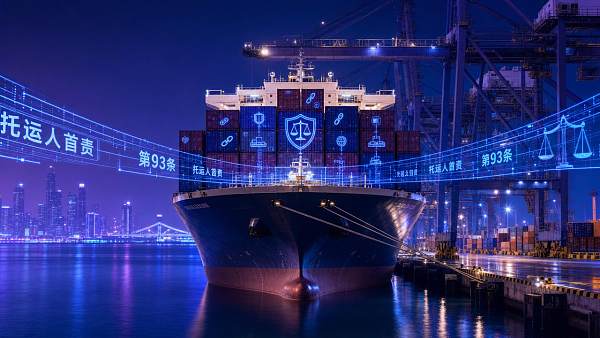
Starting from May 1, 2026,the newly revised Maritime Law of the People’s Republic of China will officially take effect,with Article 93 making a major adjustment to the determination of liability in cases where no one takes delivery of goods at the port of discharge——changing from the original provision under which the consignee bears primary liability to a comprehensive shift in which the shipper bears primary liability。This change directly affects the risk allocation logic of foreign trade export enterprises,international freight forwarders,cross-border supply chain service providers and other entities,and has a substantive impact in particular on enterprises conducting business under international trade terms such as FOB and CIF,which deserves close attention from the foreign trade,logistics,shipping and foreign-related manufacturing industries。
Event Overview
According to publicly available information,Article 93 of the new Maritime Law of the People’s Republic of China,which will take effect on May 1, 2026,clearly states that when goods arrive at the port of discharge and no one takes delivery of them(including cases where the consignee refuses to take delivery,fails to complete customs clearance in time or becomes unreachable),liabilities such as port detention charges,storage charges,disposal costs and losses from abandoned goods will be adjusted from the original principle of ‘consignee liability’ to ‘shipper primary liability’。This clause is a mandatory legal provision and is not automatically excluded by the terms of a trade contract,but it allows the parties to separately agree on the allocation of liability under lawful conditions。
Which Segmented Industries Will Be Affected
Direct Trading Enterprises
For foreign trade companies or integrated manufacturing and trading enterprises acting as exporters,if transactions are concluded under FOB or CIF terms,destination port risks could previously be transferred to the buyer based on the trade terms;after the new rules take effect,even if the contract stipulates that the overseas buyer is responsible for customs clearance and taking delivery,once no one takes delivery of the goods,the carrier may still seek recovery from the shipper in accordance with the law。The impact is mainly reflected in increased accounts receivable risk,higher costs for handling overseas disputes,and a greater possibility of payment refusal under letters of credit/collection arrangements。
Processing and Manufacturing Enterprises
Manufacturing enterprises exporting under OEM/ODM models often do not directly sign ocean bills of lading,but if they are listed as the shipper on the bill of lading(such as when the factory name is used for bill issuance or when an agent issues the bill without clearly separating rights and responsibilities),they may be claimed against by the carrier as primarily liable。The impact is mainly reflected in:being passively drawn into overseas port disputes,sudden compensation pressure caused by insufficient financial reserves,and an expanded gap in export credit insurance coverage。
Supply Chain Service Enterprises
These include international freight forwarders,non-vessel operating common carriers(NVOCC),cross-border logistics platforms and others,which often act as contractual shippers or bill of lading issuers in actual operations。The new rules strengthen their duty of care regarding the downstream consignee’s ability to perform,with the impact mainly reflected in:higher requirements for customer credit reviews,the need to bring forward liability statements in document circulation,and the urgent need to improve internal recovery mechanisms with the actual shipper。
Channel Distribution Enterprises
Enterprises engaged in cross-border e-commerce direct mail,overseas warehousing and distribution,distribution import and other businesses may trigger situations where no one takes delivery if delays or abnormal receipt occur during customs clearance in the destination country。The impact is mainly reflected in:port detention costs being elevated from “terminal costs” to “source liability”,the need to rebuild existing cost calculation models,and the need to renegotiate risk-sharing clauses with overseas partners。
What Key Points Should Relevant Enterprises or Practitioners Pay Attention To,and How Should They Respond Now
Pay Attention to Subsequent Supporting Judicial Interpretations and Typical Case Developments
Analysis shows:the legal provisions have currently taken effect,but the specific criteria for determining “no one takes delivery”(such as time limits,notification obligations,and reasonable forms of demand notices),as well as grounds for shipper exemption(such as being able to prove that the consignee has expressly abandoned the goods and that confirmation has been obtained from the competent authority of the destination country),still await judicial interpretations from the Supreme People’s Court or the release of guiding cases。Enterprises should continuously track the first batch of publicly available judgments applying the rules from maritime courts and identify the boundaries of adjudication standards。
Focus on Reviewing Liability Connection Clauses in FOB/CIF Contracts
It is worth noting that:under FOB terms,although the seller is not responsible for booking space,if the seller participates in booking in actual operations or is listed as the shipper on the bill of lading,it cannot automatically be exempted from liability;under CIF terms,the seller arranges transportation and obtains the bill of lading,making it more likely to be identified as the shipper in the legal sense。What currently deserves more attention is:whether to add a “destination port delivery guarantee clause” to the sales contract,whether to require the buyer to provide customs clearance agent qualifications and advance payment guarantees,and whether to make necessary liability limitation statements in bill of lading annotations。
Reassess the Coverage Scope of Export Credit Insurance and Cargo Insurance
From an industry perspective:traditional export credit insurance mostly focuses on commercial risks such as buyer bankruptcy and payment refusal,and seldom covers port charges arising from unclaimed cargo;cargo insurance usually does not cover derivative costs from port detention。A more appropriate understanding is:enterprises need to proactively communicate with insurers to expand insured liabilities,or separately take out “destination port cost protection add-on insurance”,and truthfully disclose the transaction model and the buyer’s performance history when applying for insurance。
Establish a Dynamic Pre-Shipment Assessment Mechanism for the Buyer’s Ability to Perform
The current priority is to:introduce third-party credit report checks at the order confirmation stage for high-risk targets such as newly developed customers,customers in politically unstable regions,and small and medium-sized importers;for existing customers,update data such as customs clearance timeliness,customs ratings,and port detention records on a quarterly basis and embed them into the order review process。Avoid judging delivery reliability solely based on historical cooperation records or verbal commitments。
Editor’s View / Industry Observation
It is worth noting that:this legislative amendment is not an isolated adjustment,but echoes the overall regulatory trend in recent years in which China has promoted “closed-loop management of maritime transport liability” and strengthened export compliance risk control。At present,it is more like an institutional signal——reminding the foreign trade ecosystem that it is shifting from “emphasizing delivery while neglecting landing” to “full-chain traceable responsibility”。What the industry needs to continue monitoring is:how maritime courts in different regions will determine whether “the shipper has fulfilled reasonable duty of care” during the first year of application;and whether the Ministry of Commerce and the Ministry of Transport will simultaneously issue supporting guidelines to clarify the connection rules between trade terms and liabilities under maritime law。In the short term,the legal effect has been established,but there remains room for interpretation and negotiation in practical implementation。
Conclusion:this adjustment to Article 93 of the Maritime Law marks the evolution of China’s maritime transport liability system from an attribution logic based on the “formal shipper” to one based on the “substantive risk controller”。It does not change the basic rules of international trade,but it significantly raises the threshold of attention that exporters must pay to performance outcomes at the destination port。At present,it is more appropriate to understand it as a structural risk reallocation mechanism rather than a simple cost transfer。Enterprises should adopt a prudent and pragmatic approach and incorporate it into a normalized risk control framework for contract management,insurance allocation and customer screening。
Information Source Statement:
Main source:Decision of the Standing Committee of the National People’s Congress on Amending the Maritime Law of the People’s Republic of China(adopted in December 2025,effective from May 1, 2026);
Items for ongoing observation:judicial interpretations by the Supreme People’s Court regarding the application of Article 93 of the Maritime Law,notices on the first batch of typical cases,and the release of supporting operational guidelines by the Ministry of Transport。
Related Articles



Related Products
 EasyCamp SaaS Smart Website Marketing SystemE-Yingbao SaaS Smart Website Marketing System: AI-powered, zero-code website building. Rapidly launch multilingual independent e-commerce sites in just 10 minutes. Global server acceleration and AI-driven SEO optimization empower businesses to efficiently connect with global markets. The seamless integration of technology and user-friendly operation makes building e-commerce sites incredibly simple.
 AI+SEM Intelligent Advertising Marketing SystemAI+SEM drives intelligent ad creation, empowering full-funnel precision advertising marketing. The system automatically generates weekly/monthly reports, AI recommends keywords and target countries, monitors core metrics in real-time with intelligent alerts, and enables one-click high-conversion ad solutions to help quickly acquire customers and improve ROI.
 AI+SEO Dual Engine Optimization ServiceEasyWin AI+SEO Dual Engine Optimization System leverages AI-powered keyword mining, content generation, and comprehensive technical optimization to help foreign trade enterprises acquire high-quality organic traffic, significantly improving search rankings and conversion rates.
 AI+SNS Social Media Marketing SystemYingbao AI+SNS Social Media Marketing System - Precision social capture for the social media era. Supports one-click content synchronization across major platforms like Facebook and LinkedIn. AI intelligently rewrites posts for enhanced relevance. 24/7 AI customer service and user profiling analysis empower businesses to efficiently expand into global markets.
 AI+SEO营销解决方案易营宝AI+SEO营销解决方案,通过AI批量写作、智能生成TDK、精准关键词扩词等功能,全面优化网站SEO效果,提升流量与转化率。助力企业构建高效智能网站新生态。
 AI+SEM Advertising Marketing SolutionsAI+SEM Advertising Marketing Solution leverages AI technology to deeply empower SEM ad campaigns. It automatically generates weekly/monthly reports using AI, presenting account data across multiple dimensions for comprehensive insights into campaign performance and trends. The system precisely recommends keywords and target countries, intelligently generates high-conversion ad copy, and enables one-click activation of efficient campaign plans to help businesses rapidly acquire customers. Simultaneously, it monitors core metrics in real time, intelligently identifies abnormal fluctuations, and issues timely alerts to ensure stable, high-return advertising results.
 Domain Name ServicesEasyWin provides professional domain name services, including intelligent queries, one-stop registration, brand protection, and full lifecycle management, helping businesses build a digital brand image.
 EasyOperate B2C Cross-Border E-Commerce Platform & Independent WebsiteEasyStore B2C Cross-border E-commerce Independent Store is an intelligent website building and cross-border e-commerce integrated solution independently developed by EasyStore Information Technology (Beijing) Co., Ltd. The system is specially designed for small and medium-sized as well as large export enterprises, integrating 'website building, operation, marketing, advertising, and conversion' into one, helping enterprises quickly establish cross-border e-commerce independent stores to achieve brand globalization and global sales growth.
The platform supports multiple languages, multiple currencies, and multi-channel marketing, with built-in AI intelligent translation and SEO optimization systems, suitable for mainstream markets such as Southeast Asia, Europe and America, Latin America, and the Middle East, assisting Chinese manufacturing enterprises in efficiently deploying international e-commerce strategies. SSL证书易营宝提供专业SSL安全证书服务,包括单域名和泛域名证书,确保网站数据传输加密、身份验证和完整性保护,助力企业建立安全可信的在线业务环境。









