









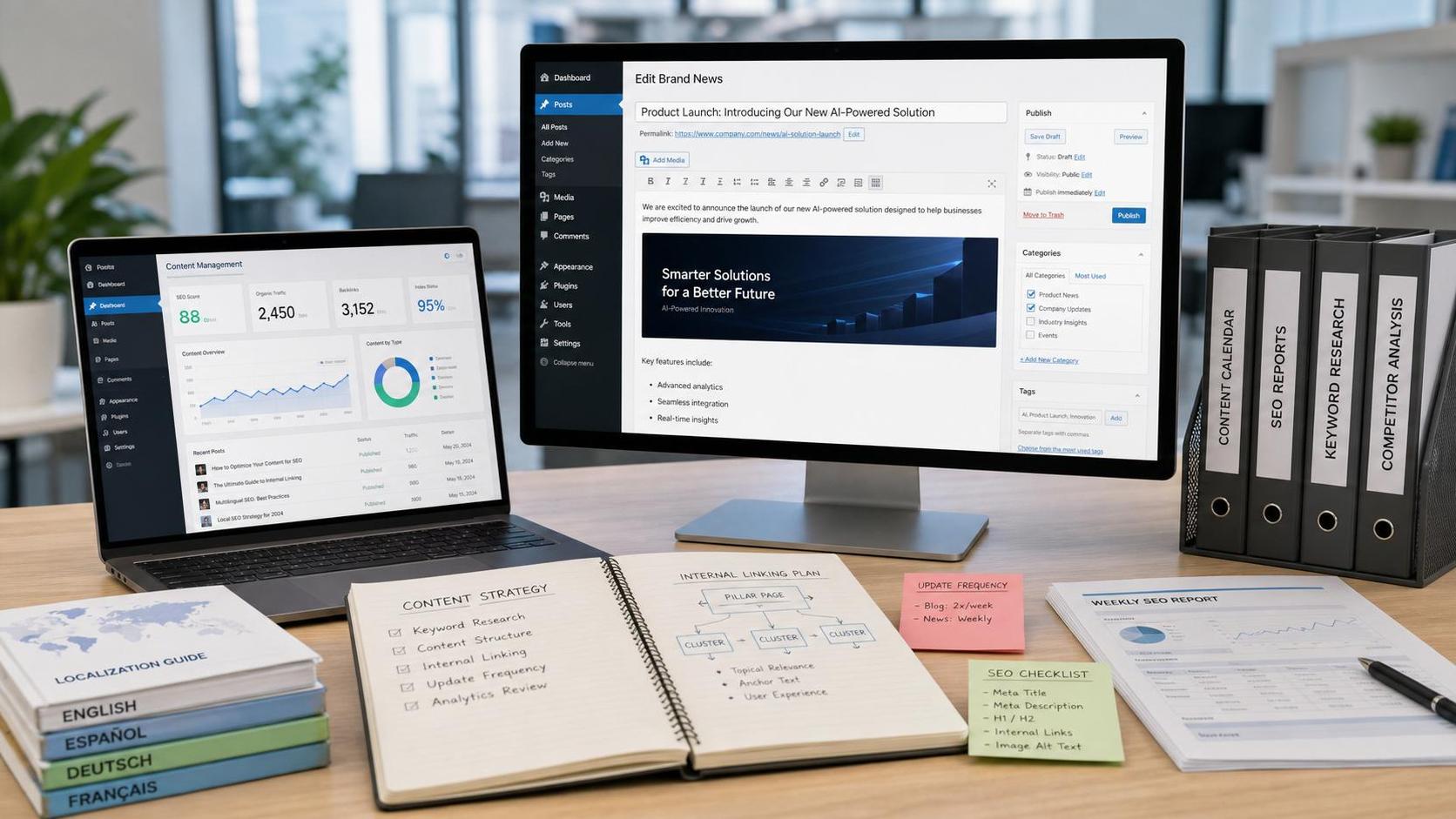
- How Can a Brand Updates Page Be Made More SEO-Friendly? Analysis of Update Frequency, Content Structure, and Internal Linking StrategyJun 28, 2026View details
- What stages does the cross-border services ecosystem include? How do website building, promotion, payment, and compliance work togetherJun 22, 2026View details
- How will email marketing costs change in 2026Jun 22, 2026View details
- The China-US tariff arrangement has reached a preliminary consensus, and the trade association will be establishedJun 15, 2026View details
- Should overseas brand marketing start with ads or contentJun 21, 2026View details
- What determines B2C cross-border e-commerce website development costs? A breakdown of features, interfaces, and deployment methodsJun 17, 2026View details
- China-Morocco zero-tariff access, a breakthrough in the cost of Moroccan goods exports to ChinaJun 11, 2026View details
- What signal should be released for the suspension of exports to JapanJun 10, 2026View details
Responsive Enterprise Website Building System Case Study: Which Pages Matter Most
In responsive corporate website system case studies, there are actually not many pages that truly affect the outcome. For project managers and engineering project leaders, the homepage determines the first impression, the product page determines whether customers will continue browsing, the case study page determines whether trust can be established, and the contact page directly affects inquiry conversion. Instead of adding more sections, it is better to first make these key pages well, so that display efficiency, customer acquisition capability, and long-term maintenance costs can all be taken into account.
When launching an official website project, many companies tend to focus on “complete pages, attractive design, and full functionality”, but judging from actual project delivery and marketing results, whether a responsive corporate website system case study is successful often depends on whether the page structure is designed around the user decision-making journey. Especially for engineering, manufacturing, and B2B service companies, a website is not simply a display brochure, but an entry point for sales leads, a tool for brand endorsement, and a long-term operational asset.
Why project owners should prioritize “key pages” first, instead of pursuing as many pages as possible
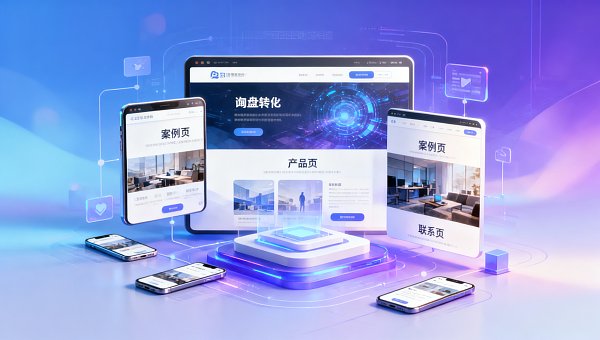
From a project management perspective, corporate website development is most afraid of two types of problems: one is that the initial requirements are spread too broadly, causing the timeline to go out of control; the other is that after launch, no one visits and no one leaves contact information, making return on investment unclear. The former affects delivery, while the latter affects business value. The solution is not to blindly add functions, but to identify the pages that truly carry the conversion task.
The reason why responsive corporate website system case studies are worth referencing lies in their ability to help companies maintain a consistent experience across terminals such as PCs, tablets, and mobile phones. For target customers, the paths of access on different devices are different, but their final concerns are very similar: who you are, what problems you can solve, what you have done, and how I can contact you. Configuring pages around these four questions is often more effective than piling up content sections.
For project managers, once the priority of key pages is clarified, resource allocation also becomes easier to implement. Design, content, development, and testing can all move forward around the main conversion chain, avoiding repeated rework. Especially when companies are also undertaking overseas promotion, multilingual campaigns, or search engine optimization tasks, the more pages there are, the heavier the burden of later updates and quality control becomes.
Why the homepage is always the most critical: it is not a storefront, but a traffic distribution hub
The importance of the homepage is not primarily whether it “looks premium”, but whether it can communicate information within a few seconds. After entering the homepage, visitors usually quickly judge three things: what this company does, whether it is suitable for me, and where I should click next. If the homepage cannot clearly answer these three questions, even the best responsive effects will hardly bring conversions.
An effective homepage is recommended to include at least the following structure: a clear expression of the core business, a value explanation for customer scenarios, entry points to key products or services, a summary of successful cases, credible qualification information, and a prominent contact action area. For engineering project leaders, such a structure makes it easier to break complex business into executable modules and also facilitates subsequent iterative optimization.
The problem with many failed cases is that the homepage information is too scattered. Either it only emphasizes the company’s founding time, office area, and vision slogan, or the first screen is filled with large images but lacks a clear business explanation. As a result, visitors cannot see the core capabilities and cannot find the next step. The real function of the homepage is to quickly direct traffic from different sources to product pages, case study pages, and contact pages, rather than staying at the level of visual display.
If a company serves international customers or cross-regional visitors, the homepage loading speed becomes an even more critical factor. Especially for overseas users, once the first screen loads slowly, the bounce rate will increase significantly. Many foreign trade official websites will introduce global CDN acceleration empowering foreign trade B2B website building at this stage. Through global CDN acceleration, intelligent scheduling, cache optimization, and security protection, they improve access stability in different regions, allowing the homepage to truly take on the role of receiving traffic.
Why product pages determine whether customers continue the conversation
If the homepage is responsible for “making people stay”, then the product page is responsible for “making people willing to keep talking”. In most responsive corporate website system case studies, the product page is the core page that determines conversion quality. Especially in the B2B industry, customers will not submit a lead because of a single slogan. They care more about capability boundaries, applicable scenarios, technical parameters, delivery methods, and expected benefits.
When planning product pages, what project owners most need to avoid is turning them into “promotional posters”. A truly valuable product page should help customers make an initial judgment: whether this service suits me, whether it can solve my problem, and what kind of changes cooperation with you will likely bring. In other words, a product page is essentially the online substitute for a sales consultant.
A high-quality product page should usually cover five types of information: what the product or service is, who it is suitable for, what problems it can solve, what its core capabilities are, and how to start cooperation. For technical businesses, concise parameter descriptions can also be added. This not only facilitates search engine crawling, but also reduces information asymmetry before customer communication.
Taking cross-border website development as an example, customers are usually very sensitive to problems such as “slow speed, unstable overseas access, and failed form submissions”. If the product page can clearly explain capabilities such as static resource acceleration, dynamic origin optimization, intelligent scheduling, and node health detection, customers will have greater confidence in the solution. Compared with vaguely writing “strong performance and good experience”, directly explaining that it can reduce loading wait time, lower bounce rate, and increase willingness to submit inquiries makes conversion easier.
Why case study pages are the trust pages that engineering customers value most
For project managers and engineering project leaders, the importance of case study pages is often underestimated. In fact, in the decision-making process of many corporate customers, the case study page carries the function of “risk verification”. Customers do not simply want to see what you have done; they want to judge whether you have handled projects similar to their own needs, with comparable complexity and verifiable results.
Therefore, a case study page cannot simply list customer Logos or a few project screenshots. A more effective approach is to organize case study content by industry, scenario, or problem type. For example, manufacturing clients care about multilingual presentation and overseas access performance, engineering industry clients care about project display logic and qualification presentation, while service companies pay more attention to lead conversion and SEO performance. The clearer the case classification, the easier it is for visitors to find reference objects similar to themselves.
A good case study page should include at least five parts: project background, customer pain points, solution, page highlights, and implementation results. If there are quantifiable indicators, even better, such as improved access speed, reduced bounce rate, and better form conversion. For companies, this not only strengthens persuasiveness, but also provides reusable materials for the sales team.
From an SEO perspective, case study pages have another value, which is their ability to continuously accumulate long-tail search traffic. When many users search for “official website case study in a certain industry”, “responsive corporate website system case study”, or “corporate website design case study in a certain region”, what they really want to see is not theory, but finished work and results they can compare. The closer the case study page is to real business, the more opportunity it has to capture this kind of high-intent traffic.
Why contact pages are often overlooked, yet most directly affect inquiry volume
The contact page looks the simplest, yet it is one of the pages most likely to affect results. Many companies invest a great deal of effort in the homepage and product pages, but in the end only place a phone number or email address on the contact page, causing the interest built up earlier to fail to convert smoothly into actual leads. For B2B companies, this kind of loss is often invisible, but very real.
An efficient contact page is not just a “contact information display page”, but should be a low-threshold action page. It should at least answer three questions for visitors: how to contact you, what will happen after contact, and whether the information I submit is secure and reliable. Especially for engineering and project-based customers, they are often more cautious before formal communication. If the contact page is too simplistic, it can easily weaken the overall sense of professionalism.
It is recommended that the contact page include a form, phone number, email address, map or regional information, instant communication entry points, and a brief cooperation explanation. The form should not have too many fields, but it should cover key judgment items, such as company name, requirement type, budget range, or project stage. This is convenient for customers to fill in and also helps the internal sales team quickly screen leads.
If the website targets overseas markets, the stability of the contact page and form page must be thoroughly tested. Many companies do not lack traffic, but because dynamic requests respond slowly, occasional timeouts occur, or security strategies are insufficient, real customer submissions fail. For such scenarios, solutions with dynamic request optimization and edge security capabilities can significantly reduce the loss of users who “looked for a long time but still failed to submit successfully”.
Besides the four core pages, which pages should be done, and which can be postponed
From the perspective of project delivery and input-output, not all pages need to be completed in phase one. News pages, recruitment pages, download pages, culture pages, and history pages certainly have value, but they are usually not the most critical conversion pages in the initial stage of website launch. If the budget is limited and the schedule is tight, priority should be given to ensuring the completeness of the homepage, product pages, case study pages, and contact page.
This does not mean that other pages are unimportant, but that they should be built in stages. For project owners, a more reasonable approach is to first build the core conversion framework, and then gradually expand the content matrix according to operational needs. This can not only shorten the launch timeline, but also reduce a large amount of rework caused by incomplete early-stage information.
In addition, the company profile page and qualification page can be retained, but content duplication should be avoided. A common problem is that the homepage states the company’s strength once, the About Us page repeats it once again, and the case study page repeats it yet again, resulting in redundant information but lack of focus. A more efficient approach is to let each page take on an independent task: the homepage is responsible for distribution, the product page for explanation, the case study page for proof, and the contact page for conversion.
How project owners can judge whether a responsive website solution is reliable
When evaluating responsive corporate website system case studies, project managers may judge from four dimensions. First, see whether the information architecture is built around the customer decision-making path, rather than simply having complete sections. Second, see whether the pages also accommodate the mobile experience, because more and more visits come from mobile devices. Third, see whether later maintenance is convenient, including content updates, SEO expansion, and permission management. Fourth, see whether performance and security are sufficient to support promotion.
Especially when a company plans to do search optimization, advertising, or overseas customer acquisition, the website is not just a display tool, but marketing infrastructure. Page loading speed, availability, form stability, and security capabilities all directly affect conversion costs. Capabilities such as global CDN acceleration empowering foreign trade B2B website building are essentially not add-ons, but important foundations for ensuring customer acquisition efficiency in cross-border or multi-region access scenarios.
For companies, a reliable website project is not “many pages, complex functions, and dazzling visuals”, but clear key pages, stable access experience, content that can be operated continuously, and genuine support for business growth. If project owners grasp this point from the very beginning, the goals, scope, and acceptance criteria of the entire website project will all become clearer.
Conclusion: only by getting the key pages right first can a website truly have business value
Returning to the question of “responsive corporate website system case study: which pages are the most critical”, the answer is actually very clear: the homepage, product pages, case study pages, and contact page are the four types of pages most worthy of priority investment. They correspond to the complete path of users from awareness, understanding, and trust to conversion, and they are also the core links whose quality should be prioritized most in project management.
For project managers and engineering project leaders, official website development should not stop at “getting it built”, but should focus on “whether it can support business goals”. As long as the information architecture, content expression, and technical support are designed around key pages, a responsive website will not just be a display platform, but will become a more stable customer acquisition entry point, brand asset, and long-term operational tool.
Related Articles
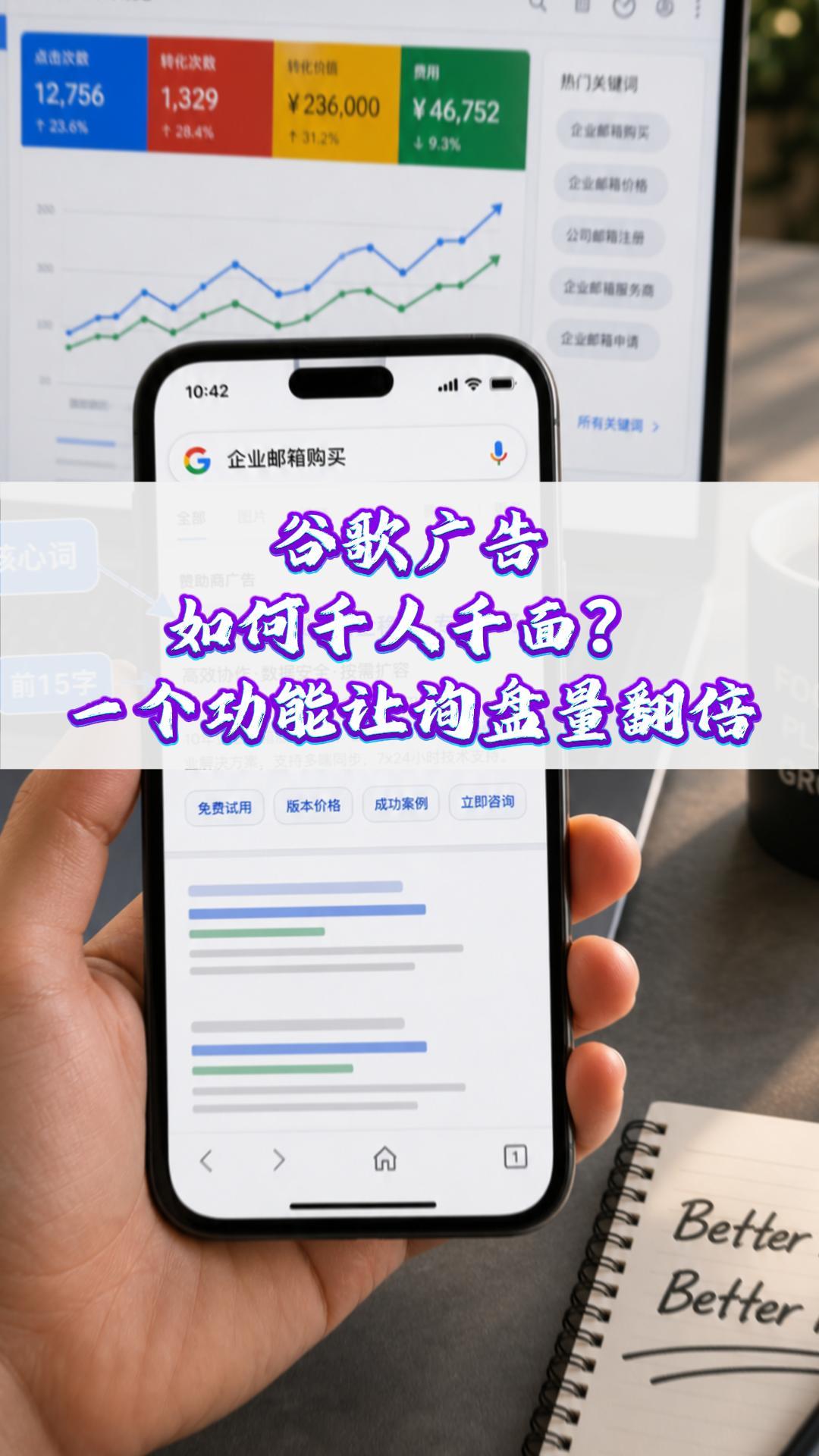
 How can Google Ads deliver one-to-one personalization? One feature can double your inquiry volume#ExportMarketing#OverseasPromotion#GoogleAds#SocialMediaMarketing#ForeignTradeIndependentWebsite
 Why a Google-optimized independent website is essential for trailer exports
 How Can a Brand Updates Page Be Made More SEO-Friendly? Analysis of Update Frequency, Content Structure, and Internal Linking Strategy

Related Products
 EasyCamp SaaS Smart Website Marketing SystemE-Yingbao SaaS Smart Website Marketing System: AI-powered, zero-code website building. Rapidly launch multilingual independent e-commerce sites in just 10 minutes. Global server acceleration and AI-driven SEO optimization empower businesses to efficiently connect with global markets. The seamless integration of technology and user-friendly operation makes building e-commerce sites incredibly simple.
 AI+SEM Intelligent Advertising Marketing SystemAI+SEM drives intelligent ad creation, empowering full-funnel precision advertising marketing. The system automatically generates weekly/monthly reports, AI recommends keywords and target countries, monitors core metrics in real-time with intelligent alerts, and enables one-click high-conversion ad solutions to help quickly acquire customers and improve ROI.
 AI+SEO Dual Engine Optimization ServiceEasyWin AI+SEO Dual Engine Optimization System leverages AI-powered keyword mining, content generation, and comprehensive technical optimization to help foreign trade enterprises acquire high-quality organic traffic, significantly improving search rankings and conversion rates.
 AI+SNS Social Media Marketing SystemYingbao AI+SNS Social Media Marketing System - Precision social capture for the social media era. Supports one-click content synchronization across major platforms like Facebook and LinkedIn. AI intelligently rewrites posts for enhanced relevance. 24/7 AI customer service and user profiling analysis empower businesses to efficiently expand into global markets.
 AI+SEO营销解决方案易营宝AI+SEO营销解决方案,通过AI批量写作、智能生成TDK、精准关键词扩词等功能,全面优化网站SEO效果,提升流量与转化率。助力企业构建高效智能网站新生态。
 AI+SEM Advertising Marketing SolutionsAI+SEM Advertising Marketing Solution leverages AI technology to deeply empower SEM ad campaigns. It automatically generates weekly/monthly reports using AI, presenting account data across multiple dimensions for comprehensive insights into campaign performance and trends. The system precisely recommends keywords and target countries, intelligently generates high-conversion ad copy, and enables one-click activation of efficient campaign plans to help businesses rapidly acquire customers. Simultaneously, it monitors core metrics in real time, intelligently identifies abnormal fluctuations, and issues timely alerts to ensure stable, high-return advertising results.
 Domain Name ServicesEasyWin provides professional domain name services, including intelligent queries, one-stop registration, brand protection, and full lifecycle management, helping businesses build a digital brand image.
 EasyOperate B2C Cross-Border E-Commerce Platform & Independent WebsiteEasyStore B2C Cross-border E-commerce Independent Store is an intelligent website building and cross-border e-commerce integrated solution independently developed by EasyStore Information Technology (Beijing) Co., Ltd. The system is specially designed for small and medium-sized as well as large export enterprises, integrating 'website building, operation, marketing, advertising, and conversion' into one, helping enterprises quickly establish cross-border e-commerce independent stores to achieve brand globalization and global sales growth.
The platform supports multiple languages, multiple currencies, and multi-channel marketing, with built-in AI intelligent translation and SEO optimization systems, suitable for mainstream markets such as Southeast Asia, Europe and America, Latin America, and the Middle East, assisting Chinese manufacturing enterprises in efficiently deploying international e-commerce strategies. SSL证书易营宝提供专业SSL安全证书服务,包括单域名和泛域名证书,确保网站数据传输加密、身份验证和完整性保护,助力企业建立安全可信的在线业务环境。









