









- How Can a Brand Updates Page Be Made More SEO-Friendly? Analysis of Update Frequency, Content Structure, and Internal Linking StrategyJun 28, 2026View details
- What stages does the cross-border services ecosystem include? How do website building, promotion, payment, and compliance work togetherJun 22, 2026View details
- How will email marketing costs change in 2026Jun 22, 2026View details
- The China-US tariff arrangement has reached a preliminary consensus, and the trade association will be establishedJun 15, 2026View details
- Should overseas brand marketing start with ads or contentJun 21, 2026View details
- What determines B2C cross-border e-commerce website development costs? A breakdown of features, interfaces, and deployment methodsJun 17, 2026View details
- China-Morocco zero-tariff access, a breakthrough in the cost of Moroccan goods exports to ChinaJun 11, 2026View details
- What signal should be released for the suspension of exports to JapanJun 10, 2026View details
Enterprise Self-Service Website Builder Tutorial: Quick Overview of Backend Features
Enterprise Self-Service Website Building System Tutorial: Understand the Backend First, Then Talk About Efficient Maintenance

This "Enterprise Self-Service Website Building System Tutorial" will help you quickly understand the core backend functions and operating logic, enabling after-sales maintenance personnel to complete site management, content updates, and basic optimization more efficiently, thereby improving enterprise website maintenance efficiency and service response capability. For integrated website + marketing service scenarios, the backend is not only a content publishing tool, but also a key hub connecting brand presentation, lead conversion, SEO optimization, and data tracking.
Since its establishment in 2013, E-Marketing Information Technology (Beijing) Co., Ltd. has continuously driven the coordinated implementation of intelligent website building, SEO optimization, social media marketing, and advertising placement with artificial intelligence and big data. For enterprise website operation and maintenance, a mature enterprise self-service website building system tutorial is not just about teaching "how to edit pages", but more importantly about how to use standardized backend operations to make the website stable, scalable, and easy to expand over the long term.
Why Enterprise Website Maintenance Needs Checklist-Based Execution
The low efficiency of many website maintenance operations is not due to system complexity, but rather the lack of a unified sequence for backend operations. If actions such as page updates, section adjustments, form configuration, SEO field completion, and permission assignment do not follow standardized procedures, omissions, incorrect changes, and repeated rework are likely to occur. The reason why an enterprise self-service website building system tutorial is important lies in its ability to organize scattered actions into reusable, transferable, and verifiable execution paths.
Especially under the integrated website + marketing service model, the website backend is no longer just a "content management system", but is also closely related to search rankings, advertising landing pages, social media traffic acquisition, and customer form collection. Checklist-based management helps teams maintain consistency under different business rhythms and reduces exposure loss and conversion loss caused by missing operational details.
Quick Overview of Core Backend Functions: Key Execution Points of the Enterprise Self-Service Website Building System Tutorial
The following enterprise self-service website building system tutorial can serve as a basic framework for daily maintenance, handover training, and site inspection. It is recommended to verify each step in sequence before and after every update to ensure that page performance, search friendliness, and lead capture capability all meet the required standards simultaneously.
- First check whether the basic site settings are complete, including website title, domain binding, language versions, navigation structure, and footer information, to avoid inconsistent brand information after launch.
- When entering the page management module, first confirm whether the homepage, section page, and content page templates match business objectives, ensuring that the display logic is consistent with the marketing conversion path.
- Before updating article or product content, prepare the title, summary, main text, images, and keyword fields in advance to reduce repeated revisions and formatting confusion during backend editing.
- SEO information must be filled in every time content is published, including page title, description, and custom links, to improve the completeness of optimization execution in the enterprise self-service website building system tutorial.
- Check whether the form module includes required fields, submission prompts, contact methods, and source tags to ensure inquiry data enters subsequent sales or customer service workflows completely.
- In carousel image and banner management, focus on verifying dimensions, redirect links, and mobile adaptation to avoid affecting homepage loading speed and the efficiency of delivering core information.
- Permission management must be divided by role, and content editing, review publishing, and data viewing should be configured hierarchically to reduce the risk of accidental deletion or incorrect publishing during multi-person collaboration.
- After completing modifications, check both desktop and mobile display effects simultaneously, paying particular attention to button positions, paragraph spacing, and form usability to avoid interruptions in the conversion path.
- Regularly review traffic data, source channels, and popular pages to determine which sections are worth continuous updates, so that the enterprise self-service website building system tutorial truly serves growth objectives.
- When publishing special-topic content, you may combine it with a resource-style page layout, such as Research on the Optimized Application of the Job Order Costing Method in Cost Accounting of Coal Mining Enterprises and similar information-bearing pages, to strengthen long-tail search coverage.
How to Use Backend Functions in Different Application Scenarios
1. Daily Content Update Scenario
In high-frequency update scenarios such as news, case studies, and product information, the most commonly used backend functions are content management, category archiving, and SEO field configuration. During operation, it is recommended to first confirm the section category, then handle the text format and images, and finally complete the title tag and description information. This not only keeps the frontend tidy, but also helps search engines better identify the topic of the page.
If multiple pieces of content need to be published intensively during the same period, it is recommended to establish unified naming conventions, such as synchronously managing publication time, business topic, and target keywords. In this way, when executing the enterprise self-service website building system tutorial, subsequent search, batch adjustment, and performance review will all become more efficient.
2. Marketing Campaign Landing Page Scenario
For pages used in advertising placement, search promotion, or social media traffic acquisition, the focus is not on "more content", but on a "shorter path". The backend should prioritize the use of campaign page templates, simplify navigation distractions, highlight form entry points, and separately configure button copy, inquiry methods, and conversion components.
After such pages are published, special attention should be paid to checking loading speed, the first-screen mobile visual effect, and source parameter recording. If a campaign page cannot accurately distinguish traffic sources, then no matter how well the content is designed, it will still be difficult to form an effective basis for later advertising optimization.
3. Multilingual or Multi-Region Website Scenario
When an enterprise targets different markets, the backend needs to focus on language version switching, independent page optimization, and localized content management. A multilingual website is not simply about duplicating pages, but requires separate configuration according to local user search habits, contact methods, and service priorities.
In this scenario, the enterprise self-service website building system tutorial should additionally include version synchronization checks, such as whether the same product page has been updated in all versions, whether there are broken links, and whether the contact entry corresponds to the local business, so as to prevent information deviation in cross-regional maintenance.
Common Overlooked Items and Risk Reminders
First, many people only modify visible frontend content while neglecting basic optimization fields such as page titles, descriptions, and image alt text. This will directly weaken the SEO value in the enterprise self-service website building system tutorial, resulting in content updates that fail to bring new traffic.
Second, a form being displayed does not mean it is usable. Whether submissions reach the designated mailbox, whether they enter the CRM, and whether there are abnormalities in spam filtering all need real testing and cannot be judged solely by the interface.
Third, if there are no clear permission boundaries when multiple people share the backend, accidental overwriting is likely to occur. Especially for high-impact modules such as the homepage, navigation, and campaign pages, an approval process and update records must be retained.
Fourth, resource-style pages, case study pages, and special-topic content are often left unmaintained after going live. For pages like Research on the Optimized Application of the Job Order Costing Method in Cost Accounting of Coal Mining Enterprises, if descriptions, related sections, or recommendation positions are not updated for a long time, it will also affect the overall content activity within the site.
Practical Execution Recommendations: Turn Backend Maintenance into Routine Actions
- Establish a weekly inspection mechanism, regularly checking the homepage, forms, core sections, mobile display, and SEO fields to avoid issues accumulating until a concentrated rework stage.
- Create standard publishing templates for different sections, including title structure, summary length, image dimensions, and keyword placement, to improve consistency in multi-person collaboration.
- Internalize the enterprise self-service website building system tutorial into transferable documentation, so that new staff can also quickly understand the backend logic and operation sequence.
- Incorporate data feedback into the maintenance process, and regularly adjust section priorities based on traffic, bounce rate, and conversion data instead of performing only mechanical updates.
For integrated website + marketing service businesses, truly efficient site maintenance does not treat the backend as a simple editor, but as an operational platform connecting content, traffic, and conversions. The long-term experience of E-Marketing Information Technology (Beijing) Co., Ltd. in serving more than 100,000 enterprises also shows that the clearer the standardized backend process is, the more stable the website's response speed, optimization effectiveness, and business conversion capability will be.
Summary and Recommended Next Steps
If you are organizing your website maintenance process, this enterprise self-service website building system tutorial can directly serve as the starting point for a backend operation quick reference. It is recommended to first create checklists item by item for the 7 areas of "site settings, page management, content publishing, SEO configuration, form testing, permission assignment, and data review", and then supplement them with rules for special-topic pages, campaign pages, and multilingual websites according to your business rhythm.
Once backend maintenance actions are clearly broken down, the website will no longer be just a display window, but will gradually become an important infrastructure for continuously acquiring traffic, accumulating content assets, and improving lead conversion. Continuous execution and regular review are the key step to truly realizing the value of the enterprise self-service website building system tutorial.
Related Articles
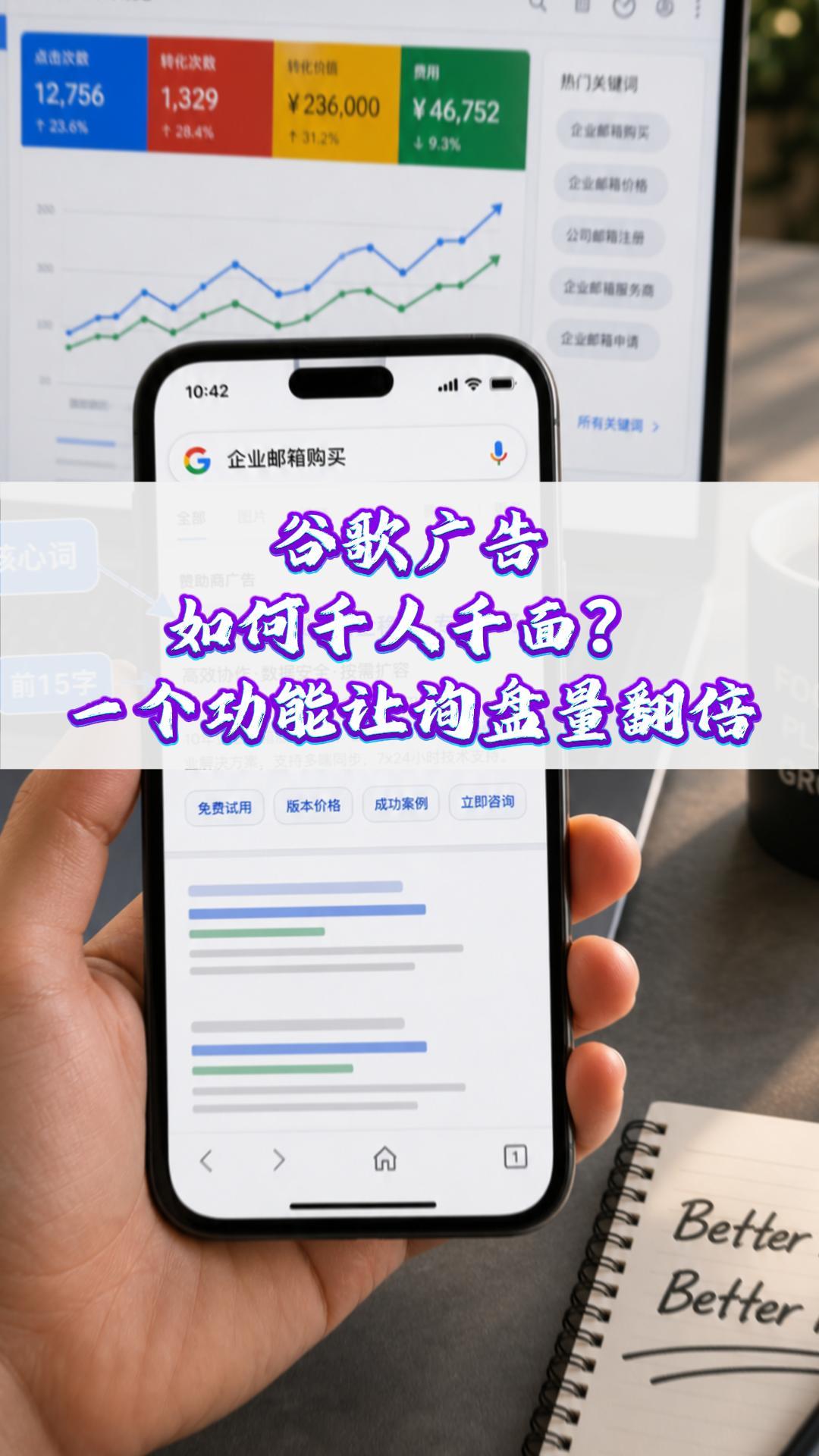
 How can Google Ads deliver one-to-one personalization? One feature can double your inquiry volume#ExportMarketing#OverseasPromotion#GoogleAds#SocialMediaMarketing#ForeignTradeIndependentWebsite
 Why a Google-optimized independent website is essential for trailer exports
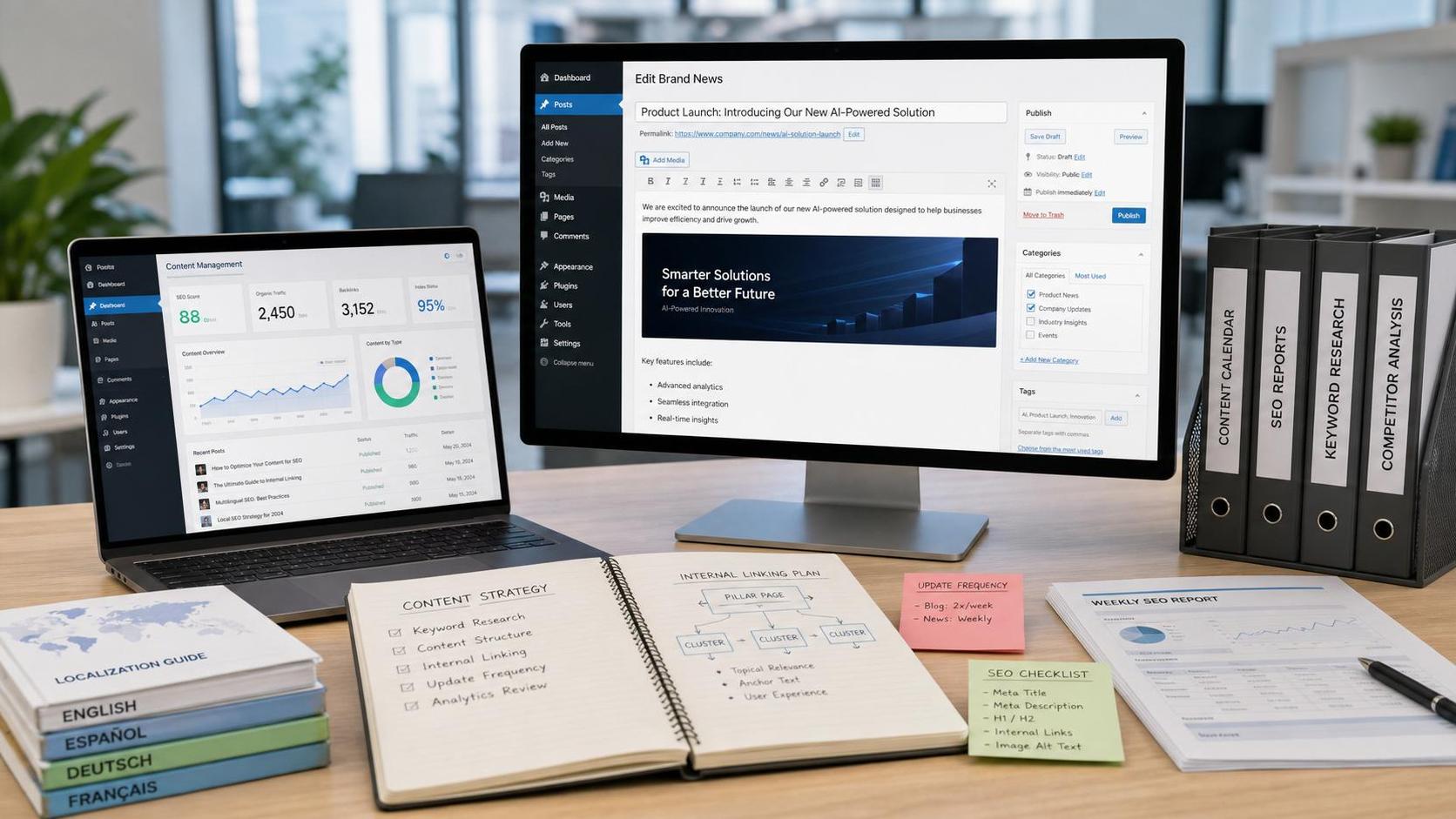
 How Can a Brand Updates Page Be Made More SEO-Friendly? Analysis of Update Frequency, Content Structure, and Internal Linking Strategy

Related Products
 EasyCamp SaaS Smart Website Marketing SystemE-Yingbao SaaS Smart Website Marketing System: AI-powered, zero-code website building. Rapidly launch multilingual independent e-commerce sites in just 10 minutes. Global server acceleration and AI-driven SEO optimization empower businesses to efficiently connect with global markets. The seamless integration of technology and user-friendly operation makes building e-commerce sites incredibly simple.
 AI+SEM Intelligent Advertising Marketing SystemAI+SEM drives intelligent ad creation, empowering full-funnel precision advertising marketing. The system automatically generates weekly/monthly reports, AI recommends keywords and target countries, monitors core metrics in real-time with intelligent alerts, and enables one-click high-conversion ad solutions to help quickly acquire customers and improve ROI.
 AI+SEO Dual Engine Optimization ServiceEasyWin AI+SEO Dual Engine Optimization System leverages AI-powered keyword mining, content generation, and comprehensive technical optimization to help foreign trade enterprises acquire high-quality organic traffic, significantly improving search rankings and conversion rates.
 AI+SNS Social Media Marketing SystemYingbao AI+SNS Social Media Marketing System - Precision social capture for the social media era. Supports one-click content synchronization across major platforms like Facebook and LinkedIn. AI intelligently rewrites posts for enhanced relevance. 24/7 AI customer service and user profiling analysis empower businesses to efficiently expand into global markets.
 AI+SEO营销解决方案易营宝AI+SEO营销解决方案,通过AI批量写作、智能生成TDK、精准关键词扩词等功能,全面优化网站SEO效果,提升流量与转化率。助力企业构建高效智能网站新生态。
 AI+SEM Advertising Marketing SolutionsAI+SEM Advertising Marketing Solution leverages AI technology to deeply empower SEM ad campaigns. It automatically generates weekly/monthly reports using AI, presenting account data across multiple dimensions for comprehensive insights into campaign performance and trends. The system precisely recommends keywords and target countries, intelligently generates high-conversion ad copy, and enables one-click activation of efficient campaign plans to help businesses rapidly acquire customers. Simultaneously, it monitors core metrics in real time, intelligently identifies abnormal fluctuations, and issues timely alerts to ensure stable, high-return advertising results.
 Domain Name ServicesEasyWin provides professional domain name services, including intelligent queries, one-stop registration, brand protection, and full lifecycle management, helping businesses build a digital brand image.
 EasyOperate B2C Cross-Border E-Commerce Platform & Independent WebsiteEasyStore B2C Cross-border E-commerce Independent Store is an intelligent website building and cross-border e-commerce integrated solution independently developed by EasyStore Information Technology (Beijing) Co., Ltd. The system is specially designed for small and medium-sized as well as large export enterprises, integrating 'website building, operation, marketing, advertising, and conversion' into one, helping enterprises quickly establish cross-border e-commerce independent stores to achieve brand globalization and global sales growth.
The platform supports multiple languages, multiple currencies, and multi-channel marketing, with built-in AI intelligent translation and SEO optimization systems, suitable for mainstream markets such as Southeast Asia, Europe and America, Latin America, and the Middle East, assisting Chinese manufacturing enterprises in efficiently deploying international e-commerce strategies. SSL证书易营宝提供专业SSL安全证书服务,包括单域名和泛域名证书,确保网站数据传输加密、身份验证和完整性保护,助力企业建立安全可信的在线业务环境。









