









- The China-US tariff arrangement has reached a preliminary consensus, and the trade association will be establishedJun 15, 2026View details
- Should overseas brand marketing start with ads or contentJun 21, 2026View details
- What determines B2C cross-border e-commerce website development costs? A breakdown of features, interfaces, and deployment methodsJun 17, 2026View details
- China-Morocco zero-tariff access, a breakthrough in the cost of Moroccan goods exports to ChinaJun 11, 2026View details
- What signal should be released for the suspension of exports to JapanJun 10, 2026View details
- China's May LNG imports rebounded, with increased volumes from Russia and Canada filling the Middle East supply gapJun 10, 2026View details
Project Management Perspective: How long does it usually take for a foreign trade independent website to go live? How to compress the delivery cycle
Project Management Perspective: How Long Does It Typically Take for a Foreign Trade Independent Website to Go Live? This article outlines the construction timeline, key pathways, and practical strategies for compressing delivery periods, serving as a reference for decision-makers and project managers. As a project manager or technical evaluator, your concerns extend beyond just "launch time" to include launch quality, international compliance, SEO foundations, operational maintenance, and long-term growth pathways. Combining practical delivery routes, common bottlenecks, and actionable compression methods, this article provides multi-stakeholder insights for users, after-sales teams, and distributors, helping teams assess reasonable expectations for "how long a foreign trade independent website typically takes to go live" and formulate executable project plans.
Definition and Overview: Why Build an Independent Website and Its Core Functions
By definition, a foreign trade independent website is an enterprise-owned sales and branding platform built on proprietary domains and servers, emphasizing full ownership, controllability, and long-term traffic assets. Core functionalities typically include multilingual support, SEO-friendly architecture, product catalog and SKU management, international payment and settlement, logistics and customs information display, user privacy and compliance modules, and performance optimization with CDN acceleration. For decision-makers and technical evaluators, key assessment points focus on scalability, security, SEO infrastructure, and localization capabilities. If you're considering "Is an independent website suitable for B2B foreign trade?" the answer is generally yes, but launch strategies and feature priorities should align with business models (direct B2B sales, distribution, or hybrid).
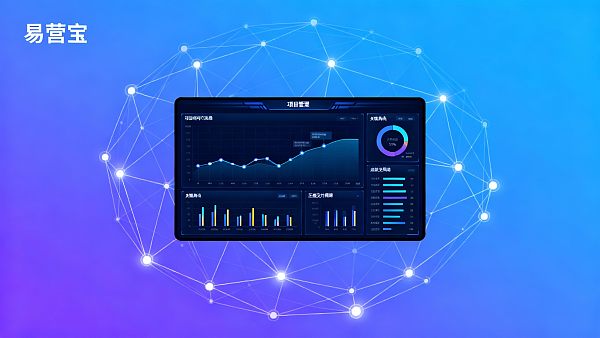
Industry Background and Construction Timeline Estimation (Market Overview + Key Pathways)
With global digital procurement and cross-border e-commerce continuing to grow, independent websites have become essential for long-term brand growth. A realistic project timeline typically breaks down into phases: requirements and solution confirmation (1-2 weeks), UI/multilingual information architecture and design (1-2 weeks), frontend/backend development and integration (2-4 weeks), content population and TDK/SEO preparation (1-2 weeks), testing (compatibility, performance, security, compliance) (1 week), and launch preparation and deployment (0.5-1 week). For SMEs, a standard MVP launch typically takes 6-10 weeks, while complex customizations or multi-system integrations may extend beyond 12 weeks. To facilitate project management, below is a typical MVP timeline comparison table, allowing project owners to quickly identify compression opportunities and risk points.
Technical Performance and Executable Strategies for Compressed Delivery (Technical Performance)
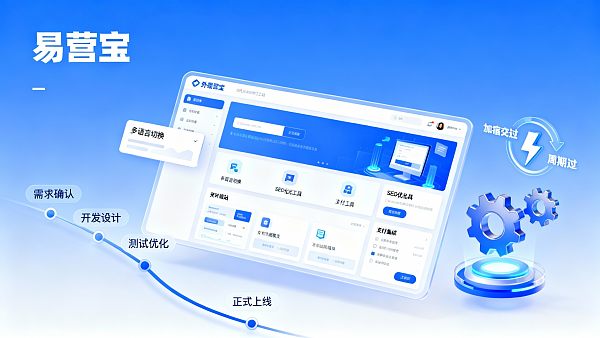
Technical performance is key to compressing delivery cycles. Priority measures include using mature templates and reusable components, predefined multilingual solutions, automated deployment pipelines, and global CDN with disaster recovery nodes. Leveraging EasyTrade's capabilities can further accelerate: EasyTrade Information Technology (Beijing), founded in 2013 with headquarters in Beijing, is a global digital marketing service provider driven by AI and big data. With a decade of industry expertise, the company combines "technological innovation + localized services" to deliver end-to-end solutions covering smart website building, SEO optimization, social media marketing, and ad placements, assisting over 100,000 enterprises in achieving global growth. Its smart website system supports multilingual, full-scenario, high-conversion features, with built-in AI translation engines and automated TDK generation, compressing content preparation time to days. Technically, AWS and Alibaba Cloud CDN deployments can improve page load speeds by ~40%, while built-in security policies and automated SSL mechanisms reduce launch bottlenecks. For enterprise network upgrades and long-term security, adopting evolving internet protocols (e.g., upgrading to IPv6) enhances address space and built-in security for cross-border traffic stability and end-to-end encryption.
Procurement Guide, Case Studies, and FAQs (Procurement Guide / Case Studies / FAQ)
Common procurement questions include "Are foreign trade independent websites expensive to build?" and "How do independent websites acquire customers?" Costs depend on functional complexity, third-party integrations (payment, ERP, logistics), custom design, and content volume. Alternatives include marketplace stores or marketing tools, which have shorter cycles but limited traffic control and brand presentation, whereas independent websites offer better long-term ROI. Project managers can employ these compression strategies: 1) Define MVP scope, prioritizing core features; 2) Use AI for initial content drafts, validated by local teams; 3) Parallelize testing and content population; 4) Adopt modular contracts with phased acceptance. In one success case, a mid-sized manufacturer using smart templates and AI keyword expansion reduced the MVP launch to 7 weeks, with significant overseas traffic growth. Common mistakes include launching all features at once and neglecting multilingual SEO data structuring. For "How do independent websites differ from marketplace stores?" and "How to build a foreign trade independent website?", decision-makers should prioritize long-term traffic assets and scalability, adopting phased investments to mitigate risks. Why choose us? EasyTrade leverages proprietary AI algorithms, global CDN, and Google Premier Partner/Meta agency credentials to provide end-to-end support from website building to customer acquisition, ensuring quality while compressing delivery cycles. Contact us for customized launch plans and quotes tailored to your business scenarios.
- Social Media Marketing
- Foreign Trade Independent Website Development
- Standalone website development
- Yiyingbao
- SEO
- Independent Website
- Smart website builder system
- SEO Optimization
- Smart Website Building
- AI Translation
- Multilingual SEO
- AI Translation Engine
- Independent foreign trade website
- Global Digital Marketing
- cross-border e-commerce
- What is the difference between an independent foreign trade website and a platform store?
- How to build a foreign trade independent station?
- How long does it usually take for a foreign trade independent website to go online?
- Is the cost of building an independent foreign trade website high?
- How can a foreign trade independent website acquire customers?
- Is a standalone website suitable for B2B foreign trade?
Related Articles
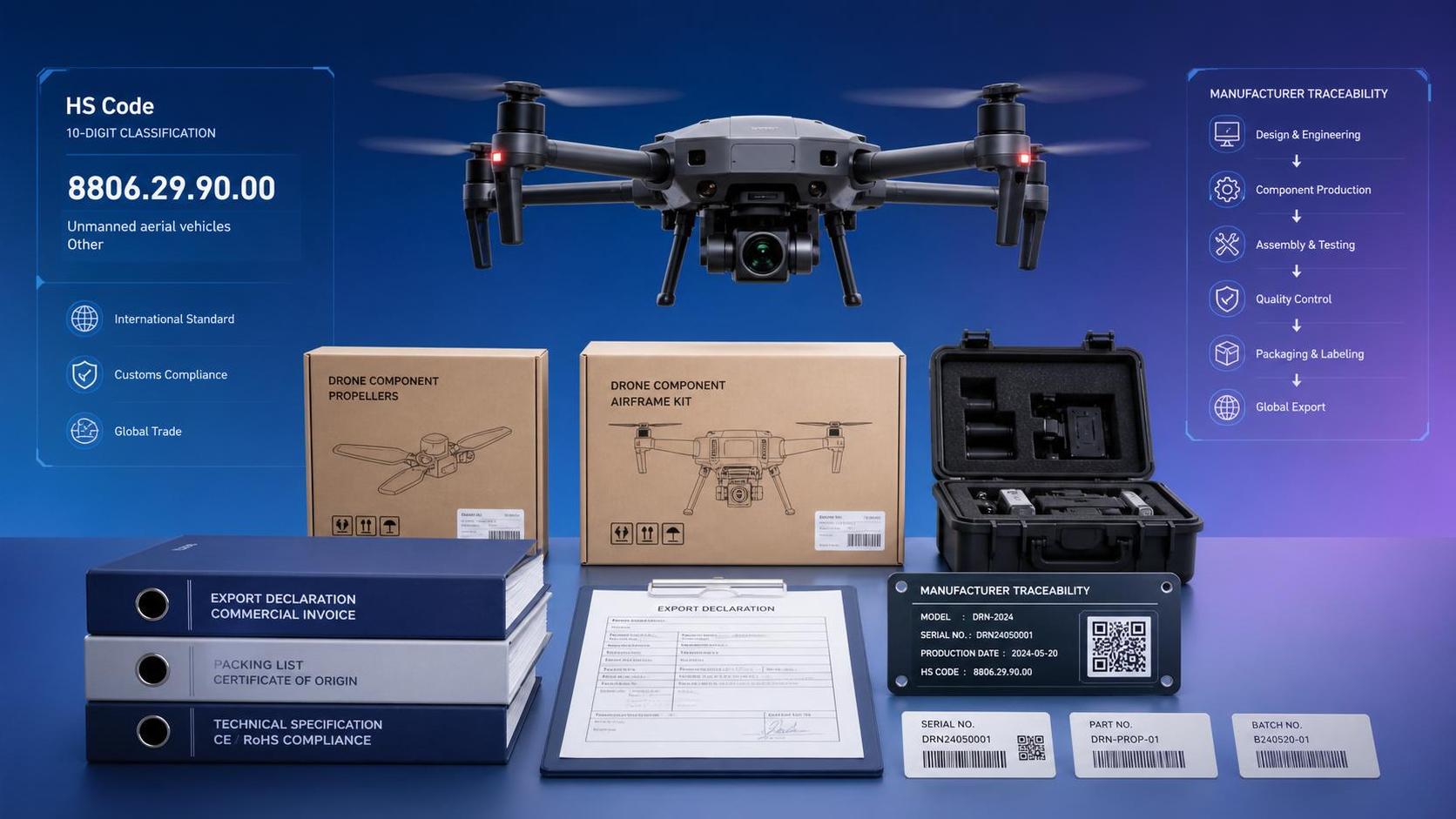
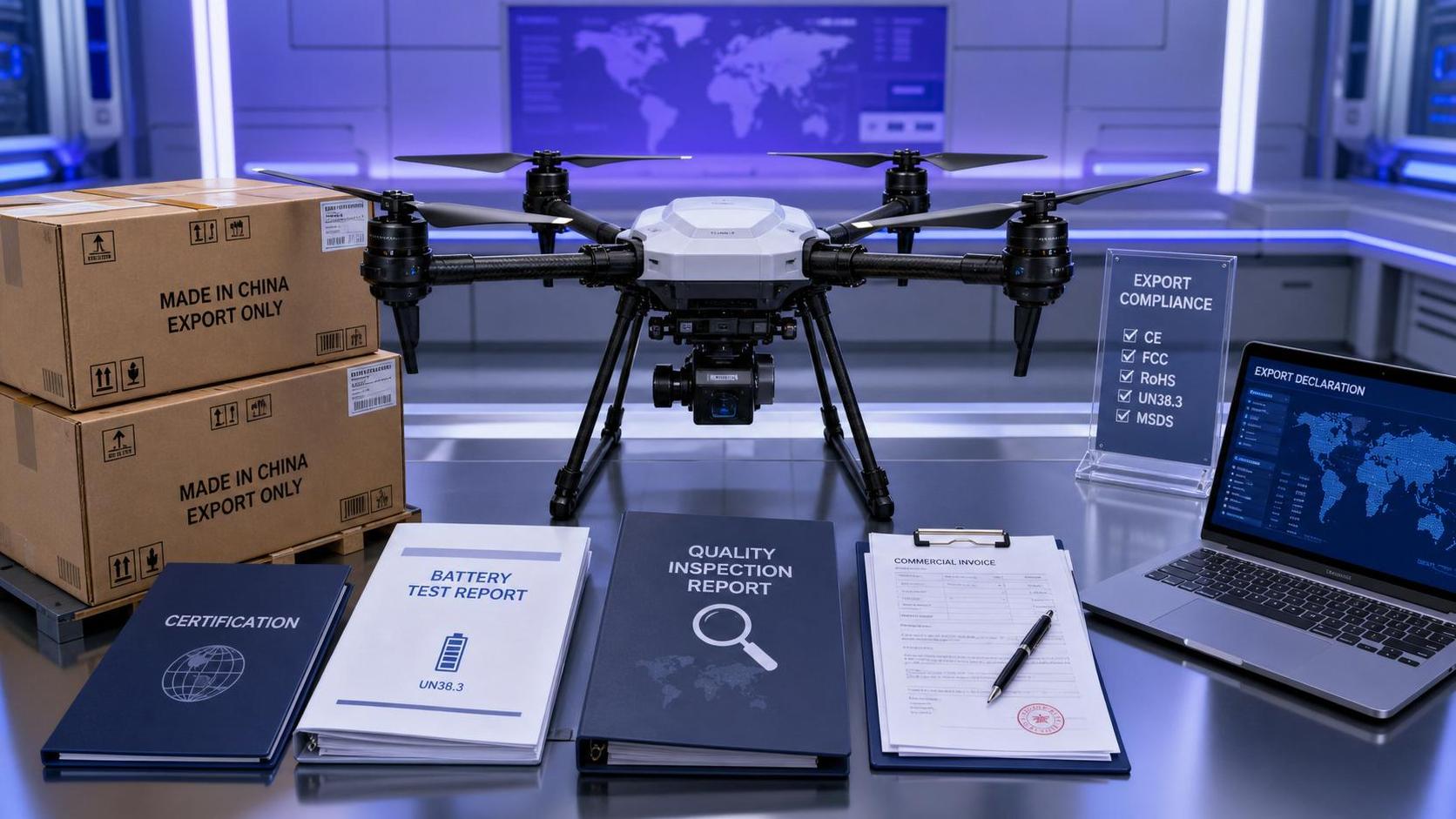
 Urgent customs declaration for drone exports starting June 30: 10-digit HS code and domestic manufacturer information required
 Drone export declaration tightening: 5 new required items effective June 30
 What Should You Pay Attention to in SaaS Website Security? A Complete Guide to Permissions, Backups, WAF, and Plugin Risks

Related Products
 EasyCamp SaaS Smart Website Marketing SystemE-Yingbao SaaS Smart Website Marketing System: AI-powered, zero-code website building. Rapidly launch multilingual independent e-commerce sites in just 10 minutes. Global server acceleration and AI-driven SEO optimization empower businesses to efficiently connect with global markets. The seamless integration of technology and user-friendly operation makes building e-commerce sites incredibly simple.
 AI+SEM Intelligent Advertising Marketing SystemAI+SEM drives intelligent ad creation, empowering full-funnel precision advertising marketing. The system automatically generates weekly/monthly reports, AI recommends keywords and target countries, monitors core metrics in real-time with intelligent alerts, and enables one-click high-conversion ad solutions to help quickly acquire customers and improve ROI.
 AI+SEO Dual Engine Optimization ServiceEasyWin AI+SEO Dual Engine Optimization System leverages AI-powered keyword mining, content generation, and comprehensive technical optimization to help foreign trade enterprises acquire high-quality organic traffic, significantly improving search rankings and conversion rates.
 AI+SNS Social Media Marketing SystemYingbao AI+SNS Social Media Marketing System - Precision social capture for the social media era. Supports one-click content synchronization across major platforms like Facebook and LinkedIn. AI intelligently rewrites posts for enhanced relevance. 24/7 AI customer service and user profiling analysis empower businesses to efficiently expand into global markets.
 AI+SEO营销解决方案易营宝AI+SEO营销解决方案,通过AI批量写作、智能生成TDK、精准关键词扩词等功能,全面优化网站SEO效果,提升流量与转化率。助力企业构建高效智能网站新生态。
 AI+SEM Advertising Marketing SolutionsAI+SEM Advertising Marketing Solution leverages AI technology to deeply empower SEM ad campaigns. It automatically generates weekly/monthly reports using AI, presenting account data across multiple dimensions for comprehensive insights into campaign performance and trends. The system precisely recommends keywords and target countries, intelligently generates high-conversion ad copy, and enables one-click activation of efficient campaign plans to help businesses rapidly acquire customers. Simultaneously, it monitors core metrics in real time, intelligently identifies abnormal fluctuations, and issues timely alerts to ensure stable, high-return advertising results.
 Domain Name ServicesEasyWin provides professional domain name services, including intelligent queries, one-stop registration, brand protection, and full lifecycle management, helping businesses build a digital brand image.
 EasyOperate B2C Cross-Border E-Commerce Platform & Independent WebsiteEasyStore B2C Cross-border E-commerce Independent Store is an intelligent website building and cross-border e-commerce integrated solution independently developed by EasyStore Information Technology (Beijing) Co., Ltd. The system is specially designed for small and medium-sized as well as large export enterprises, integrating 'website building, operation, marketing, advertising, and conversion' into one, helping enterprises quickly establish cross-border e-commerce independent stores to achieve brand globalization and global sales growth.
The platform supports multiple languages, multiple currencies, and multi-channel marketing, with built-in AI intelligent translation and SEO optimization systems, suitable for mainstream markets such as Southeast Asia, Europe and America, Latin America, and the Middle East, assisting Chinese manufacturing enterprises in efficiently deploying international e-commerce strategies. SSL证书易营宝提供专业SSL安全证书服务,包括单域名和泛域名证书,确保网站数据传输加密、身份验证和完整性保护,助力企业建立安全可信的在线业务环境。









