









- What Does a Global Traffic Ecosystem Service Provider Do? What Are the Differences from a Single Advertising AgencyJul 16, 2026View details
- What should you focus on in the latest enterprise SaaS report? From renewal rates and delivery costs to overseas growth opportunitiesJul 12, 2026View details
- What signals are worth paying attention to in a cross-border marketing trend report? B2B companies should look at these 6 signalsJul 11, 2026View details
- How to Read a Cross-Border Marketing Trends Report? Five Key Dimensions for Evaluating Channel OpportunitiesJul 11, 2026View details
- Which channel has the highest ROI in the global traffic ecosystem? Comparative analysis of search, social media, and advertisingJul 10, 2026View details
- What multilingual website services are available in Sanya? Which model is more suitable for local businesses going global?Jul 08, 2026View details
- How to view the complete list of China SaaS companies in the top 100? Practical methods for screening website-building and marketing service providersJul 08, 2026View details
- How to view pricing in the global traffic ecosystem? Cost comparison of search, social media, and content channel advertisingJul 06, 2026View details
How can you tell the professional level from website design case studies?
When many people look at website design case studies, their first reaction is whether it “looks good.” But if you truly want to judge whether a service provider is professional, especially in an integrated website + marketing service scenario, visual appeal alone is far from enough. A professional website design case study should simultaneously demonstrate a clear information architecture, a defined conversion path, a strong multi-device experience, practical search engine optimization service capabilities, and multilingual website-building capabilities for different markets. In other words, a case study is not a “portfolio,” but an outward reflection of a company’s growth capabilities.
For business decision-makers, the core issue is usually not “whether the page looks good,” but “whether this website can help me acquire customers, drive conversions, and build brand assets”; for users and operations teams, the bigger concern is “whether it will be easy to maintain later, whether SEO can be effectively implemented, and whether the site can handle traffic after campaigns go live.” Therefore, the website design case studies truly worth reviewing are not about flashy techniques, but about whether they can prove a balance among brand presentation, user experience, search performance, and business conversion.
Conclusion first: the key to a professional website design case study is not visual impact, but business results
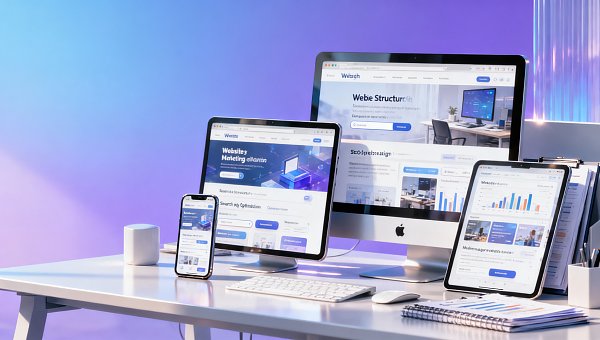
To judge whether a website design case study is professional, you can first focus on one principle: any case study that only showcases homepage banners, color schemes, and animations, yet fails to reveal business logic, page hierarchy, content delivery methods, and conversion paths, usually has limited reference value.
Truly professional case studies often reveal their quality in the following aspects:
- whether the design is centered on target users rather than only the designer’s aesthetic preferences;
- whether there is clear content organization and navigation logic so visitors can quickly find the information they need;
- whether it takes into account search engine crawling, keyword layout, and landing page expansion, reflecting the capabilities of a website SEO optimization company;
- whether it considers conversion details such as mobile experience, loading speed, form submission, and online inquiry;
- whether it has multilingual website-building capabilities, especially for global business or cross-border expansion;
- whether it can support subsequent promotional traffic instead of being “left there after launch.”
If a case study shows a complete line of thinking across all these dimensions, then it is most likely not just a “design work,” but a marketing asset that can be operated sustainably.
When reviewing website design case studies, which 6 professional dimensions should companies focus on most?
Many target readers often lack a practical set of evaluation criteria when screening website-building service providers. The following 6 dimensions can basically help you quickly identify whether a team is truly professional or only good at surface-level packaging.
1. Instead of looking at the homepage, check whether the information architecture is clear
One of the core characteristics of a professional case study is a very clear information architecture. After entering the website, visitors should be able to quickly understand what the company does, whom it serves, what its advantages are, and where they should click next. The navigation bar, content hierarchy, and page logic should all serve user understanding and conversion.
If a case study looks high-end visually, but its page structure is chaotic, section names are vague, and important information is buried too deeply, then even if such a website looks good, it will still be difficult to generate real business value.
2. Instead of looking at pages, check whether there is a “conversion path”
Professional website design case studies almost always include clear conversion design, for example:
- whether key pages have inquiry entry points, phone numbers, forms, WhatsApp, or online customer service;
- whether product pages have clear selling points, specifications, application scenarios, and call-to-action buttons;
- whether case study pages can guide users to further understand services or book a consultation;
- whether different pages undertake different conversion tasks rather than all pages serving only as displays.
If every page in a case study is just “a large image + one sentence” and there is no support for inquiries, lead capture, or transactions, then it is more like a design showcase site than a marketing-oriented website.
3. In addition to design style, check whether it matches the industry and audience
Website design is not better the more “high-end” it is; it is more professional the more “suitable” it is. Industrial manufacturing, B2B foreign trade, educational services, consumer retail, and branded e-commerce all face completely different customers, and therefore have different requirements for page language, content depth, and methods of building trust.
Professional case studies usually reflect industry understanding, for example:
- B2B companies place more emphasis on qualifications, case studies, solution capabilities, and inquiry conversion;
- consumer brands pay more attention to brand feel, purchase paths, and interactive experience;
- global businesses place more emphasis on multilingual website building, localized expression, and cross-region access experience.
If a service provider applies the same template style to all industries, then its level of professionalism usually needs to be discounted.
4. Beyond “looking good,” check whether the SEO foundation is solid
This is one of the points most easily overlooked by many companies, yet it has the greatest impact on long-term results. Whether a website design case study is professional depends to a large extent on whether it has a strong SEO foundation. Because if a website ignores the need for search engine optimization services during the design phase, fixing it later will cost more and deliver more limited results.
You can focus on these signals:
- whether there is a clear site structure that facilitates keyword layout;
- whether it supports content expansion through independent product pages, service pages, case study pages, news pages, etc.;
- whether the URL structure is standardized;
- whether titles, descriptions, image Alt text, and internal linking logic are optimization-friendly;
- whether the pages avoid large amounts of image-only or overly script-heavy design that is unfavorable for crawling;
- whether page loading speed and mobile experience are taken into account.
If a case study can only serve as a “display” but does not support subsequent SEO operations, then its long-term traffic value will be very limited for a company.
5. Check whether there is multilingual website-building capability, rather than just simple translated pages
For companies pursuing global growth, distributor-based businesses, and cross-border business teams, multilingual website building is no longer a bonus, but a basic capability. In professional case studies, a multilingual site is not simply about translating a Chinese page into English, but about considering the expression habits, page structure, keyword strategy, and compliance requirements of different markets.
For example, for the same product page aimed at domestic customers and overseas customers, the content focus, certificate display, communication entry points, and CTA design may all be different. Truly professional service providers integrate multilingual website building with localized marketing rather than stopping at the level of merely “switchable languages.”
6. Check whether there are operational and technical support capabilities behind the case study
After a website goes live, whether it can steadily support marketing campaigns, content distribution, and traffic growth is also critical. Especially in scenarios such as major e-commerce promotions, media exposure, or global advertising campaigns, if a website is slow to access, traffic costs are uncontrollable, and monitoring is not timely, then even excellent front-end design will still affect conversions.
Some mature teams plan website development together with subsequent traffic-handling capabilities, for example by combining cloud resources, monitoring, automation interfaces, and data analysis tools to improve overall operational efficiency. For companies that need to control bandwidth and access costs, solutions such as website traffic packages can help lock in traffic costs more steadily during business peak periods, while also working with real-time monitoring and BI data analysis, making them more suitable for long-term operational websites.
Why are many case studies that “look pretty good” not actually professional?
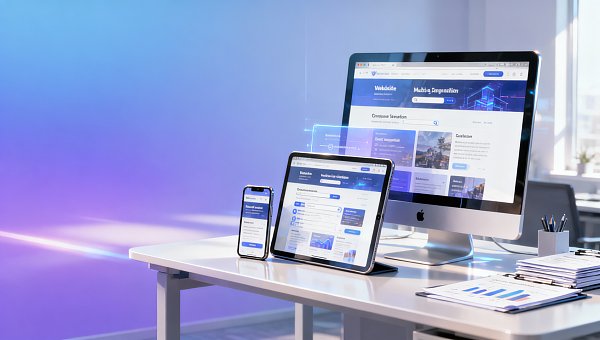
This is because many case studies only satisfy the need to “show the client,” but fail to meet the needs of “actually being used by users, crawled by search engines, and driving business conversions.”
Common problems include:
- focusing only on homepage design while neglecting inner-page logic, resulting in very rough deep-level pages;
- having lots of animation and large images, but slow loading speed and poor mobile experience;
- having empty and vague page copy that does not address users’ decision-making questions;
- having no SEO structure, leaving almost no starting point for later content optimization;
- having multilingual pages that are only machine-translated and lack localization;
- having a backend that is difficult to maintain, making it hard for the operations team to update content quickly.
Therefore, when companies review website design case studies, they must shift from a perspective of “surface aesthetics” to one of “business practicality.” Especially for business decision-makers, the key is to determine whether this case study can truly be replicated in their own business scenario, rather than being misled by demo effects.
Different roles view website case studies with different priorities
The reason many project communications are inefficient is that different roles focus on different points. If you can evaluate case studies by role, your judgment will be more accurate.
What do business decision-makers care about?
- whether this website can generate inquiries, leads, and brand uplift;
- whether the input-output ratio is reasonable and whether it can be operated sustainably later;
- whether the service provider understands marketing rather than only design;
- whether it supports future business expansion, such as multilingual website building, SEO, and paid advertising integration.
What do operations and execution staff care about?
- whether the backend is easy to use and whether content updates are convenient;
- whether the content structure supports continuous publishing;
- whether it is convenient for SEO optimization, landing page building, and data tracking;
- whether page revamps and new feature additions are flexible.
What do distributors, agents, or channel partners care about?
- whether the website helps establish brand trust;
- whether product information is complete and convenient for promotion and forwarding;
- whether there are corresponding language and content versions for different regional markets;
- whether the official website can serve as a support tool for channel expansion and customer communication.
What do end consumers care about?
- whether the website is trustworthy, easy to use, and fast to open;
- whether they can quickly find products, prices, services, and contact methods;
- whether the mobile browsing experience is smooth;
- whether the page content is authentic and helpful rather than empty promotion.
A truly professional website design case study should be able to strike a balance among the concerns of these different roles, rather than only satisfying one level of “looking good.”
When companies evaluate a website SEO optimization company, how should they use case studies to ask questions?
If you are already reviewing service provider case studies, the most effective approach is not passive browsing, but active questioning. The following questions are highly valuable:
- What type of customer did this case study serve? What was the business objective at the time?
- After the website went live, which conversion points were mainly optimized?
- Were search engine optimization services considered at the same time? What specific structural support was provided?
- How was localized content handled in the multilingual versions?
- Who maintains the backend? Is it convenient for the client to update content on their own?
- If paid advertising, content marketing, or high-concurrency traffic are added later, how will this be technically supported?
When the other party can answer “why it was designed this way, what results this design delivered, and how growth will continue afterward,” then what you are seeing is professional capability. But if the other party can only say “our style is very international and very high-end,” then you need to further verify their real execution capabilities.
For companies that need long-term marketing growth, a website is not a one-time deliverable, but the infrastructure of continuous business operations. Especially when a company is involved in media content distribution, cross-border expansion, or periodic traffic peaks, in addition to the page design itself, attention must also be paid to whether subsequent traffic capacity, cost management, and alert mechanisms are well established. Evaluating design, SEO, traffic acquisition support, and resource allocation together is what gets closer to real business results.
Summary: when reviewing website design case studies, what really matters is “growth capability,” not “display effect”
Back to the original question: how can you tell whether a website design case study is professional? The answer is very clear——you cannot look only at visuals; you must see whether it simultaneously has user experience, conversion logic, SEO foundation, multilingual website-building capability, and sustained operational support capability.
If a case study is only beautiful, then it only shows that the design presentation is acceptable; if it is both attractive and able to help a company build its brand, acquire traffic, capture inquiries, support search optimization, and expand global business, then that is a truly professional website case study.
For companies choosing a website SEO optimization company, what deserves the most attention is not “how many beautiful websites the other party has made,” but “whether the other party has the ability to turn a website into a long-term, growth-driven marketing hub.” When you learn to evaluate case studies based on business value and practical operational standards, it becomes much easier to identify truly reliable partners.
Related Articles


Related Products
 EasyCamp SaaS Smart Website Marketing SystemE-Yingbao SaaS Smart Website Marketing System: AI-powered, zero-code website building. Rapidly launch multilingual independent e-commerce sites in just 10 minutes. Global server acceleration and AI-driven SEO optimization empower businesses to efficiently connect with global markets. The seamless integration of technology and user-friendly operation makes building e-commerce sites incredibly simple.
 AI+SEM Intelligent Advertising Marketing SystemAI+SEM drives intelligent ad creation, empowering full-funnel precision advertising marketing. The system automatically generates weekly/monthly reports, AI recommends keywords and target countries, monitors core metrics in real-time with intelligent alerts, and enables one-click high-conversion ad solutions to help quickly acquire customers and improve ROI.
 AI+SEO Dual Engine Optimization ServiceEasyWin AI+SEO Dual Engine Optimization System leverages AI-powered keyword mining, content generation, and comprehensive technical optimization to help foreign trade enterprises acquire high-quality organic traffic, significantly improving search rankings and conversion rates.
 AI+SNS Social Media Marketing SystemYingbao AI+SNS Social Media Marketing System - Precision social capture for the social media era. Supports one-click content synchronization across major platforms like Facebook and LinkedIn. AI intelligently rewrites posts for enhanced relevance. 24/7 AI customer service and user profiling analysis empower businesses to efficiently expand into global markets.
 AI+SEO营销解决方案易营宝AI+SEO营销解决方案,通过AI批量写作、智能生成TDK、精准关键词扩词等功能,全面优化网站SEO效果,提升流量与转化率。助力企业构建高效智能网站新生态。
 AI+SEM Advertising Marketing SolutionsAI+SEM Advertising Marketing Solution leverages AI technology to deeply empower SEM ad campaigns. It automatically generates weekly/monthly reports using AI, presenting account data across multiple dimensions for comprehensive insights into campaign performance and trends. The system precisely recommends keywords and target countries, intelligently generates high-conversion ad copy, and enables one-click activation of efficient campaign plans to help businesses rapidly acquire customers. Simultaneously, it monitors core metrics in real time, intelligently identifies abnormal fluctuations, and issues timely alerts to ensure stable, high-return advertising results.
 Domain Name ServicesEasyWin provides professional domain name services, including intelligent queries, one-stop registration, brand protection, and full lifecycle management, helping businesses build a digital brand image.
 EasyOperate B2C Cross-Border E-Commerce Platform & Independent WebsiteEasyStore B2C Cross-border E-commerce Independent Store is an intelligent website building and cross-border e-commerce integrated solution independently developed by EasyStore Information Technology (Beijing) Co., Ltd. The system is specially designed for small and medium-sized as well as large export enterprises, integrating 'website building, operation, marketing, advertising, and conversion' into one, helping enterprises quickly establish cross-border e-commerce independent stores to achieve brand globalization and global sales growth.
The platform supports multiple languages, multiple currencies, and multi-channel marketing, with built-in AI intelligent translation and SEO optimization systems, suitable for mainstream markets such as Southeast Asia, Europe and America, Latin America, and the Middle East, assisting Chinese manufacturing enterprises in efficiently deploying international e-commerce strategies. SSL证书易营宝提供专业SSL安全证书服务,包括单域名和泛域名证书,确保网站数据传输加密、身份验证和完整性保护,助力企业建立安全可信的在线业务环境。









