









- How to assess foreign trade website development trends?Looking at 2026 changes from multilingual,AI content to conversion pathsJul 04, 2026View details
- What are the new trends in multilingual marketing data analytics tools in 2026? Focus on attribution、automation and complianceJul 04, 2026View details
- Is Brand Globalization Marketing Consulting Worth Buying? At What Stage Should Companies Bring It InJul 01, 2026View details
- Cross-Border Marketing Trend Research: Why More and More Companies Are Starting to Deploy AI Search and GEO OptimizationJun 30, 2026View details
- Cross-Border Marketing Trend Research: How Independent Sites, AI Content, and Short-Video Customer Acquisition Are ChangingJun 30, 2026View details
- How Can a Brand Updates Page Be Made More SEO-Friendly? Analysis of Update Frequency, Content Structure, and Internal Linking StrategyJun 28, 2026View details
What is global CDN acceleration? 2025 enterprise website selection and cost ROI evaluation guide

What is global CDN acceleration? This guide focuses on how CDN enhances website access speed, enterprise official website selection and cost ROI evaluation, while balancing security and multilingual operation, helping to improve conversion and inquiry rates. As a practical guide for users/operators, enterprise decision-makers, project managers, distributors, and end consumers, this article analyzes the role of global CDN in reducing latency, ensuring stable access, HTTPS security, and website protection, combined with multilingual marketing systems and standalone site scenarios for overseas markets, providing actionable selection and cost recovery recommendations to help enterprises make stable decisions in global markets.
CDN Fundamentals and Practical Performance: How Does CDN Improve Website Access Speed?
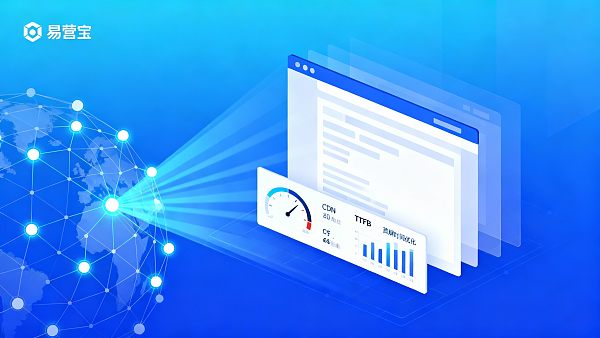
Global CDN acceleration deploys edge nodes (POPs) in target markets to cache static and dynamic content near users, significantly reducing network hops and transmission latency. Key performance improvements include caching strategies (TTL, cache layers), compression and resource merging (Brotli/Gzip, CSS/JS merging), and modern transport protocols (HTTP/2, HTTP/3). Additionally, TLS optimization and session reuse maintain low latency with HTTPS enabled, directly addressing the question "What is the role of HTTPS for websites?": HTTPS not only protects data and trust but also, when properly configured with CDN, avoids noticeable performance degradation. For enterprise websites, CDN also provides intelligent routing, failover mechanisms, and edge computing capabilities, ensuring availability during cross-regional traffic peaks or origin server failures. Performance metrics should focus on TTFB, First Contentful Paint, and Largest Contentful Paint, which quantify "How does CDN improve website access speed?" and form the basis for ROI evaluation.
Website Experience, Conversion, and Inquiries: How Does Website Experience Impact Conversion Rates? Does Website Performance Affect Inquiry Volume?
Page load speed and stability directly impact user trust and behavior. Research and industry practices show that every second of delay increases bounce rates and form abandonment, reducing inquiry volume and sales lead quality. Thus, the answers to "How does website experience impact conversion rates?" and "Does website performance affect inquiry volume?" are unequivocal: faster, more stable websites yield higher conversions and more valid inquiries. Practical A/B testing should correlate performance optimization with conversion changes, such as combining CDN caching with lazy-loaded images to test form submission rates and session duration improvements. For B2B standalone sites, stable multilingual experiences are critical: visitors are more likely to engage when they see localized, trustworthy pages in target markets—a key consideration when evaluating "Are standalone sites suitable for B2B exports?"
Enterprise Website Selection and Technical Safeguards: What Technical Safeguards Do Enterprise Websites Need? Does Website Security Affect SEO?
Enterprise website infrastructure should include global CDN, enforced HTTPS, WAF and DDoS protection, automated certificate management, performance monitoring, logging, backup/rollback strategies, and multilingual marketing support. Addressing "Does website security affect SEO?", security incidents (injections, blacklisting, or hijacking) lead to search engine ranking drops, while HTTPS as a trust signal aids SEO evaluations. Vendor selection must prioritize node coverage (target countries/regions), cache hit rates, dynamic acceleration (APIs, SSR), pricing models (bandwidth, requests, or tiers), and cloud platform compatibility. For Middle East projects, localized solutions (right-to-left layouts, Arabic localization) are recommended. Reference solutions like EasyHub’s Middle East products (Arabic Industry Website Construction and Marketing Solutions) offer Arabic site building, RTL layouts, and Google Ads keyword optimization for rapid deployment.

Cost and ROI Evaluation: How to Quantify Input-Output and Select Vendors
Evaluating CDN ROI requires balancing direct costs against savings and new revenue. Direct costs include bandwidth, edge requests, SSL/WAF subscriptions; savings cover origin bandwidth reduction, server scaling delays, and reduced downtime. New revenue stems from conversion and inquiry growth: compare pre/post-optimization inquiry counts and average LTV to estimate net gains. Steps: 1) Establish baselines (PV/UV, conversion rates, inquiry values); 2) Simulate CDN configurations (static vs. dynamic acceleration); 3) Calculate monthly costs and origin savings; 4) Convert uplift to revenue, determining payback periods. Prioritize vendors with global nodes, SLAs, technical support, cloud integration, and analytics.
Localization and Long-Term Operations: Multilingual, Standalone Sites, and Continuous Optimization
Long-term global sites require multilingual performance, compliance, and data integration. Multilingual systems must localize static content, TDK, URLs, images, and forms for search indexing and user experience. For "Are standalone sites suitable for B2B exports?", the answer is yes—provided they achieve professional localization and stable delivery: standalone sites offer brand control and data ownership but require investments in CDN+HTTPS+WAF, localized logistics/payments, and multilingual content. Regular monitoring (Core Web Vitals, compliance/security scans) and KPI integration ensure sustained inquiry and conversion growth.
Conclusion: Global CDN is key for low-latency, high-availability cross-regional experiences. Performance and security directly impact inquiries and conversions, necessitating holistic ROI calculations and long-term planning. EasyHub’s AI-driven, full-funnel marketing capabilities, combined with global nodes and localization, offer end-to-end support from site building to deployment. Contact us for CDN selection, multilingual system implementation, customized ROI reports, and deployment advice to achieve stable growth and rapid returns in target markets.
- Website Development
- Corporate website
- Website Security
- Google Ads
- Keyword Optimization
- Yiyingbao
- SEO
- Independent Website
- Multilingual Marketing System
- Is a standalone website suitable for B2B foreign trade?
- What is global CDN acceleration?
- How does CDN improve website access speed?
- Does website security affect SEO?
- What does HTTPS do for a website?
- How does website experience affect conversion rates?
- Does website performance affect the number of inquiries?
- What basic technical safeguards are required for a corporate website?
Related Articles
 Should marketing-oriented website development start with design or with defining the conversion path?A planning method to avoid rework
 Are maintenance costs high for multilingual SEO on a marketing-oriented website?Break down content、labor and technical expenses
 EU EPR new regulations updated,independent site checkout page must embed DPR-ID



Related Products
 EasyCamp SaaS Smart Website Marketing SystemE-Yingbao SaaS Smart Website Marketing System: AI-powered, zero-code website building. Rapidly launch multilingual independent e-commerce sites in just 10 minutes. Global server acceleration and AI-driven SEO optimization empower businesses to efficiently connect with global markets. The seamless integration of technology and user-friendly operation makes building e-commerce sites incredibly simple.
 AI+SEM Intelligent Advertising Marketing SystemAI+SEM drives intelligent ad creation, empowering full-funnel precision advertising marketing. The system automatically generates weekly/monthly reports, AI recommends keywords and target countries, monitors core metrics in real-time with intelligent alerts, and enables one-click high-conversion ad solutions to help quickly acquire customers and improve ROI.
 AI+SEO Dual Engine Optimization ServiceEasyWin AI+SEO Dual Engine Optimization System leverages AI-powered keyword mining, content generation, and comprehensive technical optimization to help foreign trade enterprises acquire high-quality organic traffic, significantly improving search rankings and conversion rates.
 AI+SNS Social Media Marketing SystemYingbao AI+SNS Social Media Marketing System - Precision social capture for the social media era. Supports one-click content synchronization across major platforms like Facebook and LinkedIn. AI intelligently rewrites posts for enhanced relevance. 24/7 AI customer service and user profiling analysis empower businesses to efficiently expand into global markets.
 AI+SEO营销解决方案易营宝AI+SEO营销解决方案,通过AI批量写作、智能生成TDK、精准关键词扩词等功能,全面优化网站SEO效果,提升流量与转化率。助力企业构建高效智能网站新生态。
 AI+SEM Advertising Marketing SolutionsAI+SEM Advertising Marketing Solution leverages AI technology to deeply empower SEM ad campaigns. It automatically generates weekly/monthly reports using AI, presenting account data across multiple dimensions for comprehensive insights into campaign performance and trends. The system precisely recommends keywords and target countries, intelligently generates high-conversion ad copy, and enables one-click activation of efficient campaign plans to help businesses rapidly acquire customers. Simultaneously, it monitors core metrics in real time, intelligently identifies abnormal fluctuations, and issues timely alerts to ensure stable, high-return advertising results.
 Domain Name ServicesEasyWin provides professional domain name services, including intelligent queries, one-stop registration, brand protection, and full lifecycle management, helping businesses build a digital brand image.
 EasyOperate B2C Cross-Border E-Commerce Platform & Independent WebsiteEasyStore B2C Cross-border E-commerce Independent Store is an intelligent website building and cross-border e-commerce integrated solution independently developed by EasyStore Information Technology (Beijing) Co., Ltd. The system is specially designed for small and medium-sized as well as large export enterprises, integrating 'website building, operation, marketing, advertising, and conversion' into one, helping enterprises quickly establish cross-border e-commerce independent stores to achieve brand globalization and global sales growth.
The platform supports multiple languages, multiple currencies, and multi-channel marketing, with built-in AI intelligent translation and SEO optimization systems, suitable for mainstream markets such as Southeast Asia, Europe and America, Latin America, and the Middle East, assisting Chinese manufacturing enterprises in efficiently deploying international e-commerce strategies. SSL证书易营宝提供专业SSL安全证书服务,包括单域名和泛域名证书,确保网站数据传输加密、身份验证和完整性保护,助力企业建立安全可信的在线业务环境。









