









- Cross-Border Marketing Trend Research: Why More and More Companies Are Starting to Deploy AI Search and GEO OptimizationJun 30, 2026View details
- Cross-Border Marketing Trend Research: How Independent Sites, AI Content, and Short-Video Customer Acquisition Are ChangingJun 30, 2026View details
- How Can a Brand Updates Page Be Made More SEO-Friendly? Analysis of Update Frequency, Content Structure, and Internal Linking StrategyJun 28, 2026View details
- What stages does the cross-border services ecosystem include? How do website building, promotion, payment, and compliance work togetherJun 22, 2026View details
- How will email marketing costs change in 2026Jun 22, 2026View details
- The China-US tariff arrangement has reached a preliminary consensus, and the trade association will be establishedJun 15, 2026View details
How to Choose an Arabic Independent Website Construction Company: Delivery Cycle, Stability, and Cost Comparison

When choosing an Arabic independent website construction company, how to balance delivery cycle, stability, and costs? This article provides a comparative guide for enterprise decision-makers and operators. Focusing on key stages from requirement confirmation, technical implementation to operational maintenance for Arabic independent websites, it helps users/operators, project managers, and after-sales support personnel quickly identify supplier capability differences. It also offers quantifiable evaluation dimensions for distributors and end consumers, facilitating more business-growth-aligned choices when addressing the common dilemma: "Which international foreign trade website or platform delivers better results?"
Definition and Overview
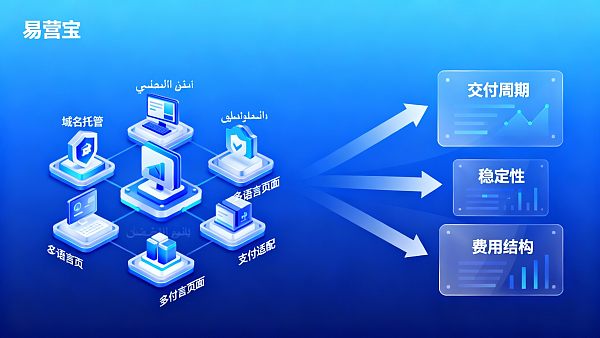
An Arabic independent website construction company refers to a one-stop service provider capable of delivering domain registration & hosting, multilingual front-end pages, backend order logic, payment & logistics adaptation, and sustained SEO optimization with local social media operations. Excellent suppliers deliver not just code and pages, but sustainable operational growth systems including multilingual automated website construction systems, structured page data, mobile UX optimization, and core conversion path design. Evaluation criteria should cover transparency in delivery cycles, post-launch stability (including CDN and DDoS protection), cost structures, and value-added services (e.g., multilingual AI translation, automated social media operations, and ad intelligence capabilities).
Industry Background and Market Analysis
Currently, foreign trade enterprises are shifting from "platform-driven" to parallel "brand self-operation", particularly in Middle Eastern and North African markets where Arabic independent websites significantly impact search rankings, local trust, and repurchase rates. Therefore, when evaluating Arabic independent website construction companies, both technical capabilities and commercial accumulations must be considered. EasyYun Information Technology (Beijing) Co., Ltd., established in 2013 with headquarters in Beijing, leverages AI and big data as core drivers. With a decade of industry expertise and a dual-strategy of "technological innovation + localized services", it has provided intelligent website construction, SEO optimization, social media marketing, and full-chain advertising solutions to over 100,000 enterprises. In 2023, it was selected among "China's Top 100 SaaS Companies" with >30% annual growth. Its core competitiveness lies in multilingual intelligent website building, AI marketing engines, and global CDN resources, significantly improving site loading speeds and SEO scores—key references for assessing supplier reliability and long-term support.
Procurement and Selection Guide
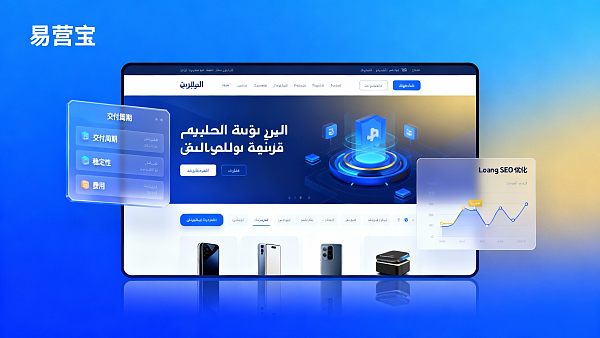
For decision-makers and project owners, selection should follow three steps: requirement matrix, capability validation, and contract negotiation. The requirement matrix must include "traffic sources, conversion goals, tech stack, compliance, and after-sales" as mandatory items. Capability validation involves reviewing demo sites, stress test results, and third-party monitoring reports to assess stability and response times. Contract negotiations should clarify delivery cycles, milestone acceptance, SLA (including downtime compensation), code/data ownership, and ongoing SEO/social media support. Technically, prioritize suppliers with multilingual automated website systems and AI marketing capabilities, such as those offering auto-translation, intelligent TDK generation, and daily content production support. For ad closure capabilities, evaluate bundled products like AI+SEM intelligent ad marketing systems, which provide keyword recommendations, automated投放 strategies, and real-time alerts to shorten the lead-to-customer window. During pricing discussions, itemize first-year configuration fees, bandwidth/CDN costs, and subsequent content/ad budgets separately to avoid lump-sum quotes masking long-term operational costs.
Client Cases, Common Pitfalls & Operational Recommendations
Case study: A traditional manufacturing enterprise achieved 80% inquiry growth and 25% higher conversion rates in Middle Eastern markets within six months after selecting an Arabic independent website builder, through localized pages and social media matrix operations. Key success factors included rapidly deployable MVP with optimization potential and AI-driven keyword strategies. Common pitfalls include equating "low-cost template sites" with long-term cost efficiency, neglecting CDN/local payment adaptation, and underestimating sustained content/ad investments. Recommendations for ops and after-sales teams: Establish weekly/monthly检测 and optimization checklists; use automated tools to monitor page loading, form submissions, and third-party payment callbacks; conduct regular SEO and security audits. Why choose us? EasyYun leverages AI-generated visuals, automated TDK generation, and creative factory models to integrate website building with lead generation, reducing manpower while achieving high conversion efficiency. For detailed solutions or customized quotes, contact us for one-on-one evaluations and implementation plans.
- Website Development
- Social Media Marketing
- Social media management
- Standalone website development
- Yiyingbao
- SEO
- Independent Website
- SEO Optimization
- Smart Website Building
- AI Translation
- AI Marketing Engine
- Social Media Automation
- AI+SEM Smart Advertising Marketing System
- Multilingual automated website construction system
Related Articles
 How to Choose Global Server Node Distribution? A Comparison of Deployment Approaches for European, North American, and Middle Eastern Markets
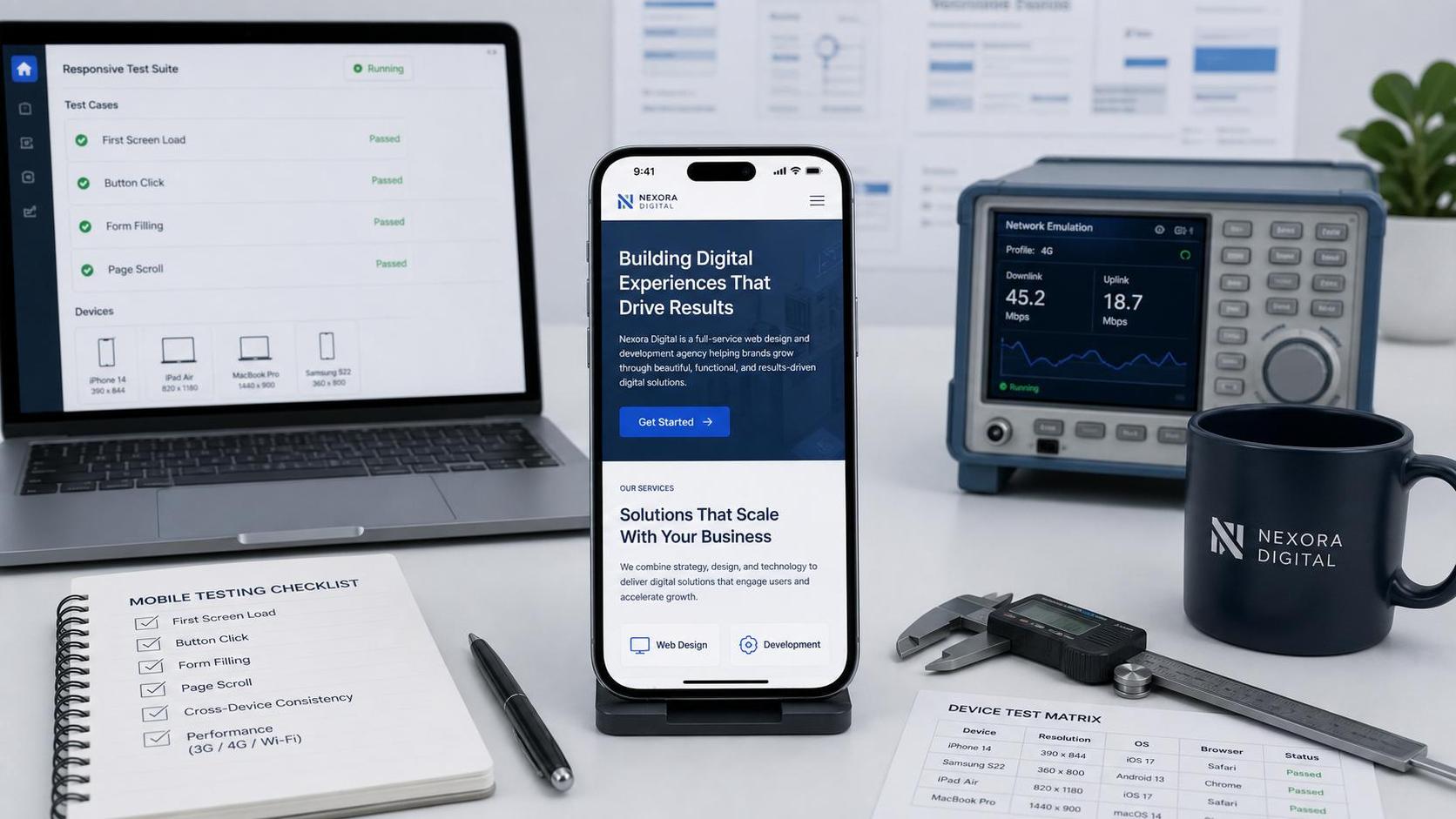
 Which metrics should be checked for mobile compatibility testing? A complete audit from first-screen speed to interaction experience
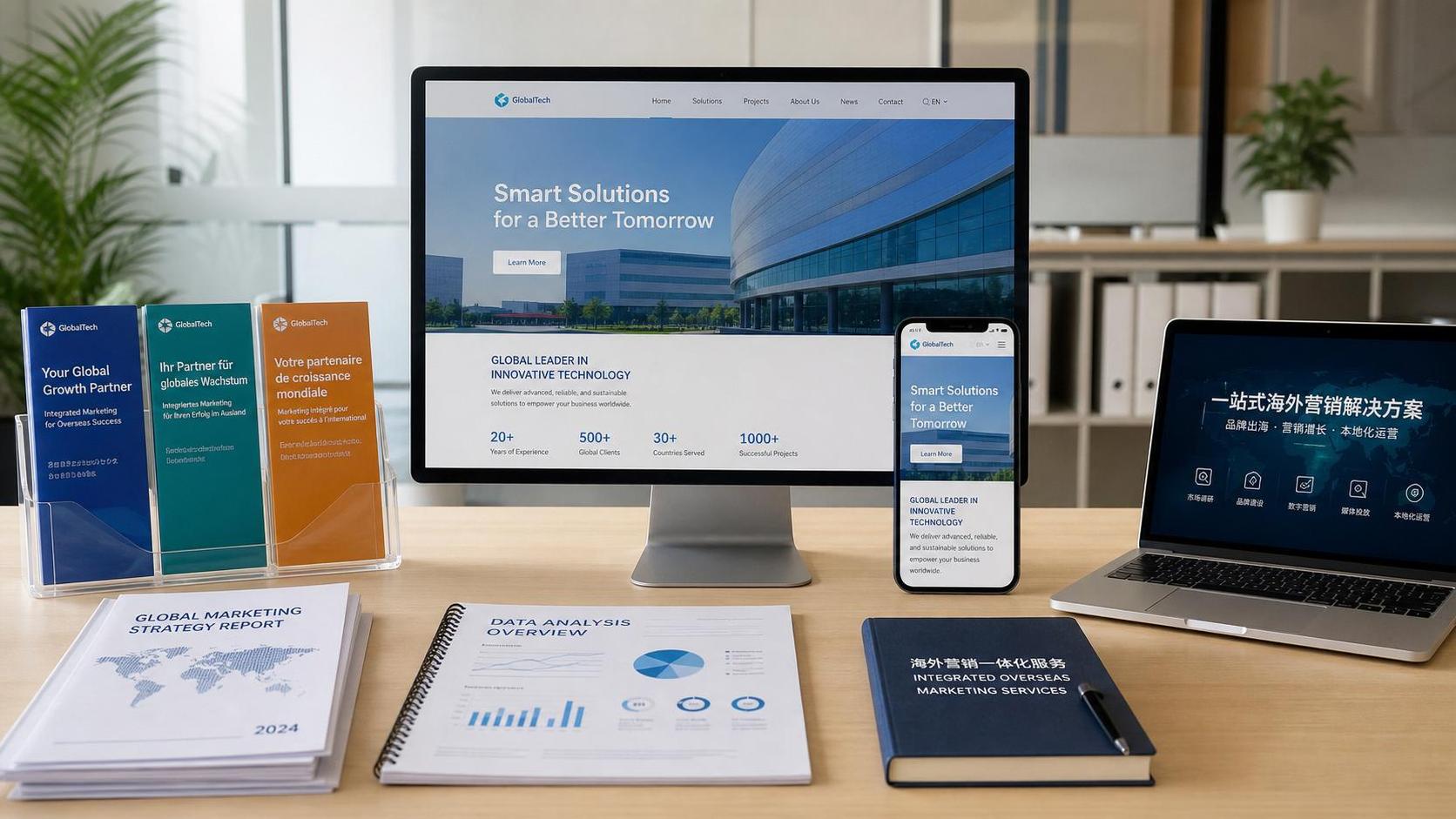
 How Are Mobile Adaptation Costs Calculated? Price Differences Between Responsive Design, Standalone Websites, and Less Common Language Pages

Related Products
 EasyCamp SaaS Smart Website Marketing SystemE-Yingbao SaaS Smart Website Marketing System: AI-powered, zero-code website building. Rapidly launch multilingual independent e-commerce sites in just 10 minutes. Global server acceleration and AI-driven SEO optimization empower businesses to efficiently connect with global markets. The seamless integration of technology and user-friendly operation makes building e-commerce sites incredibly simple.
 AI+SEM Intelligent Advertising Marketing SystemAI+SEM drives intelligent ad creation, empowering full-funnel precision advertising marketing. The system automatically generates weekly/monthly reports, AI recommends keywords and target countries, monitors core metrics in real-time with intelligent alerts, and enables one-click high-conversion ad solutions to help quickly acquire customers and improve ROI.
 AI+SEO Dual Engine Optimization ServiceEasyWin AI+SEO Dual Engine Optimization System leverages AI-powered keyword mining, content generation, and comprehensive technical optimization to help foreign trade enterprises acquire high-quality organic traffic, significantly improving search rankings and conversion rates.
 AI+SNS Social Media Marketing SystemYingbao AI+SNS Social Media Marketing System - Precision social capture for the social media era. Supports one-click content synchronization across major platforms like Facebook and LinkedIn. AI intelligently rewrites posts for enhanced relevance. 24/7 AI customer service and user profiling analysis empower businesses to efficiently expand into global markets.
 AI+SEO营销解决方案易营宝AI+SEO营销解决方案,通过AI批量写作、智能生成TDK、精准关键词扩词等功能,全面优化网站SEO效果,提升流量与转化率。助力企业构建高效智能网站新生态。
 AI+SEM Advertising Marketing SolutionsAI+SEM Advertising Marketing Solution leverages AI technology to deeply empower SEM ad campaigns. It automatically generates weekly/monthly reports using AI, presenting account data across multiple dimensions for comprehensive insights into campaign performance and trends. The system precisely recommends keywords and target countries, intelligently generates high-conversion ad copy, and enables one-click activation of efficient campaign plans to help businesses rapidly acquire customers. Simultaneously, it monitors core metrics in real time, intelligently identifies abnormal fluctuations, and issues timely alerts to ensure stable, high-return advertising results.
 Domain Name ServicesEasyWin provides professional domain name services, including intelligent queries, one-stop registration, brand protection, and full lifecycle management, helping businesses build a digital brand image.
 EasyOperate B2C Cross-Border E-Commerce Platform & Independent WebsiteEasyStore B2C Cross-border E-commerce Independent Store is an intelligent website building and cross-border e-commerce integrated solution independently developed by EasyStore Information Technology (Beijing) Co., Ltd. The system is specially designed for small and medium-sized as well as large export enterprises, integrating 'website building, operation, marketing, advertising, and conversion' into one, helping enterprises quickly establish cross-border e-commerce independent stores to achieve brand globalization and global sales growth.
The platform supports multiple languages, multiple currencies, and multi-channel marketing, with built-in AI intelligent translation and SEO optimization systems, suitable for mainstream markets such as Southeast Asia, Europe and America, Latin America, and the Middle East, assisting Chinese manufacturing enterprises in efficiently deploying international e-commerce strategies. SSL证书易营宝提供专业SSL安全证书服务,包括单域名和泛域名证书,确保网站数据传输加密、身份验证和完整性保护,助力企业建立安全可信的在线业务环境。









