









- How to view pricing in the global traffic ecosystem? Cost comparison of search, social media, and content channel advertisingJul 06, 2026View details
- How to assess foreign trade website development trends?Looking at 2026 changes from multilingual,AI content to conversion pathsJul 04, 2026View details
- What are the new trends in multilingual marketing data analytics tools in 2026? Focus on attribution、automation and complianceJul 04, 2026View details
- Is Brand Globalization Marketing Consulting Worth Buying? At What Stage Should Companies Bring It InJul 01, 2026View details
- Cross-Border Marketing Trend Research: Why More and More Companies Are Starting to Deploy AI Search and GEO OptimizationJun 30, 2026View details
- Cross-Border Marketing Trend Research: How Independent Sites, AI Content, and Short-Video Customer Acquisition Are ChangingJun 30, 2026View details
How to Build a Foreign Trade Independent Website? Enterprise-Level Setup Process and Delivery Timeline for 2025
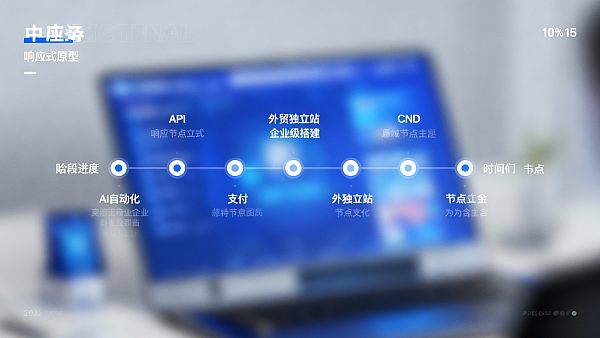
How to build an independent website for foreign trade? This article covers enterprise-level processes, essential functions, launch cycle, costs, and AI-driven acceleration and customer acquisition strategies to help you go global efficiently.
In the practice of enterprises going global, project managers, decision-makers, and implementation teams are most concerned about: What functions does an independent foreign trade website need? How long does it typically take to launch an independent foreign trade website? Is the construction cost of an independent foreign trade website high? This article takes a general internet service and enterprise-level delivery perspective, combined with productization, automation, and compliance requirements, to provide an operational path and time cost estimate from needs assessment and technology selection to delivery and acceptance. The article also answers practical questions such as "Is an independent website suitable for B2B foreign trade?" and "Can AI help quickly build an independent website?", and provides a replicable implementation checklist to facilitate execution and handover by users/operators and after-sales maintenance personnel. For ease of reading, each module includes actionable steps, acceptance criteria, and risk warnings to help distributors, resellers, and end consumers understand the value and quantifiable benefits of enterprise-level independent website delivery.
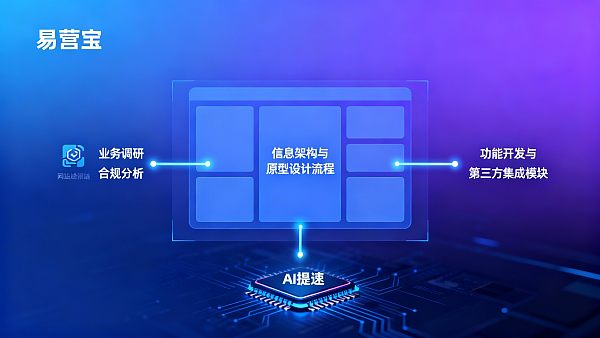
Enterprise-level deployment process: phased delivery from requirements to deployment
The construction of an enterprise-level independent foreign trade website should follow a clear, tiered process: Phase 1 involves business and compliance research, including target market, payment and taxation, target customer profiling, and channel matching; Phase 2 involves information architecture and prototype design, clarifying product catalogs, conversion paths, and SEO page planning; Phase 3 involves visual and UI development, adhering to responsive and accessibility standards; Phase 4 involves feature development and third-party integration (payment gateways, logistics APIs, ERP/CRM integration); Phase 5 involves testing and performance optimization (including stress testing, security scanning, and SEO pre-verification); Phase 6 involves phased deployment and gray-scale verification, finally entering operation and maintenance and continuous optimization. Each phase should have clear deliverables and acceptance criteria: requirements confirmation, prototype acceptance form, feature list, test report, and deployment regression report. Regarding the question "How long does it typically take for an independent foreign trade website to go live?", with sufficient preparation, the MVP version of a typical enterprise-level project can usually be launched within 6-10 weeks. For complex B2B platforms and projects involving extensive third-party integration, the delivery cycle can extend to 12-20 weeks. Project managers need to monitor milestones and allow a 2-4 week buffer period to account for the impact of delays in compliance or overseas payment certification.
Essential Functions and Technology Selection: Underlying Capabilities for Conversion and Compliance
What features should an independent e-commerce website have? An enterprise-level website should at least include: multi-language and multi-currency support, product and catalog management, order and shipping management, overseas payment and tax calculation, logistics tracking, customer segmentation and CRM integration, SEO-friendly URLs and structured data, compliant privacy terms and cookie management, site security (WAF, DDoS protection), analytics tracking, and conversion funnels. If targeting the B2B market, additional features such as inquiry forms, quotation management, contracts and approval workflows, and enterprise authentication and login mechanisms are needed. Regarding technology selection, a modular architecture is recommended: the front-end should use component-based frameworks such as React/Vue for rapid iteration, and the back-end should use scalable microservices or cloud functions to support traffic fluctuations. Databases and caches should be separated to ensure performance. Can AI help quickly build an independent website? The answer is yes: AI can be used to automatically generate TDK (Title, Description, Keywords), templated copy, image generation, and multi-language translation, thereby increasing initial content production efficiency several times over and shortening launch preparation time. At the network level, it is recommended to assess support for IPv6 to improve global interoperability. For example, adopting a managed solution that supports Internet Protocol version 6 (IPv6) can leverage its larger address space and native security mechanisms to optimize enterprise network deployment.
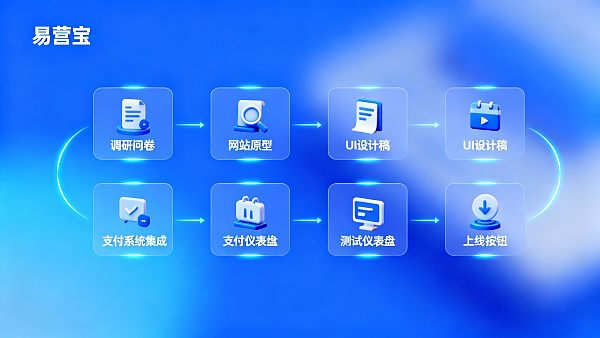
Strategies for estimating and optimizing launch cycle, cost, and delivery cycle
Regarding the question, "Is the cost of building an independent website for foreign trade high?", the cost depends on the needs and goals: the development and first-year operation and maintenance costs of a basic SME website typically range from tens of thousands to hundreds of thousands of RMB; while the cost of an enterprise-level customized platform (including ERP integration, complex permissions, and compliance auditing) can rise to hundreds of thousands or even higher. Effective strategies to reduce costs and timelines include: adopting templated and component-based technology platforms, advancing design and content production in parallel, using AI tools early for automatic TDK generation and keyword expansion, and using SaaS platform hosting services to reduce operational investment. For delivery cycle management, adopting iterative delivery (Sprint) to launch major functions in stages, and quickly validating business assumptions through A/B testing and canary releases, thereby achieving an "operable" independent website in the shortest possible time and gradually expanding functional modules. Project managers need to pay attention to long-term TCO (Total Cost of Ownership), including SEO investment, content update frequency, and advertising customer acquisition costs.
AI and Performance Optimization: Practical Methods from Content Recommendation to Global Access Speed
How to get website content recommended by AI search? This is a problem driven by both technology and content. Technically, it requires well-structured data (schema), sitemaps, consumer-grade signal collection, and social media metadata such as OpenGraph to ensure machine readability. Content-wise, it requires building topic clusters, long-tail keyword strategies, and high-quality multilingual landing pages. Combining the platform's built-in "AI keyword expansion + automatic TDK generation + AI-generated images" strategy can achieve thousands of pieces of content output daily while ensuring semantic consistency. Why is website loading speed important? Access speed directly affects conversion rates, indexing rates, and ad quality scores. What to do if overseas websites are slow? It is recommended to use global CDN, edge caching, lazy image loading, resource compression, and a reasonable domain access strategy, and evaluate network-level upgrades, such as supporting IPv6 to improve routing efficiency and future compatibility, thereby reducing packet loss and latency risks. Regarding "How to acquire customers for an independent foreign trade website?", it is recommended to use a combination of organic search optimization, social media matrix placement, channelized email marketing, and targeted advertising, supplemented by localized landing pages and local payment experiences, forming a closed loop from customer acquisition to retention.
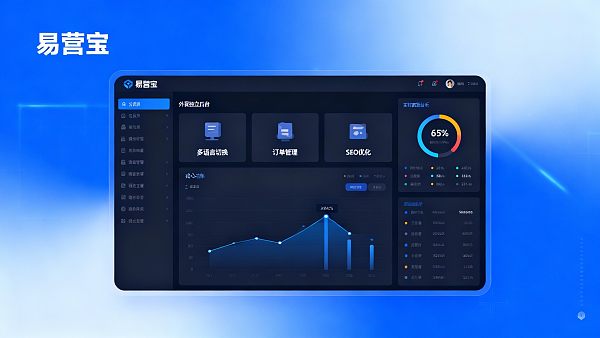
Summary and Next Steps
Building an independent e-commerce website is not a one-time technical undertaking, but a productized project geared towards growth. This article outlines the enterprise-level setup process, key functions, time and cost estimation, and AI-driven acceleration path, and provides technical suggestions for addressing slow overseas access and network security. Choosing a mature intelligent website building and marketing platform can significantly shorten the delivery cycle, reduce operation and maintenance costs, and improve customer acquisition efficiency. E-Creation provides a full-chain solution covering intelligent website building, AI marketing engines, and global CDN deployment, helping businesses quickly achieve launch and monetization while maintaining compliance and localization. If you would like a tailored solution for your target market and business model, or would like to see enterprise-level delivery samples and pricing, please contact us immediately for more solutions and free consultation.
- Foreign Trade Independent Website Development
- Standalone website development
- Yiyingbao
- SEO
- Independent Website
- Smart Website Building
- AI Marketing Engine
- Independent foreign trade website
- How to build a foreign trade independent station?
- What features are needed for a foreign trade independent website?
- How long does it usually take for a foreign trade independent website to go online?
- Is the cost of building an independent foreign trade website high?
- How can a foreign trade independent website acquire customers?
- Is a standalone website suitable for B2B foreign trade?
- Can AI help quickly build an independent website?
- How can website content be recommended by AI search?
- Why is website loading speed so important?
- What should I do if my overseas website loads slowly?
Related Articles
 How can website data analysis improve conversion rates? First identify high-bounce pages and key loss points
 How much does it cost to build a foreign trade multilingual website?Analysis of the modules and hidden costs that affect quotations
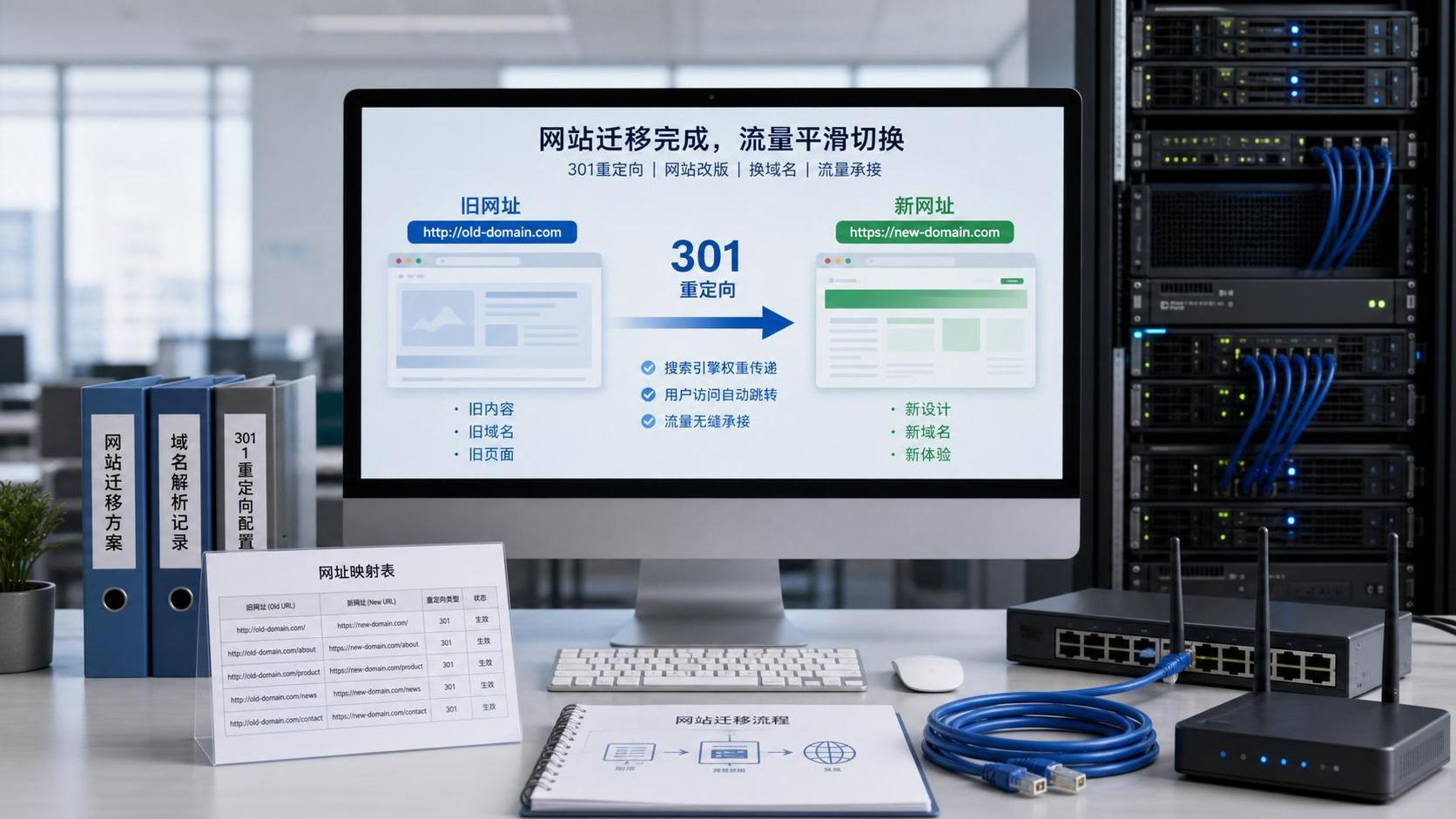
 Detailed explanation of 301 redirect setup methods:which pages must be redirected during a website redesign or domain change

Related Products
 EasyCamp SaaS Smart Website Marketing SystemE-Yingbao SaaS Smart Website Marketing System: AI-powered, zero-code website building. Rapidly launch multilingual independent e-commerce sites in just 10 minutes. Global server acceleration and AI-driven SEO optimization empower businesses to efficiently connect with global markets. The seamless integration of technology and user-friendly operation makes building e-commerce sites incredibly simple.
 AI+SEM Intelligent Advertising Marketing SystemAI+SEM drives intelligent ad creation, empowering full-funnel precision advertising marketing. The system automatically generates weekly/monthly reports, AI recommends keywords and target countries, monitors core metrics in real-time with intelligent alerts, and enables one-click high-conversion ad solutions to help quickly acquire customers and improve ROI.
 AI+SEO Dual Engine Optimization ServiceEasyWin AI+SEO Dual Engine Optimization System leverages AI-powered keyword mining, content generation, and comprehensive technical optimization to help foreign trade enterprises acquire high-quality organic traffic, significantly improving search rankings and conversion rates.
 AI+SNS Social Media Marketing SystemYingbao AI+SNS Social Media Marketing System - Precision social capture for the social media era. Supports one-click content synchronization across major platforms like Facebook and LinkedIn. AI intelligently rewrites posts for enhanced relevance. 24/7 AI customer service and user profiling analysis empower businesses to efficiently expand into global markets.
 AI+SEO营销解决方案易营宝AI+SEO营销解决方案,通过AI批量写作、智能生成TDK、精准关键词扩词等功能,全面优化网站SEO效果,提升流量与转化率。助力企业构建高效智能网站新生态。
 AI+SEM Advertising Marketing SolutionsAI+SEM Advertising Marketing Solution leverages AI technology to deeply empower SEM ad campaigns. It automatically generates weekly/monthly reports using AI, presenting account data across multiple dimensions for comprehensive insights into campaign performance and trends. The system precisely recommends keywords and target countries, intelligently generates high-conversion ad copy, and enables one-click activation of efficient campaign plans to help businesses rapidly acquire customers. Simultaneously, it monitors core metrics in real time, intelligently identifies abnormal fluctuations, and issues timely alerts to ensure stable, high-return advertising results.
 Domain Name ServicesEasyWin provides professional domain name services, including intelligent queries, one-stop registration, brand protection, and full lifecycle management, helping businesses build a digital brand image.
 EasyOperate B2C Cross-Border E-Commerce Platform & Independent WebsiteEasyStore B2C Cross-border E-commerce Independent Store is an intelligent website building and cross-border e-commerce integrated solution independently developed by EasyStore Information Technology (Beijing) Co., Ltd. The system is specially designed for small and medium-sized as well as large export enterprises, integrating 'website building, operation, marketing, advertising, and conversion' into one, helping enterprises quickly establish cross-border e-commerce independent stores to achieve brand globalization and global sales growth.
The platform supports multiple languages, multiple currencies, and multi-channel marketing, with built-in AI intelligent translation and SEO optimization systems, suitable for mainstream markets such as Southeast Asia, Europe and America, Latin America, and the Middle East, assisting Chinese manufacturing enterprises in efficiently deploying international e-commerce strategies. SSL证书易营宝提供专业SSL安全证书服务,包括单域名和泛域名证书,确保网站数据传输加密、身份验证和完整性保护,助力企业建立安全可信的在线业务环境。









