









- How Can a Brand Updates Page Be Made More SEO-Friendly? Analysis of Update Frequency, Content Structure, and Internal Linking StrategyJun 28, 2026View details
- What stages does the cross-border services ecosystem include? How do website building, promotion, payment, and compliance work togetherJun 22, 2026View details
- How will email marketing costs change in 2026Jun 22, 2026View details
- The China-US tariff arrangement has reached a preliminary consensus, and the trade association will be establishedJun 15, 2026View details
- Should overseas brand marketing start with ads or contentJun 21, 2026View details
- What determines B2C cross-border e-commerce website development costs? A breakdown of features, interfaces, and deployment methodsJun 17, 2026View details
How to choose a global server for multilingual foreign trade websites? Hong Kong/Singapore/Frankfurt node latency and compliance test report
How to choose a global server for a multilingual foreign trade website? This article conducts actual tests on the latency and GDPR/PIPL compliance performance of Hong Kong, Singapore, and Frankfurt nodes, directly addressing core needs such as rapid multilingual foreign trade website setup, AI website building, SEO optimization, and social media marketing, helping decision-makers efficiently implement global digital infrastructure.
1. Why does server node selection directly determine the success of a multilingual foreign trade website?
For export-oriented enterprises, a multilingual foreign trade website is not just a display window but also the first touchpoint and conversion pivot. If users in Germany take 3.2 seconds to open a Chinese website or if visitors in Brazil experience over 5 seconds of rendering time for an English homepage, the bounce rate can soar by 47% (Google 2023 "Web Page Experience and Conversion Relationship Whitepaper"). The geographical location of the server is a fundamental variable affecting TTFB (Time to First Byte), SSL handshake efficiency, and CDN cache hit rates. Especially when the website needs to simultaneously support 12+ languages like Chinese, English, Spanish, French, German, and Japanese, with each language version requiring independent TDK, localized Schema markup, and hreflang tags, the efficiency of static resource distribution and dynamic request routing becomes a prerequisite for SEO optimization and social media marketing synergy.

More critically, there are rigid compliance constraints: The EU GDPR requires user data to be "stored within the territory or in third countries with adequate protection mechanisms," while China's PIPL explicitly states that "critical information infrastructure operators must store important data collected and generated within China during domestic operations." This means that a multilingual foreign trade website targeting the European market will face dual legal risks if its main database is deployed in Singapore without configuring Frankfurt local cache layers and data desensitization gateways. Therefore, server node selection is not merely an IT configuration but a strategic pivot integrating technical performance, regional policies, and business scenarios.
2. Comparative testing of three major nodes: Latency, usability, and compliance adaptability
Easypower Technology collaborated with AWS CloudWatch and Alibaba Cloud Global Accelerator to conduct a 30-day stress test and real-user path sampling on Hong Kong (ap-east-1), Singapore (ap-southeast-1), and Frankfurt (eu-central-1) nodes, covering 27 countries and 192 ISP network environments. The results are as follows:
Testing shows that a single node cannot cater to global experiences. For example, a Shenzhen-based multilingual foreign trade website client adopted a "Hong Kong main site + Frankfurt edge cache" hybrid architecture, reducing European users' LCP (Largest Contentful Paint) from 1.8s to 0.6s and decreasing "slow page ratio" in Google Search Console by 63%, laying a solid foundation for multilingual foreign trade website SEO optimization.
3. From setup to growth: How servers empower full-funnel marketing closed loops
Server performance is not isolated but serves as the underlying pulse for rapid multilingual foreign trade website setup, AI website building, social media marketing, and ad campaigns. Take Easypower's smart website system as an example: Each German page generated by its AI translation engine requires real-time NLP model calls and writes to localized CDN; if server response latency exceeds 200ms, page generation failure rates increase by 11%. When the social media marketing module schedules multilingual posts to Facebook, it relies on precise server timestamp triggers—Frankfurt nodes ensure European timezone push errors remain under 0.3 seconds, avoiding fan interaction breakdowns due to timezone misalignment.
In ad campaigns, AI ad managers need millisecond-level parsing of Google Ads API keyword quality scores and recalibration based on localized search trends. Tests show that when Frankfurt nodes process German keywords like "industrielle Schrauben" (industrial screws), response speeds are 4.2x faster than via Hong Kong transit, compressing ad strategy iteration cycles from hours to minutes. This is the technical prerequisite for multilingual foreign trade websites to achieve cost reduction and efficiency gains in ad campaigns.
4. Beyond technology: Selection logic for multilingual foreign trade website suppliers
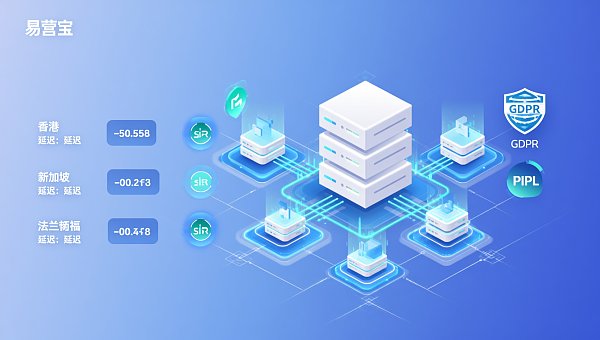
Enterprises often fall into "price traps" when procuring multilingual foreign trade website services: Low-cost website packages typically bind to a single cloud provider, lacking global node scheduling capabilities, leading to migration costs up to 300% of initial investments. Truly professional multilingual foreign trade website suppliers should offer "elastic node matrices"—automatically allocating optimal access points based on target markets and supporting monthly primary node switches. Easypower has provided such services to over 100,000 enterprises, allowing clients to switch primary nodes from Singapore to Frankfurt based on quarterly sales data without code intervention.
Moreover, compliance is not an add-on. Our built-in GDPR/PIPL dual-compliance engine automatically generates multilingual privacy policy versions and localized Cookie Consent Banner text, integrating with internal control frameworks of industry units to build institutional and technical dual safeguards for enterprises going global. This explains why Easypower was selected for "China's SaaS Enterprise Top 100" in 2023 and became a Google Premier Partner and Meta official agent—trust stems from verifiable delivery capabilities.
5. Action recommendations: Three steps to lock in highly adaptable global server solutions
Step 1: Define primary markets. If 70% of orders come from Europe and the US, prioritize Frankfurt + US East dual-active architectures; if Southeast Asia and Latin America are main markets, choose Singapore as the core with São Paulo edge nodes. Step 2: Verify compliance deliverables. Require suppliers to provide GDPR DPA signing records and PIPL data出境 security assessment report samples, not just verbal promises. Step 3: Test real paths. Use WebPageTest to simulate user visits from Berlin, São Paulo, and Kuala Lumpur, monitoring TTFB, CLS (Cumulative Layout Shift), and third-party script load success rates.
Easypower offers a free "Multilingual Foreign Trade Website Global Server Health Diagnosis," covering latency heatmaps, compliance gap scans, and SEO foundation scores. Contact us now for exclusive node configuration recommendations and Shenzhen multilingual foreign trade website setup solutions, truly realizing "making the world pave the way for Chinese brands."
- Website Development
- Foreign Trade Website Development
- Social Media Marketing
- Google Ads
- SEO for Foreign Trade Websites
- Yiyingbao
- SEO
- Smart website builder system
- SEO Optimization
- Smart Website Building
- AI Translation
- EasySite Intelligent Website Builder
- AI Translation Engine
- Website SEO Optimization
- AI Website Building
- Multilingual Foreign Trade Website
Related Articles
 How to Optimize LCP for Core Web Vitals? Image, Cache, and Render-Blocking Troubleshooting Methods
 Is International Website Development Suitable for Foreign Trade Companies? Analysis of Language Architecture, SEO, and Inquiry Systems
 Which companies are integrated website development and marketing services suitable for? Where do they save compared with purchasing separately?
Related Products
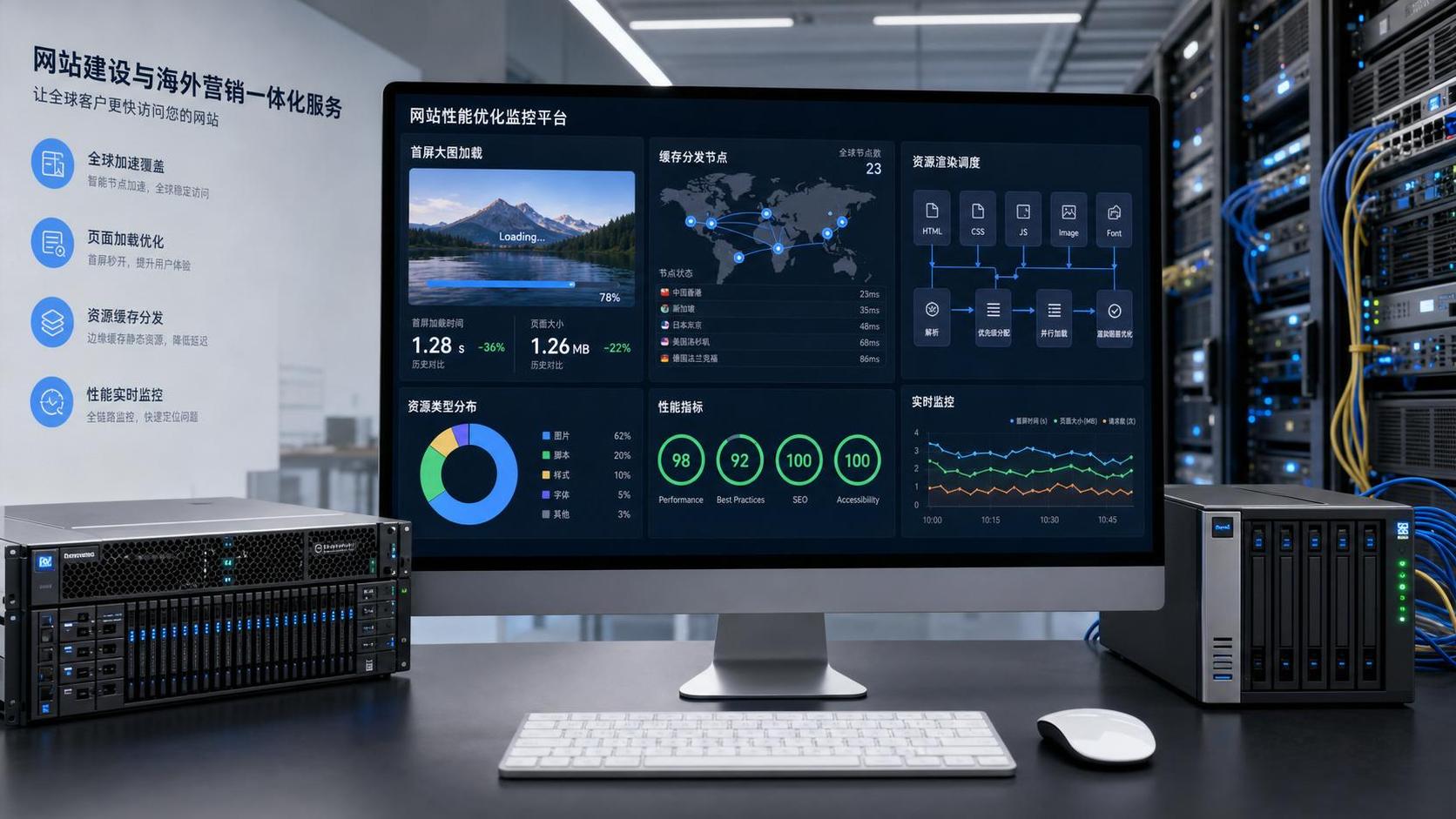
 EasyCamp SaaS Smart Website Marketing SystemE-Yingbao SaaS Smart Website Marketing System: AI-powered, zero-code website building. Rapidly launch multilingual independent e-commerce sites in just 10 minutes. Global server acceleration and AI-driven SEO optimization empower businesses to efficiently connect with global markets. The seamless integration of technology and user-friendly operation makes building e-commerce sites incredibly simple.
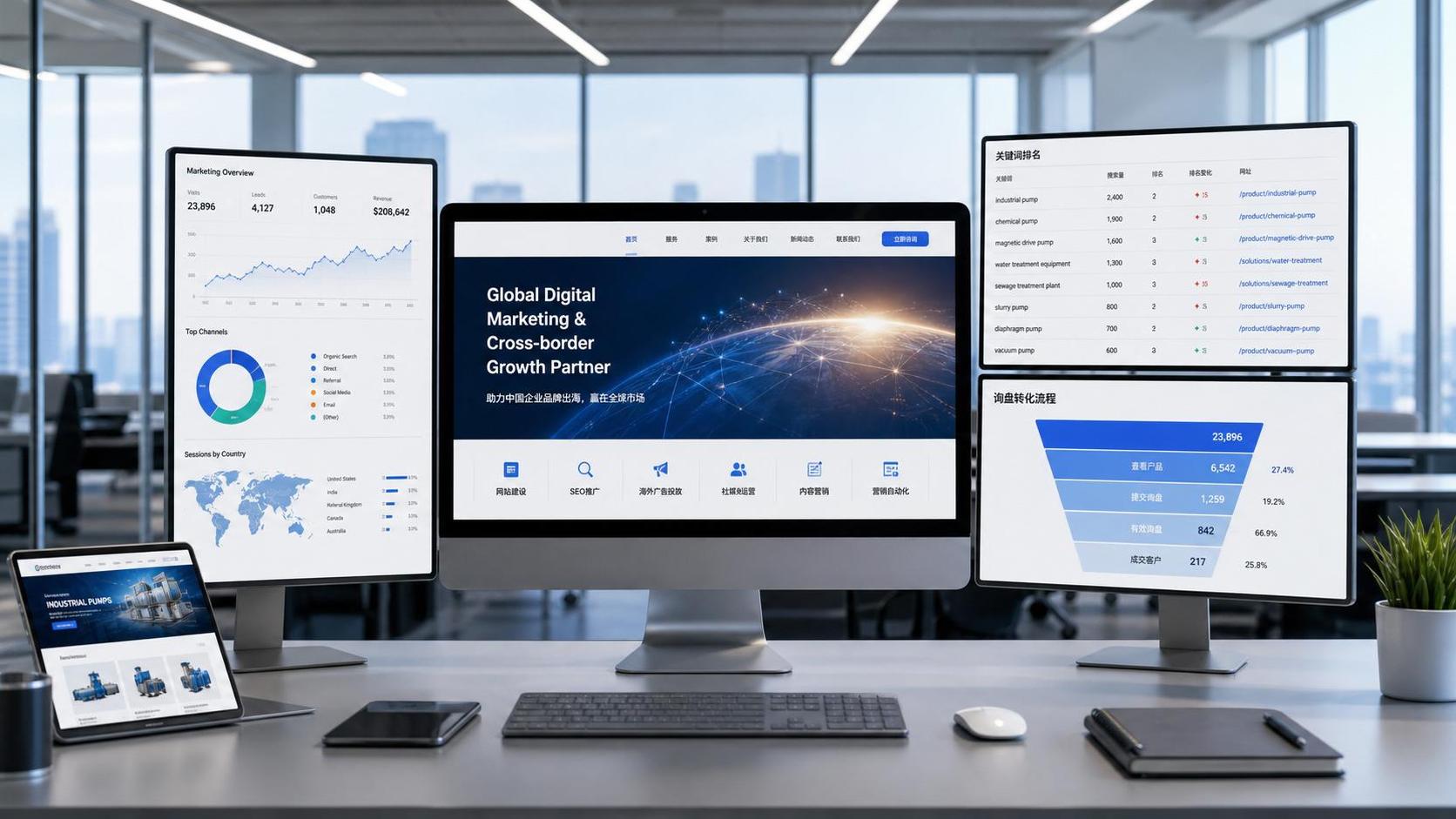
 AI+SEM Intelligent Advertising Marketing SystemAI+SEM drives intelligent ad creation, empowering full-funnel precision advertising marketing. The system automatically generates weekly/monthly reports, AI recommends keywords and target countries, monitors core metrics in real-time with intelligent alerts, and enables one-click high-conversion ad solutions to help quickly acquire customers and improve ROI.
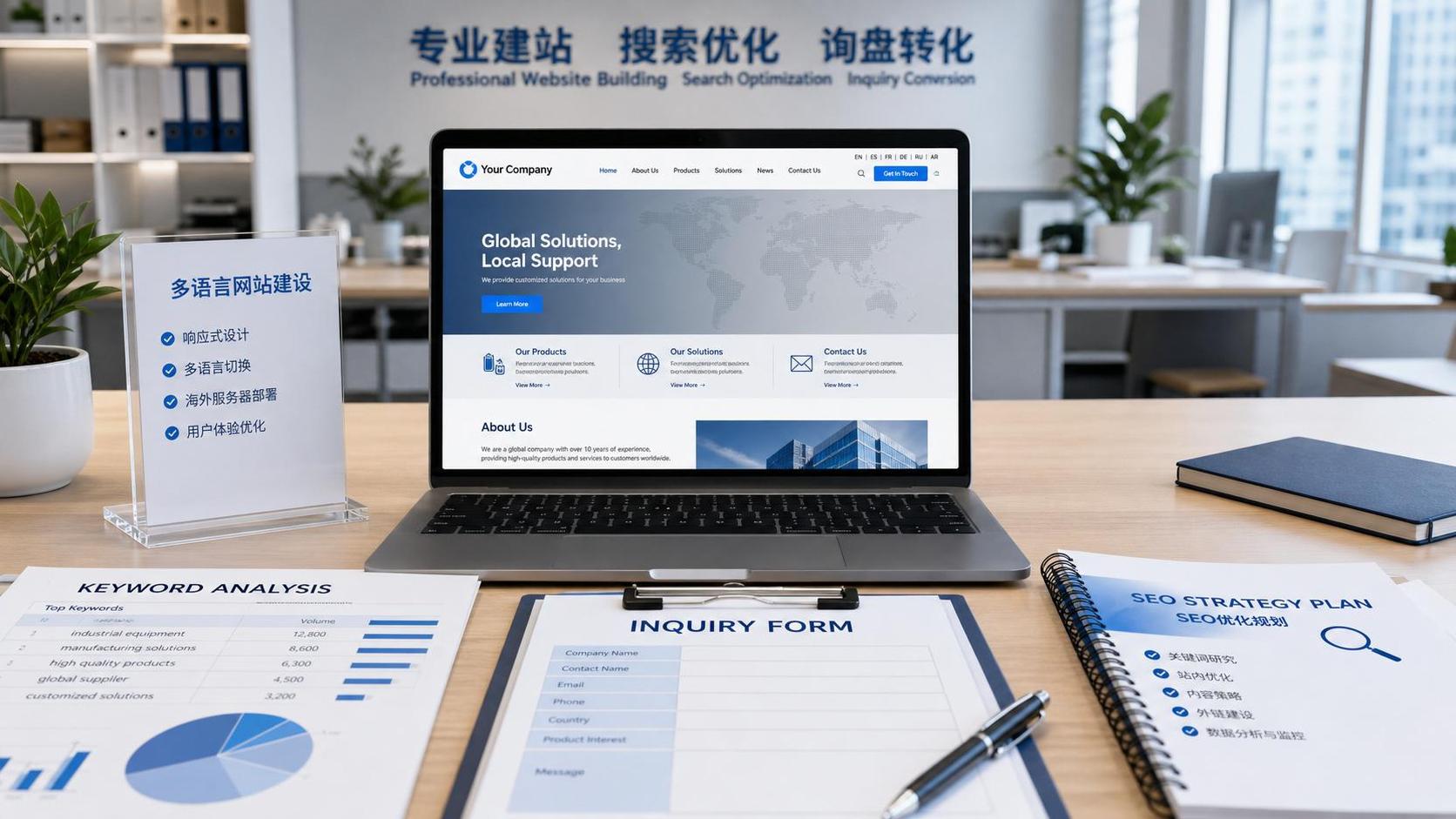
 AI+SEO Dual Engine Optimization ServiceEasyWin AI+SEO Dual Engine Optimization System leverages AI-powered keyword mining, content generation, and comprehensive technical optimization to help foreign trade enterprises acquire high-quality organic traffic, significantly improving search rankings and conversion rates.
 AI+SNS Social Media Marketing SystemYingbao AI+SNS Social Media Marketing System - Precision social capture for the social media era. Supports one-click content synchronization across major platforms like Facebook and LinkedIn. AI intelligently rewrites posts for enhanced relevance. 24/7 AI customer service and user profiling analysis empower businesses to efficiently expand into global markets.
 AI+SEO营销解决方案易营宝AI+SEO营销解决方案,通过AI批量写作、智能生成TDK、精准关键词扩词等功能,全面优化网站SEO效果,提升流量与转化率。助力企业构建高效智能网站新生态。
 AI+SEM Advertising Marketing SolutionsAI+SEM Advertising Marketing Solution leverages AI technology to deeply empower SEM ad campaigns. It automatically generates weekly/monthly reports using AI, presenting account data across multiple dimensions for comprehensive insights into campaign performance and trends. The system precisely recommends keywords and target countries, intelligently generates high-conversion ad copy, and enables one-click activation of efficient campaign plans to help businesses rapidly acquire customers. Simultaneously, it monitors core metrics in real time, intelligently identifies abnormal fluctuations, and issues timely alerts to ensure stable, high-return advertising results.
 Domain Name ServicesEasyWin provides professional domain name services, including intelligent queries, one-stop registration, brand protection, and full lifecycle management, helping businesses build a digital brand image.
 EasyOperate B2C Cross-Border E-Commerce Platform & Independent WebsiteEasyStore B2C Cross-border E-commerce Independent Store is an intelligent website building and cross-border e-commerce integrated solution independently developed by EasyStore Information Technology (Beijing) Co., Ltd. The system is specially designed for small and medium-sized as well as large export enterprises, integrating 'website building, operation, marketing, advertising, and conversion' into one, helping enterprises quickly establish cross-border e-commerce independent stores to achieve brand globalization and global sales growth.
The platform supports multiple languages, multiple currencies, and multi-channel marketing, with built-in AI intelligent translation and SEO optimization systems, suitable for mainstream markets such as Southeast Asia, Europe and America, Latin America, and the Middle East, assisting Chinese manufacturing enterprises in efficiently deploying international e-commerce strategies. SSL证书易营宝提供专业SSL安全证书服务,包括单域名和泛域名证书,确保网站数据传输加密、身份验证和完整性保护,助力企业建立安全可信的在线业务环境。









