









- The China-US tariff arrangement has reached a preliminary consensus, and the trade association will be establishedJun 15, 2026View details
- What determines B2C cross-border e-commerce website development costs? A breakdown of features, interfaces, and deployment methodsJun 17, 2026View details
- China-Morocco zero-tariff access, a breakthrough in the cost of Moroccan goods exports to ChinaJun 11, 2026View details
- What signal should be released for the suspension of exports to JapanJun 10, 2026View details
- China's May LNG imports rebounded, with increased volumes from Russia and Canada filling the Middle East supply gapJun 10, 2026View details
- Will GEO change its SEO strategy?Jun 04, 2026View details
Responsive self-service website builder system comparison: how much does the cell phone conversion improve? 5 real cases
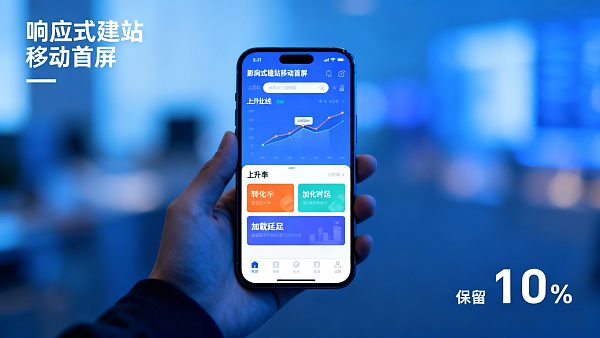
Five Real Case Comparisons: How Responsive Self-Service Website Systems Boost Mobile Conversion Rates, Including Multilingual Foreign Trade Website System Operational Data Analysis
This article targets information researchers and users/operators, focusing on the practical improvement of mobile conversion rates in B2B scenarios using responsive self-service website systems. When selecting a global website SaaS platform or cross-border foreign trade website solution, companies prioritize mobile experience, SEO performance, and localized conversion rates. This article provides replicable implementation paths, key metrics, and considerations through comparative analysis of five real cases, helping marketing or operations teams reduce uncertainty in selection and deployment while quickly achieving measurable returns.

1. Why Mobile Experience Determines the Success of Cross-Border Websites: The Technical Logic of Responsiveness and Multilingual Support
In cross-border e-commerce and enterprise multilingual CMS applications, mobile devices have become the primary traffic source in most countries. Responsive self-service website systems involve not just visual adaptation but also resource loading strategies, cross-region CDN distribution, lazy image loading, and interaction optimization through device detection. A well-designed responsive system can render key visible content within 3 seconds of user arrival, significantly reducing bounce rates and increasing purchase intent. Technically, AI-powered multilingual website systems must collaborate with global SEO systems: dynamically generating locally optimized meta tags, URL structures, and localized content versions to achieve higher organic traffic match rates in target markets.
Additionally, geo-targeted website solutions require IP/browser language-based default display strategies, automatic currency switching, and flexible local payment integrations. These capabilities directly impact user trust and checkout speed on mobile. For users/operators, choosing drag-and-drop website builders with no-code solutions enables lightweight page optimization while facilitating rapid A/B testing iterations to identify optimal conversion paths within short cycles.
2. Five Real Cases and Key Data Comparisons (Grouped by Market & Industry)
The following cases demonstrate mobile conversion rate improvements after implementing responsive self-service website systems with synchronized multilingual strategies. Covering Southeast Asia, Europe/America, and Middle East markets, data focuses on percentage conversion increases and loading speed improvements as core benchmarks for decision-making.

Case A: Southeast Asian Apparel Independent Site (Goal: Improve Mobile Conversion)
Issue: Original site had slow mobile loading, complex checkout flows, and high abandonment. Solution: Rebuilt mobile templates using responsive system, implemented WebP images with lazy loading, deployed local CDN nodes, and enabled automatic currency/language detection. Result: 28% mobile conversion increase, first-screen load time reduced from 4.8s to 2.1s, 14% longer average session duration. This proves page performance optimization and localized currency display are high-leverage conversion drivers.
Case B: Middle Eastern Auto Parts/Mechanical Independent Site (Goal: Boost Inquiry & Form Submission)
Issue: Language/trust barriers caused low mobile form completion. Solution: Deployed multilingual forms with localized templates, added one-click callback and WhatsApp quick-contact buttons, optimized form reading sequence via responsive layouts. Result: 45% higher mobile form submissions with improved lead quality. Geo-targeted solutions combined with lightweight page structures doubled conversion and follow-up efficiency.
Case C: European/American Brand Direct Store (Goal: Increase Mobile Payment Conversion)
Issue: Poor mobile SEO and ad landing page relevance led to high customer acquisition costs. Solution: Integrated full-stack SEO modules, optimized mobile landing page TDK (Title/Description/Keywords) to align with ad keywords, used AI-generated high-relevance mobile content to reduce bounce rates. Result: 38% higher mobile ROAS, 25% improved ad click-through conversion. Highlights the synergy between global SEO systems and ad platforms.
Case D: European Retailer (Multilingual Pilot - Goal: Boost Local Search Traffic)
Issue: Search engines couldn't effectively index multilingual pages, limiting localized traffic. Solution: Implemented enterprise multilingual CMS with structured Hreflang and auto-generated sitemaps, combined AI translation + human review for semantic localization. Result: 32% growth in mobile search traffic for specific languages with corresponding conversion lifts. Demonstrates how AI multilingual systems with standardized SEO governance drive long-term organic growth.
Case E: Cross-Border Niche Market Experiment (Goal: Validate Small-Language Templates)
Issue: Poor small-language user experience with high operational costs. Solution: Adopted website solutions with 100+ small-language templates, enabling 300+ auto-translated localized displays. Result: 22% higher new user conversion in target markets, increased page depth, and lower CAC. Validates the feasibility of rapid template replication in emerging markets.
3. Implementation Checklist: Key Steps From Selection to Launch
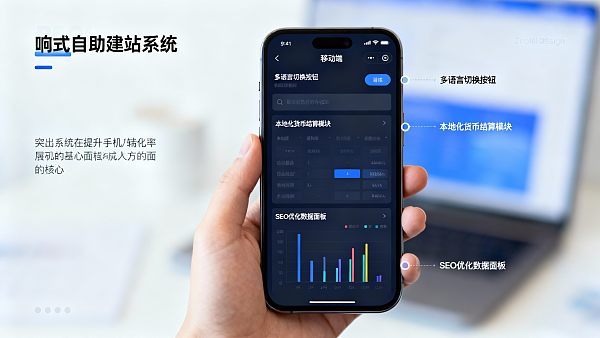
To transform responsive systems into growth drivers, marketing and technical teams should:
- Requirement Definition: Clarify target markets, primary device share, and conversion funnel leaks (browse → cart → checkout/submit).
- Template & Performance: Choose systems supporting responsive layouts, image compression, local CDN, and first-screen optimization.
- Multilingual & Localization: Prioritize AI multilingual capabilities with human review to ensure SEO-friendliness and cultural adaptation.
- SEO-Ad Synergy: Use full-stack SEO modules generating standardized TDK, URLs, and sitemaps to improve mobile landing page quality scores.
- Monitoring & Iteration: Deploy mobile behavior tracking and funnel analysis for continuous A/B testing on buttons, checkout paths, and image displays.
For rapid validation, consider platforms integrating responsive building, AI translation, and full-funnel marketing like EasySell B2C Cross-Border Marketplace, featuring drag-and-drop builders, 300+ auto-translation languages, and global CDN - ideal for Southeast Asia, Middle East, and European market expansion.
4. Evaluation Metrics & Long-Term Optimization Recommendations
Mobile optimization should track these KPIs: Conversion rates (by country/language), first-screen load time, bounce rate, average order value (AOV), mobile ROAS, and form completion rates. Short-term (30-90 days) prioritize loading performance and checkout flows; medium-term (3-12 months) focus on content localization and SEO authority.
Technically, prioritize vendors offering: Automated meta/sitemap generation in global SaaS platforms, geo-targeted solutions with multi-currency support, and integrated CRM/behavior tracking. This combination accelerates initial traffic conversion into repeatable customer assets.
5. Conclusion & Action Guide
Responsive self-service systems deliver mobile value not just through visual adaptation but via performance optimization, localized content, and automated SEO synergy. Five cases show proper system selection and execution typically drives 20%-45% mobile conversion lifts. For cross-border teams, adopt data-driven approaches prioritizing first-screen loading and checkout experience before advancing multilingual localization strategies.
To implement these methodologies or experience integrated website-SEO-ad-CRM platforms, visit EasySell B2C Cross-Border Marketplace. Contact us for customized assessments and free trials to achieve sustainable mobile conversion growth.
- Foreign Trade Website Development
- Yiyingbao
- SEO
- Independent Website
- AI Translation
- Global CDN Acceleration
- Multilingual Foreign Trade Website System
- Global Website Building SaaS Platform
- Cross-border E-commerce Website
- Responsive self-service website system
- AI multilingual website system
- Global SEO Website System
- Geo-targeted Website Solution
- Enterprise-Grade Multilingual CMS
- Cross-border E-commerce Website
- Foreign Trade Website Solutions
- Foreign Trade Website System
- Multilingual Website System
- Responsive Website Building
Related Articles
 The China-US tariff arrangement has reached a preliminary consensus, and the trade association will be established
 What determines B2C cross-border e-commerce website development costs? A breakdown of features, interfaces, and deployment methods
 China-Morocco zero-tariff access, a breakthrough in the cost of Moroccan goods exports to China


Related Products
 EasyCamp SaaS Smart Website Marketing SystemE-Yingbao SaaS Smart Website Marketing System: AI-powered, zero-code website building. Rapidly launch multilingual independent e-commerce sites in just 10 minutes. Global server acceleration and AI-driven SEO optimization empower businesses to efficiently connect with global markets. The seamless integration of technology and user-friendly operation makes building e-commerce sites incredibly simple.
 AI+SEM Intelligent Advertising Marketing SystemAI+SEM drives intelligent ad creation, empowering full-funnel precision advertising marketing. The system automatically generates weekly/monthly reports, AI recommends keywords and target countries, monitors core metrics in real-time with intelligent alerts, and enables one-click high-conversion ad solutions to help quickly acquire customers and improve ROI.
 AI+SEO Dual Engine Optimization ServiceEasyWin AI+SEO Dual Engine Optimization System leverages AI-powered keyword mining, content generation, and comprehensive technical optimization to help foreign trade enterprises acquire high-quality organic traffic, significantly improving search rankings and conversion rates.
 AI+SNS Social Media Marketing SystemYingbao AI+SNS Social Media Marketing System - Precision social capture for the social media era. Supports one-click content synchronization across major platforms like Facebook and LinkedIn. AI intelligently rewrites posts for enhanced relevance. 24/7 AI customer service and user profiling analysis empower businesses to efficiently expand into global markets.
 AI+SEO营销解决方案易营宝AI+SEO营销解决方案,通过AI批量写作、智能生成TDK、精准关键词扩词等功能,全面优化网站SEO效果,提升流量与转化率。助力企业构建高效智能网站新生态。
 AI+SEM Advertising Marketing SolutionsAI+SEM Advertising Marketing Solution leverages AI technology to deeply empower SEM ad campaigns. It automatically generates weekly/monthly reports using AI, presenting account data across multiple dimensions for comprehensive insights into campaign performance and trends. The system precisely recommends keywords and target countries, intelligently generates high-conversion ad copy, and enables one-click activation of efficient campaign plans to help businesses rapidly acquire customers. Simultaneously, it monitors core metrics in real time, intelligently identifies abnormal fluctuations, and issues timely alerts to ensure stable, high-return advertising results.
 Domain Name ServicesEasyWin provides professional domain name services, including intelligent queries, one-stop registration, brand protection, and full lifecycle management, helping businesses build a digital brand image.
 EasyOperate B2C Cross-Border E-Commerce Platform & Independent WebsiteEasyStore B2C Cross-border E-commerce Independent Store is an intelligent website building and cross-border e-commerce integrated solution independently developed by EasyStore Information Technology (Beijing) Co., Ltd. The system is specially designed for small and medium-sized as well as large export enterprises, integrating 'website building, operation, marketing, advertising, and conversion' into one, helping enterprises quickly establish cross-border e-commerce independent stores to achieve brand globalization and global sales growth.
The platform supports multiple languages, multiple currencies, and multi-channel marketing, with built-in AI intelligent translation and SEO optimization systems, suitable for mainstream markets such as Southeast Asia, Europe and America, Latin America, and the Middle East, assisting Chinese manufacturing enterprises in efficiently deploying international e-commerce strategies. SSL证书易营宝提供专业SSL安全证书服务,包括单域名和泛域名证书,确保网站数据传输加密、身份验证和完整性保护,助力企业建立安全可信的在线业务环境。









