









- The China-US tariff arrangement has reached a preliminary consensus, and the trade association will be establishedJun 15, 2026View details
- What determines B2C cross-border e-commerce website development costs? A breakdown of features, interfaces, and deployment methodsJun 17, 2026View details
- China-Morocco zero-tariff access, a breakthrough in the cost of Moroccan goods exports to ChinaJun 11, 2026View details
- What signal should be released for the suspension of exports to JapanJun 10, 2026View details
- China's May LNG imports rebounded, with increased volumes from Russia and Canada filling the Middle East supply gapJun 10, 2026View details
- Will GEO change its SEO strategy?Jun 04, 2026View details
Global Building SaaS System Hands-on: Deployment Timeline and Cost Estimation from 0 to 1
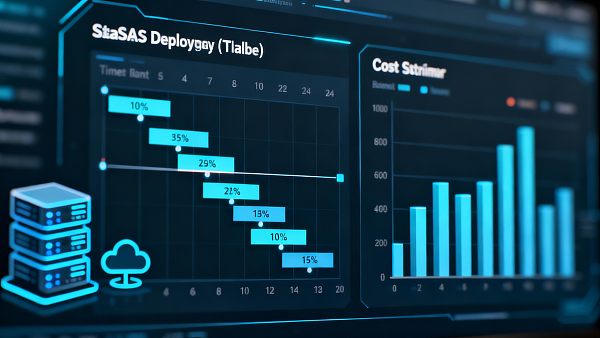
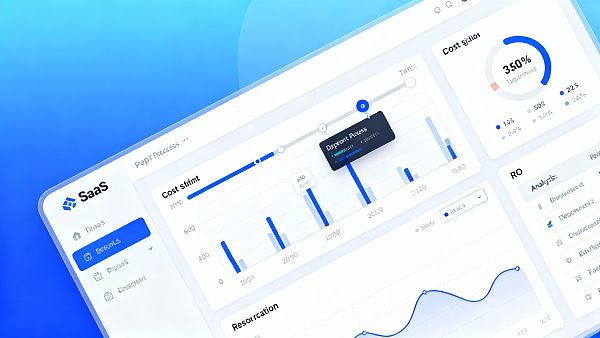
Focusing on global website SaaS system implementation, combining AI multilingual website systems with multilingual foreign trade website systems, providing deployment timelines and cost estimates from 0 to 1, helping operational teams quickly execute.
This article targets researchers and users/operators, focusing on the practical implementation of global website SaaS platforms. Many enterprises face common pain points when choosing multilingual foreign trade website systems or global SEO website systems: unpredictable deployment cycles, complex cost structures, difficulties in balancing cross-border compliance and regional targeting solutions, and insufficient experience in achieving high-conversion structures within responsive self-service website systems. This article provides executable timelines, detailed implementation milestones, resource allocation recommendations, and quantifiable cost estimation models to help project managers and operational teams control the pace, reduce risks, and achieve faster go-live with better ROI.
1. Pre-project Preparation and 0→1 Deployment Timeline (Executable Milestones and Staffing)
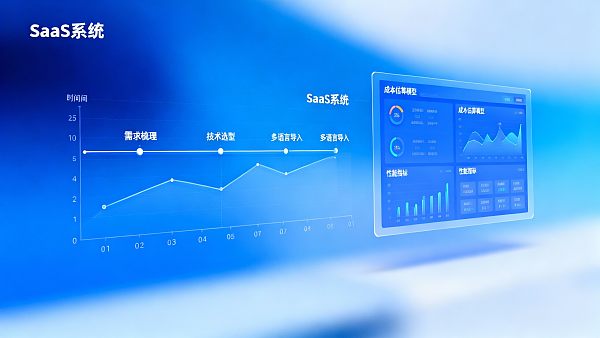
In global website SaaS system projects, early preparation determines subsequent deployment efficiency. It is recommended to break down the preparation phase into five modules: requirement analysis, technology selection, domain and CDN planning, compliance and payment integration, and multilingual resource preparation. Requirement analysis should include target markets, primary languages, SEO keyword sets (including regional and industry long-tail keywords), and product catalog structures. The technology selection phase should evaluate the platform's support for CDN, auto-SSL, DDoS protection, and multilingual content management, prioritizing solutions with enterprise-grade multilingual CMS and API extensions.
Sample timeline (weekly): Week 1 completes requirements and glossary definition; Week 2 completes system selection and environment setup (including server clusters, CDN, and domain allocation); Weeks 3-4 focus on template setup, product catalog import, and shopping cart/order logic validation; Week 5 completes multilingual translation interfaces and localized displays; Week 6 conducts ad and social media account joint debugging, SEO optimization, and performance stress testing; Week 7 goes live with gray release and collects initial data, adjusting based on AI detection tool feedback. The entire 0→1 process typically takes 6-8 weeks on mature global website SaaS platforms, but may extend to 10-12 weeks for complex B2B2C scenarios and ERP integrations.
2. Deployment Steps: Technical Implementation and Operational Acceptance (Including B2B2C Case Examples)
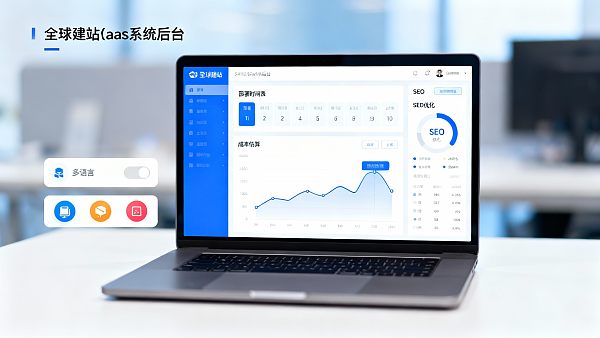
The deployment phase should parallel technical and operational tracks. Technical implementation includes site template development, responsive frontend adaptation, backend multi-spec product management and cart pricing, API integrations (payment, logistics, tax), and search engine-friendly URLs with sitemaps. Operational preparation includes product copywriting, category mapping, multilingual translation memory banks, ensuring AI-generated TDK and content are SEO-ready. For companies serving both wholesale and retail, adopt a B2B2C dual-mode logic—unified frontend product displays with backend rules differentiating wholesale/retail pricing and bulk inquiry portals to reduce duplicate maintenance costs.
In this process, integrate cloud website functions with big data analytics to monitor PV/UV, conversion rates, and cart abandonment in real-time. For reference products, see B2B2C dual-mode standalone site solutions, which offer direct advantages in multi-spec product management, unified bulk quoting, and cart experiences. Technical KPIs: First Contentful Paint (FCP) ≤1.5s, SEO friendliness ≥80, mobile/desktop conversion rate gap ≤20%. Operational acceptance focuses on multilingual content quality, regional targeting coverage, and localized ad creatives.
3. Cost Estimation Models and Optimization Recommendations (Hardware, Software, and Labor)
Total costs for global website SaaS systems typically include infrastructure (CDN, cloud servers, certificates, security), platform subscriptions/feature licenses, content/translation, development/integration labor, and marketing. Mid-sized cross-border sites using enterprise multilingual CMS and global SEO systems incur initial costs (domains, template development, multilingual imports, basic testing) of ¥20,000-80,000; annual operations/hosting (CDN, SSL, monitoring, basic AI content quotas) range ¥30,000-150,000; deep customization and ERP/third-party integrations may add tens to hundreds of thousands per project.
Optimization: Prioritize modular, reusable templates to reduce initial development; use AI keyword expansion and auto-TDK generation to lower content costs; deploy regional targeting in phases (test markets first) to mitigate upfront risks; employ AI ad managers for A/B testing and creative optimization, achieving 20%-40% cost reductions in the first 3 months. For responsive systems, prioritize LCP, image compression, and lazy loading in initial development to avoid costly performance fixes.
4. Multilingual SEO and Regional Targeting Implementation (Technical and Content Checklist)
In cross-border and global SEO systems, language/region strategies directly impact organic traffic and conversions. Technically, ensure per-language URL structures (consistent domain/subdomain/directory strategies), correct hreflang tags, language-specific sitemaps, and Search Console/Bing/Yandex verification. Content should localize long-tail keywords—AI accelerates TDK generation and draft translations but requires native reviewers for cultural/commercial accuracy.
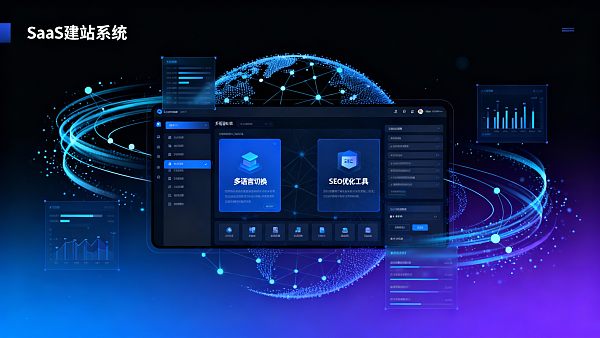
Regional solutions must cover payment/logistics variations, compliance (VAT, privacy clauses), and localized UX (currency, units, seasonal promotions). Combine social media automation with localized ad creatives and dynamic keyword libraries for rapid market testing, forming closed-loop data feedback to refine site structures and content strategies. Responsive systems must prioritize mobile flows, ensuring cart/checkout usability across regions and network conditions.
Conclusion and Action Guide
Global website SaaS deployment is both technical and operational—rational timelines, parallel technical/content tracks, AI-driven efficiency, and phased regional releases enable standalone sites in 6-12 weeks. Platforms with AI multilingual CMS and data-driven ad/social tools significantly accelerate launches and conversions.
EasyWinTech (Beijing) offers integrated smart websites, global SEO systems, and AI ad platforms via global server clusters and AI marketing engines, helping enterprises achieve faster cross-border e-commerce execution. Contact us for industry-specific timelines, precise cost estimates, or project consulting to accelerate your 0→1 journey into sustained growth.
- Foreign Trade Website Development
- Yiyingbao
- SEO
- Independent Website
- SEO Optimization
- Smart Website Building
- AI Marketing Engine
- Social Media Automation
- Multilingual SEO
- Multilingual Foreign Trade Website System
- Global Website Building SaaS Platform
- Cross-border E-commerce Website
- Responsive self-service website system
- AI multilingual website system
- Global SEO Website System
- Geo-targeted Website Solution
- Enterprise-Grade Multilingual CMS
- Cross-border E-commerce Website
- Global Website Building SaaS System
- Foreign Trade Website System
- Multilingual Website System
Related Articles
 Does a responsive corporate website need to be built? Applicable scenarios, advantages and upgrade criteria
 How much does responsive website development cost? Design, front-end, and functionality development expenses make up the total
 What Should You Pay Attention to in Responsive Website Development? Page Adaptation, Speed and SEO Key Points

Related Products
 EasyCamp SaaS Smart Website Marketing SystemE-Yingbao SaaS Smart Website Marketing System: AI-powered, zero-code website building. Rapidly launch multilingual independent e-commerce sites in just 10 minutes. Global server acceleration and AI-driven SEO optimization empower businesses to efficiently connect with global markets. The seamless integration of technology and user-friendly operation makes building e-commerce sites incredibly simple.
 AI+SEM Intelligent Advertising Marketing SystemAI+SEM drives intelligent ad creation, empowering full-funnel precision advertising marketing. The system automatically generates weekly/monthly reports, AI recommends keywords and target countries, monitors core metrics in real-time with intelligent alerts, and enables one-click high-conversion ad solutions to help quickly acquire customers and improve ROI.
 AI+SEO Dual Engine Optimization ServiceEasyWin AI+SEO Dual Engine Optimization System leverages AI-powered keyword mining, content generation, and comprehensive technical optimization to help foreign trade enterprises acquire high-quality organic traffic, significantly improving search rankings and conversion rates.
 AI+SNS Social Media Marketing SystemYingbao AI+SNS Social Media Marketing System - Precision social capture for the social media era. Supports one-click content synchronization across major platforms like Facebook and LinkedIn. AI intelligently rewrites posts for enhanced relevance. 24/7 AI customer service and user profiling analysis empower businesses to efficiently expand into global markets.
 AI+SEO营销解决方案易营宝AI+SEO营销解决方案,通过AI批量写作、智能生成TDK、精准关键词扩词等功能,全面优化网站SEO效果,提升流量与转化率。助力企业构建高效智能网站新生态。
 AI+SEM Advertising Marketing SolutionsAI+SEM Advertising Marketing Solution leverages AI technology to deeply empower SEM ad campaigns. It automatically generates weekly/monthly reports using AI, presenting account data across multiple dimensions for comprehensive insights into campaign performance and trends. The system precisely recommends keywords and target countries, intelligently generates high-conversion ad copy, and enables one-click activation of efficient campaign plans to help businesses rapidly acquire customers. Simultaneously, it monitors core metrics in real time, intelligently identifies abnormal fluctuations, and issues timely alerts to ensure stable, high-return advertising results.
 Domain Name ServicesEasyWin provides professional domain name services, including intelligent queries, one-stop registration, brand protection, and full lifecycle management, helping businesses build a digital brand image.
 EasyOperate B2C Cross-Border E-Commerce Platform & Independent WebsiteEasyStore B2C Cross-border E-commerce Independent Store is an intelligent website building and cross-border e-commerce integrated solution independently developed by EasyStore Information Technology (Beijing) Co., Ltd. The system is specially designed for small and medium-sized as well as large export enterprises, integrating 'website building, operation, marketing, advertising, and conversion' into one, helping enterprises quickly establish cross-border e-commerce independent stores to achieve brand globalization and global sales growth.
The platform supports multiple languages, multiple currencies, and multi-channel marketing, with built-in AI intelligent translation and SEO optimization systems, suitable for mainstream markets such as Southeast Asia, Europe and America, Latin America, and the Middle East, assisting Chinese manufacturing enterprises in efficiently deploying international e-commerce strategies. SSL证书易营宝提供专业SSL安全证书服务,包括单域名和泛域名证书,确保网站数据传输加密、身份验证和完整性保护,助力企业建立安全可信的在线业务环境。









